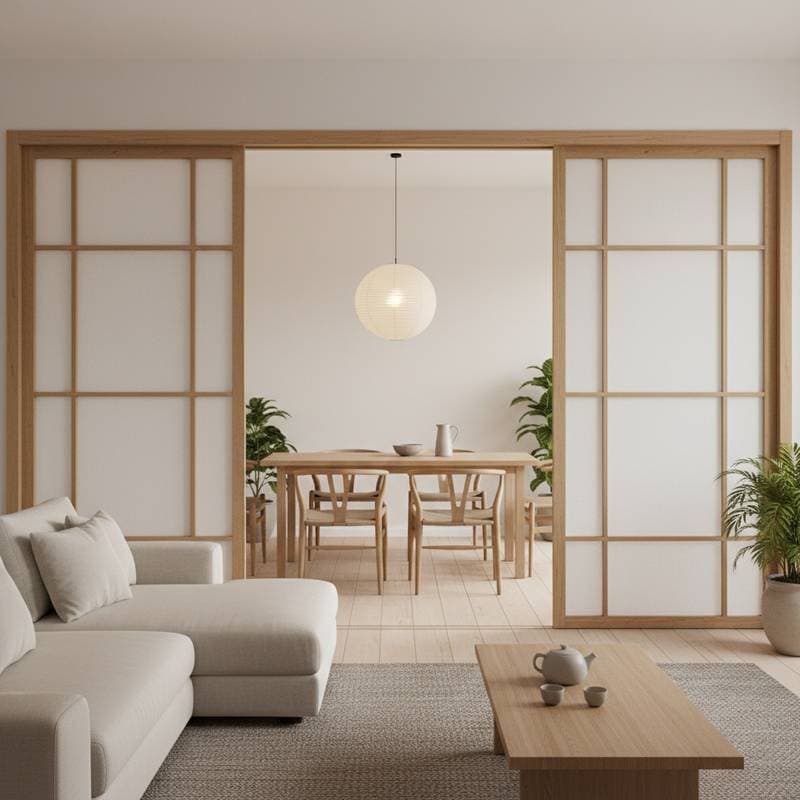
Japandi Shoji Doors Transform Interior Flow
Japandi design blends Japanese minimalism with Scandinavian functionality. This approach produces calm interiors that remain practical for daily use. Shoji doors serve as an effective element within this style because they connect spaces through light and texture.
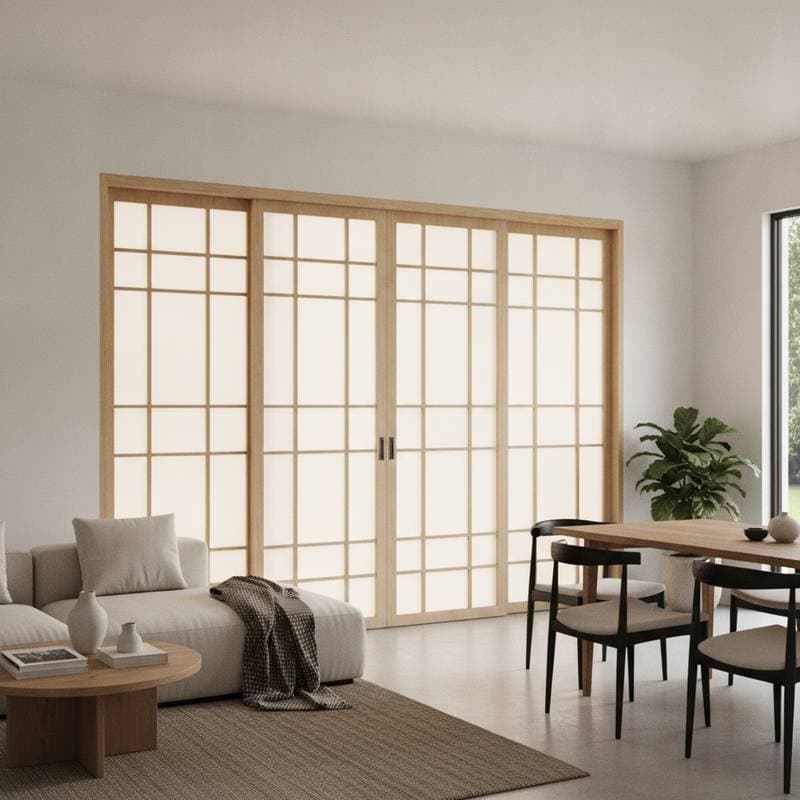
These sliding panels define areas without blocking movement or light. The translucent surfaces soften boundaries while preserving privacy. Homeowners apply them as room dividers, closet fronts, or window coverings to maintain an open yet ordered feel.
Budget Approaches for Different Projects
Select prefabricated panels in pine or MDF with acrylic inserts for installations between 600 and 1500 dollars. Pair them with matte black track hardware for a clean appearance. Focus spending on one high impact location such as a divider between a bedroom and dressing area.
Choose solid wood frames in white oak or bamboo with frosted glass for projects between 1600 and 3500 dollars. Add soft close mechanisms to reduce noise and wear. Coordinate the doors with neutral wall finishes and simple trim for visual consistency.
Commission custom doors in quarter sawn oak or walnut for investments between 3600 and 7000 dollars. Specify layered panels that adjust light levels. Conceal the tracks within the wall structure to create a continuous architectural surface.
Material and Finish Selections
Match Shoji doors with slim window frames in natural wood or matte black. Large glass areas increase the amount of diffused light that reaches the panels. Use thin muntins in the door grids for a modern profile or wider spacing for a traditional appearance. Select flush pulls in blackened steel rather than prominent knobs.
Apply natural wood cladding or lime washed surfaces on adjacent walls. These finishes provide a calm backdrop that highlights the organic quality of the doors. Limit trim to light stained oak or pine and add texture through linen curtains or wool rugs.
Practical Maintenance Steps
Clean rice paper panels with a soft brush vacuum attachment. Wipe acrylic or glass inserts with mild soap and water. Inspect wood frames twice a year and apply a thin coat of plant based oil to prevent drying.
Lubricate sliding tracks every six months with a silicone free product. Address small scratches immediately to avoid moisture penetration. Consistent care allows well constructed doors to remain functional for decades.
Common Installation Errors to Prevent
Avoid combining Shoji doors with bold patterns or heavy ornamentation. Maintain muted tones and soft textures throughout the space. Measure openings accurately to ensure panels fit the architecture without appearing cramped or oversized.
Reject thin plywood frames that twist over time. Invest in solid or laminated wood for better stability. Schedule regular track cleaning to prevent sticking and surface damage.
Color Coordination Guidelines
Select a palette of warm birch, charcoal linen, clay taupe, mist white, and olive drift. These tones create gentle contrast while echoing natural surroundings. Balance the matte surface of the panels with wood flooring and ceramic accents. Limit metal finishes to brushed brass or black steel.
Documentation Before Ordering
Photograph every wall considered for installation. Record ceiling heights, floor transitions, and existing window placements. Note neighborhood style and any applicable design restrictions. Include climate details that affect humidity and sunlight exposure.
Creating Fluid Interiors With Shoji Doors
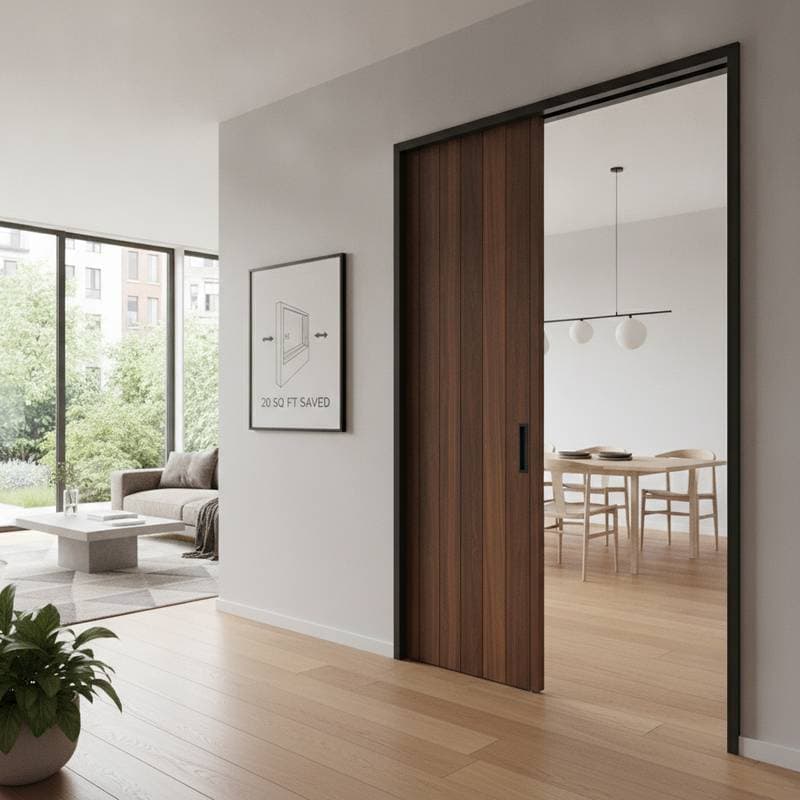
Shoji doors remove swing space requirements and allow smaller rooms to feel larger. They support balanced movement between areas when paired with natural materials and controlled light. The result is a home that maintains privacy while encouraging calm daily routines.