Common Reasons Sliding Barn Door Hardware Fails After Two Years
Sliding barn doors add rustic charm and efficient space use to modern homes. However, numerous owners report hardware issues emerging after just two years. Rollers grind against tracks, doors misalign and drift, and protective finishes fade or corrode.
These problems stem from interactions among materials, installation methods, environmental factors, and usage habits. A deeper examination reveals how these elements accelerate wear. Homeowners gain control by identifying these dynamics early, enabling informed choices in selection, care, and upgrades.
Installation Errors That Accelerate Hardware Wear
Superior hardware demands precise installation to achieve full potential. Common setup mistakes impose uneven stress, hastening component failure.
- Misaligned tracks: An unlevel track distributes weight unevenly on rollers. This leads to accelerated wear on one side, causing the door to bind or drag during operation.
- Inadequate fasteners: Screws too short or not secured into wall studs allow the track to shift under load. Vibration from movement loosens connections over time.
- Insufficient clearance: Doors require space from walls and trim for unobstructed travel. Tight gaps result in scraping, which damages edges and hardware alike.
- Omission of bottom guides: These stabilizers prevent lateral swinging. Without them, repeated slides misalign the door, overworking rollers and mounts.
Hire professionals for complex setups, especially where structural support proves weak. Reinforce headers with additional bracing to handle the door's full weight without sagging.
Daily Usage Habits That Strain Components
The frequency and manner of door operation directly influence hardware longevity. Doors in high-traffic zones, like living rooms, endure far more cycles than those in low-use areas, such as pantries.
Forceful closing transfers shock to rollers, flattening wheels or degrading bearings. Children climbing or yanking on doors amplifies torque on tracks and brackets. These actions, even if occasional, accumulate damage through repetitive micro-stresses.
In shared homes, varied user techniques exacerbate issues. Gentle slides preserve alignment, while aggressive pushes alter load paths. Track usage logs or simple observations help identify patterns that demand adjustment.
Evaluating Hardware Quality Across Categories
Hardware varies widely in construction, affecting performance under sustained demands. Budget options mimic premium aesthetics but falter in durability tests.
| Hardware Type | Initial Cost | Expected Lifespan | Required Maintenance | Ideal Applications |
|---|---|---|---|---|
| Basic steel with plastic rollers | Low | 1-2 years | Frequent lubrication and debris removal | Lightweight closet doors |
| Mid-range steel with nylon bearings | Moderate | 3-5 years | Periodic cleaning and tension checks | Everyday room dividers |
| Heavy-duty stainless steel with sealed bearings | High | 7+ years | Occasional wiping to prevent corrosion | Exterior or heavy interior doors |
| Aesthetic aluminum with coated finishes | Moderate | 3-5 years | Avoid impacts to preserve integrity | Stylish, low-traffic designs |
Entry-level kits often succumb at bearings or brackets first. Rattling signals impending total failure. Premium choices incorporate thicker gauges, protected mechanisms, and robust alloys to resist deformation.
Design Flaws That Undermine Long-Term Reliability
Quality materials and installations cannot compensate for inherent weaknesses in hardware engineering. Narrow wheels increase friction, demanding more energy per slide and hastening fatigue.
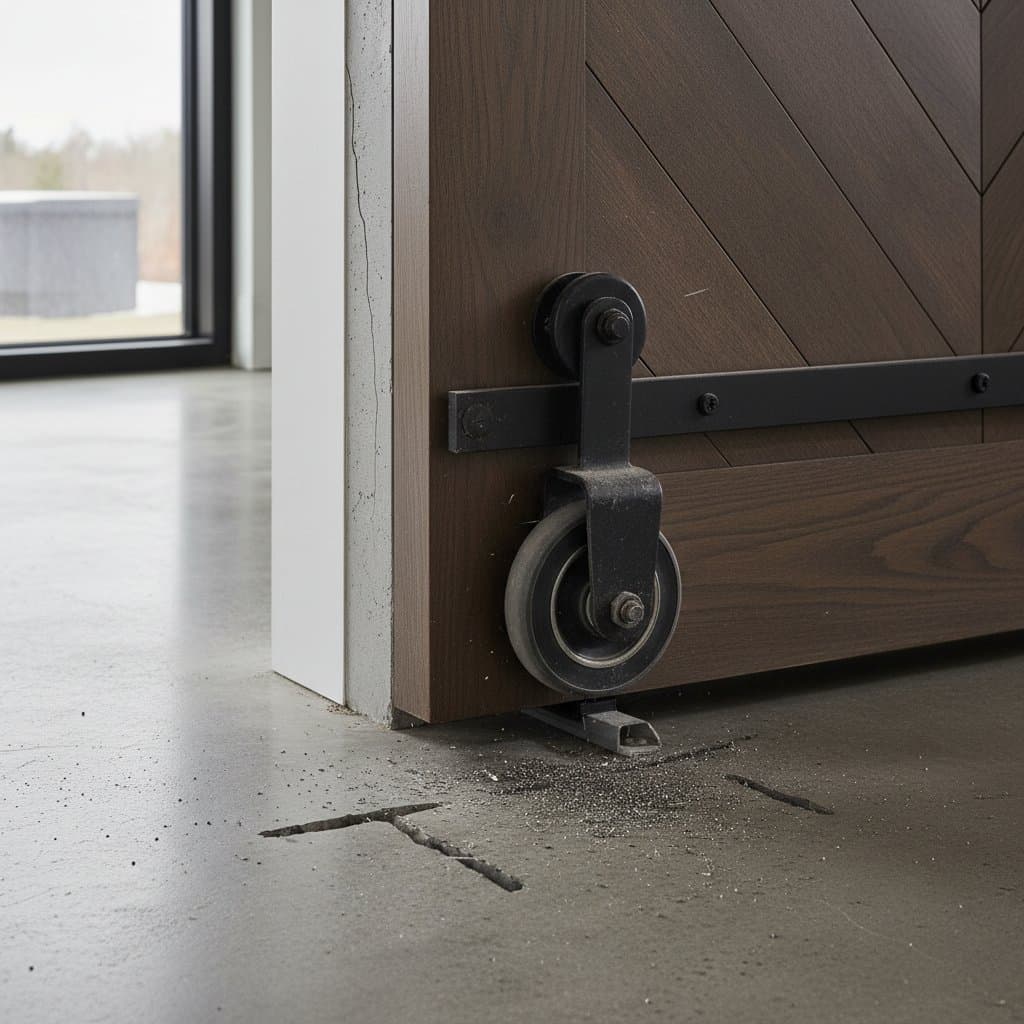
Exposed bearings invite dust and moisture infiltration, leading to seized rotation. Thinly welded brackets fracture from subtle vibrations over months. Sleek, minimalist profiles sacrifice support thickness for visual appeal, reducing tolerance for operational loads.
Opt for systems with anti-derailment stops and enclosed bearings. These elements block contaminants and maintain consistent tracking, delaying the onset of major issues.
Selecting Hardware for Specific Needs
Base hardware decisions on practical demands rather than appearance alone. Assess door dimensions, expected cycles, and room conditions to match components effectively.
- Heavy doors: Select steel tracks engineered for loads exceeding 200 pounds, paired with dual-roller assemblies for balanced support.
- Moist environments: Prioritize stainless or galvanized finishes to resist rust from steam or splashes.
- Busy areas: Integrate sealed, precision bearings for effortless motion and reduced wear from constant activity.
- Style-focused setups: Combine powder-coated aluminum with reinforced internals to blend form and function without compromise.
Verify load capacities against your setup, and bolster mounting surfaces with plywood reinforcements or metal plates for even distribution.
Strategies to Maximize Hardware Durability
Anticipate wear patterns to implement proactive care. High-end systems still require attention to sustain peak performance across a decade.
Inspect quarterly for looseness or debris buildup; lubricate bearings with silicone-based sprays as needed. Address early signs like noise or sticking by tightening fasteners or replacing individual parts, such as worn wheels.
Full replacements suit cases of track distortion or widespread corrosion. Pair upgraded hardware with the original door for cost-effective renewal. Proper choices and routines transform barn doors into enduring assets, delivering seamless utility and enduring style.