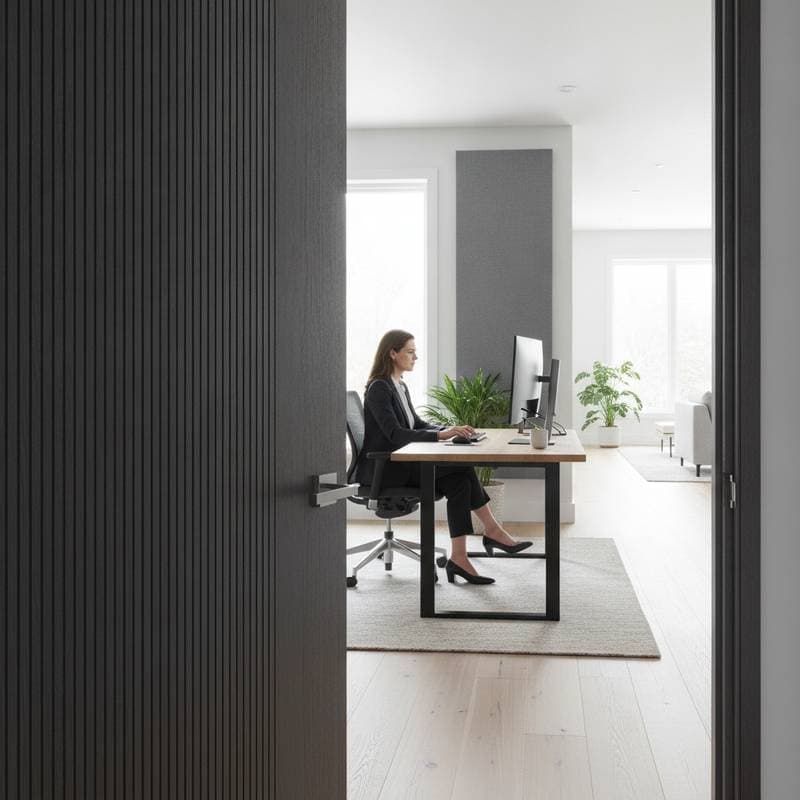
Acoustic Doors for Quieter Home Offices
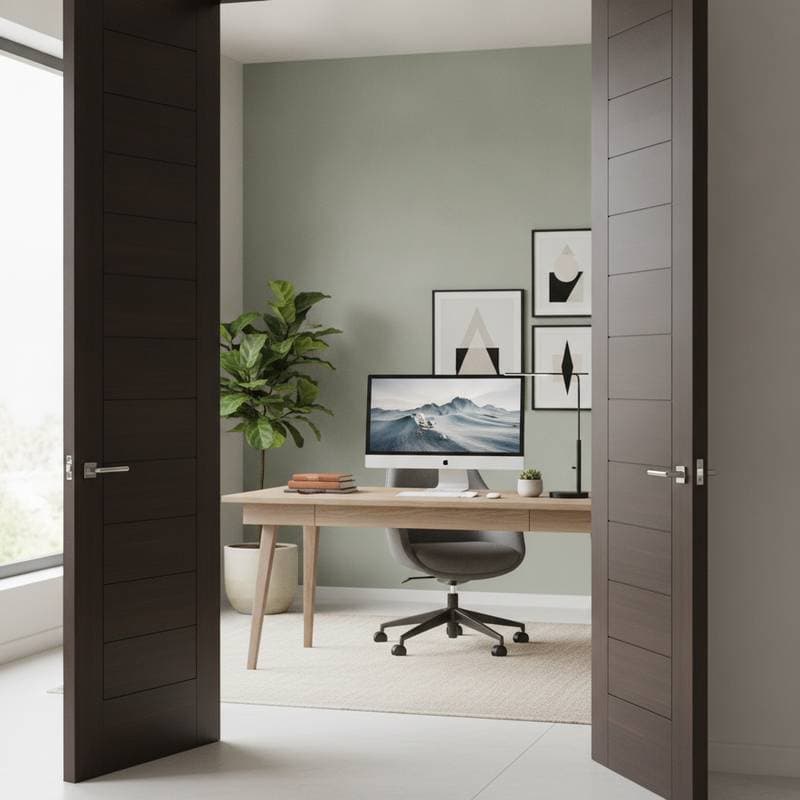
Creating a quiet home office ranks high among homeowner priorities. Remote work makes noise control essential for productivity and reduced stress. Acoustic interior doors deliver measurable sound reduction along with privacy and a professional setting for calls or focused tasks.
Homeowners treat these doors as a practical investment. Installation costs range from $800 to $2,500 per door based on material, design, and sound rating. The upfront expense exceeds that of standard doors, yet the gains in comfort and output justify the difference for many households.
Typical Costs by Material
Prices depend on construction, size, and labor. The table below shows common installed ranges.
| Material/Type | Cost Range (Installed) | STC Rating | Key Features |
|---|---|---|---|
| Solid Core Wood Door | $800 to $1,200 | 30-35 | Natural appearance, moderate insulation |
| Acoustic Veneer Door | $1,200 to $1,800 | 35-40 | Premium finish, balanced performance |
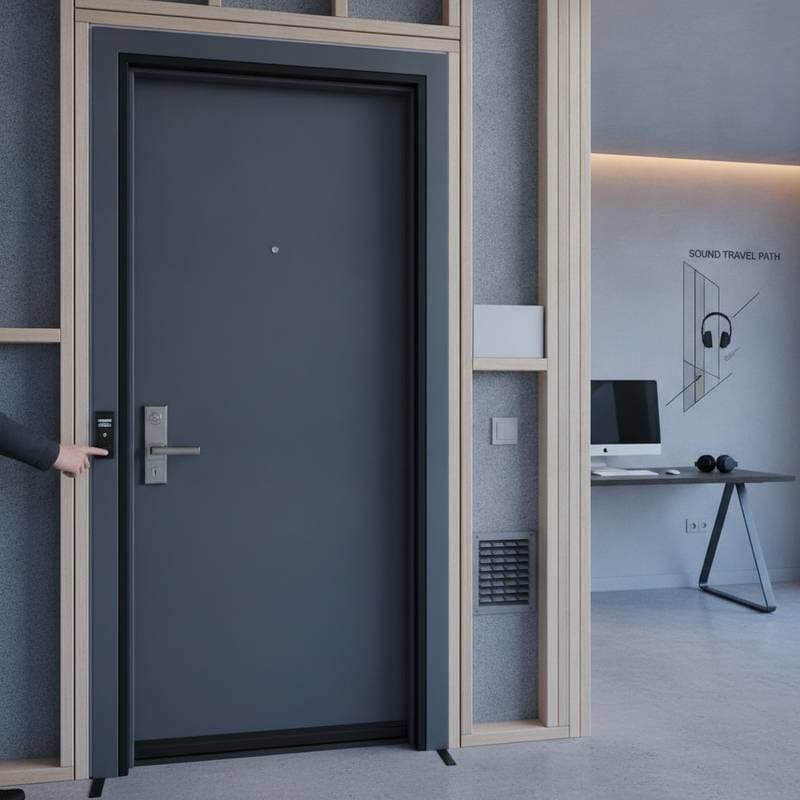
| Acoustic Steel Door | $1,500 to $2,500 | 40-45 | Highest reduction, durable, fire-rated options |
| Acoustic Glass Door | $1,000 to $1,800 | 30-38 | Light transmission, laminated glazing |
These figures cover the slab, frame, seals, and labor. Upgrades to an existing frame cost less, while custom sizes or finishes increase totals.
Performance Advantages
Reduced Distractions
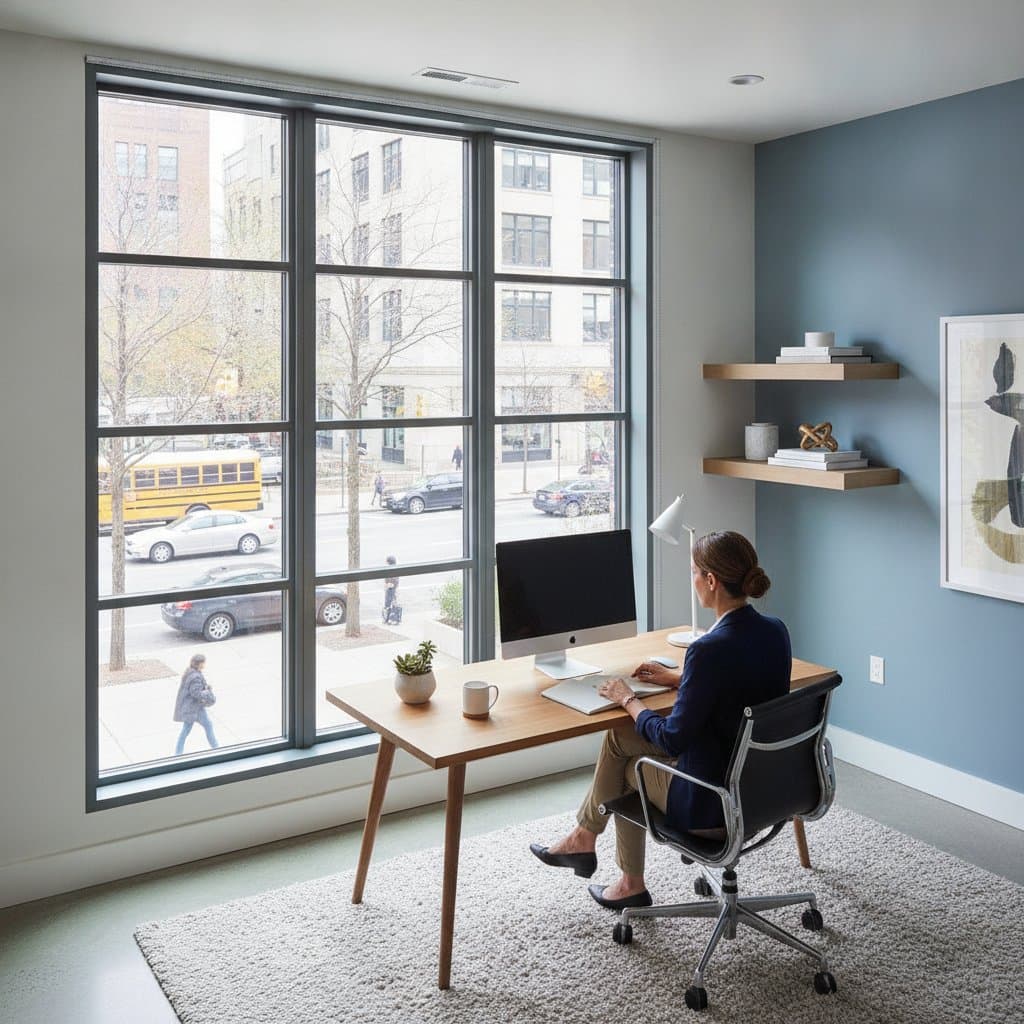
Background noise from conversations, traffic, or household activity interrupts concentration. An acoustic door creates a sealed workspace that limits interruptions. Research indicates that lower noise levels raise task efficiency by 20 to 25 percent. Remote workers gain clearer output and less fatigue.
Stronger Privacy
The doors limit sound travel during calls or meetings. Multiple household members can work or study at once without mutual disturbance.
Clearer Virtual Meetings
Better room isolation reduces echo and external sounds. Call participants hear speech more distinctly, which improves daily communication quality.
Installation Steps
Professional installation follows a set sequence to achieve tight seals.
- Measure the opening and inspect wall construction for compatibility.
- Reinforce or replace the frame to handle added weight and maintain alignment.
- Hang the door, fit perimeter seals, and attach an automatic drop bottom.
- Test operation and adjust seals for full contact.
Standard jobs finish in a few hours. Larger or custom doors require extra time.
Ongoing Care
Inspect seals twice yearly and replace worn gaskets at once. Lubricate hinges and drop seals regularly. Clean surfaces with mild detergent only. Refinish wood doors every few years when sunlight or humidity affects the surface. With routine attention these doors retain performance for 20 years or longer.
Contractor Perspectives
Daniel Ruiz, a contractor in Austin, notes that many homeowners overlook sound transmission through hollow-core doors. One replacement in a home office often produces a clear drop in noise. Sarah Chen, an acoustic consultant in Chicago, points out that doors remain the weakest point in sound isolation when walls receive all the attention.
Energy and Value Gains
Dense cores and tight seals also limit air movement. Rooms stay warmer or cooler with less energy use, especially near exterior walls.
Planning an Upgrade
Identify current leak points by listening for sound under the door or through thin panels. Request a written quote that lists materials, labor, and warranty coverage for both structure and seals. The result is a workspace that supports focus and daily comfort.