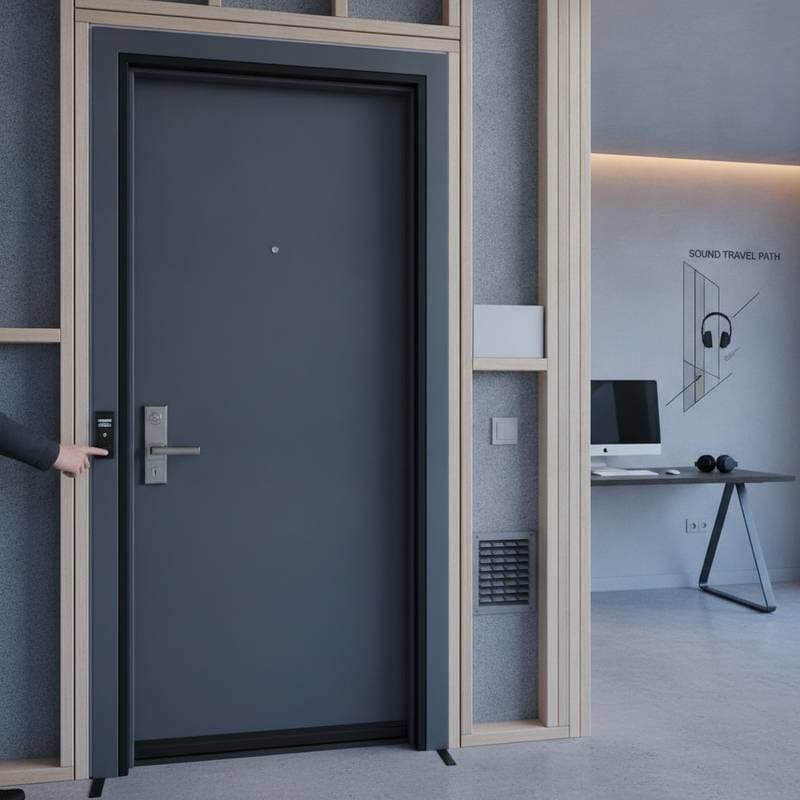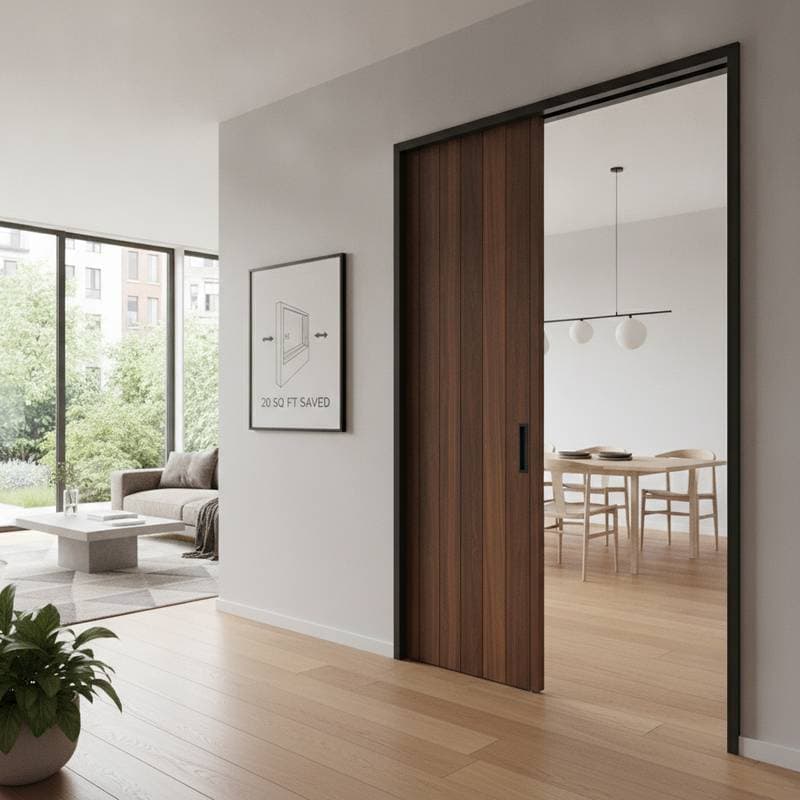

Why Acoustic Doors Matter for Home Offices
Working from home has shifted priorities around personal space and productivity. Noise control now ranks as a core requirement rather than an optional upgrade. Acoustic doors create a physical barrier that reduces sound transmission while preserving the visual character of interior spaces.
How Acoustic Doors Manage Sound
These doors use dense cores, perimeter seals, and layered materials to limit airborne noise and vibration. The result supports mental transition from household activity to focused work. Modern options include finishes that align with residential styles instead of industrial appearances.
Budget-Conscious Upgrade Path
Select a solid-core wood composite door rated at STC 30 or higher. Add adhesive perimeter seals and a drop-down threshold to improve isolation without frame replacement. Allocate the largest portion of the budget to a heavy door sweep, which delivers the greatest single improvement in performance.
Mid-Level Performance Option
Choose a solid hardwood or laminated MDF door with an STC rating of 35 to 40. Specify factory-installed seals and a core filled with mineral wool. Upgrade hinges and latch hardware to reduce vibration transfer, then select a veneer or paint-grade surface that matches surrounding cabinetry.
Premium System Investment
Install a specialized acoustic door system rated STC 45 or above. Materials may include engineered wood, steel-core composites, or laminated glass panels. Integrate jamb seals, automatic thresholds, and precision frames. Pair the assembly with matte black or brushed nickel hardware for a finished appearance.
Material and Finish Coordination
Double- or triple-pane windows with laminated glass reduce sound transmission through openings. Acoustic doors are produced in flush, shaker, and paneled profiles. Walnut veneer, painted white, and oak stain finishes blend with typical residential trim. Wide casing conceals seals while maintaining visual continuity.
Routine Care Requirements
Inspect seals and thresholds every few months to maintain rated performance. Clean gaskets with a damp cloth and avoid abrasive cleaners. Refinish wood surfaces as needed in humid conditions. Tighten hardware periodically to preserve alignment and seal compression.
Common Installation Errors
Verify frame plumb and insulation before fitting the door. Avoid hollow-core units, which lack required mass. Close floor gaps with a threshold seal. Plan hardware and finish selections in advance to prevent visual mismatch. Reserve professional installation for high-STC systems to protect performance ratings.
Design Palette Examples
Warm minimalist rooms pair soft beige walls with a white oak door and matte black hardware. Contemporary contrast uses a charcoal door, satin brass lever, and light ash flooring. Classic neutral schemes rely on a painted white shaker door with brushed nickel fittings. Natural modern spaces combine walnut veneer with linen walls and fiber textures.
Preparation Steps Before Purchase
Photograph the existing door, adjacent hallway, windows, and trim details. Note natural light direction and current color schemes. Record budget limits and primary goals such as sound isolation or style integration.
Matching Door Performance to Work Patterns
Creative tasks that require extended concentration benefit from higher STC ratings. Frequent video calls gain from reliable privacy. A properly specified door marks the boundary between domestic and professional time while contributing to overall room comfort.