Why Blackened Steel Door Hardware Outpaces Brass Sales 3-to-1 in Homes
Blackened steel door hardware emerges as the leading choice in contemporary residences. Sales data from design showrooms, builder specifications, and e-commerce platforms reveal that blackened steel finishes exceed traditional brass by approximately three to one. This transition highlights evolving homeowner priorities, including enhanced durability, reduced maintenance demands, and a subtle aesthetic that adapts to diverse interior environments.
Individuals who previously selected brass for its warm glow now gravitate toward the refined, non-reflective surface of blackened steel. This option delivers a current visual impact free from the sheen typical of polished alternatives. The following sections detail the reasons behind this popularity, associated expenses, and long-term reliability.
Typical Costs and Budget Considerations
Homeowners often anticipate a significant price gap between blackened steel and brass hardware, yet the reality proves more accessible. Brass maintains an image of premium expense, but advancements in production and surface treatments have rendered blackened steel competitively priced.
| Material/Finish | Typical Cost (Per Door Set) | Maintenance Needs | Expected Lifespan |
|---|---|---|---|
| Blackened Steel | $80 to $200 | Low; clean with mild soap | 25 to 50 years |
| Solid Brass | $100 to $250 | Moderate; polish to avoid tarnish | 30 to 60 years |
| Satin Nickel | $60 to $150 | Low; occasional cleaning | 20 to 40 years |
| Oil-Rubbed Bronze | $90 to $190 | Medium; finish may fade | 25 to 45 years |
For an average home, a complete interior door hardware installation in blackened steel ranges from $800 to $1,500. Comparable brass selections generally incur 15 to 25 percent higher costs. These disparities amplify during whole-home updates or when incorporating custom lever designs and knobs.
Key Reasons Homeowners Choose Blackened Steel
1. Superior Durability and Minimal Upkeep
Blackened steel stands out for its ability to withstand fingerprints, minor scratches, and color shifts. In contrast, brass undergoes natural oxidation, necessitating periodic polishing to preserve its luster. Families with active lifestyles, including children and pets, benefit from the matte finish that conceals daily marks more effectively than brighter metals.
Contractor James Larkin of Larkin Custom Interiors notes, “Homeowners love that blackened steel hardware still looks clean after months of use. It develops a subtle patina that adds depth without looking neglected.”
2. Broad Aesthetic Compatibility
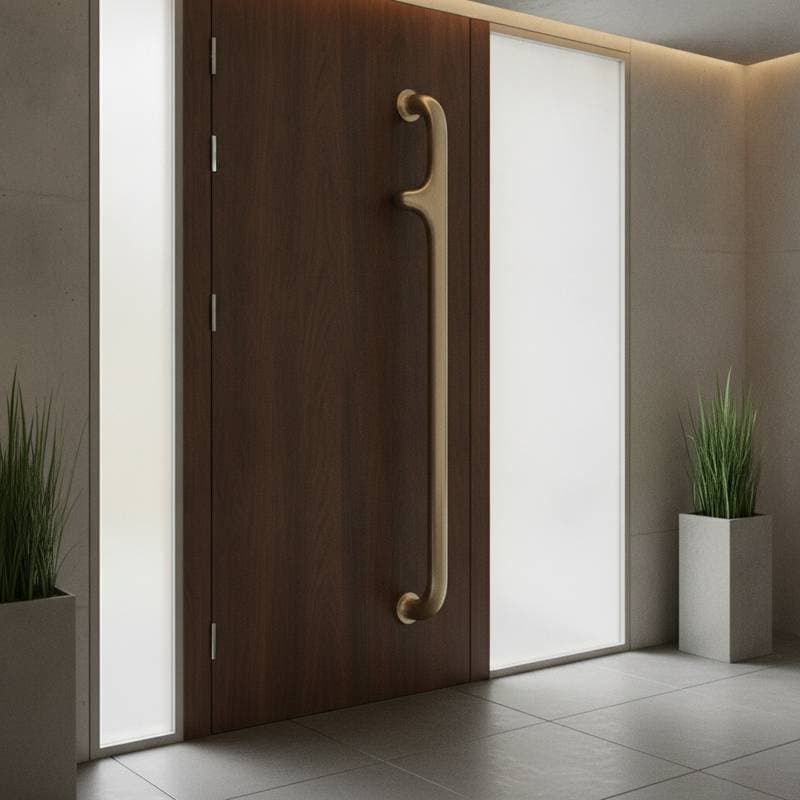
This finish integrates effortlessly with various door types and color schemes. It harmonizes with white oak, walnut, or painted surfaces alike. The subdued black hue enhances neutral walls and provides striking contrast against wooden elements, whereas brass suits primarily traditional or period settings and may conflict with modern palettes.
Professionals frequently suggest blackened steel to achieve uniformity in hinges, handles, and pulls. Such consistency fosters a unified, up-to-date appearance suitable for both rustic farmhouses and sleek minimalist layouts.
3. Alignment with Current Design Trends
Door hardware trends mirror larger shifts in interior styling. Recent years have seen matte surfaces prevail in items from plumbing fixtures to lighting. Blackened steel embodies this move toward refined subtlety, offering impact without the reflectivity of chrome or the vibrancy of brass.
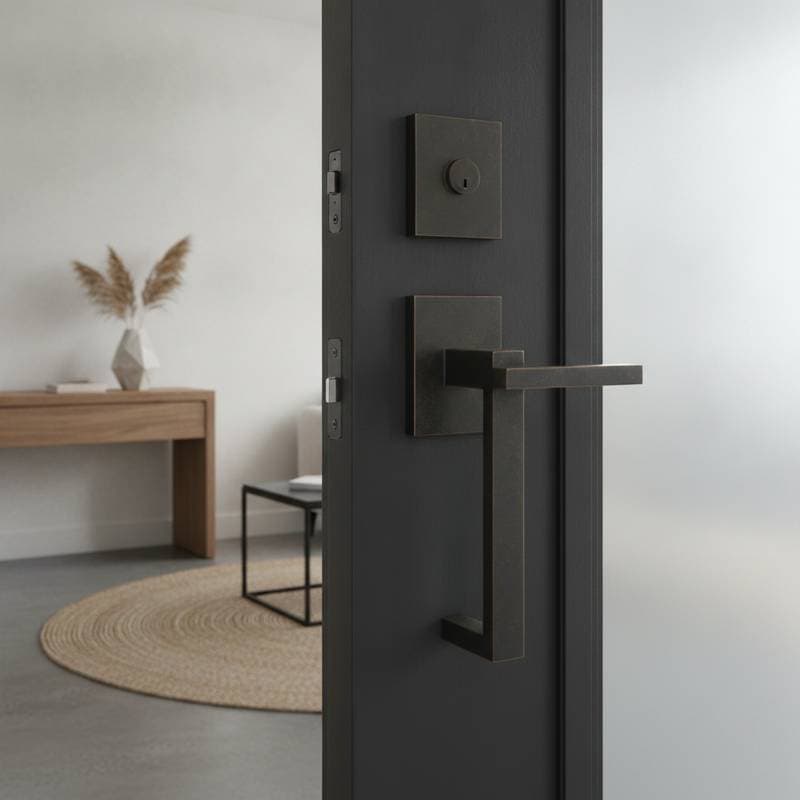
Users also value the tactile qualities. The surface of blackened steel feels smooth and cool, conveying premium construction standards.
Evaluating Long-Term Material Performance
Selecting door hardware demands insight into aging characteristics. Factors like surface treatment, protective layers, and core composition determine endurance within household settings.
| Feature | Blackened Steel | Brass |
|---|---|---|
| Corrosion Resistance | Excellent, enhanced by coatings | Good, yet susceptible to tarnish |
| Scratch Resistance | High | Moderate |
| Cleaning Frequency | Minimal | Frequent |
| Color Stability | Highly consistent | Alters through oxidation |
| Eco-Friendliness | Utilizes recycled steel frequently | Recyclable, though sourcing varies |
Blackened steel typically receives a black oxide or powder-coat application. These methods form a barrier against rust, performing reliably in moisture-prone areas such as bathrooms. Brass resists corrosion inherently but interacts with atmospheric elements, developing a darkening patina. While some embrace this evolution, many opt for the unchanging profile of blackened steel.
Practical Installation and Compatibility Guidance
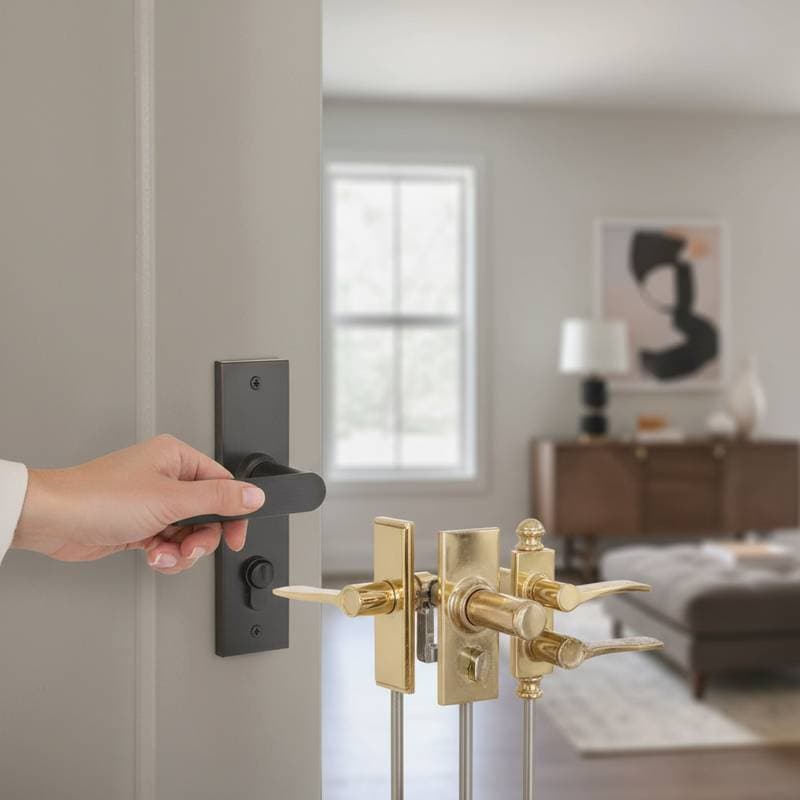
Transitioning from brass to blackened steel hardware involves minimal disruption. Standard dimensions in contemporary levers and hinges allow for direct replacement, often without additional boring or modifications. Existing mounting holes and strike plates can typically remain in place.
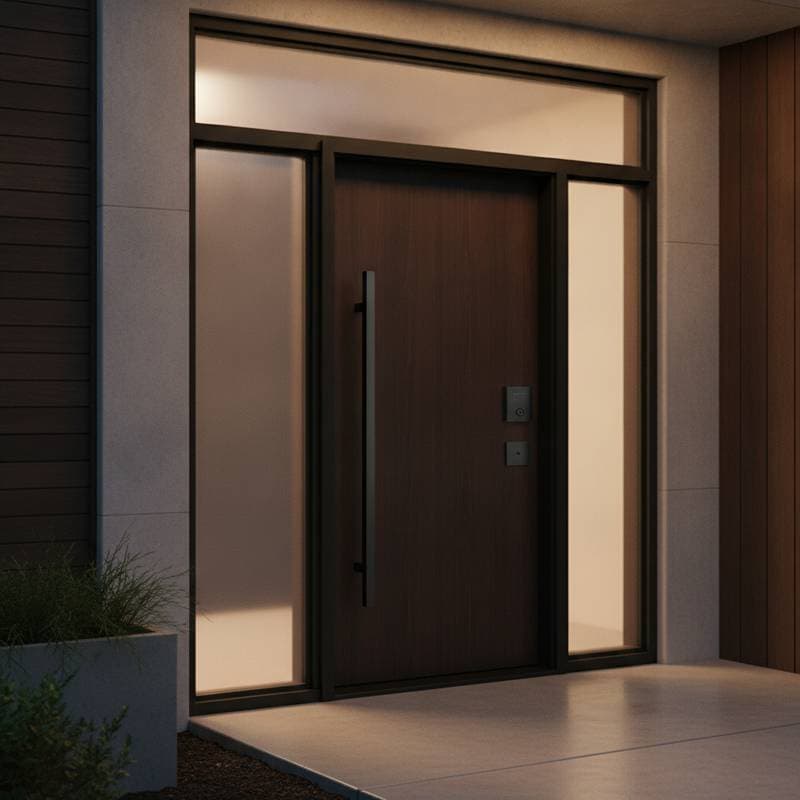
For entryway applications, select blackened steel options featuring moisture-repellent treatments. Interior components endure standard conditions effectively, but exterior ones demand safeguards against weather exposure. Verify compliance with ANSI grading for durability and lock integrity.
Hiring a specialist costs $60 to $100 per door, covering disassembly, alignment, and testing. Self-installation requires screwdrivers, a level, and shims, with emphasis on even positioning to guarantee reliable latching.
Essential Maintenance Strategies
Blackened steel demands little effort to preserve its condition. Wipe surfaces weekly with a damp cloth and gentle detergent to remove dust. Steer clear of solvents or scrubbers that might compromise the coating; for enhanced luster, apply a light mineral oil layer sparingly.
Brass maintenance proves more involved. Exposure to air triggers tarnish, manifesting as a brownish or verdant layer. Removal via polishing pastes revives the gleam but gradually erodes the material, potentially altering feel and shade after repeated applications.
Professional Perspectives on Emerging Preferences
Experts in design and construction link blackened steel's ascent to both visual merits and practical demands. Buyers increasingly seek options that blend with eclectic elements like polished concrete, stone accents, and subdued cabinet fronts.
“People are done polishing their door handles,” observes designer Marisa Holt of Holt Studio. “They want something that stays beautiful with minimal effort. Blackened steel gives that luxury look without the upkeep.”
Market analytics confirm the momentum. Suppliers indicate that blackened variants comprise over 50 percent of matte hardware transactions. Construction firms now default to this finish in new builds, supplanting the former prevalence of polished brass.
Steps to Integrate Blackened Steel in Your Space
Updating hardware with blackened steel combines value, resilience, and enduring style. Begin by auditing current doors to identify compatible sets, then procure matching pieces for hinges, knobs, and escutcheons to ensure visual harmony.
This approach suits targeted refreshes or comprehensive overhauls. As preferences solidify around low-effort sophistication, blackened steel positions itself as a strategic enhancement for lasting home appeal.