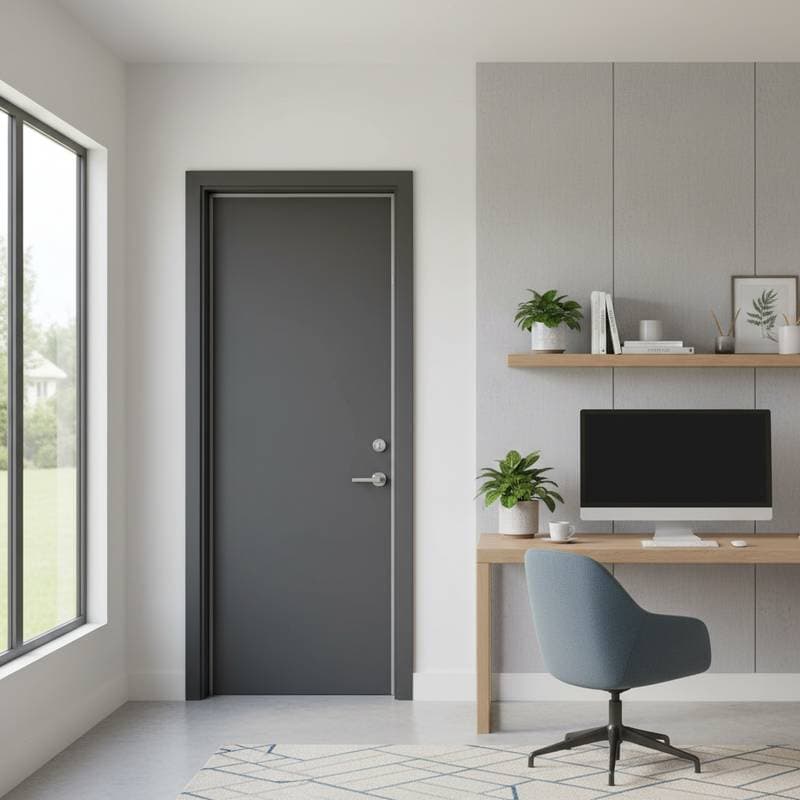
Quiet Your Home Office: Acoustic Doors Cut Noise 80%
Creating a quiet and productive home office often comes down to controlling sound. Even in well-designed spaces, unwanted noise from other rooms, outdoor traffic, or household activities can disrupt focus. Acoustic doors provide one of the most effective ways to reduce sound transfer between spaces.
These specialized doors can cut noise by as much as 80 percent. They turn a busy household into a workable environment for concentration, calls, and creative tasks. Understanding how they work, what options exist, and how to integrate them into your home helps ensure both comfort and long-term value.
Understanding Acoustic Doors
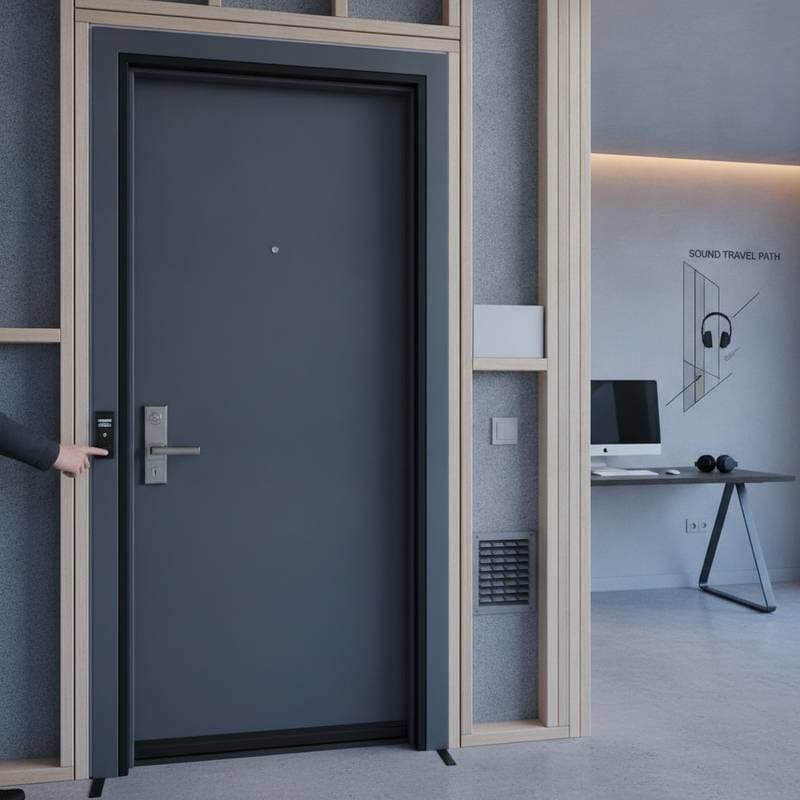
An acoustic door resists the passage of sound through dense materials and carefully sealed edges. Unlike standard hollow-core interior doors, it blocks and absorbs sound waves with solid cores, layered construction, and precise gaskets that prevent air gaps.
Performance is measured by the Sound Transmission Class rating. Standard interior doors rate around 25 to 30. Acoustic doors reach 40, 50, or higher depending on materials and installation. For most home offices an STC range between 40 and 45 delivers substantial improvement.
Why Sound Control Matters for Home Offices
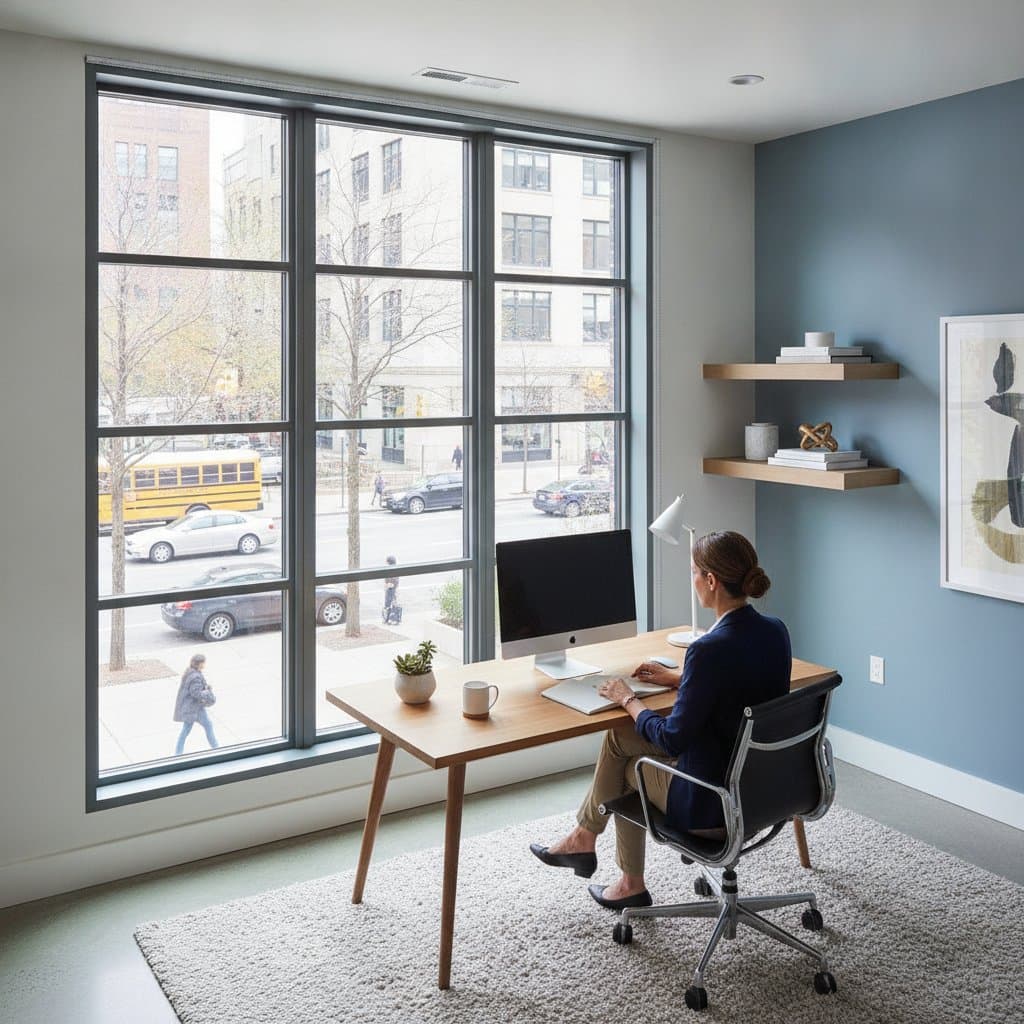
Working from home introduces challenges from children playing, kitchen appliances, and conversations in other rooms. Video meetings make background noise especially noticeable. An acoustic door creates a physical and psychological boundary between work and home life.
The quieter environment supports focus and reduces fatigue. It also allows clearer communication during calls. Other household members can move freely without constant concern about disturbing work.
Core Construction and Materials
The effectiveness of an acoustic door depends on its internal composition. Several core types offer different levels of performance, weight, and cost.
- Solid wood provides good density and a classic appearance.
- Solid composite balances weight and sound resistance at moderate cost.
- Mineral core delivers exceptional quieting and fire resistance.
- Layered laminate offers an affordable step up from hollow-core doors.
Choose the core based on noise levels in adjacent rooms and the tasks performed in the office.
Seals and Frames
Even the best door core fails if air leaks around the edges. Acoustic doors use specialized perimeter seals and thresholds to close gaps. Some models include drop-down seals that engage when the door shuts.
The frame must be rigid and properly fitted. Contractors often apply acoustic sealant between the frame and wall to maintain an airtight bond. Verify that the installer understands these details before work begins.
Surface Finishes and Style Options
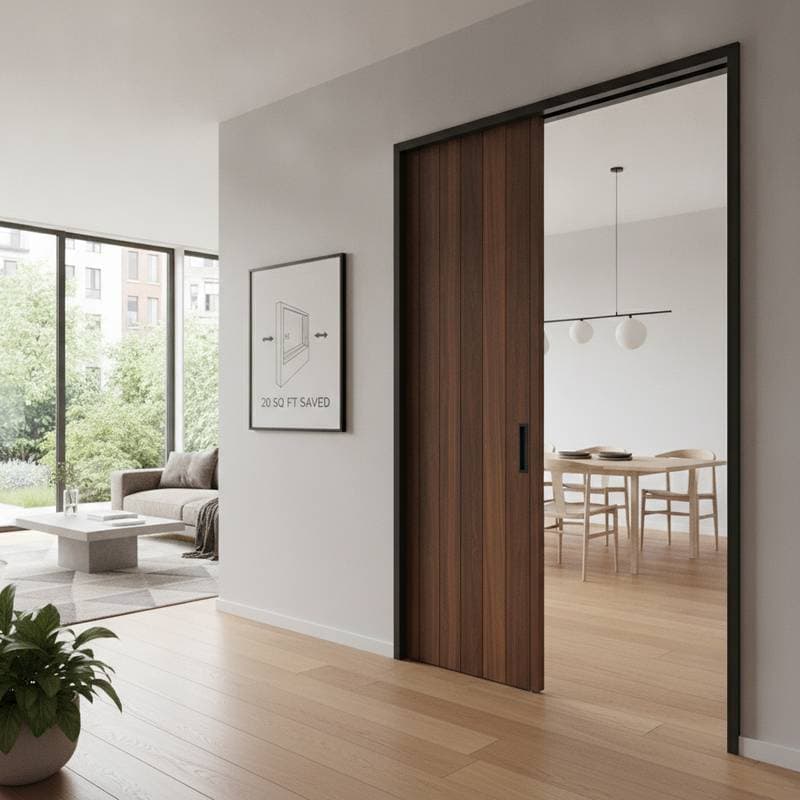
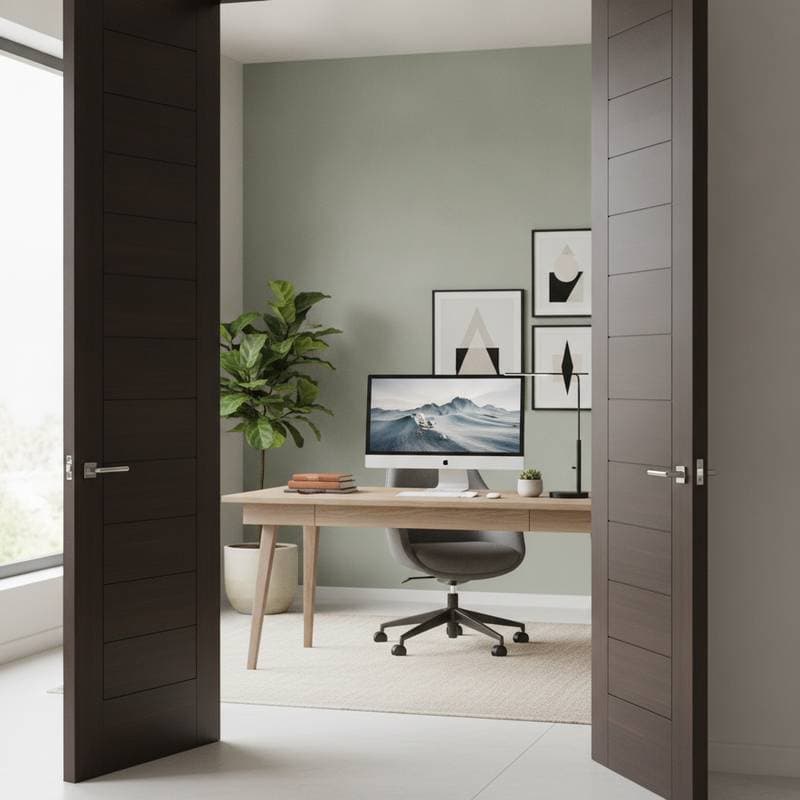
Acoustic doors come in painted surfaces and natural veneers that match standard interior designs. Finishes that resist fingerprints and clean easily work best for a home office. Heavier doors require durable hinges and latches.
Lever handles provide smooth operation. Magnetic latching systems maintain tight closure without excessive force. When style and sound control combine effectively the result feels both elegant and practical.
Comparative Performance and Cost
Investing in an acoustic door requires balancing upfront expense against long-term benefits. Standard solid-core doors offer moderate noise control at lower cost. Mid-grade acoustic doors suit offices near living spaces. Premium models deliver higher STC ratings for frequent meetings or audio recording.
Installation Process and Key Phases
Proper installation ensures the door performs as intended. The process follows several phases.
- Measure the existing doorway accurately and decide whether the current frame can be reused.
- Clear the area and verify the floor is level before applying acoustic backing.
- Position and anchor the door and frame, then apply acoustic sealant around the perimeter.
- Install hardware and test for tight closure and smooth operation.
- Finish trim and paint only after performance is verified.
Common Mistakes to Avoid
Several missteps reduce results when homeowners attempt soundproofing upgrades. Using standard frames that lack acoustic seals is a frequent error. Skipping acoustic sealant between the frame and wall allows sound to leak. Selecting lightweight cores fails to block mid-frequency sounds. Ignoring thresholds leaves gaps at the bottom where sound travels easily.
Maintenance and Care
Acoustic doors require minimal upkeep. Regular cleaning with mild solutions preserves finish quality. Check seals periodically to ensure they remain flexible and in full contact. Replace worn seals promptly. Lubricate hinges annually and avoid slamming the door.
Lifestyle and Aesthetic Integration
A quiet home office contributes to mental clarity. Acoustic doors define the workspace while complementing interior design. They are available in various wood species, colors, and panel styles. For open-concept homes some models include laminated acoustic glass inserts that allow light to pass while reducing noise.
Environmental and Energy Considerations
Acoustic doors improve energy efficiency by sealing air gaps that contribute to heat loss. Their dense cores provide natural insulation. Homeowners concerned about sustainability can select models made with certified wood or recycled materials.
Matching Your Needs
Selecting the right acoustic door depends on noise levels in adjacent rooms, desired quietness for specific tasks, available budget, style preferences, and existing wall and floor construction. A homeowner near a busy living area may need a higher STC rating than someone with a detached office.
Working with Contractors
When hiring a contractor request evidence of prior experience with acoustic installations. Ask about materials used, perimeter sealing methods, and post-installation testing. Professional installers can provide documentation of STC ratings and manufacturer warranties.
Long-Term Value and Resale Considerations
Sound control improvements enhance property appeal. Buyers increasingly value flexible spaces that support remote work. An acoustic door signals thoughtful design and attention to comfort. It becomes a permanent feature that continues to perform with minimal maintenance.
Preparing for Installation
Before scheduling installation confirm that the wall opening and floor area are ready. Remove obstructions and ensure electrical switches or trim will not interfere with door movement. Complete nearby painting or remodeling first to prevent damage to the door finish.
Selecting the Right Door for Your Workspace
Review noise sources, budget limits, and style goals before making a final choice. The right acoustic door creates a lasting boundary that supports productivity and comfort for years to come.