Acoustic Doors for Effective Noise Control
Quiet spaces have become essential in homes filled with open layouts and daily activity. Acoustic-rated doors offer a practical way to limit sound transfer between rooms without major construction. These doors use dense cores, edge seals, and precise frames to reduce noise while fitting standard interior styles.
How Acoustic Doors Work
Sound Transmission Class ratings, known as STC, measure how well a door blocks noise. Standard hollow-core doors score low and allow most sound to pass. Solid-core and engineered acoustic models reach higher STC values that noticeably reduce voices, music, and household sounds.
Performance depends on the core material, perimeter seals, and frame fit. Dense cores such as mineral board or MDF absorb vibrations. Seals close gaps that let sound leak through. Proper installation prevents air movement around the edges, which directly affects results.
Material Choices
Several materials suit different needs and budgets.
- Solid wood offers natural density and warmth for traditional rooms.
- Engineered cores made of MDF or composites provide stable performance and resist warping.
- Metal-clad doors with insulated cores deliver high STC ratings for demanding spaces.
- Laminated panels work well in modern offices or minimalist homes.
Engineered options often balance cost, consistency, and acoustic results better than solid wood in humid climates.
STC Ratings by Room Type
Choose ratings based on the noise level and room use.
- STC 25-30 suits basic privacy in bedrooms or guest rooms.
- STC 30-35 handles normal conversation in home offices.
- STC 35-40 reduces television and raised voices in nurseries or media rooms.
- STC 40 and above provides strong control for studios or shared walls.
Match the rating to actual needs to avoid overspending on unnecessary performance.
Installation Steps
Acoustic doors require careful fitting. An installer first measures the opening and checks wall support. Old frames are removed and the space is leveled. The new door and frame are set as one unit with heavy-duty hardware. Final checks confirm even seal compression and smooth operation.
Homeowners should test the door after installation. Any visible light or air gaps indicate needed adjustments.
Maintenance Practices
Inspect seals twice a year and clean them with mild solution to keep them flexible. Lubricate hinges regularly to avoid misalignment. Follow manufacturer guidance for refinishing wood surfaces. These steps preserve both sound control and appearance over time.
Design and Daily Use
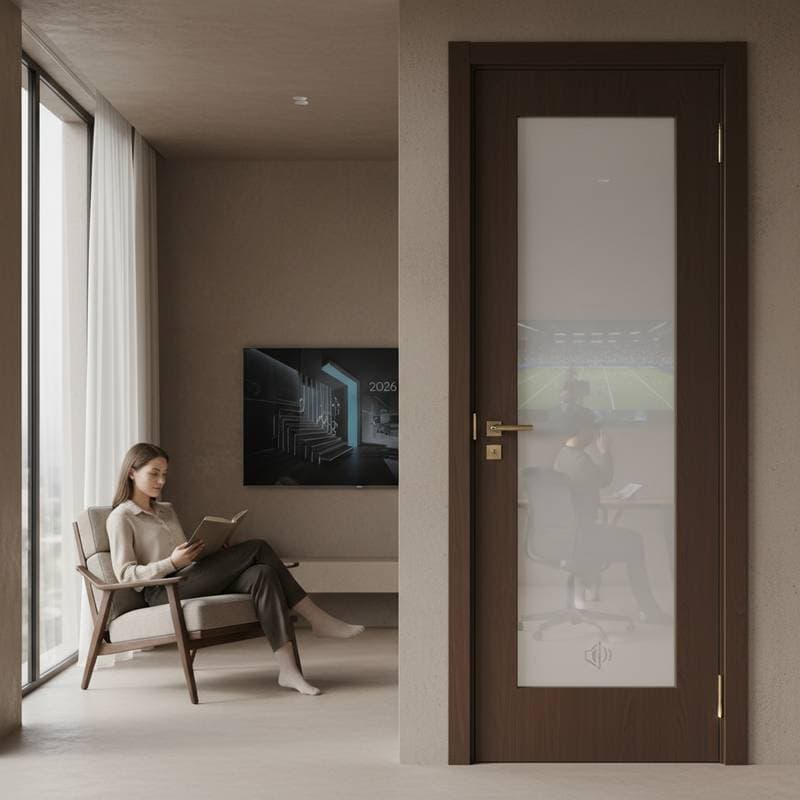
Acoustic doors come in many finishes that match existing trim or modern styles. Veneers, flush panels, and even laminated glass inserts allow light while maintaining privacy. Home offices gain focus, bedrooms stay restful, and multi-generational homes support better privacy.
Reduced background noise also lowers stress and improves concentration throughout the day.
Cost and Selection Guidance
Prices rise with higher STC ratings and specialized hardware. Include installation and frame upgrades in the budget. Compare total value rather than purchase price alone. An experienced contractor can assess noise sources and recommend the right configuration for each space.
Before accepting the work, verify smooth closing, even seals, and proper latch function. Schedule periodic checks in high-use areas to maintain performance.
Well-chosen acoustic doors add lasting comfort and can increase appeal for future buyers seeking quieter homes.