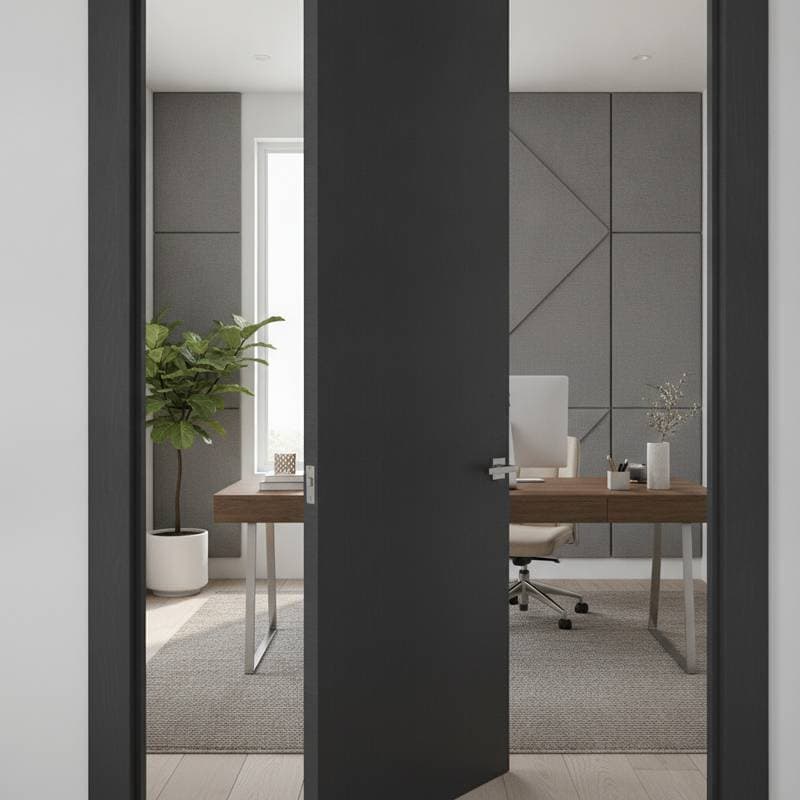
Soundproof Doors Reduce Home Office Noise by Up to 80 Percent
A quiet home office supports steady concentration and lowers daily stress. Many remote workers face interruptions from household activity or street traffic that fragment attention. Soundproof doors address this issue directly by limiting sound transmission up to 80 percent when selected and installed with care.
Core Construction Features
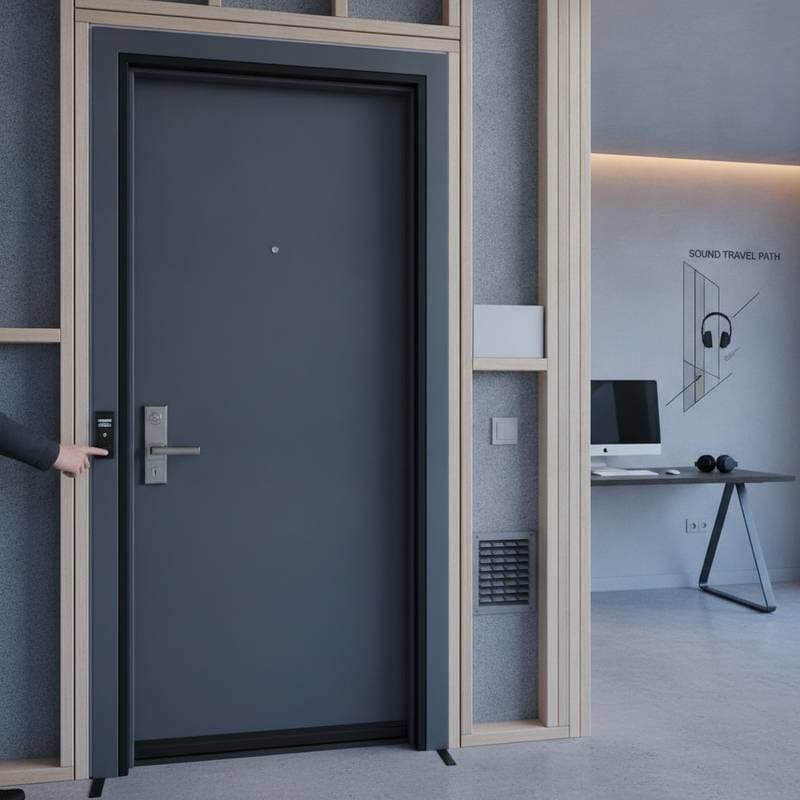
Soundproof doors block noise through added mass and complete perimeter sealing. Solid core construction supplies the density needed to absorb sound waves. Acoustic gaskets line the frame to close air paths, while a bottom sweep eliminates the gap at the floor. Multi layer panels further dampen vibration.
Proper fit determines final performance. A well built door loses effectiveness if the frame allows even small openings.
Material Options and Performance| Door Type| Initial Cost| Expected Lifespan | Maintenance Needs| Recommended Setting|
|------------------------|-------------------|-------------------|-----------------------|-----------------------------------------|
| Solid Wood| Moderate to High| 20+ years| Periodic refinishing| Offices that value natural appearance|
| Solid Core Composite| Moderate| 15+ years| Minimal| Balanced cost and acoustic results|
| Acoustic Laminate| High| 20+ years| Wipe clean only| Highest noise reduction priority|
| Hollow Core| Low| 5 years| Minimal| Avoid for any sound control project|
Homeowners commonly replace hollow core doors during office conversions. The immediate change in sound levels confirms the upgrade.
STC Ratings and Noise Reduction
Sound Transmission Class ratings provide a clear comparison standard. Ordinary interior doors rate between 20 and 25, allowing normal conversation to pass. Quality soundproof models reach 40 to 50, cutting most speech and reducing louder mechanical noise.
Each ten point increase in rating halves the perceived volume. Match the rating to actual noise sources in the home rather than choosing the highest number available.
Pre Installation Assessment
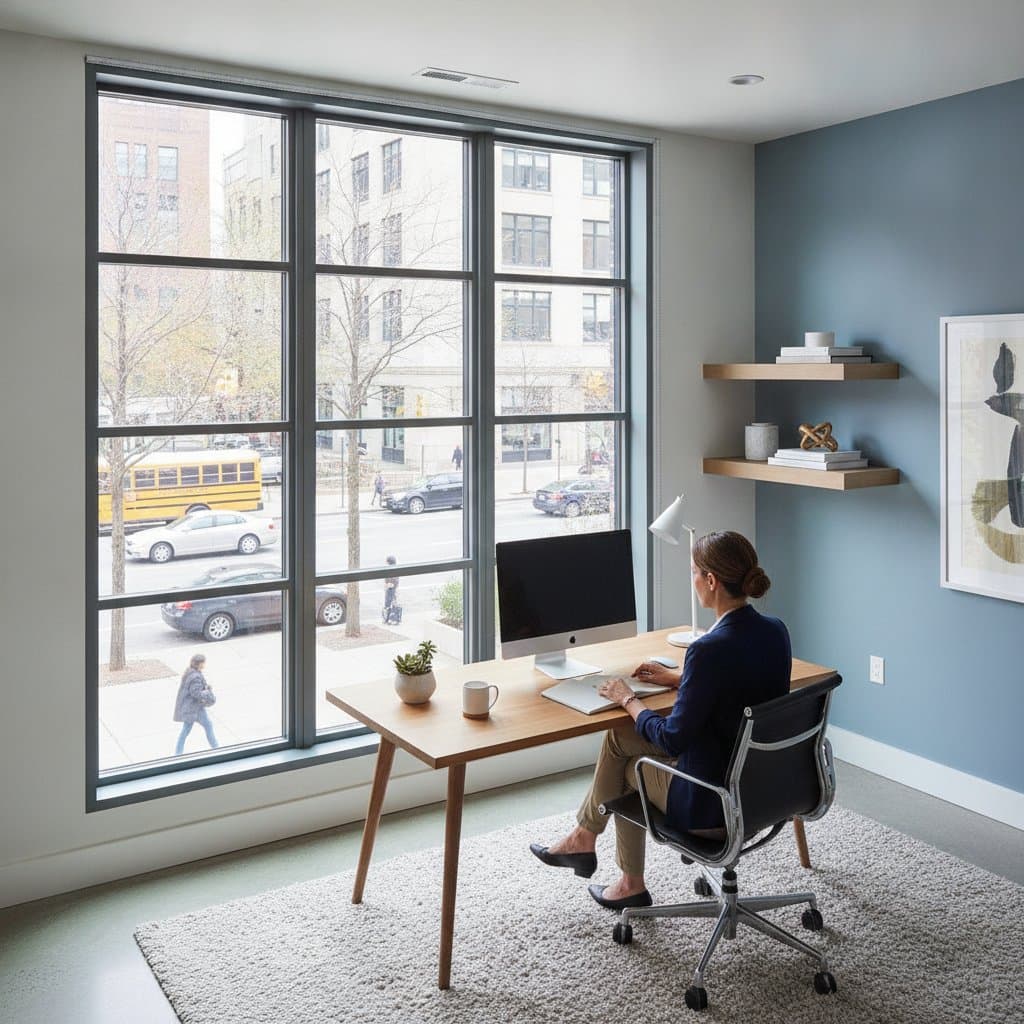
Measure the existing opening and examine wall construction before purchase. Identify primary noise paths, whether from adjacent rooms, hallways, or exterior traffic. Confirm that the wall itself will not undermine door performance.
Select heavy duty hinges and a latch suited to the door weight. Accurate measurements prevent misalignment after hanging.
Installation Sequence
Remove the old frame completely. Set the new acoustic jamb square and secure it to create uniform contact surfaces. Hang the door and adjust for even margins on all sides. Apply perimeter seals and the floor sweep last.
Test the finished assembly by closing the door and checking sound levels from both sides. Address any remaining gaps immediately.
Ongoing Care Steps
Inspect seals and sweeps twice each year. Clean them with mild soap to maintain flexibility. Lubricate hinges to prevent noise from the hardware itself. Realign the door if seasonal movement affects contact.
These checks preserve the original sound rating without major expense.
Cost Evaluation
Higher purchase prices reflect denser materials and specialized hardware. The return appears in fewer distractions, clearer calls, and reduced fatigue during long work periods. Energy savings from better air sealing add a secondary benefit over time.
Design Integration
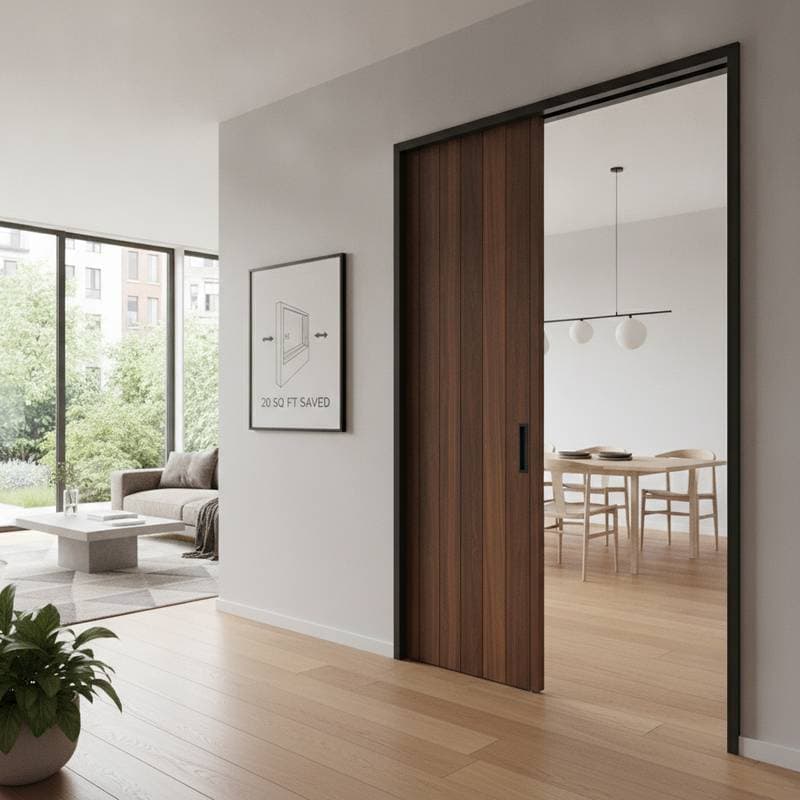
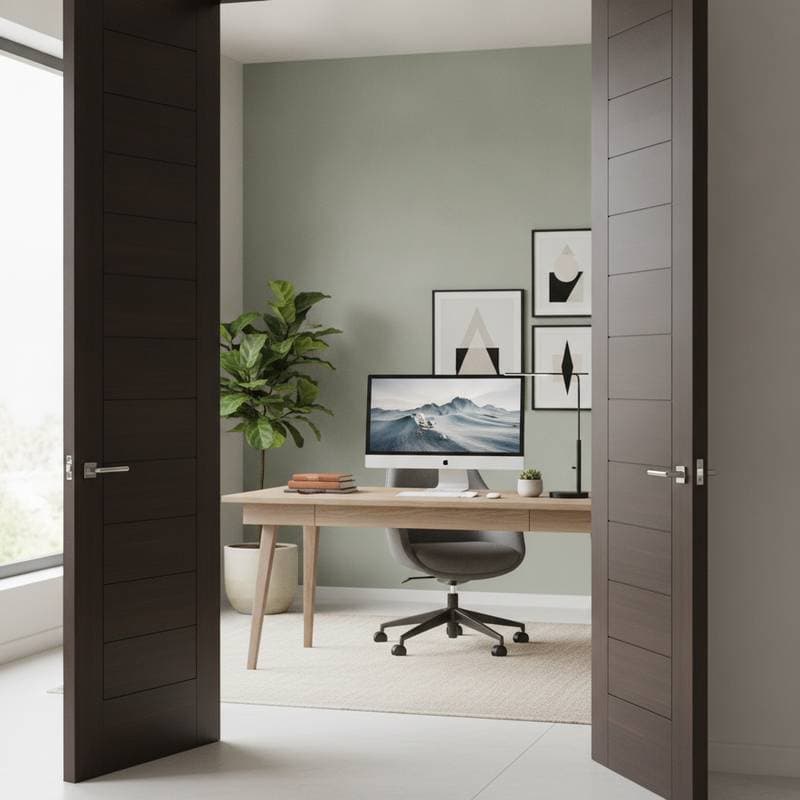
Choose finishes that match surrounding doors and trim. Wood veneers suit traditional rooms, while painted surfaces fit modern spaces. Acoustic glass inserts supply daylight while preserving privacy.
Decision Criteria
List daily tasks and typical interruptions first. Compare STC values against those patterns. Verify that the chosen door fits the frame and floor conditions. Weigh appearance against performance only after confirming acoustic specifications.
Long Term Advantages
Correctly installed doors maintain performance for decades. They also limit drafts and support steady room temperatures. When future remodeling occurs, pair the doors with wall insulation to extend quiet throughout the workspace.