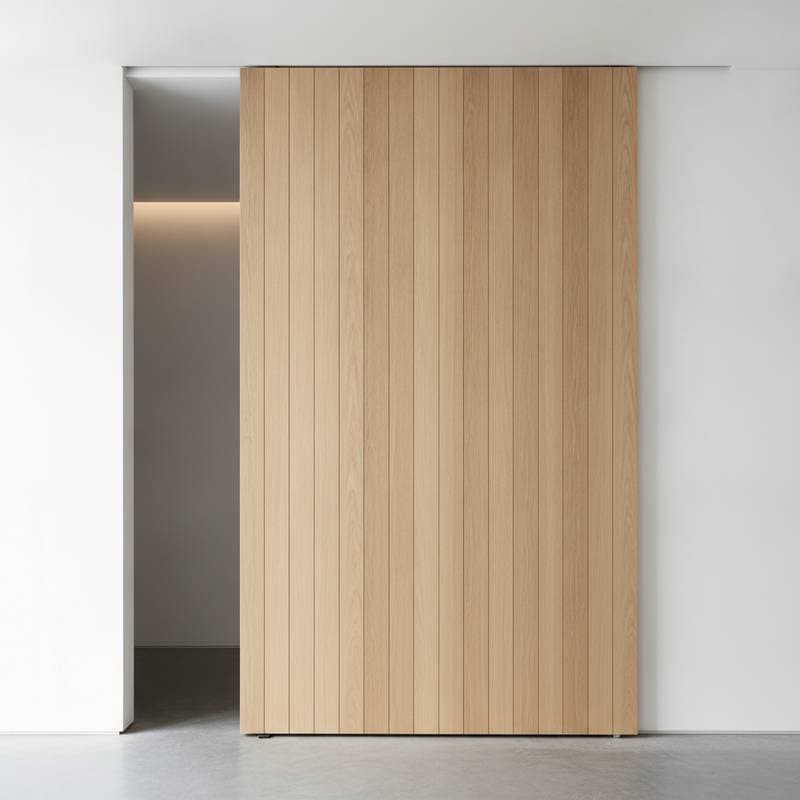
Invisible Tracks Redefine Barn Door Hardware
Barn doors remain popular because they combine practical space saving with distinctive style. Recent hardware advances have shifted focus from exposed industrial components to concealed mechanisms that suit a wider range of interiors.
Evolution of Barn Door Hardware
Early barn door systems used heavy steel tracks mounted on the wall surface. These visible elements created an industrial look but restricted design choices in minimalist rooms. Homeowners later requested quieter movement and hardware that would not interrupt wall planes.
Invisible track systems address these needs by placing the rail inside the ceiling or behind a finished panel. The door still slides laterally, yet the mechanical parts remain out of sight.
How Invisible Track Systems Operate
A recessed aluminum or steel channel holds precision rollers attached to the top of the door. The channel can be mounted within the ceiling joists or behind a header extension. Because the rollers ride inside the channel, the door face stays flush with the surrounding wall when closed.
Installation begins during framing. Blocking must be added to carry the door weight, and the channel must be leveled before drywall or trim is applied. Professional coordination prevents later adjustments that could damage finished surfaces.
Cost and Performance Comparison
| Option | Initial Cost | Expected Lifespan | Maintenance Needs | Ideal Settings |
|---|---|---|---|---|
| Exposed Track | Moderate | 15 plus years | Occasional lubrication | Rustic or industrial rooms |
| Invisible Track | Higher | 15 plus years | Periodic channel cleaning | Modern and transitional spaces |
Higher upfront expense for invisible systems stems from custom framing and specialized components. In return, owners gain reduced visual clutter and quieter daily use.
Design Options and Material Choices
Without visible brackets, doors can continue wall finishes such as painted drywall or wood paneling. This approach creates the appearance of a movable wall section rather than a separate door. Solid wood, glass, and composite panels all function well because no hardware interrupts their surfaces.
Designers often align door height with adjacent cabinetry or window trim. The result maintains consistent horizontal lines throughout the room.
Step by Step Installation Sequence
- Assess wall structure and ceiling height to confirm adequate space for the recessed channel.
- Install blocking between studs to support the track and door weight.
- Mount and level the hidden channel before drywall installation.
- Attach rollers to the door and test travel for smooth, quiet motion.
- Apply final trim and finishes, then verify that no hardware remains visible.
Each step requires precise measurement to avoid binding or gaps after completion.
Maintenance Requirements
Protected rollers collect less dust than exposed hardware. Owners should vacuum the channel opening twice a year and apply a light lubricant to the rollers if movement becomes slightly noisier. These simple tasks preserve performance for many years.
Evaluating Installation Requirements
Homeowners should discuss load requirements with both a door supplier and a framing contractor before ordering materials. Early planning confirms that the chosen door weight can be supported and that electrical or plumbing runs will not interfere with the track location.