Why Barn Doors Fall Short: Flush Pocket Doors Lead in 2026
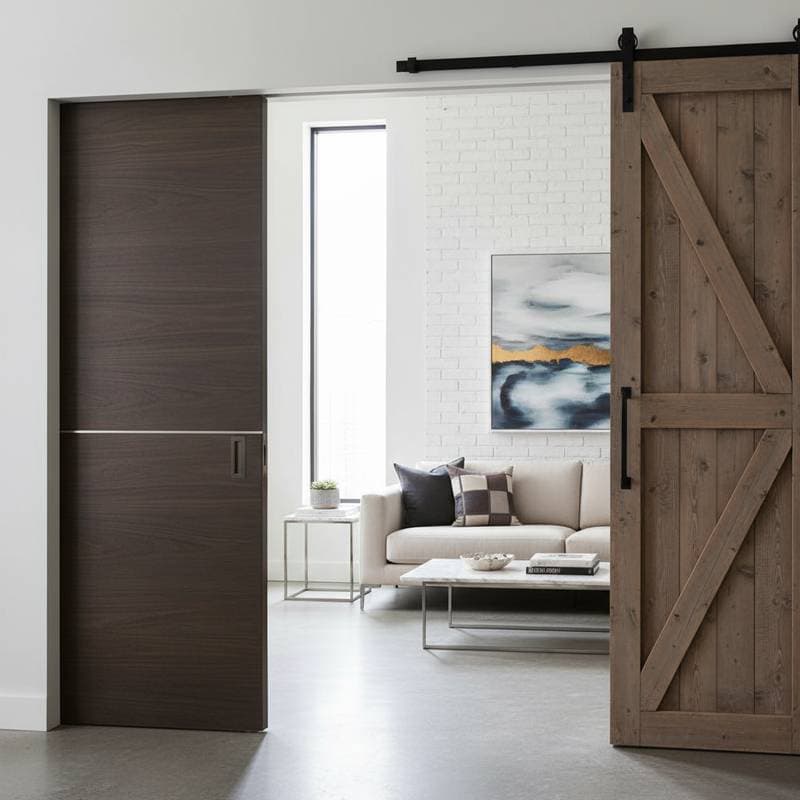
Barn doors captured attention with their rustic appeal, space-saving design, and bold visual impact. Homeowners initially embraced them as a creative alternative to standard hinged doors. However, evolving design standards and practical needs reveal significant limitations in barn doors. The rise of flush pocket doors highlights a preference for seamless integration, enhanced privacy, and reliable performance in contemporary homes.
This shift extends beyond surface-level style. It involves a comprehensive evaluation of how door systems influence daily comfort, acoustics, and spatial dynamics. By examining the drawbacks of barn doors, homeowners gain insights to select enduring solutions that align with long-term living requirements.
The Initial Draw and Emerging Drawbacks
Barn doors emerged as a popular choice due to their distinctive hardware and sliding mechanism. The visible tracks and large panels added texture to otherwise plain spaces. They appeared to optimize room layouts by avoiding the need for swinging clearance. In practice, these elements introduce challenges that diminish their effectiveness over time.
Primary Limitations of Barn Doors
-
Privacy Deficiencies
Barn doors fail to create a complete barrier. Gaps at the sides and bottom permit light, sound, and odors to pass through. In private areas such as bedrooms or home offices, this incomplete enclosure disrupts tranquility and confidentiality. -
Upkeep Demands
Exposed components attract dust and debris, necessitating regular cleaning. Tracks may shift out of alignment, and rollers often produce noise with repeated use. These factors lead to gradual deterioration in both operation and appearance. -
Spatial Constraints
The mechanism demands unobstructed wall space adjacent to the opening for the door to slide fully. This requirement can hinder furniture arrangements and limit decorative options in compact interiors. -
Operational Risks
The weight of the panels poses handling difficulties, particularly for younger or elderly users. Loose fittings on tracks increase the chance of instability or unexpected detachment, introducing potential hazards. -
Style Saturation
The once-unique look has become commonplace in renovations. Many now seek subtler alternatives that enhance rather than overshadow the overall room design.
The Advantages of Flush Pocket Doors
Flush pocket doors align with demands for understated elegance and superior utility. These doors retract fully into the wall when open, eliminating visual obstructions. When closed, they align perfectly with the wall plane, delivering a polished, uninterrupted surface.
Essential Features of Flush Pocket Doors
-
Optimal Spatial Utilization
By concealing the door within the wall structure, pocket systems liberate adjacent areas for practical use. This approach achieves the efficiency barn doors intend without compromising aesthetics or functionality. -
Superior Isolation and Acoustics
Equipped with tight seals and damped closing mechanisms, these doors minimize noise leakage. Advanced models rival solid-core doors in blocking sound, ideal for noise-sensitive environments. -
Seamless Visual Harmony
The flush profile complements minimalist and transitional styles. It integrates effortlessly with wall treatments, promoting a cohesive interior narrative. -
Effortless and Silent Movement
Hidden ball-bearing guides ensure fluid, whisper-quiet traversal. This reliability extends the system's lifespan and enhances user satisfaction. -
Enhanced Security Measures
The enclosed track maintains constant alignment, reducing accident risks. Integrated soft-close functions safeguard against injuries during operation.
Side-by-Side Evaluation
| Feature | Barn Door | Flush Pocket Door |
|---|---|---|
| Space Utilization | Needs clear wall space alongside | Employs wall cavity fully |
| Privacy Level | Compromised by perimeter gaps | Bolstered by comprehensive seals |
| Upkeep Requirements | Regular due to exposed parts | Infrequent with protected elements |
| Acoustic Performance | Limited noise reduction | Effective sound dampening |
| Aesthetic Fit | Rustic, prominent | Contemporary, integrated |
| Longevity | Vulnerable to environmental wear | Shielded for extended durability |
| Safety Profile | Prone to instability | Secure, guided operation |
This table illustrates the practical superiority of flush pocket doors. They address core user needs more effectively than the novelty-driven barn door design.
Installation Essentials
Implementing a flush pocket door demands precise preparation to match architectural constraints. Homeowners benefit from detailed planning to integrate the system without disruptions.
Step-by-Step Implementation
-
Site Assessment
Inspect the wall for obstructions like electrical lines or structural beams. Non-load-bearing walls simplify the process, while others may need engineering input for reinforcement. -
Framing Preparation
Remove interior finishes to create the pocket enclosure. Ensure dimensions allow for square alignment and smooth door travel. Select durable hardware suited to the door's weight and frequency of use. -
Core Assembly
Secure the frame within the cavity, then mount the panel with adjustable hangers. Fine-tune the path to eliminate friction points before enclosing the structure. -
Performance Verification
Test the full range of motion, seal integrity, and closing dynamics. Address any deviations to guarantee consistent operation from the outset. -
Finishing Touches
Apply matching surface materials and trim. Periodic checks on guides and seals maintain peak condition with minimal effort.
Durability and Ongoing Care
Exposed elements in barn doors accelerate wear from daily exposure. Finishes erode, and mechanisms falter under accumulation of particles. Flush pocket doors protect internal parts, sustaining performance across years.
Care Overview
| Element | Barn Door | Flush Pocket Door |
|---|---|---|
| Cleaning Frequency | Often required for tracks | Sporadic for visible surfaces |
| Adjustment Needs | Frequent realignments | Occasional tweaks |
| Surface Resilience | Prone to damage | Concealed from direct contact |
| Overall Lifespan | Moderate | Extended |
| Total Ownership Cost | Elevated through repairs | Economical long-term |
The enclosed design of pocket doors translates to fewer interventions and sustained value.
Selecting the Ideal Solution
Evaluate room functions to determine suitability. Pocket doors excel in tight spaces or areas needing acoustic separation, such as studies or guest rooms. They support fluid transitions without visual dominance.
For warmer aesthetics, opt for paneled variants that echo wood grains while preserving flush benefits. This customization ensures alignment with personal style preferences.
Enduring Benefits and Market Appeal
Flush pocket doors prioritize timeless utility over fleeting trends. Their refined execution withstands changing tastes, contributing to home longevity.
In property transactions, such features appeal to discerning buyers who value subtlety and efficiency. They elevate perceived quality, distinguishing a residence in competitive markets.
Partnering with Professionals
Engage contractors versed in concealed installations for optimal results. Precision in measurement and assembly prevents costly adjustments later.
Professional Selection Guide
- Conduct wall analysis at the outset
- Review specific hardware specifications
- Explore customization for closure and seals
- Mandate pre-purchase measurements
- Oversee structural integration
- Validate functionality prior to completion
Clear expectations foster a seamless collaboration and superior outcomes.
Final Decision Framework
Assess daily routines alongside design goals when choosing interior divisions. Flush pocket doors provide dependable privacy and flow for most modern applications. Barn doors suit low-stakes, decorative uses where full enclosure proves unnecessary.