Acoustic Doors for Quieter Home Offices
Remote work requires sustained concentration, clear communication, and a workspace that supports both scheduled meetings and independent tasks. Household noise disrupts each of these elements. Conversations from adjacent rooms, television audio, kitchen activity, pets, and street traffic travel through weak doors and surrounding gaps.
Acoustic doors reduce this disruption when selected and installed correctly. Claims of an 85 percent noise reduction apply to controlled testing with a complete door assembly, not every room or installation. Real results depend on the door rating, wall construction, seals, hardware, and sound paths around the opening.
Understanding these factors helps homeowners select a practical solution instead of assuming that a heavy door alone will create a soundproof room.
What Makes an Acoustic Door Different
A standard interior door often has a hollow core, lightweight frame, and limited sealing around its edges. Sound travels through the thin panel and escapes through the clearance beneath the door. An acoustic door uses a solid or composite core, dense facing materials, perimeter seals, and a drop seal at the bottom.
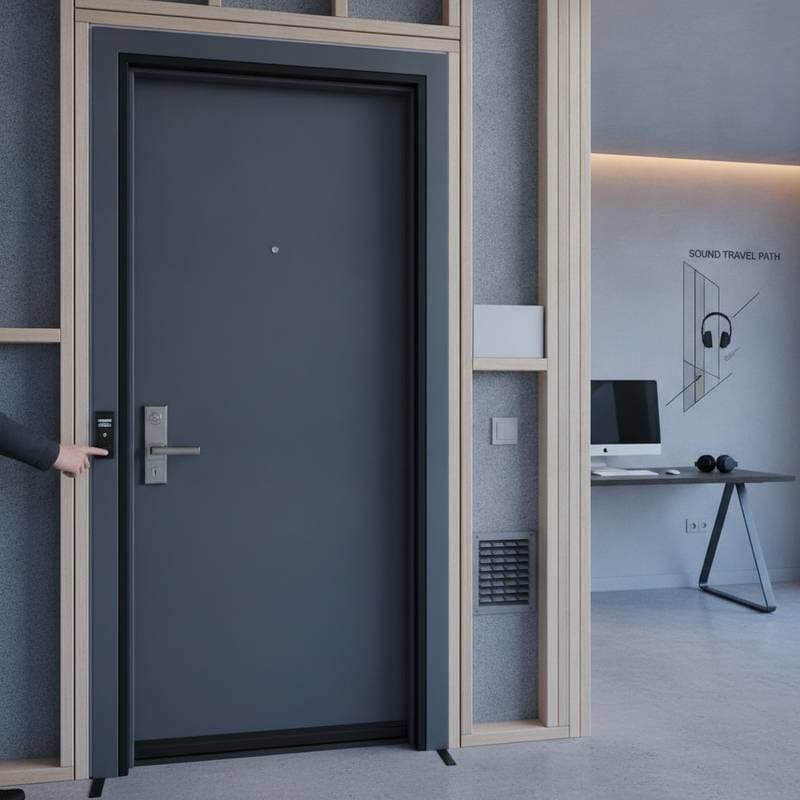
The complete assembly should be evaluated as one system. A strong door placed in a lightweight partition may provide less privacy than expected. Electrical outlets, vents, borrowed light panels, and gaps around the frame can also reduce performance.
Look for a tested sound transmission rating, often called STC, and ask whether the rating applies to the full installed assembly. A higher rating can improve speech privacy, but it does not guarantee silence. Low frequency sounds, such as bass or mechanical vibration, may pass through walls and floors even when voices are well controlled.
Comparing Door Options
| Door type | Initial cost | Durability | Maintenance | Best for |
|---|---|---|---|---|
| Hollow core | Low | Limited | Basic hardware care | Low noise sensitivity |
| Solid wood | Medium to high | Strong | Refinishing and seal checks | Traditional interiors |
| Composite acoustic | Medium to high | Strong | Seal and hardware inspection | Home offices and media rooms |
| Specialty sound rated | High | Strong | Professional service recommended | High privacy requirements |
Solid wood can provide useful mass and an attractive appearance, though its performance depends on construction and sealing. Composite acoustic doors often deliver more consistent results and can include specialized frames. Specialty assemblies may make sense for recording, counseling, or confidential work, but their cost and installation requirements can be excessive for ordinary office use.
What the Project Involves
A professional installer should begin by assessing the wall, frame opening, floor condition, and nearby sound paths. The assessment should also identify whether the existing wall can support a heavier door and stronger hinges.
Preparation may include removing the current door, repairing the rough opening, reinforcing framing, and correcting an uneven floor. The installer then fits the frame, sets the hinges, hangs the slab, and adjusts the latch. Perimeter seals must compress evenly without making the door difficult to operate. A bottom drop seal should meet the threshold across its full width.
Quality checks include operating the door several times, inspecting light leaks, testing the latch, and confirming that the seals remain engaged when the door is closed. If the office still sounds noisy, the next investigation should include walls, ceilings, ventilation routes, and adjoining doors.
Lifestyle and Practical Considerations
A sealed acoustic door can make video calls more private and reduce distractions during focused work. It may also limit airflow, daylight, and the ability to hear children, visitors, or alarms. A person who needs to monitor the rest of the home may prefer moderate sound reduction rather than a highly sealed enclosure.
Door weight affects daily use. Children, older adults, or anyone with limited mobility may find a heavy slab harder to open. Lever hardware can be easier to operate than a round knob, while a closer may prevent the door from being left open accidentally. Glass panels improve visibility and natural light, but they usually reduce acoustic performance unless they use specialized laminated construction.
Aesthetic choices matter as well. Wood veneer, painted composite surfaces, flush panels, and traditional profiles can all support a cohesive interior design. The selected finish should tolerate frequent hand contact and cleaning, especially in a shared household workspace.
Cost, Codes, and Installation Risks
Costs depend on door size, rating, frame changes, hardware, wall repairs, and regional labor rates. A replacement slab may be relatively simple when the existing frame is sound. A complete rated assembly costs more and may require carpentry, electrical adjustments, or permit review.
Local building requirements can affect bedroom egress, ventilation, fire separation, and accessibility. An acoustic door should not block a required exit or replace a fire rated assembly with an unapproved product. Ask contractors for written scope details, product documentation, labor charges, and warranty terms.
Avoid selecting a door based only on a dramatic percentage claim. Ask what frequency range was tested, whether the result applies to the installed assembly, and what conditions are required to maintain the rating. A contractor should explain how wall construction and adjacent openings may limit performance.
Choosing What Works Best
Start by identifying the noise source and the level of privacy required. If the main problem is hallway conversation, a solid door with continuous seals may provide a noticeable improvement. If traffic, plumbing, or mechanical noise enters through the wall, door replacement alone will not solve the issue.
Prioritize a complete assembly when confidentiality matters. Choose moderate performance when convenience, ventilation, and budget carry equal weight. Consider professional installation for heavy doors, new frames, specialty seals, or altered wall openings. DIY work may be suitable for a straightforward solid door replacement, but poor alignment can create gaps that weaken the result.
Maintaining Acoustic Performance
Regular inspection keeps acoustic performance consistent over time. Check perimeter seals for compression and wear every six months. Replace worn seals promptly to prevent sound leaks. Lubricate hinges and drop seal mechanisms to maintain smooth operation. Test the door after any household changes that might affect the opening, such as new flooring or wall modifications. Schedule professional service when seals no longer compress evenly or when hardware shows signs of failure.