Why Barn Doors Fall Short and Pocket Doors Excel
Barn doors appeared in numerous design publications and renovation programs. Homeowners valued their rustic character, which combined contemporary elements with nostalgic touches. However, as initial excitement fades, users recognize that barn doors frequently underperform in routine applications. Pocket doors, previously viewed as outdated, now emerge as a reliable, space-efficient, and aesthetically refined option. This transition aids homeowners in selecting doors that align with their environments and daily needs.
Initial Appeal and Practical Challenges of Barn Doors
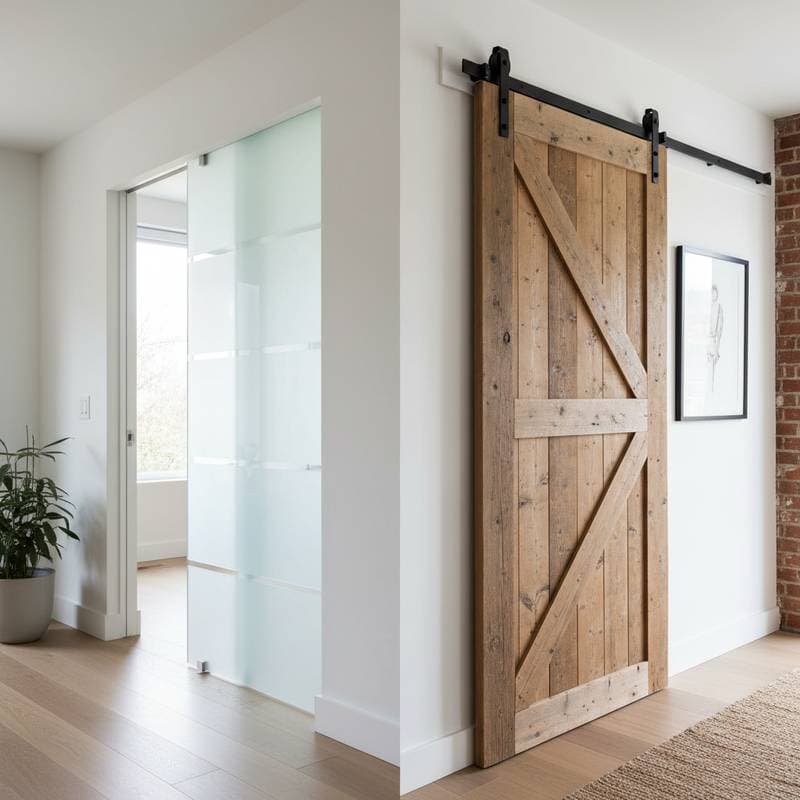
Barn doors attract attention through bold visual impact. They slide along exposed tracks, introducing texture and a crafted appearance to rooms. These doors appear to address space constraints by avoiding the swing of traditional models. In reality, challenges arise that diminish their effectiveness.
Key drawbacks include privacy, noise, and sealing issues. Positioned outside the wall, barn doors fail to seal completely against the frame. Gaps persist along the edges, permitting light and sound to penetrate. Such features reduce suitability for areas like bathrooms, bedrooms, or home offices that demand seclusion. The visible track mechanism may also produce noise or require frequent tightening. Proper setup demands ongoing tweaks to sustain fluid movement.
Wall space presents another concern. Barn doors necessitate unobstructed areas adjacent to the doorway for sliding. Items such as light switches, wall art, or furniture cannot interfere. In compact residences or rooms with constrained layouts, this demand proves restrictive. A solution intended to conserve space often imposes new limitations.
The Resurgence of Pocket Doors
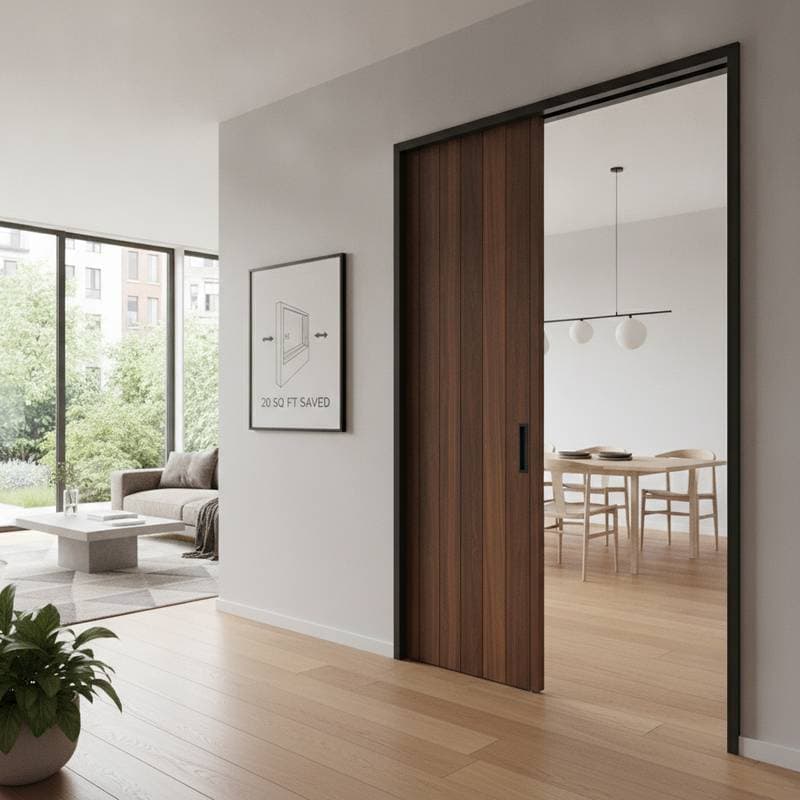
Pocket doors address several shortcomings of barn doors. They slide into a recess within the wall rather than along its surface. When opened, the door vanishes completely, freeing the entire adjacent wall for use. When closed, it aligns with a frame equipped with seals and latches to ensure privacy and acoustic isolation. This integrated approach suits those pursuing streamlined, unobtrusive designs.
Current design trends favor minimalism, rendering visible hardware less desirable. Pocket doors provide elegance and utility without prominence. They adapt to classic or contemporary contexts, offering enduring versatility.
Functionality and Maintenance Comparison
Comparing barn doors and pocket doors reveals clear preferences for the latter.
| Door Type | Space Efficiency | Privacy | Maintenance | Best Use |
|---|---|---|---|---|
| Barn Door | Moderate; needs wall clearance | Limited; gaps remain | Requires track adjustments | Decorative dividers or closets |
| Pocket Door | Excellent; utilizes wall recess | Strong; includes seals | Minimal after installation | Bathrooms, offices, compact spaces |
Pocket doors demand precise planning during building or remodeling, as walls must include a dedicated recess. Existing structures may complicate installation if utilities occupy the space. Nonetheless, correct implementation yields dependable performance with little upkeep. Barn doors install more simply but necessitate consistent care to preserve alignment and smoothness.
Long-Term Performance and Everyday Practicality
Door longevity extends beyond material strength to include support for daily routines. Pocket doors endure well, with internal components shielded from exposure. Barn doors show aging through dust accumulation on rollers and tracks, alongside visible deterioration. These factors influence both aesthetics and user contentment over time.
Pocket doors fit smaller dwellings, versatile rooms, and privacy-focused zones. They enable adaptable furniture arrangements and full wall access. Barn doors suit open layouts or as stylistic separators in communal areas. Selection should prioritize function over fashion for each specific setting.
Key Steps for Pocket Door Installation
Pocket door setup involves meticulous framing and precise leveling. The wall recess requires clearance from any obstacles, and the track demands straight alignment for effortless operation. Professionals often handle installation to secure durability. Superior systems feature sturdy rollers, bolstered frames, and mechanisms that close gently to avoid abrupt stops.
Selecting the Ideal Door Solution
Choices between barn and pocket doors hinge on core needs. Barn doors deliver stylistic flair when appearance takes precedence over utility in select spots. Pocket doors prevail when seclusion, resilience, and spatial optimization rank highest. Renovation plans should account for upkeep and future modifications.
Achieving Enduring Interior Harmony
Design fads evolve, yet consistent usability endures. Evaluate doors based on future performance needs. A properly fitted pocket door ensures silent function, complete seclusion, and a refined look that integrates seamlessly across years. Barn doors retain appeal for certain stylistic applications, though real-world constraints have gained recognition.