Japandi Entryways: Serene, Balanced, and Timelessly Modern
Japandi design emerges as a cornerstone for entryway aesthetics, combining the inviting warmth of Scandinavian simplicity with the poised tranquility of Japanese minimalism. This fusion establishes a deliberate sense of arrival, rooted in intention and profound hospitality. Emphasis falls on crisp lines, organic materials, and a harmonious color scheme that instills peace even before visitors cross the threshold.
Homeowners appreciate how this aesthetic unites visual appeal with everyday utility. Japandi entryways remain free of clutter while radiating invitation, elegant yet straightforward in upkeep. The style adapts seamlessly to city dwellings or rural escapes, delivering an enduring appearance that stays contemporary without harshness.
Three Approaches to Achieve the Japandi Aesthetic
Budget-Friendly Approach ($2,000 - $4,000)
- Materials: Select painted fiber-cement siding in subdued neutrals like warm white, mist gray, or pale taupe. Pair it with an economical fiberglass door mimicking wood grain and featuring straightforward vertical panels.
- Cost-Effective Strategies: Repaint current trim in a subtle black or rich brown to introduce contrast, rather than replacing windows entirely. Opt for matte-finish black hardware to unify the overall look.
- Strategic Investment: Allocate funds toward superior exterior lighting that emits warm light, highlighting textures and hues effectively at dusk.
Mid-Range Approach ($5,000 - $9,000)
- Material Combinations: Blend smooth cedar siding with composite panels for enhanced resilience. Choose a genuine wood door showcasing clear vertical grain, sealed with a warm natural stain.
- Key Performance Enhancements: Incorporate energy-efficient windows framed in slim black aluminum cladding. These elements add a modern touch while optimizing thermal insulation.
- Valuable Design Additions: Install horizontal wood slats or a sleek awning to define the entrance and build visual depth.
Premium Approach ($10,000 - $18,000)
- High-Quality Materials: Employ thermally modified ash or Accoya wood siding for superior durability. Complement it with a bespoke solid oak or walnut pivot door, equipped with hidden hinges and a natural finish.
- Refined Details: Integrate full-height glass sidelights or a transom window to permit gentle daylight entry while upholding privacy.
- Sustainability Focus: Apply robust finishes such as factory stains and marine-grade sealants to shield natural elements from environmental wear, retaining their inherent warmth.
Guide to Materials and Finishes
- Windows: Opt for slim-frame designs in matte black, bronze, or deep charcoal to align with Japandi tones. Casement or fixed-pane options with minimal grids foster rhythmic visuals without excess. Steer clear of elaborate mullions; prioritize balanced proportions instead.
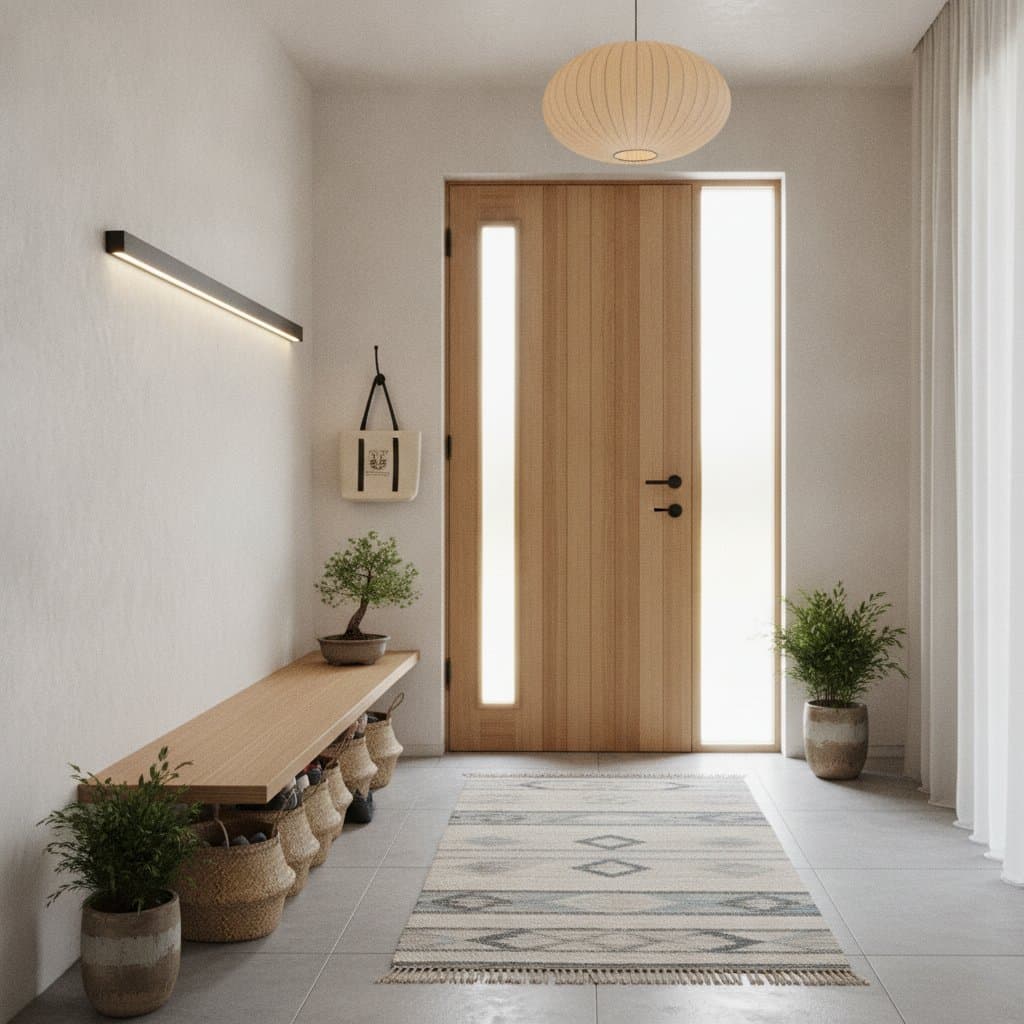
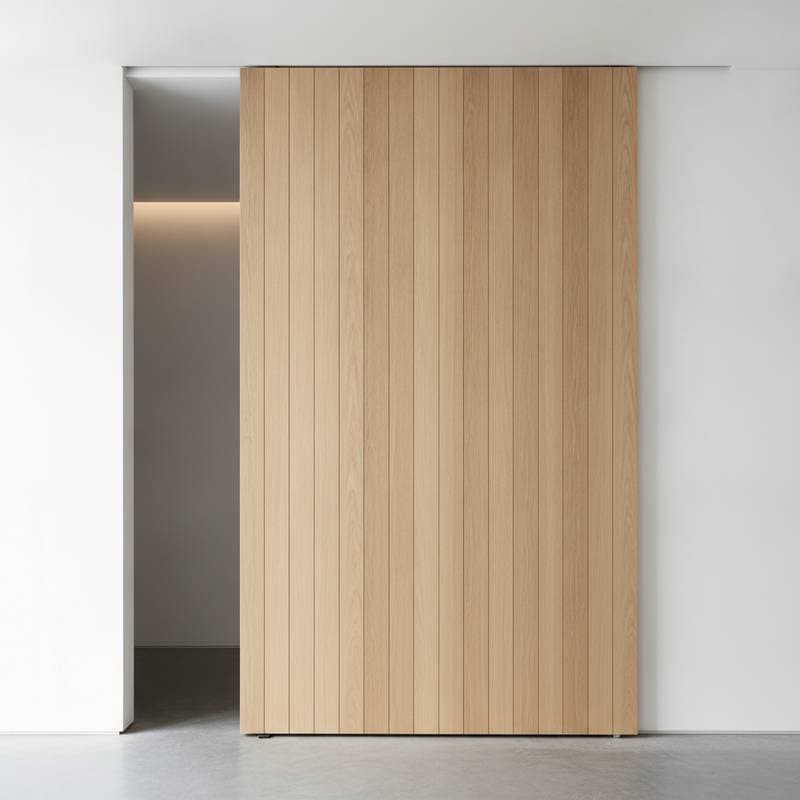
- Doors: Flat-panel or vertical-slat wood doors serve as perfect choices. Finishes in light oak, beech, or smoked walnut introduce texture and coziness. For added privacy, incorporate frosted glass panels or slim sidelights that diffuse light softly.
- Siding: Authentic wood defines the style, yet low-maintenance options like engineered wood or textured composite panels replicate the effect. Limit colors to gentle neutrals such as sand, clay, or stone gray.
- Trim and Accents: Maintain trim at a minimum to uphold clean silhouettes. Black or bronze hardware harmonizes with varied finishes. Select lighting fixtures in geometric forms and matte metal shades.
Practical Maintenance Considerations
Japandi honors the integrity of materials, yet natural surfaces demand regular care. Authentic wood doors and siding require resealing at intervals to avert moisture intrusion. Composite substitutes minimize maintenance and sustain uniform color, although they forgo the nuanced patina of true wood. Metal frames for windows resist distortion but benefit from routine cleaning to clear debris from edges.
Durable stains paired with UV-resistant coatings safeguard the serene, earthy hues essential to the aesthetic. Residents in humid areas benefit from engineered options that combat expansion. In arid zones, unprotected wood fades rapidly; thus, protective layers prove vital to sustain warmth and equilibrium.
Common Pitfalls to Sidestep
- Excessive Ornamentation: Japandi thrives on moderation. Refrain from intricate glasswork, bulky hardware, or elaborate planters. Focus on select items that amplify simplicity.
- Texture Imbalance: An abundance of sleek surfaces risks a clinical feel. Introduce varied tactility through wood grains, stone pathways, or woven mats for comforting depth.
- Proportional Oversights: Oversized doors or fixtures dominate compact spaces. Maintain modest scaling to preserve overall harmony.
- Inferior Material Choices: Low-cost synthetic wood imitations degrade under exposure. Favor mid-tier engineered alternatives that deliver authentic texture and endurance.
- Upkeep Neglect: Failure to reseal wood or polish hardware accelerates deterioration. Establish a quarterly routine to ensure the entry retains its purposeful polish.
Coordinating Colors and Styles
Japandi palettes draw from nature, emphasizing soft equilibrium over bold clashes. The aim centers on unified tranquility.
Recommended Palette:
- Soft Clay: A warm neutral that complements wood elements seamlessly.
- Charcoal Black: Ideal for frames and fixtures, anchoring lighter tones.
- Pale Driftwood: Subtle gray infused with warmth, suitable for siding or borders.
- Natural Oak: Prominent shade for doors and focal panels.
- Stone White: Crisp yet gentle base that highlights adjacent textures.
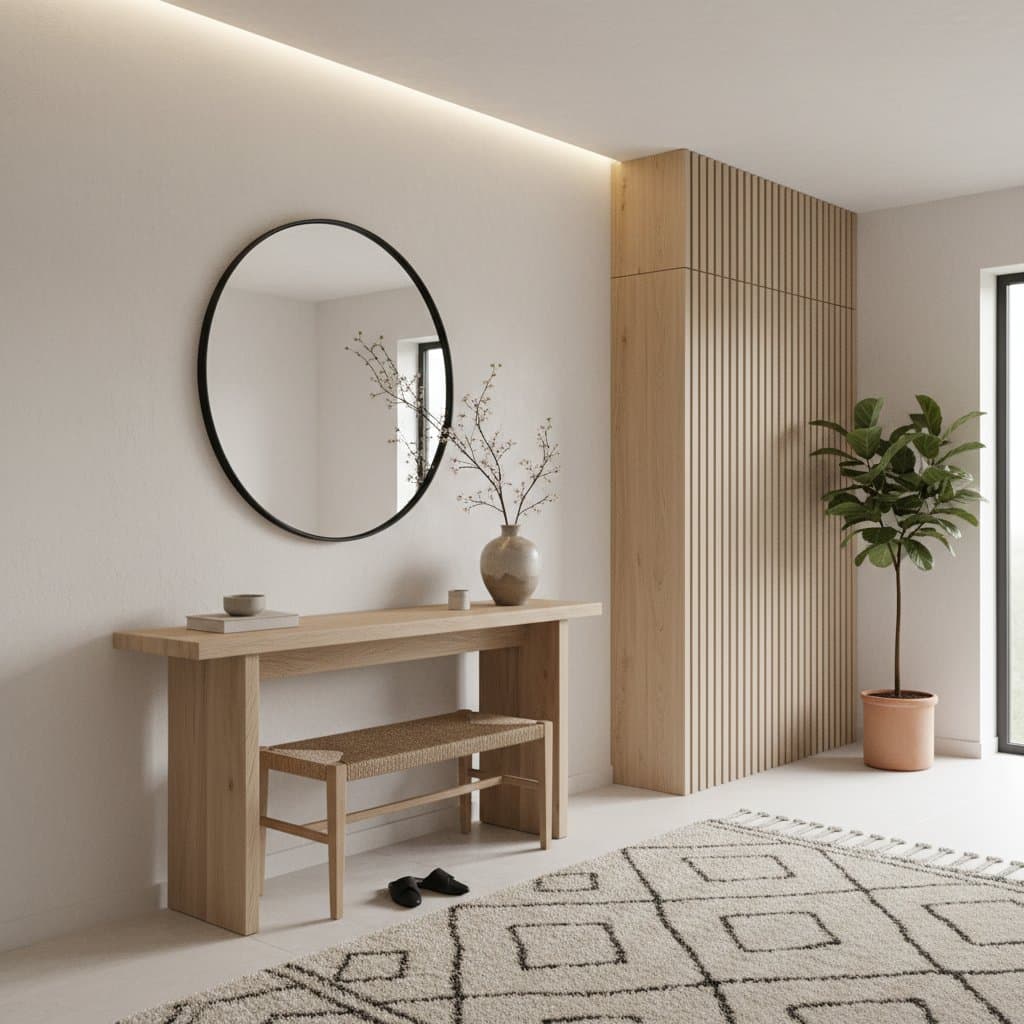
Organic accents enhance the scene. Consider a potted olive or unadorned concrete seat to foster balance sans excess. Lighting ought to diffuse gentle radiance, bolstering the restful ambiance.
Checklist for Entryway Planning and Photography
Homeowners prepare best by thoroughly documenting their facade prior to decisions or professional consultations. Precise imagery supports scaled choices and material synergy.
Essential Steps:
- Capture present exterior images from diverse perspectives, encompassing broad views and detailed material shots.
- Document structural features like roof profiles, trim contours, and porch components.
- Assess local surroundings and potential HOA guidelines affecting hues or door styles.
- Evaluate environmental influences such as sunlight, precipitation, or saline air for finish selections.
- Establish financial boundaries upfront, identifying priorities like efficiency, aesthetics, or upkeep reductions.
Realizing Harmony in Your Entryway
A Japandi entryway transcends mere decoration; it embodies mindful existence and meticulous artistry. Proper implementation harmonizes aesthetics and purpose, yielding a perennial highlight that invites without imposition.
Natural elements, muted shades, and exacting details enable homeowners to craft a peaceful portal that endures through time. From modest refreshes to comprehensive overhauls, core tenets persist: restraint, poise, and genuineness.
When components from window coatings to handle grips align with this ethos, the outcome manifests as a threshold of composure, elegance, and seamless integration into daily rhythms. Japandi endures by honoring perception and ecology, delivering lasting allure independent of fleeting fashions.