Reclaimed Barn Beams: Creating a Rustic Entryway for Around $8,000
Reclaimed barn beams offer a unique blend of historical depth and natural warmth that elevates any entryway. Homeowners choose this feature for its enduring craftsmanship and environmental benefits, turning a simple threshold into a captivating welcome. Suitable for farmhouse renovations or contemporary spaces, these beams create a focal point that harmonizes age-old textures with current aesthetics. A full project, encompassing materials, professional labor, and essential finishes, typically ranges from $7,000 to $9,000.
This installation merges artistic expression with practical engineering. The following sections outline key cost elements, material considerations, step-by-step installation, design inspirations, and upkeep strategies to guide your project toward success.
Factors Influencing Project Costs
Multiple elements determine the expense of a reclaimed beam entryway. Gaining insight into these allows for precise budgeting and informed decisions that prevent unexpected expenses.
Sourcing Genuine Reclaimed Materials
Authentic beams originate from deconstructed barns, industrial buildings, or historic mills, featuring woods such as oak, Douglas fir, or heart pine. Prices increase for beams from century-old structures due to scarcity and the effort involved in ethical sourcing. Opt for verified suppliers to ensure sustainability; imitation products, while cheaper at $20 to $40 per linear foot, fail to capture the irregular knots and patina of true reclaimed wood, which commands $50 to $100 per linear foot.
Dimensions and Volume of Beams
Beam dimensions play a significant role in overall pricing. Thicker profiles, such as 8x10 inches, demand more raw material and specialized transport. A standard 12-foot beam might weigh 200 pounds, necessitating equipment for safe positioning. Calculate needs based on your entryway's span; for a 10-foot-wide space, two to four beams could total $2,500 to $4,000 in materials alone, with labor scaling accordingly.
Engineering for Structural Integrity
In older residences, existing frameworks may require upgrades to bear the load of dense timber. Professionals often incorporate steel reinforcements or additional joists, costing $1,000 to $2,000 depending on complexity. Consult a structural engineer early to assess your home's capacity and comply with local building codes, ensuring safety without compromising the rustic visual.
Protective Finishes and Treatments
Sealing enhances longevity by guarding against humidity and insects. Choose penetrating oils for a subtle sheen that preserves the wood's story, or durable polyurethanes for high-traffic areas. Application labor adds $500 to $1,000, but these steps prevent warping and maintain the beam's integrity over decades.
Step-by-Step Installation Guide
Professional installation ensures precision, given the beams' heft and the need for flawless alignment. While basic prep work suits DIY enthusiasts, full execution demands expertise to avoid structural issues.
Initial Assessment and Cleaning
Begin with a thorough examination of each beam for embedded hardware like spikes or wire. Remove these using specialized tools, then employ industrial sanders to smooth surfaces without erasing the characteristic weathering. Apply borate-based treatments to eradicate pests, followed by a vacuum to clear debris, preparing the wood for secure mounting.
Planning the Layout and Support System
Map the beam positions on ceilings or walls, considering sightlines and traffic flow. Install plywood blocking or metal struts within walls to distribute weight evenly, preventing future shifts. This phase, often taking one to two days, forms the foundation for a stable installation.
Precise Cutting and Securing
Trim beams on-site with circular saws to fit exact measurements, allowing for expansion gaps. Fasten using galvanized hardware concealed behind trim for a seamless appearance. Align grains across joints to mimic a continuous piece; in load-bearing spots, integrate adjustable hangers for ongoing adjustments.
Final Sealing and Detailing
After positioning, wipe down surfaces and apply chosen finishes in thin coats, allowing 24 hours between layers for curing. Test for even coverage, and incorporate elements like corbels for added support and style. This completes the transformation, ready for daily use.
Inspiring Design Concepts
Adapt reclaimed beams to your space's architecture and personal taste. These approaches provide versatility for various entryway sizes.
-
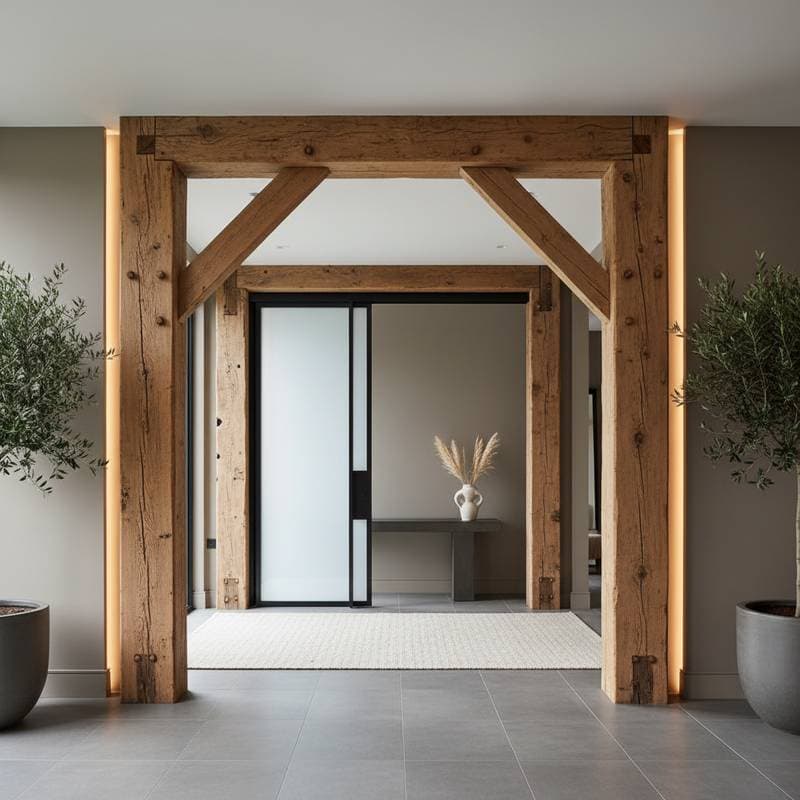
Symmetrical Portal Frame: Position parallel beams overhead with flanking posts to define the entrance, fostering a sense of enclosure and balance.
-
Intersecting Ceiling Grid: Arrange beams in a crosshatch pattern to introduce layered depth, ideal for open-plan foyers.
-
Beam-Paneled Ensemble: Integrate beams with matching shiplap panels for a unified wall-to-ceiling effect that amplifies texture.
-
Illuminated Accents: Embed LED strips or hang industrial lanterns from beams to accentuate the wood's contours at night.
-
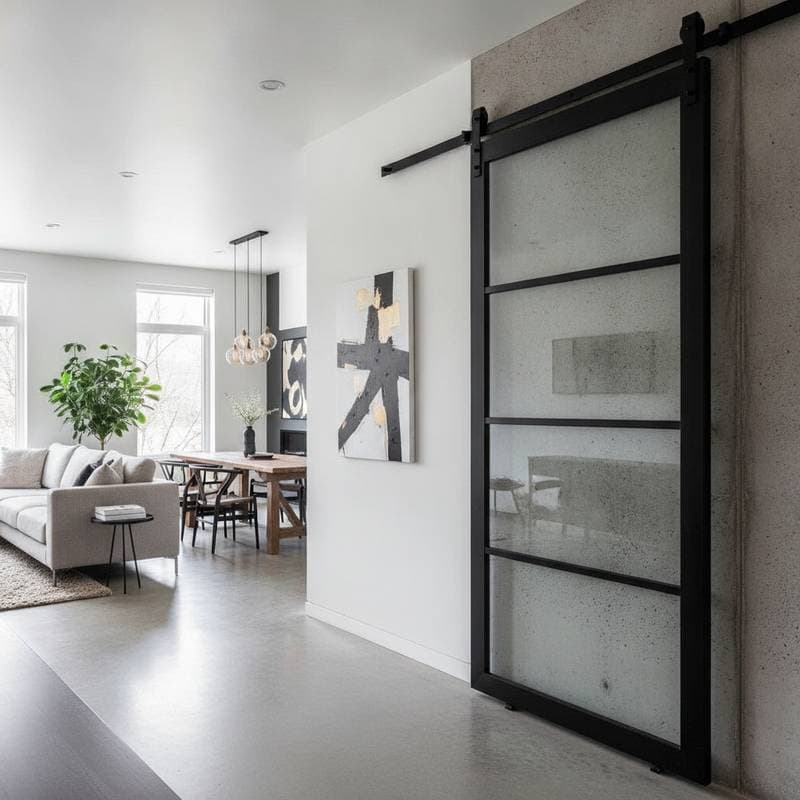
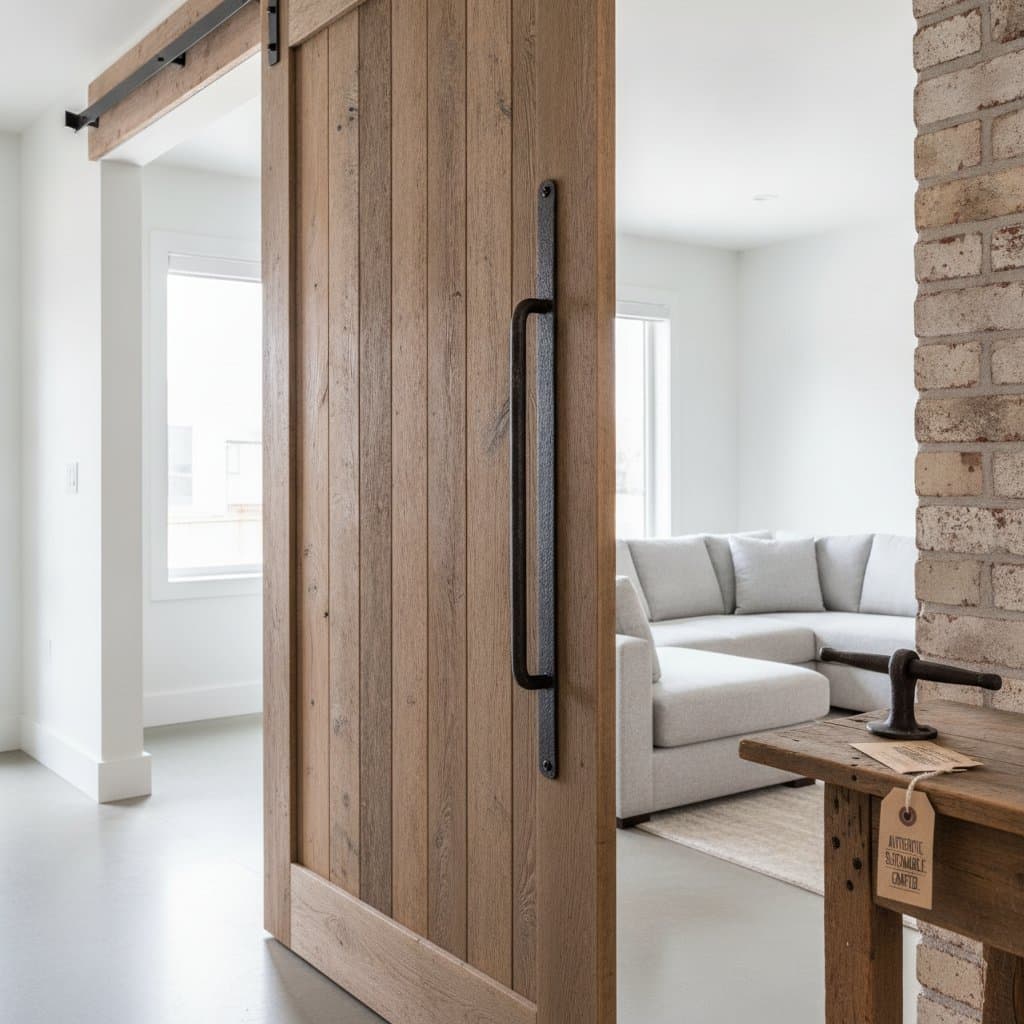
Hybrid Material Pairings: Offset the beams' earth tones against sleek metal doors or polished concrete floors for contemporary contrast.
Scale these ideas proportionally; measure your entryway's height and width to select beam depths that avoid overwhelming the area. Coordinate with hardware finishes, such as wrought iron, to unify the palette.
Advancing Your Project Forward
Embarking on a reclaimed barn beam entryway project honors sustainable practices while crafting a distinctive home feature. The $8,000 average outlay yields enduring value through enhanced curb appeal and narrative-rich interiors. Partner with certified salvage providers for beams that carry verifiable provenance, minimizing environmental impact.
Engage contractors experienced in historic materials to navigate challenges like irregular shapes and weight distribution. They provide tailored recommendations on sealants that highlight the wood's narrative without alteration. Beyond aesthetics, this upgrade fosters a welcoming atmosphere infused with authenticity, enriching your living space for years ahead.