Evaluating Reclaimed Barn Wood Doors Priced at Eight Thousand Dollars
Reclaimed barn wood doors serve as focal points in many custom homes. Their texture, grain, and historic character provide authenticity that new materials seldom achieve. At a cost near eight thousand dollars per door, homeowners must assess value through material quality, installation demands, lifestyle alignment, and durability over time.
Factors Behind Elevated Pricing for Reclaimed Barn Wood
Pricing for these doors accounts for the full recovery and fabrication process. Timber comes from dismantled barns and historic buildings. Workers perform careful disassembly, scan for metal, and clean surfaces while retaining original character.
Each board then undergoes hand milling, planing, and sealing. Limited supply of authentic reclaimed stock adds to the expense, especially for oversized or custom configurations.
Cost and Performance Comparison with New Wood Options
Homeowners benefit from direct comparison when weighing an eight thousand dollar reclaimed door against alternatives.
- Reclaimed barn wood: Initial cost around eight thousand dollars, lifespan exceeding forty years, occasional refinishing required, suited to custom or eco focused projects.
- Solid hardwood: Initial cost between one thousand and four thousand dollars, lifespan over thirty years, periodic sealing needed, appropriate for traditional durable interiors.
- Engineered wood: Initial cost between five hundred and fifteen hundred dollars, lifespan of twenty to twenty five years, minimal upkeep, best for budget stable environments.
Design Fit and Daily Living Implications
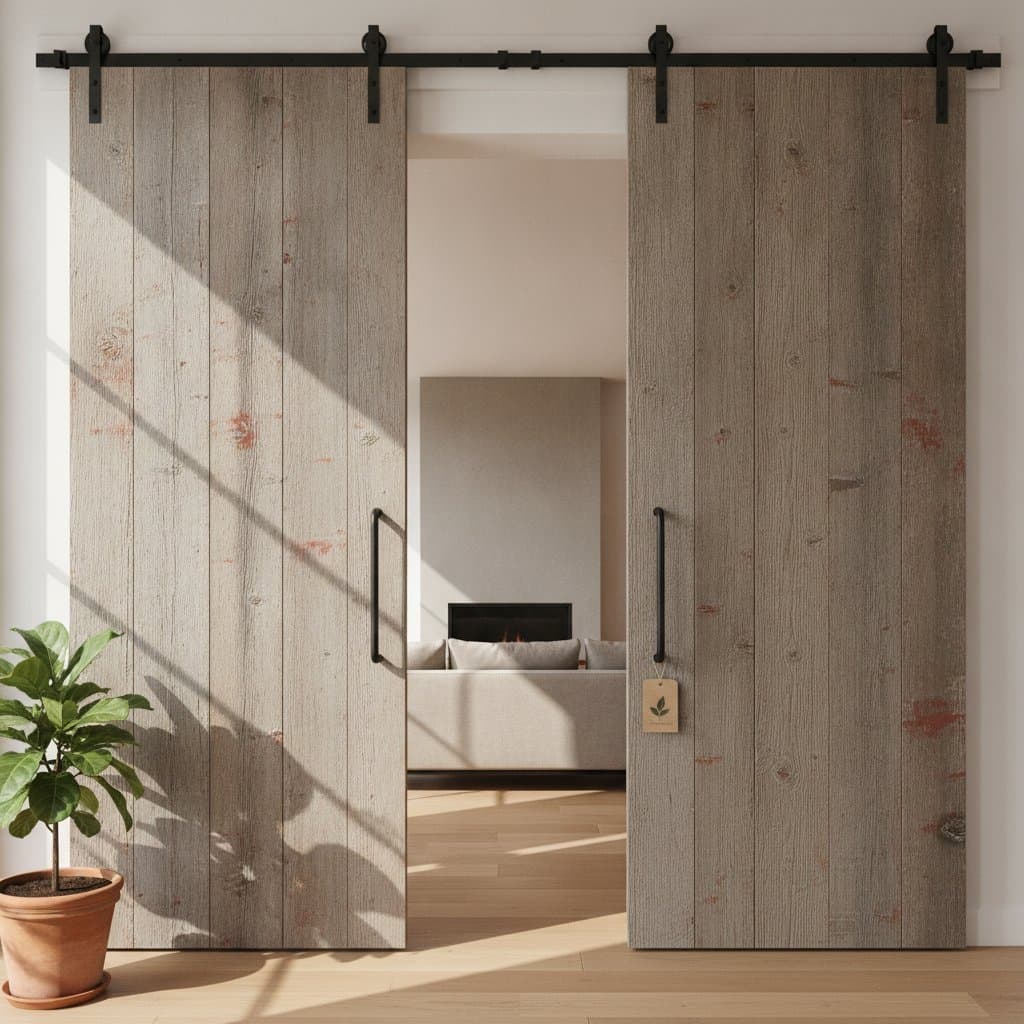
Each reclaimed door displays unique nail holes, sun exposure marks, and grain shifts that distinguish it from uniform surfaces. These traits appeal to owners who treat their interiors as expressions of personal history.
The material adds warmth to open plans and complements stone, glass, or metal elements. Its density also reduces sound transmission. In strictly minimalist settings, however, the natural variation may clash with clean lines.
Sustainability Advantages and Limitations
Reclaimed wood reduces demand for fresh lumber and avoids new deforestation. Embodied energy remains lower than that of freshly milled stock because the material already exists. Long service life further supports resource conservation.
Local sourcing maximizes these gains by limiting transport emissions. When distance increases, some environmental benefit diminishes.
Fabrication and Installation Sequence
Builders follow defined steps to convert salvaged timber into reliable doors.
- Assess timber condition for rot, warping, and embedded metal.
- Clean boards, kiln dry to indoor moisture levels, and stabilize against movement.
- Cut and join pieces into panels while allowing for natural expansion.
- Sand surfaces and apply protective oils that preserve visible grain.
- Mount with heavy duty hardware and verify smooth operation.
Indicators of Sound Construction Quality
Buyers should confirm kiln drying reached stable moisture content. Joints must sit tight without visible gaps. The finished door should operate quietly and without binding. A reputable maker supplies details on these checks and offers workmanship coverage.
Value Components Within the Eight Thousand Dollar Price
The total covers custom design work, specialized hardware, and on site installation. Large sliding or double door units require additional engineering to support weight.
Key value elements include dense old growth stability that outlasts newer lumber, potential enhancement of resale character, surfaces that conceal minor wear, and singular appearance that satisfies demand for individuality.
Situations Where the Purchase Aligns with Goals
The investment fits high end renovations where the door functions as an architectural anchor. Open floor plans gain definition from large sliding versions without sacrificing visual continuity.
When funds target mechanical upgrades or multiple smaller improvements, the same amount may deliver greater practical return elsewhere.
Ongoing Care Requirements
Regular dusting with soft cloths and application of natural oil conditioners maintain surface integrity. Avoid chemical cleaners that remove protective layers. Ultraviolet protective topcoats help doors near windows resist fading.
Inspect tracks and hinges at regular intervals. Consistent indoor humidity supports long term stability. With attentive care these doors can serve multiple generations.
Selecting the Appropriate Material for Your Project
Request physical samples or visit showrooms to judge texture against your palette. Discuss finish and hardware options with the fabricator to ensure cohesion with surrounding elements. Owners who prioritize authenticity and environmental responsibility frequently conclude that reclaimed barn wood doors justify the cost through decades of service and distinctive presence.