Why Terrazzo Tile Entryways Are Making a 2026 Comeback
Home design trends often move in cycles. Terrazzo tile serves as a clear example of a material that returns to prominence after years of quiet appreciation. Once seen mainly in public buildings and mid century spaces, terrazzo now finds new life in residential entryways. Its combination of durability, visual texture, and design flexibility fits modern lifestyles that value character and practicality in equal measure.
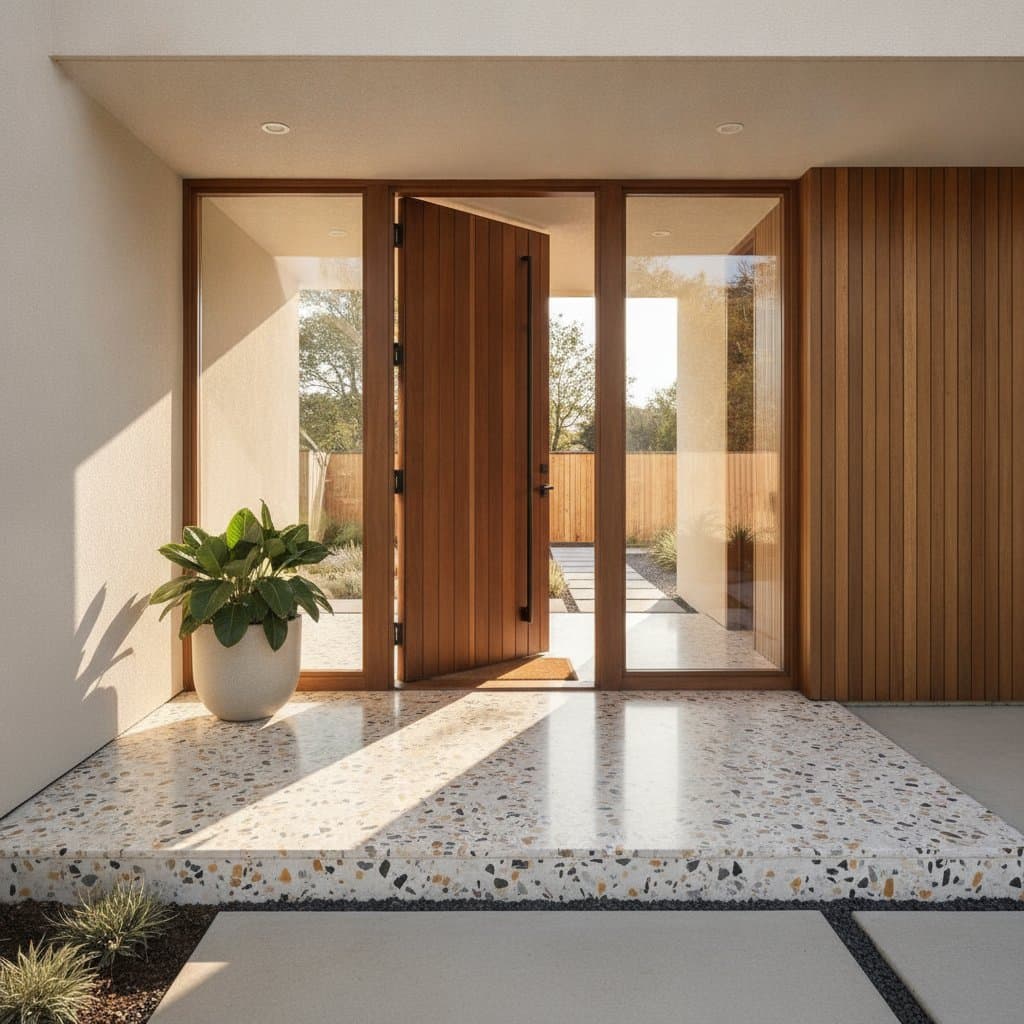
Homeowners rediscover how terrazzo can transform a simple entryway into a statement area. The space welcomes guests while standing up to everyday wear.
Understanding the Appeal of Terrazzo
Terrazzo is a composite material made by mixing marble, quartz, glass, or other aggregates into a cement or resin base. Once cured, it is polished to reveal a smooth, patterned surface. Each installation remains unique, with subtle variations in texture and color that create depth and movement. This individuality gives terrazzo a timeless quality that fits both modern and traditional interiors.
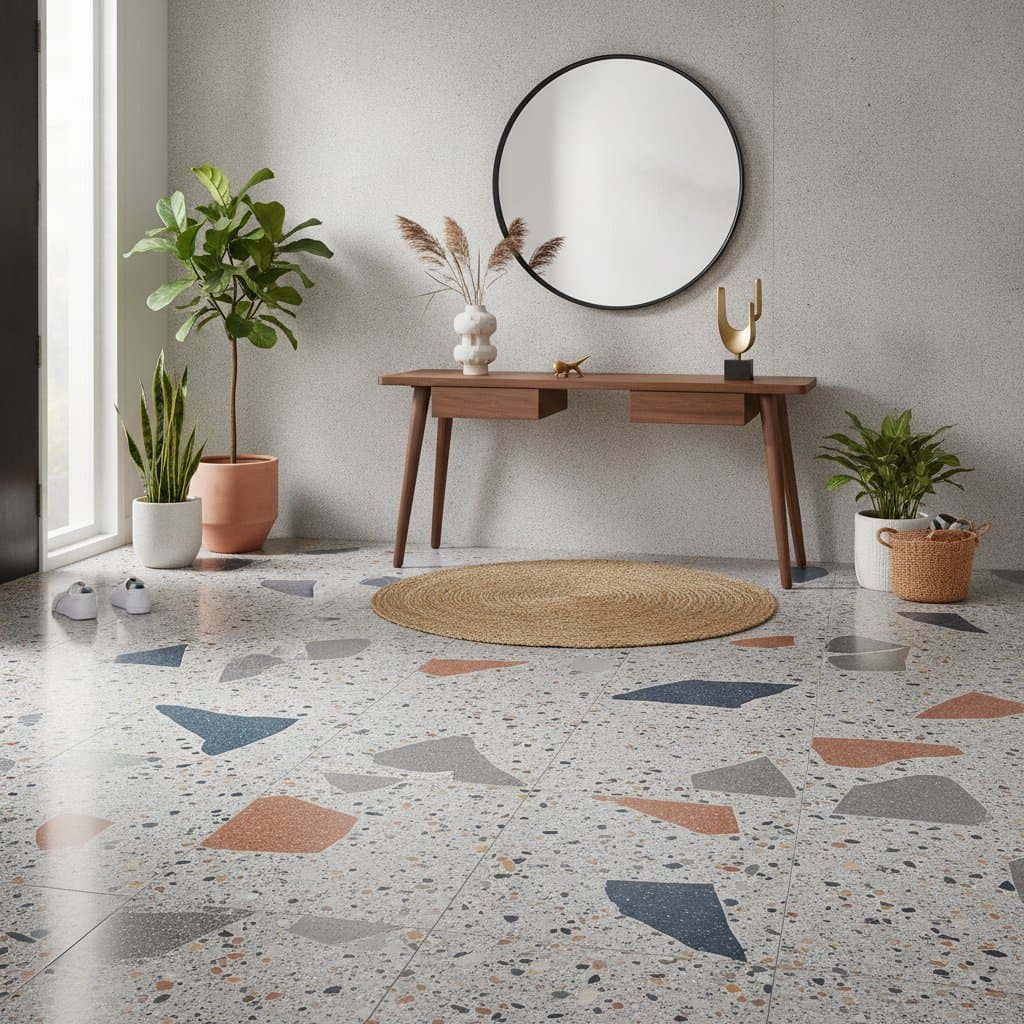
The renewed interest in terrazzo entryways stems from its ability to balance artistry and performance. Homeowners want entry floors that resist moisture and dirt. They also want the space to express personality. Terrazzo achieves both goals. Its speckled surface hides minor debris between cleanings. Its dense finish resists staining when properly sealed.
Material Choices and Design Options
Modern terrazzo tiles come in two main types. Cement based terrazzo offers a natural matte look. It is often chosen for homes that lean toward rustic or organic design. Resin based terrazzo, sometimes called epoxy terrazzo, has a smoother finish and broader color range. It suits bright, contemporary interiors where color consistency and shine remain desirable.
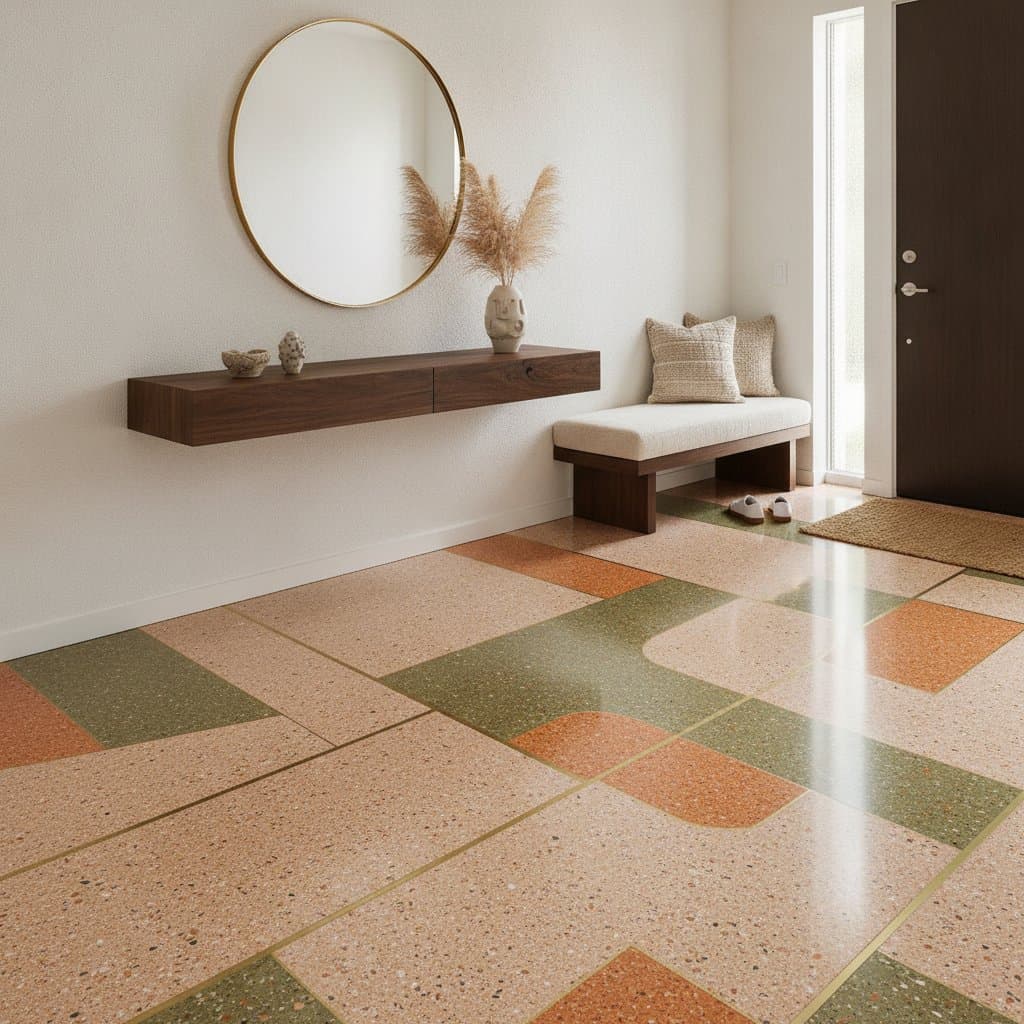
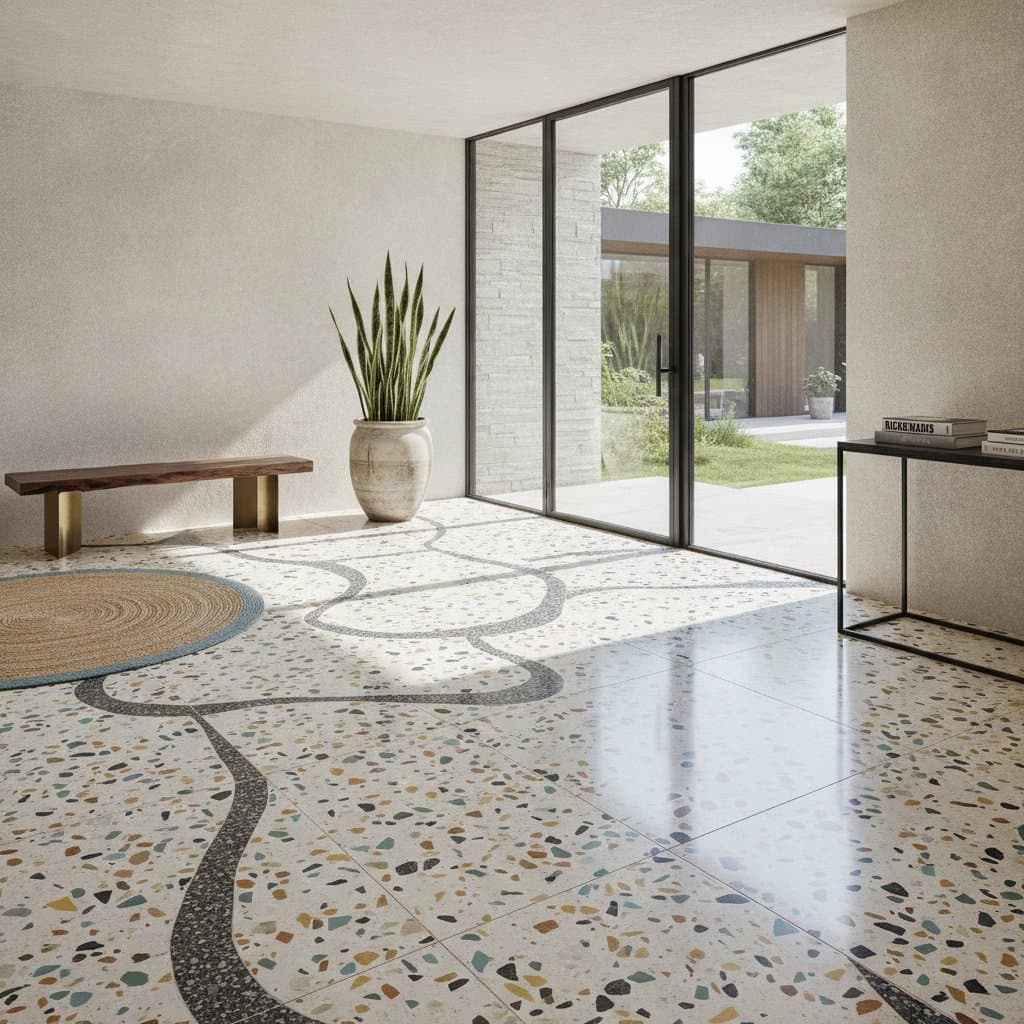
Within these categories, homeowners can select from a wide range of aggregate sizes and materials. Larger chips create bold pattern contrast. Smaller granules result in a subtler, more uniform surface. Designers also experiment with metal dividers or geometric layouts to create visual boundaries or directional flow in entryways.
| Option | Initial Cost | Lifespan | Maintenance | Best For |
|---|---|---|---|---|
| Cement Terrazzo | High | Several decades | Periodic sealing | Classic or natural interiors |
| Resin Terrazzo | Moderate to high | Several decades | Light cleaning | Modern, colorful spaces |
Practical Benefits for Entryway Flooring
The entryway is one of the most demanding areas of any home. It experiences heavy traffic, moisture from shoes, and exposure to outdoor elements. Terrazzo performs well under these conditions. Its surface is dense and nonporous. This means it resists water infiltration and damage from tracked in grit. When properly installed, it can last for generations with only routine maintenance.
Another advantage is thermal stability. Terrazzo remains comfortable underfoot and works well with radiant heating systems. It also reflects natural light effectively. These qualities brighten spaces that lack large windows. The material becomes both functional and aesthetically uplifting for entry zones.
Sustainability and Lifecycle Value
Sustainability has become a major consideration in material selection. Terrazzo fits this mindset because it often incorporates recycled glass or stone chips that reduce waste. The long lifespan of terrazzo also means fewer replacements over time. This decreases the overall environmental footprint compared to short lived flooring materials.
From a lifecycle perspective, terrazzo initial cost may be higher than standard tiles. Its durability offsets that investment. Once installed, it requires minimal upkeep and rarely needs full replacement. Homeowners who plan to stay in their homes long term often find terrazzo more economical than materials that need frequent refinishing or replacement.
What to Expect During Installation
Terrazzo tile installation differs from standard ceramic or porcelain tile. Precision in surface preparation is critical. The subfloor must be level and stable to prevent cracking. For cement based terrazzo, installers apply a setting bed, place the tiles, then grind and polish the surface once cured. Resin based terrazzo tiles are thinner and lighter. This allows for easier handling and faster installation.
Quality checkpoints during installation include verifying even aggregate distribution. Installers check joint alignment and confirm surface flatness before sealing. A well executed terrazzo floor should have a continuous, reflective surface with no visible height variations between tiles. Once sealed, the floor should repel moisture and maintain its natural sheen with basic care.
Maintenance and Long term Care
Terrazzo floors age gracefully when properly maintained. Regular sweeping or vacuuming removes abrasive dust that can dull the finish. Damp mopping with a neutral cleaner keeps the surface bright without damaging the sealant. Depending on foot traffic, resealing may be needed every few years to maintain water resistance and shine. Polishing can also restore the surface if it becomes dull over time.
Avoid harsh chemicals or acidic cleaners. They can etch the surface. Entry mats help limit debris and extend the life of the finish. With these simple practices, terrazzo floors can retain their beauty for decades. They become a strong long term investment for homeowners focused on durability and design integrity.
Selecting the Right Terrazzo Option
When deciding whether terrazzo suits a specific home, consider both lifestyle and aesthetic goals. Households with children or pets benefit from its toughness and easy cleaning. Those seeking custom design options appreciate the range of colors and aggregate patterns. For smaller spaces, lighter terrazzo tones can make an entryway feel more open. Darker tones create a richer, grounded effect.
Cost and installation time should also be factored in. Terrazzo is not a weekend project. Professional craftsmanship ensures lasting results. Yet the payoff comes through daily use. Few materials combine such longevity with artistic expression. Terrazzo becomes a practical yet visually rewarding choice.