Why Zellige Tiles Suit Modern Entryways
Zellige tiles bring handmade texture and light variation to entryways. Their surfaces catch light differently throughout the day and create warmth without overwhelming neutral schemes. Homeowners choose them when they want a material that feels crafted rather than manufactured.
These tiles originate from traditional Moroccan workshops that still rely on hand molding and double firing. Natural clay forms the base, and mineral glazes produce subtle shifts in tone within each batch. The resulting irregularities give every installation a unique character.
Core Material Traits
Each tile is shaped by hand, dried in the sun, and fired at high heat before glazing. The finished surface resists moisture and most stains once sealed. Thickness and edge alignment vary slightly, which installers accommodate during layout.
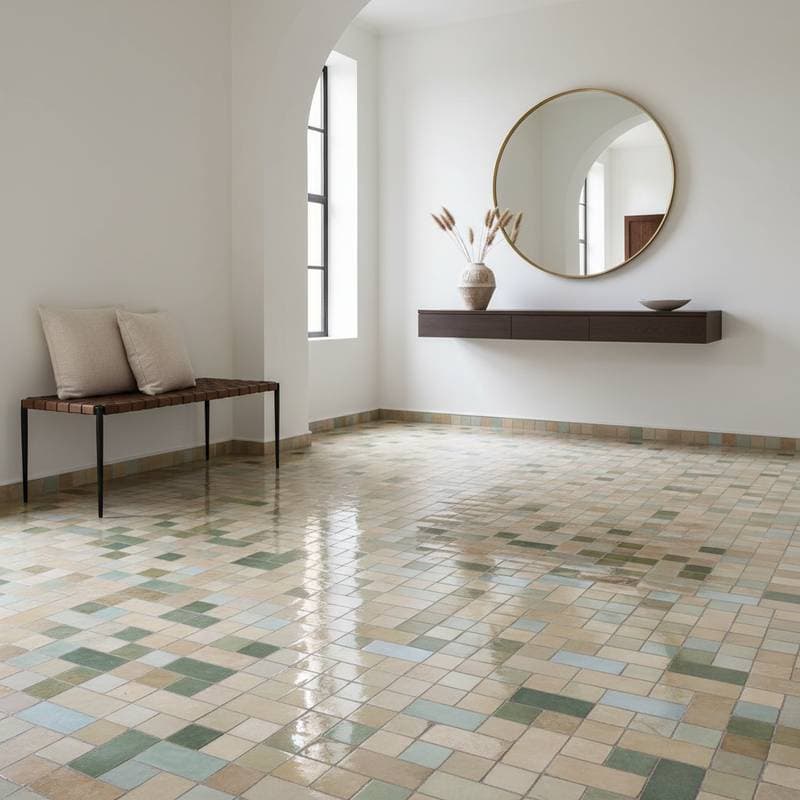
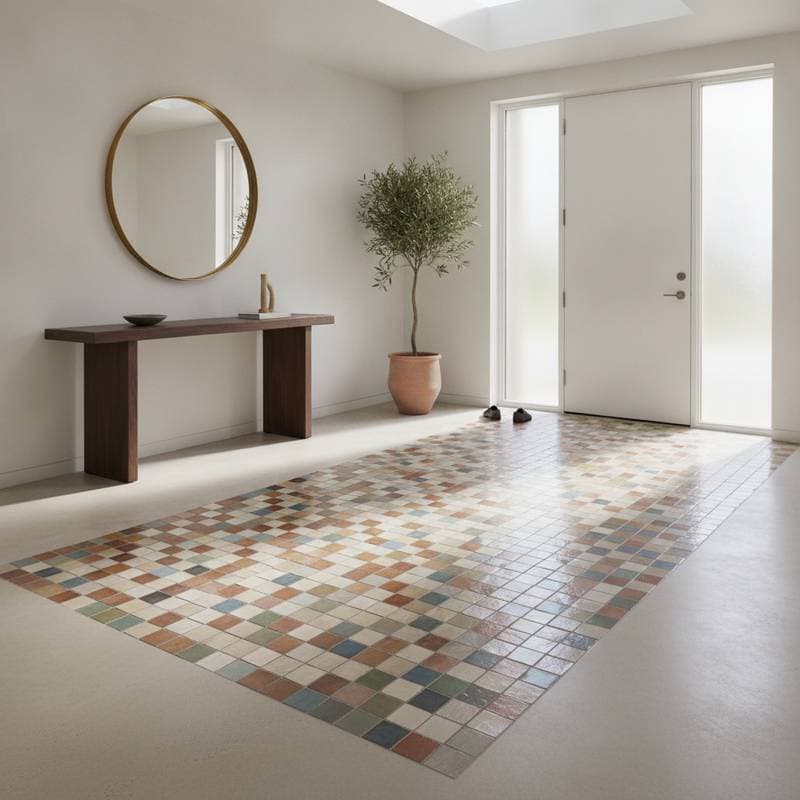
This variation produces a lively wall or floor that changes with shifting light. In an entryway the effect appears most noticeable near windows or under mixed lighting. Neutral colors such as off white, sand, and soft sage emphasize the texture while deeper blues add contrast.
Material Comparison
- Zellige offers moderate to high initial cost, long lifespan, and moderate maintenance focused on occasional sealing.
- Porcelain provides lower maintenance and uniform appearance at moderate cost.
- Natural stone delivers organic texture at higher cost and requires frequent sealing.
- Concrete suits industrial looks but needs regular resealing and shows wear faster.
Zellige occupies a middle ground that favors visual depth over perfect uniformity.
Placement and Pattern Choices
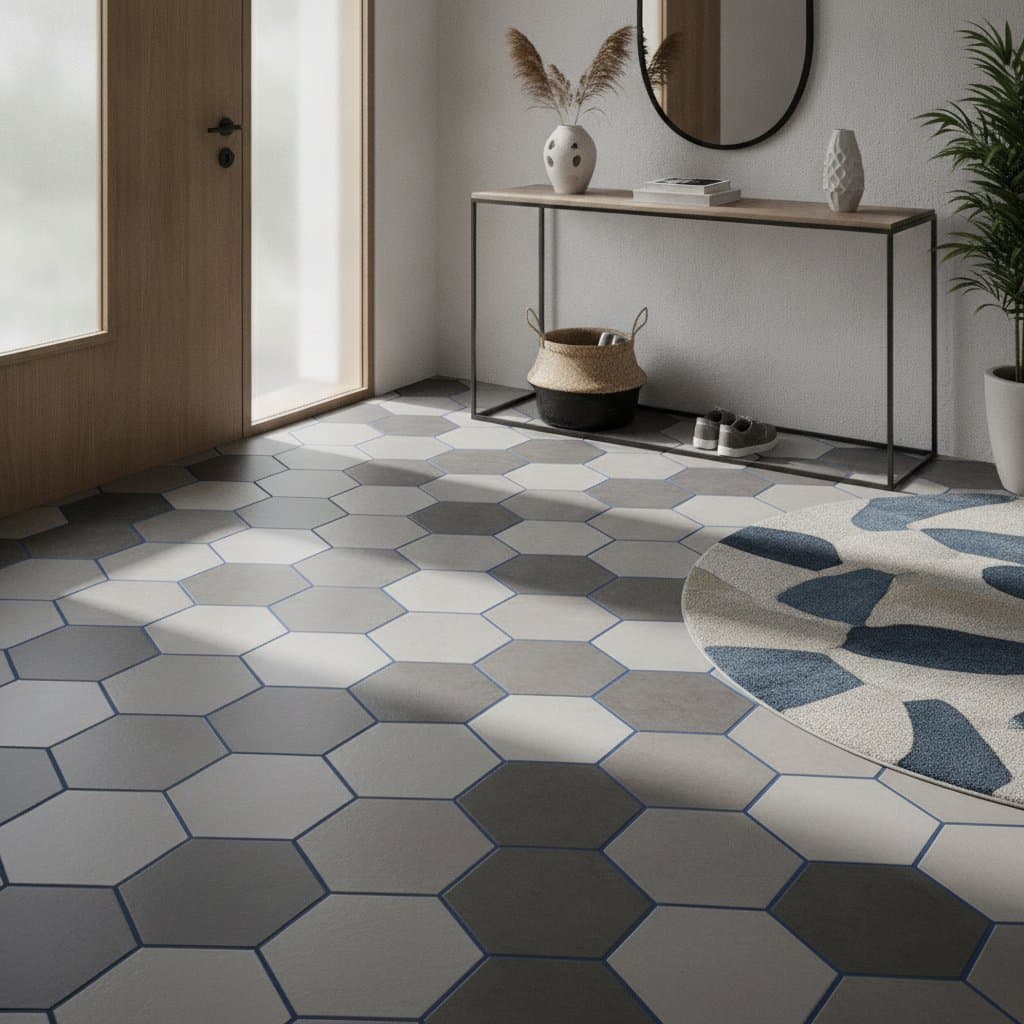
Installers apply Zellige to floors, lower wall sections, or full height cladding. Square formats remain most common, yet rectangles and hexagons allow custom rhythms. Tight grout lines highlight surface movement while wider joints create clearer geometric order.
Homeowners often combine matte and glossy tiles within the same field to increase perceived depth. Test samples under both daylight and evening lighting before final selection.
Daily Performance
Properly sealed Zellige withstands foot traffic and tracked moisture in covered entryways. Sweep regularly and clean with mild soap. Avoid acidic or abrasive products that can dull the glaze. Reapply sealer every few years to maintain protection.
The clay base also moderates temperature. Tiles stay cool underfoot in summer and pair effectively with radiant heating in winter.
Installation Sequence
- Measure the space and add ten percent for waste.
- Confirm the subfloor or wall is level and dry.
- Lay tiles with minimal spacing and adjust each piece by eye.
- Clean grout haze before it sets.
- Apply the first sealer after the surface cures.
Experienced installers finish the work in stages that respect the handmade nature of the material.
Cost, Value, and Sourcing
Material and labor costs exceed standard ceramic, yet the surface develops a patina that improves with age. Replacement remains rare when basic care is followed. Source tiles from suppliers who document fair labor practices and responsible clay harvesting.
Selecting Your Configuration
Match color depth to room size. Lighter tones enlarge compact entries. Decide between wall and floor placement according to tolerance for periodic maintenance. Verify that chosen grout color either blends or contrasts as intended.
Project Completion
Inspect the finished surface for consistent adhesion and even sealer coverage. A well installed Zellige entryway greets visitors with quiet craftsmanship that endures daily use and continues to reward attention over time.