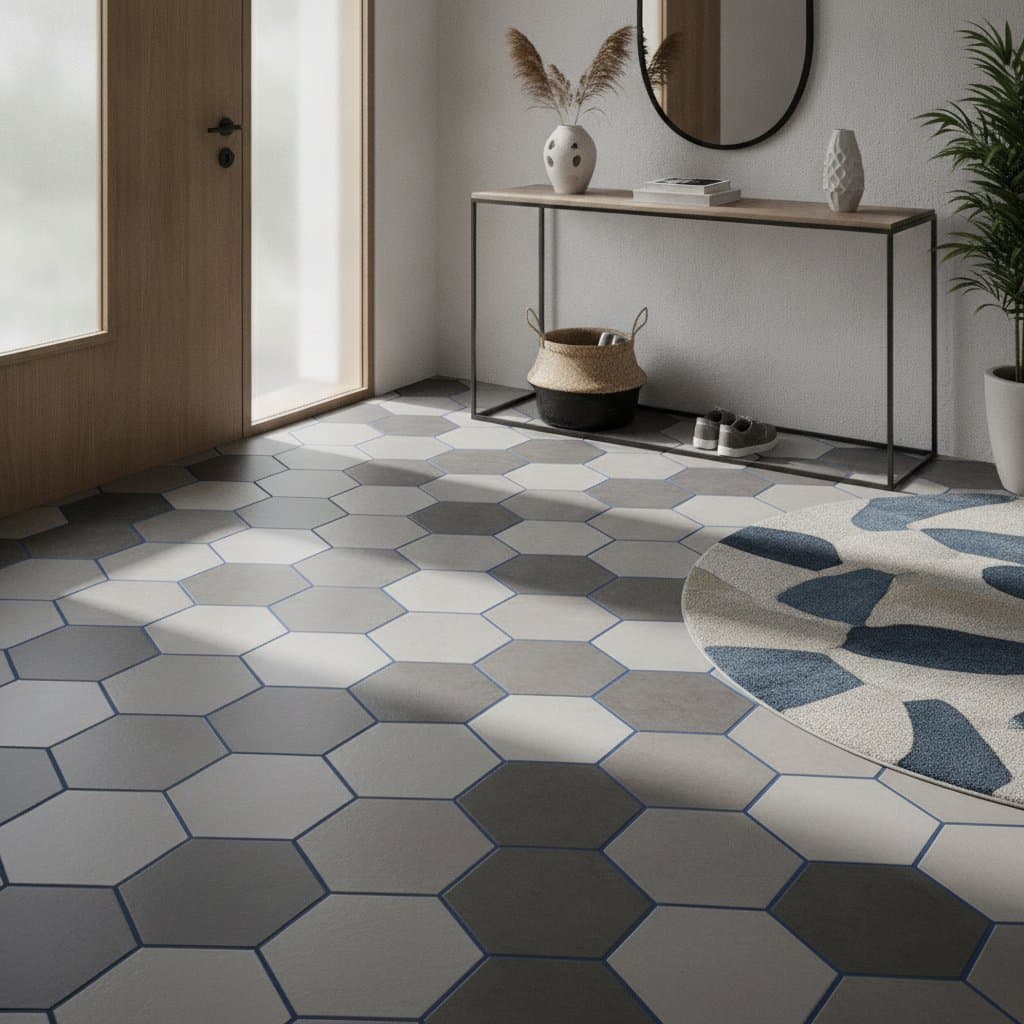
Colored Grout Lines Transform Entryways in 2026
Entryways set the tone for an entire home. Homeowners increasingly select colored grout lines to elevate floors through a subtle yet striking detail. This approach converts a once functional element into a deliberate design feature.
Grout now functions as a visible component rather than a hidden necessity. In 2026 the technique ranks among the leading methods to customize tile and wood look flooring. The following sections address costs, material options, design decisions, and practical installation steps.
Reasons Colored Grout Gains Popularity in Entryways
Homeowners select colored grout for both visual and functional advantages. Entryways experience heavy foot traffic along with exposure to dirt and moisture that quickly soil traditional white lines. Colored grout supplies an attractive appearance while concealing routine wear.
The primary drivers include the following points.
- Design versatility allows grout to add definition or softness according to the chosen palette.
- Low maintenance results from darker or tinted formulas that hide dirt and stains.
- Personalization occurs when grout matches door trim, accent rugs, or wall paint.
- Durability improves through modern formulas that retain color and resist fading.
Interior designer Laura Kim of Urban Tile Concepts noted that grout color functions as an intentional choice rather than an afterthought.
Grout Material Options and Performance Comparison
Colored grout exists in several formulations suited to different conditions. Epoxy and urethane types perform well in entryways because they withstand stains from mud, water, and salt.
| Grout Type | Cost Range per Pound | Key Features | Best For |
|---|---|---|---|
| Cement based | 1 to 3 dollars | Affordable and simple to apply yet requires sealing | Standard entryways with moderate traffic |
| Epoxy | 4 to 8 dollars | Stain proof, waterproof, and colorfast | Busy households, mudrooms, or coastal homes |
| Urethane | 5 to 7 dollars | Flexible, pre mixed, and UV resistant | Entryways exposed to sunlight |
| Polymer modified | 3 to 5 dollars | Improved adhesion and reduced cracking | Large format tile installations |
Selection of a suitable grout at installation time supports long term performance. Epoxy grout carries a higher initial cost yet frequently reduces maintenance needs and extends service life.
Maintenance Practices That Preserve Color
Colored grout withstands regular use, yet consistent care preserves appearance. Entryways receive constant exposure to dirt and grit, so targeted routines maintain surface quality.
Routine care consists of the following actions.
- Apply pH neutral cleaners instead of bleach or ammonia that may fade pigment.
- Reseal cement based grout every twelve to eighteen months to retain color depth.
- Address spills or mud immediately before penetration occurs.
- Position mats inside and outside doors to limit tracked debris.
Epoxy and urethane grouts need less sealing, although periodic cleaning remains necessary to sustain sheen.
Indicators That Grout Requires Refreshing or Replacement
Even high quality grout eventually shows wear. Visible signs include cracking, discoloration, or loose tiles. Regrouting restores both color and structural integrity when lines appear dull or patchy.
The process typically requires one to two days for an average entryway. Labor costs range from 250 to 600 dollars depending on area size and access difficulty. Minor touch ups can employ colorant pens or surface sealers at a lower expense.
Climate Factors That Influence Grout Selection
Regional conditions affect grout behavior. Humid or coastal locations increase moisture absorption, while cold climates produce expansion and contraction that stress joints. Matching the formulation to the environment reduces the likelihood of cracking or fading.
Steps to Implement Colored Grout Successfully
Begin by evaluating traffic patterns and existing flooring materials. Next, test sample colors against trim, rugs, and lighting conditions. Finally, engage a qualified installer experienced with the chosen grout type to ensure proper joint preparation and application.