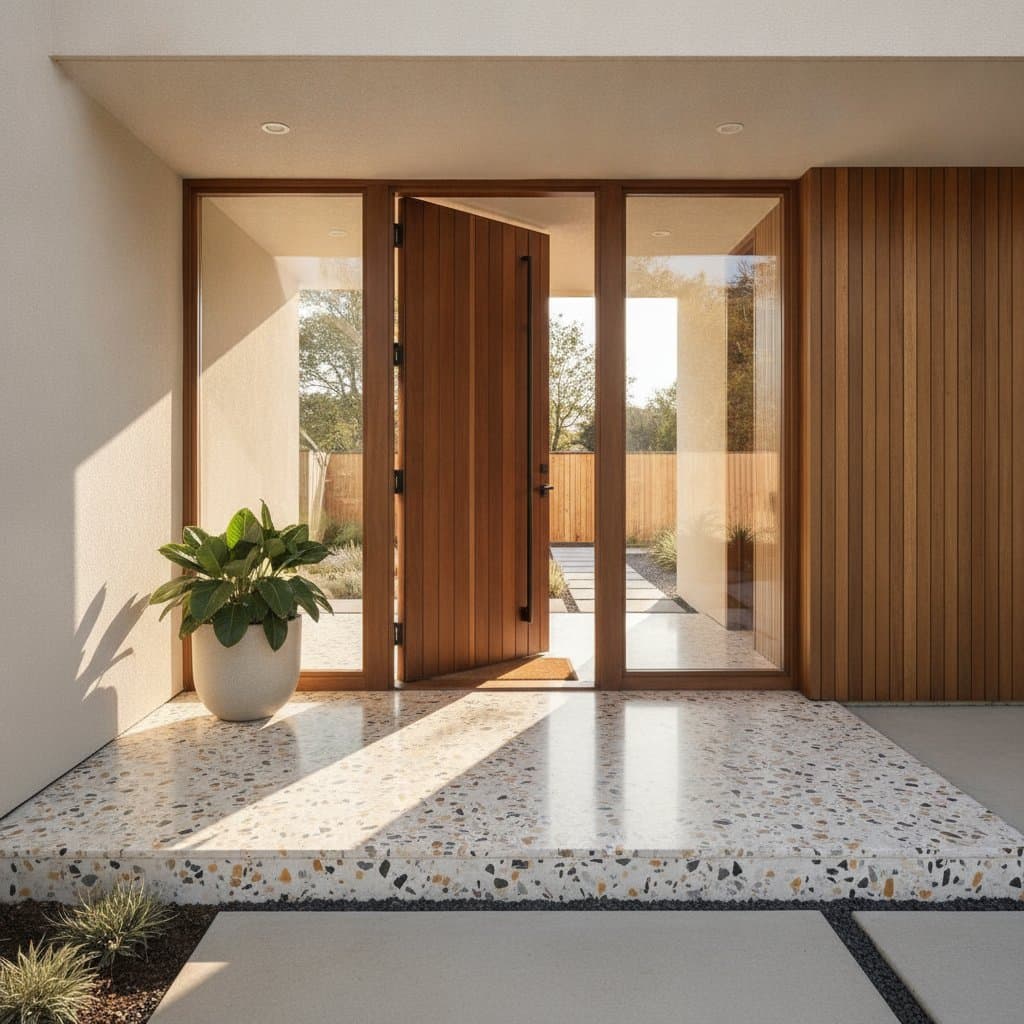
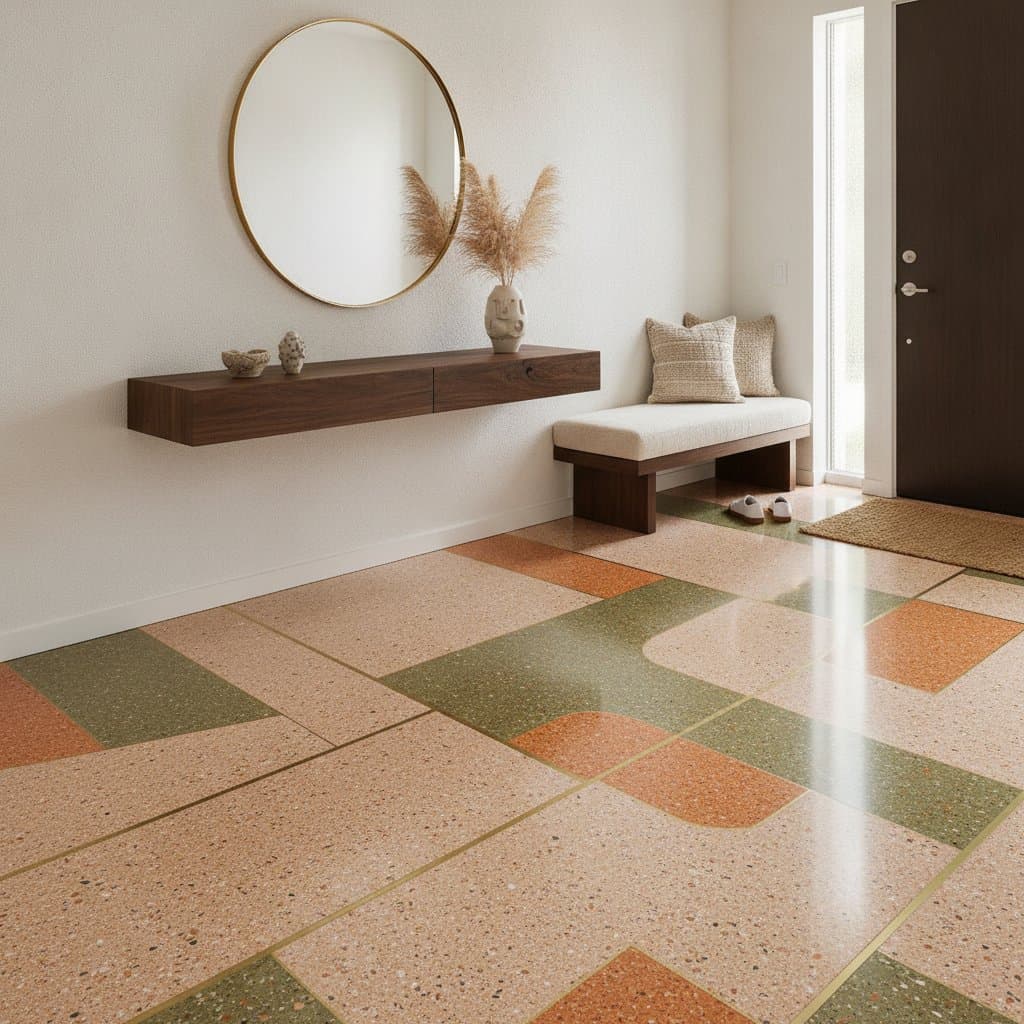
Why 70s Terrazzo Entryways Are Back and Costing $8,000
Retro design trends have revived interest in materials known for endurance and visual character. Terrazzo entryways stand out because they combine durability with distinctive patterns that age gracefully. Homeowners increasingly choose professional installations that average around 8000 dollars for a typical residential entry space.
The following sections explain the drivers behind this resurgence, detail the elements that shape total project costs, and outline steps to integrate terrazzo successfully.
Average Cost Breakdown for Terrazzo Entryways
Professional terrazzo work in an entryway typically falls between 6000 and 10000 dollars. Most completed projects land near 8000 dollars once materials and labor are combined.
| Project Component | Cost Range | Description |
|---|---|---|
| Materials | 3000 to 5000 dollars | Marble, quartz, or glass chips set in cement or epoxy |
| Labor | 2500 to 4000 dollars | Mixing, pouring, grinding, and polishing by trained crews |
| Preparation | 500 to 1000 dollars | Subfloor leveling and moisture assessment |
| Sealing and Finish | 300 to 800 dollars | Protective coatings that enhance color and add sheen |
Prices shift with regional labor rates, entryway dimensions, and any custom patterns or borders requested.
Reasons Homeowners Choose Terrazzo Again
Durability That Withstands Daily Use
Terrazzo resists heavy foot traffic and moisture when sealed correctly. A properly maintained floor often remains serviceable for several decades, which suits high-use zones near exterior doors.
Design Options That Match Individual Homes
Chip size, aggregate colors, and surface finish can be adjusted during mixing. The finished surface complements wood doors, metal hardware, and simple architectural lines without visual conflict.
Use of Recycled Content and Low Emissions
Many terrazzo mixes incorporate reclaimed stone or glass. Epoxy binders formulated for low volatile organic compounds further support indoor air quality goals.
Alignment With Current Retro Minimalism
Designers note growing demand for speckled surfaces that reference earlier eras while remaining compatible with pared-down interiors.
Installation Sequence
Trained installers follow a controlled sequence to achieve consistent results.
- Prepare and level the subfloor while checking for moisture issues.
- Place divider strips that outline the intended pattern and limit future cracking.
- Blend aggregates with the chosen binder, then pour and spread the mixture.
- Allow several days of curing before grinding the surface flat.
- Polish progressively finer grits and apply a penetrating sealer.
Most entryway projects require about one week from start to final seal, though complex designs may extend curing periods.
Advantages and Tradeoffs
| Advantages | Tradeoffs |
|---|---|
| Service life measured in decades | Higher initial outlay than many alternatives |
| Extensive color and pattern choices | Requires experienced installers only |
| Straightforward cleaning routine | Potential for cracking if the subfloor moves |
| Options that include recycled aggregates | Weight may exceed structural limits in some older buildings |
Owners who anticipate remaining in the residence for many years generally recover value through reduced replacement needs and distinctive appearance.
Next Steps for a Successful Project
- Identify contractors who specialize in terrazzo and request portfolios of completed residential work.
- Obtain detailed proposals that list materials, methods, and warranty coverage.
- Share reference images or color samples during consultations so aggregates can be matched precisely.
- Establish a maintenance schedule that includes periodic resealing and appropriate cleaning products.
A terrazzo entryway delivers both visual impact and practical longevity. Thoughtful planning and skilled execution turn the initial investment into a durable feature that greets visitors for decades.