Why Japandi Minimalism Dominates Entryways
Japandi minimalism combines Scandinavian warmth with Japanese restraint. This approach turns entryways into calm, purposeful spaces that establish the mood for the rest of the home. Homeowners now treat the entryway as an intentional zone rather than a simple transition.
Understanding Japandi Style
Japandi design relies on neutral palettes, clean lines, and durable natural materials. Wood, linen, stone, and ceramic appear frequently because they age well and require little ornament. In an entryway these choices produce immediate visual calm while supporting daily routines.
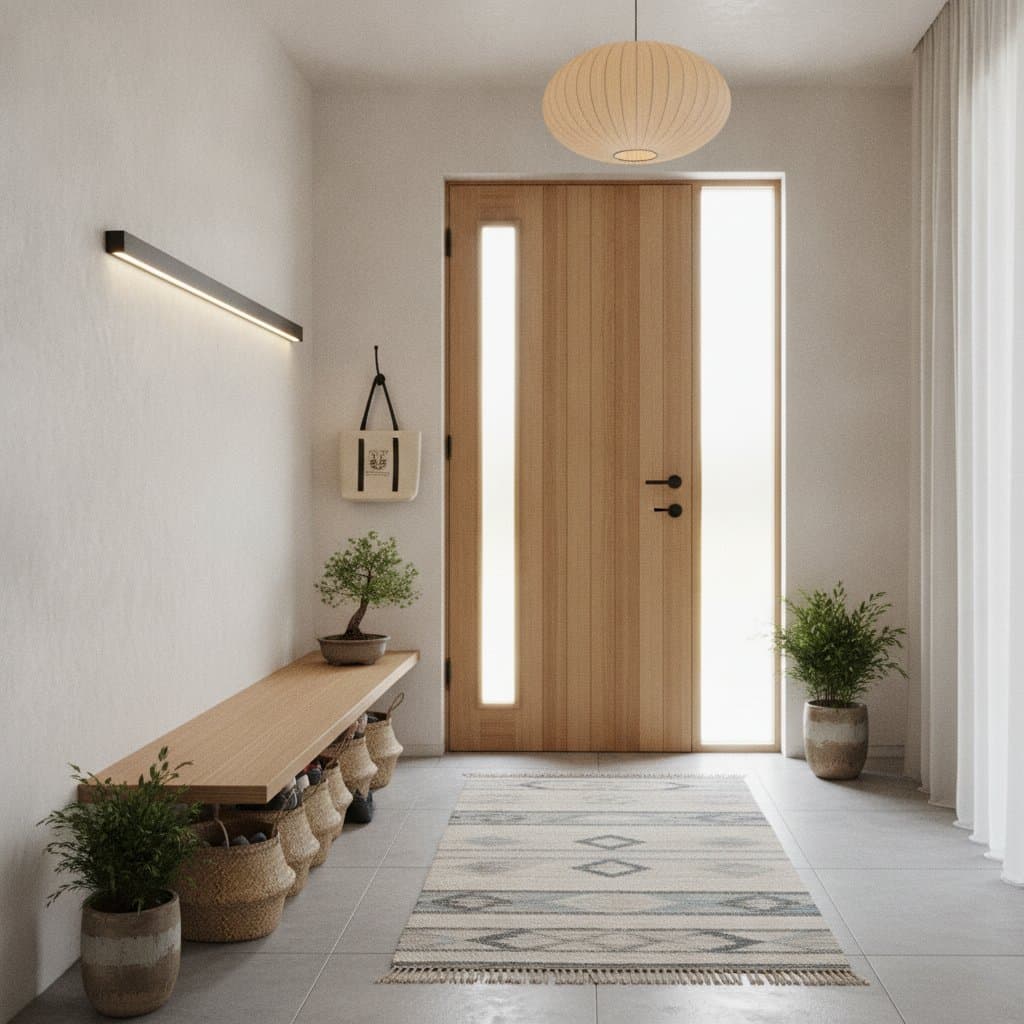
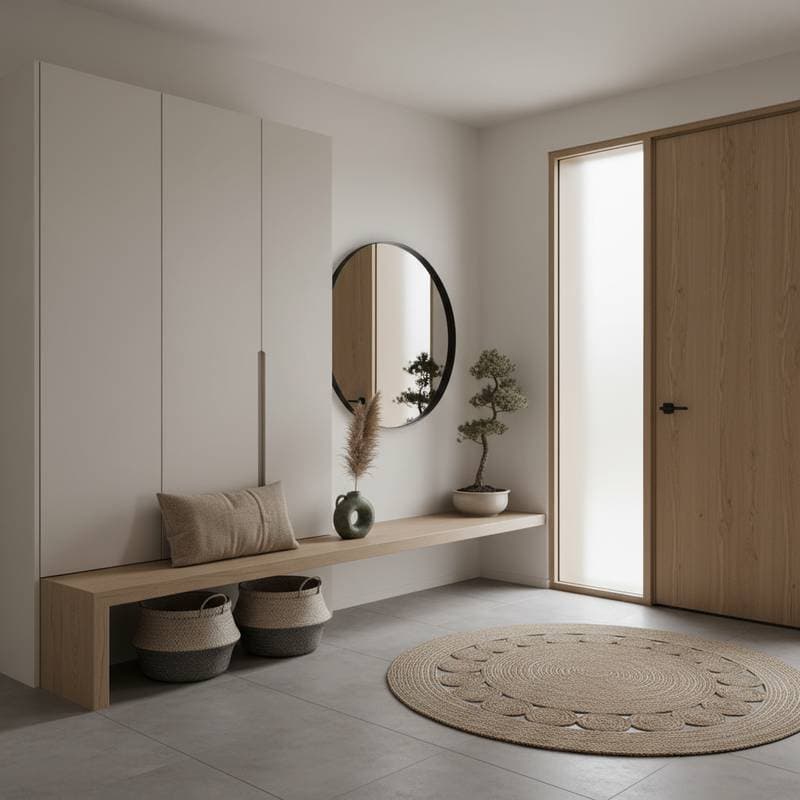
Select a solid wood door with visible grain and a matte finish. Add a low bench and a single woven basket to keep surfaces clear. Each item must serve a defined purpose.
Selecting Core Materials and Finishes
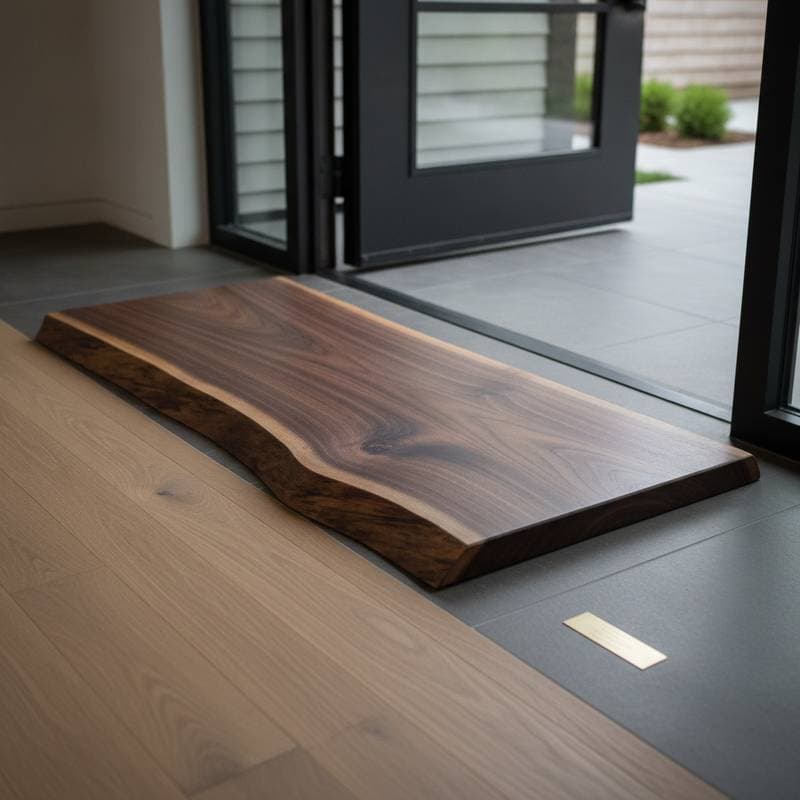
Light oak, ash, and walnut supply texture without visual weight. Apply a penetrating oil finish to protect the surface and reveal the wood grain. Slate or travertine tiles on the floor add subtle contrast and withstand heavy foot traffic.
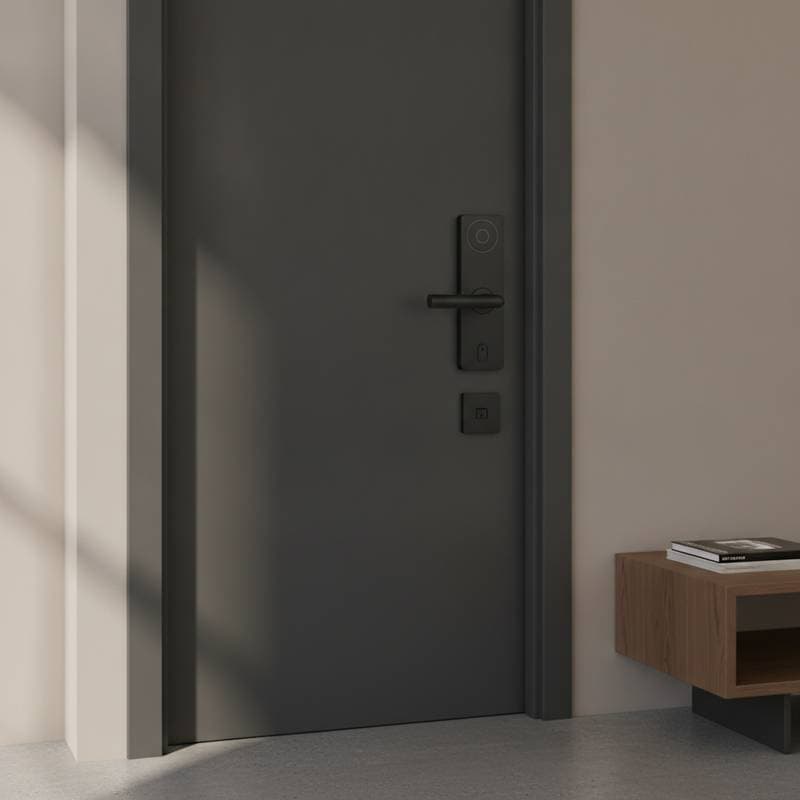
Limit metal hardware to brushed or blackened finishes on hooks and door pulls. Use cotton or linen textiles for any cushions or mats. These restrained choices maintain an organic atmosphere.
Using Color and Light Effectively
Soft whites, warm beiges, and muted grays reflect available light and enlarge the sense of space. Introduce one deeper tone, such as charcoal or forest green, on a single accent piece. Avoid high-contrast patterns.
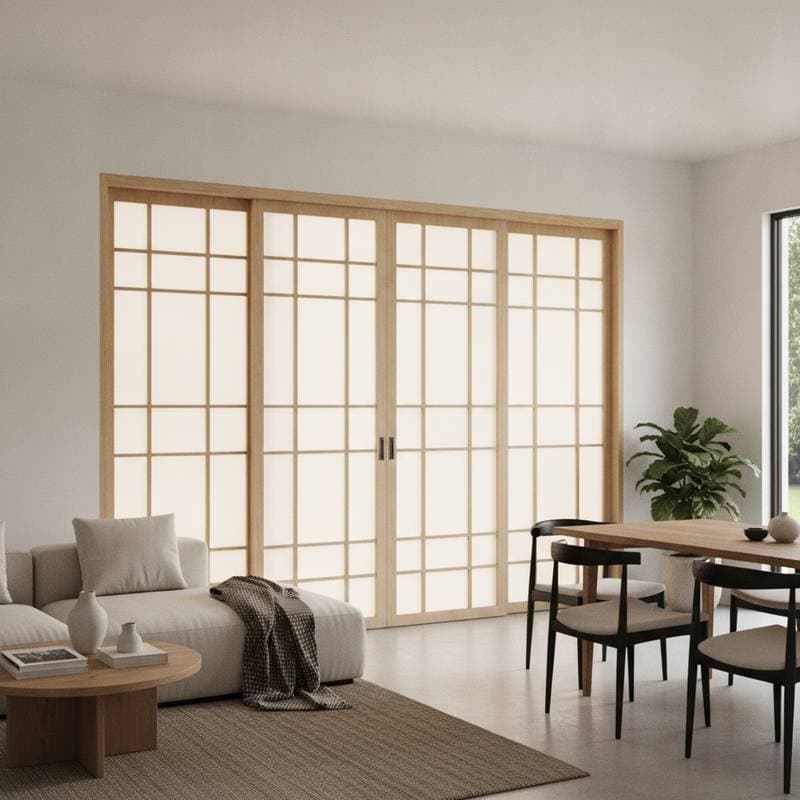
Install wall sconces with frosted glass shades or place a floor lamp behind a bench. Doors fitted with translucent glass panels bring in daylight while preserving privacy. The goal remains even, glare-free illumination.
Integrating Function with Aesthetics
Build storage into the architecture with closed cabinets and a bench that conceals shoe compartments. Position hooks at consistent heights and choose trays sized to hold keys and mail. Every object stays within reach yet out of sight.
Designate a spot for coats, another for footwear, and a small ledge for outgoing items. This arrangement reduces morning stress and keeps the visual field orderly.
Ensuring Durability and Easy Maintenance
Solid wood doors resist warping better than veneered products in high-use areas. Reapply oil to wood surfaces once or twice a year to maintain protection. Clean stone floors with pH-neutral solutions to preserve their natural appearance.
Inspect hardware annually and tighten screws before finishes loosen. These simple steps keep the minimalist look intact over time.
Implementing the Design in Your Space
Measure the entryway footprint and note existing light sources before selecting furniture scale. Smaller areas benefit from wall-mounted storage and narrow benches. Larger foyers accommodate a low console table and layered rugs.
Prioritize one high-quality door and one storage piece rather than multiple smaller items. Consult an installer experienced with natural materials to achieve precise reveals and level thresholds.
Supporting Intentional Daily Routines
A Japandi entryway encourages a brief pause when entering or leaving. The bench invites removal of shoes. A small vessel holding seasonal branches connects the space to the outdoors. These quiet details reinforce mindful habits without added decoration.