The Resurgence of 1970s Terrazzo in 2026 Entryway Design
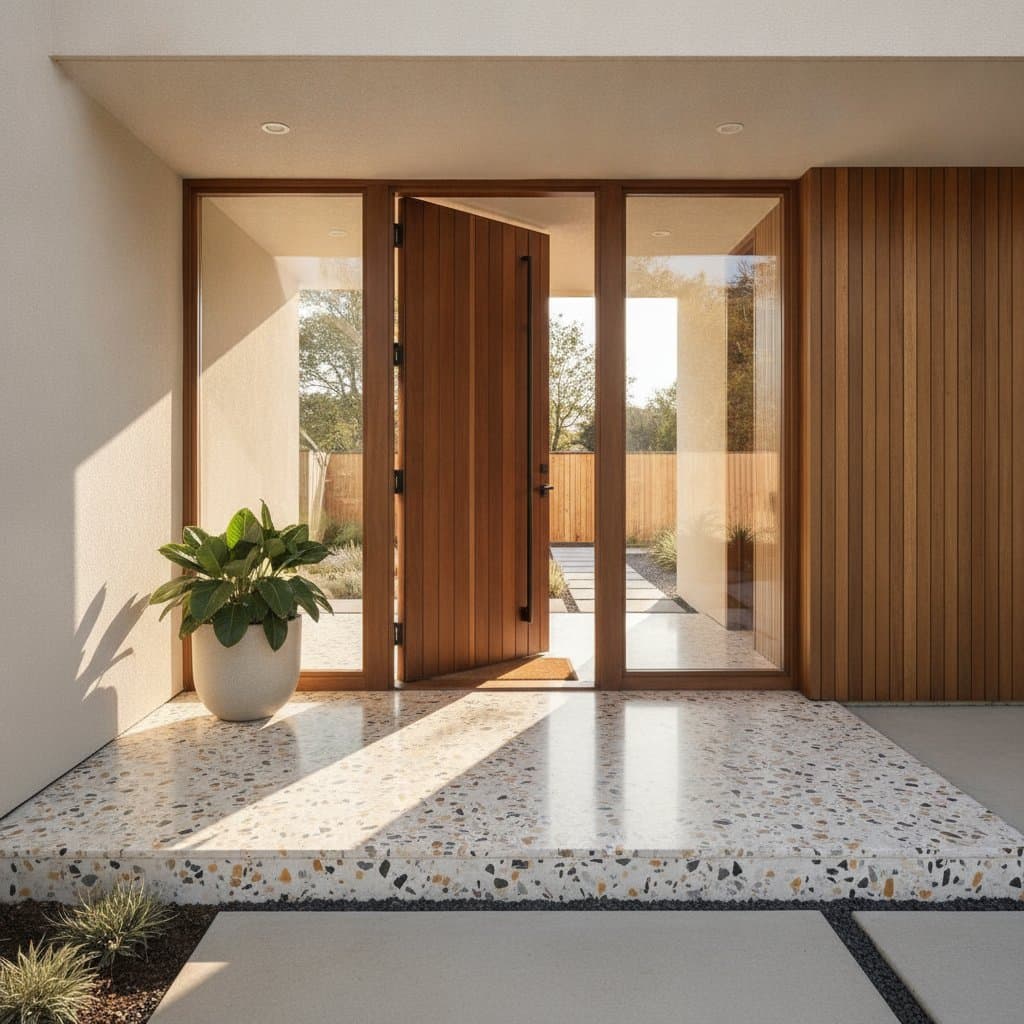
Terrazzo flooring, a fixture in mid-century institutions and residences, experiences a revival in modern homes. Composed of marble, quartz, glass, or other aggregates bound by cement or resin, this material captures a speckled, nostalgic aesthetic that aligns with today's emphasis on retro influences. Beyond visual appeal, terrazzo embodies superior craftsmanship, extended service life, and eco-friendly attributes that resonate with discerning homeowners.
The Enduring Charm of Terrazzo
Terrazzo began as a resourceful method to repurpose marble remnants embedded in cement bases. Its distinctive mottled pattern soon became synonymous with progressive architecture during the modernist era. By the 1970s, terrazzo gained prominence in residential entryways, valued for its resilient finish and array of color options that enhanced both form and function.
Contemporary designers revive this legacy by integrating terrazzo with sleek hardware and sustainable elements. Homeowners now view its once-retro vibe as innovative, particularly in neutral palettes that ground minimalist spaces or vibrant mixes that add focal interest. This adaptability ensures terrazzo remains relevant across evolving interior trends.
Entryways as the Focal Point of Terrazzo's Return
Entryways serve as the home's initial showcase, enduring intensive use from daily commuters, family members, and guests. Terrazzo excels here due to its non-porous surface, which repels water, resists abrasions, and prevents permanent marks from dirt or spills. This performance surpasses alternatives like wood or tile in demanding threshold zones.
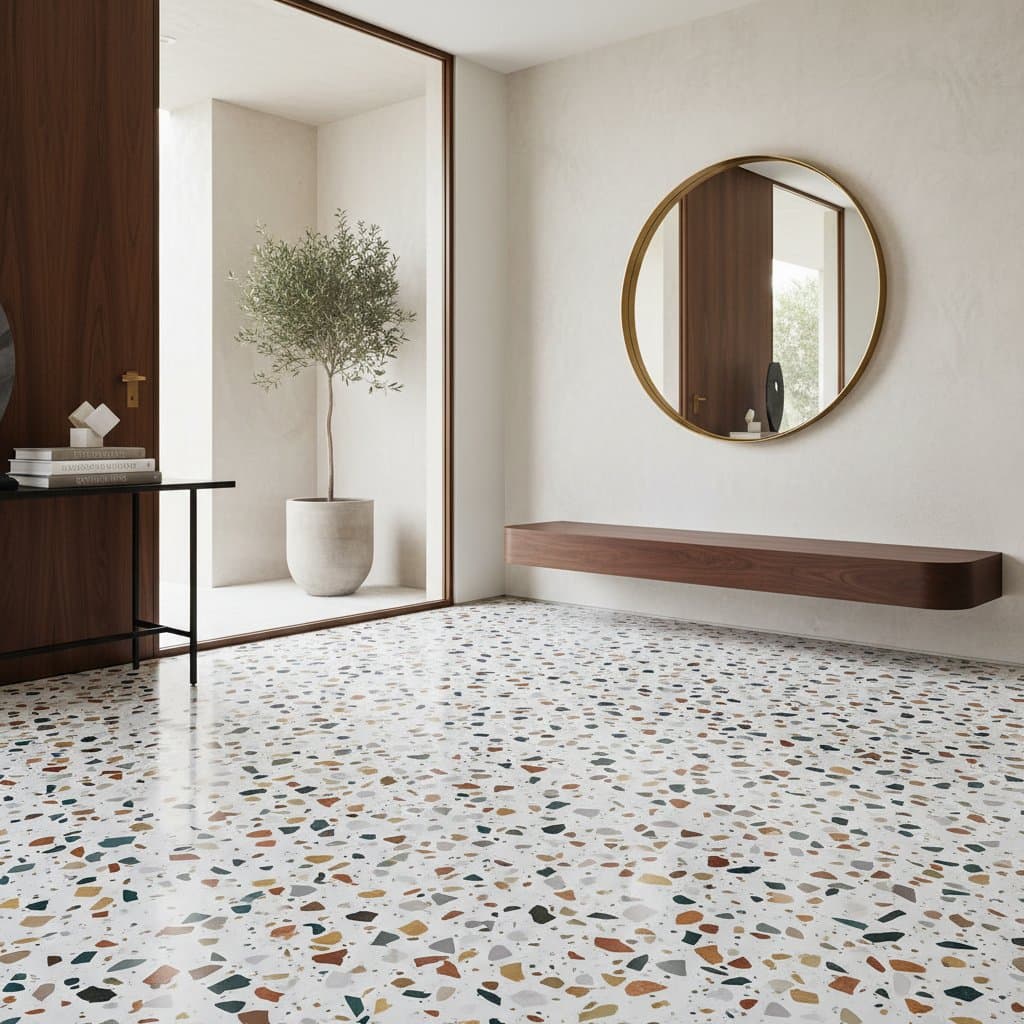
Designers select terrazzo to foster seamless flow into adjacent areas, complementing elements such as solid wood doors or metallic accents. Custom applications might incorporate color fades or inlaid motifs that accentuate door frames or overhead fixtures, elevating the space's architectural presence. Such integrations create cohesive, impressive arrivals that withstand time and traffic.
Composition and Contemporary Variations
Traditional terrazzo relied on cement matrices, but epoxy or polyacrylate binders now enable slimmer profiles and expanded pigmentation. These formulations enhance crack resistance and simplify upkeep, broadening appeal for residential projects. Producers also offer prefabricated terrazzo slabs, which install rapidly and control expenses without sacrificing the fluid look of on-site pours.
Environmental considerations further propel terrazzo's popularity. Aggregates often derive from recycled sources, paired with resins emitting minimal volatile organic compounds. The material's projected 40-to-75-year durability minimizes waste, aligning with sustainable building practices and appealing to forward-thinking residents.
Evaluating Entryway Flooring Alternatives
| Option | Initial Cost | Lifespan | Maintenance | Best For |
|---|---|---|---|---|
| Terrazzo | Medium to high | 40+ years | Low | Enduring style and heavy use |
| Ceramic Tile | Medium | 20 years | Moderate | Wet zones with straightforward care |
| Hardwood | Medium to high | 25 years | Moderate | Traditional warmth requiring upkeep |
| Vinyl | Low | 10 years | Low | Affordable, short-term solutions |
| Natural Stone | High | 30+ years | High | Premium textures in select areas |
The Installation Process Demystified
Professional installation demands meticulous preparation to ensure longevity. Start by assessing the subfloor for flatness and stability, then apply a bonding layer of epoxy or cement. Embed the chosen aggregates evenly, allow curing, and proceed to grinding and polishing stages for a glossy, uniform result.
For expedited projects, opt for pre-manufactured terrazzo panels grouted like conventional tiles, reducing on-site time to days rather than weeks. Key quality measures involve uniform aggregate placement, precise depth control, and robust sealing to guard against wear. These practices guarantee a flawless, resilient entryway surface.
Weighing Aesthetics, Expenses, and Upkeep
Terrazzo's upfront price exceeds budget options like vinyl, yet its minimal ongoing demands offset costs over time. Basic care involves vacuuming debris and wiping with a neutral cleaner; avoid harsh abrasives to maintain integrity. Periodic resealing, typically every three to five years, restores luster and bolsters protection.
Budget-conscious owners benefit from terrazzo's value retention, as it preserves appearance through years of activity. This reliability suits entryways as high-visibility hubs, delivering consistent performance without frequent interventions.
Tailoring Terrazzo to Daily Living
Terrazzo accommodates diverse aesthetics through customizable aggregates and finishes. Opt for fine, monochromatic chips in soft beiges for contemporary minimalism, or coarse, multicolored pieces in earthy tones for mid-century flair. These choices harmonize with surrounding decor, from sleek cabinetry to textured walls.
Families with active households favor terrazzo's toughness against impacts, pet claws, and tracked-in grime. Hosts appreciate its light-reflecting polish, which amplifies ambient illumination and fosters a hospitable vibe. Such versatility ensures the material enhances routines without compromise.
Planning for Decades of Performance
Terrazzo investment yields sustained benefits, seldom requiring full renewal. Spot repairs involve matching patches ground to blend seamlessly, preserving uniformity. This resilience aids ecological aims by curtailing material turnover and supports fiscal prudence through reduced replacements.
Climate influences suitability; terrazzo's thermal mass cools interiors in hot regions. In temperate zones, pair it with hydronic heating systems embedded during installation for optimal warmth. This adaptability extends its utility across geographic variations.
Steps to Select Terrazzo for Your Entryway
Assess your entryway's demands, from traffic volume to stylistic preferences, before committing. Review binder varieties, such as epoxy for speed or cement for authenticity, and explore aggregate samples to visualize outcomes. Factor in sealing timelines to align with maintenance routines.
Engage certified contractors to evaluate site specifics and propose tailored systems. By grasping these elements, you secure a flooring solution that marries visual sophistication with operational excellence. Terrazzo thus elevates entryways into durable expressions of refined, sustainable living.