Why Japandi Fusion Tops 2026 Entryway Trends
Japandi design emerges as a leading interior trend, particularly in entryways where it delivers a serene and functional welcome. This blend of Japanese minimalism and Scandinavian coziness fosters organized, timeless spaces that enhance even compact areas. Homeowners appreciate its emphasis on balance and quality, which transforms the entry into a thoughtful prelude to the home. The following sections explore essential elements to consider when incorporating Japandi principles into your entryway.
Average Costs for a Japandi-Inspired Entryway
Budgeting for a Japandi entryway varies based on scope and selections. Full renovations, encompassing new flooring, illumination, furnishings, and door enhancements, generally fall between $2,000 and $6,000. Simpler do-it-yourself projects involving fresh paint and select accessories range from $500 to $1,200.
| Project Element | Cost Range | What’s Included |
|---|---|---|
| Entry Door Replacement | $900 to $3,500 | Solid wood or wood veneer door, hardware, labor |
| Flooring Installation | $6 to $18 per sq. ft. | Bamboo, oak, or light-toned engineered wood |
| Lighting | $150 to $500 | Pendant or recessed lighting, installation |
| Storage Bench or Cabinet | $300 to $1,200 | Built-in or freestanding wood unit |
| Paint and Wall Finish | $150 to $400 | Neutral tones, matte finish, labor optional |
A licensed contractor from Seattle-based Nordic Elements Design notes, “Japandi works best when you invest in fewer, higher-quality materials. It is not about adding more; it is about simplifying what you already have.”
Key Characteristics of Japandi Entryway Design
Japandi merges Japanese restraint with Scandinavian hygge, yielding entryways that promote tranquility and utility. These spaces prioritize purposeful elements that harmonize with daily routines while maintaining visual serenity.
Neutral and Natural Color Palette
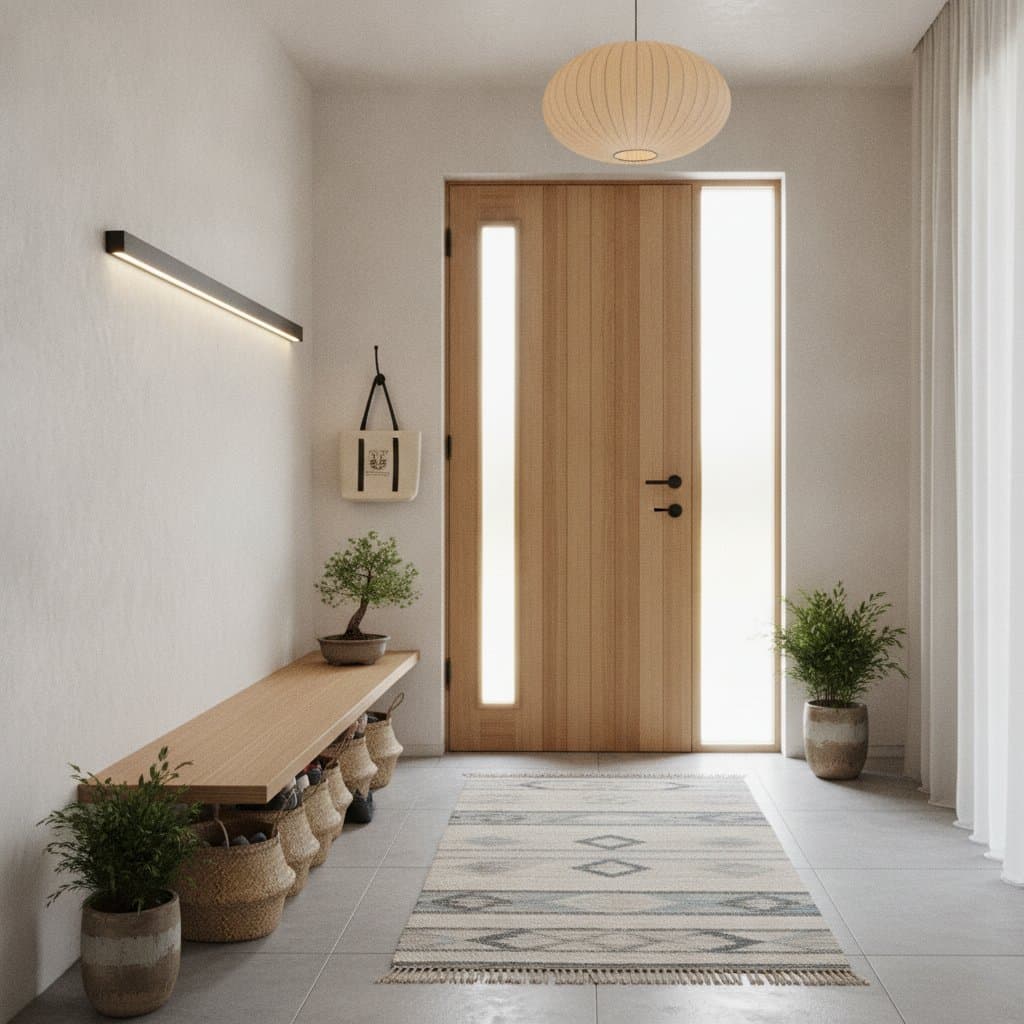
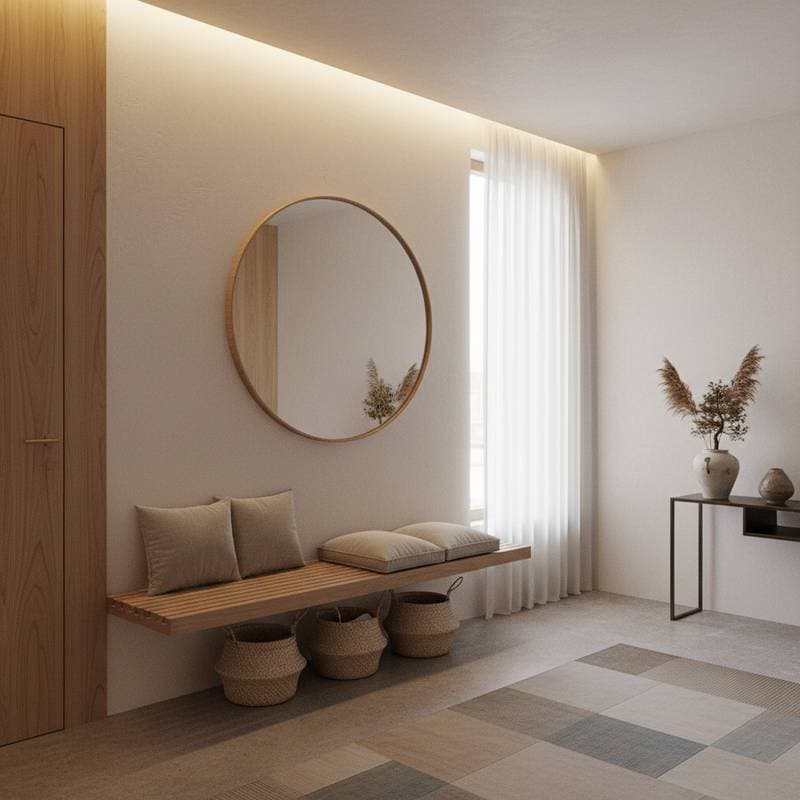
Designers favor subdued shades such as soft whites, warm taupes, and gentle grays, complemented by wood undertones like honeyed oak. This palette establishes immediate composure upon entry. Matte surfaces prevail, diffusing light to evoke a grounded, inviting atmosphere that aligns with the style's ethos of subtlety.
Minimalist Functionality
In Japandi, utility guides every choice. Opt for multifunctional items, such as a low-profile bench with integrated storage for keys and mail. Eliminate excess to cultivate openness; a lone sculptural hook or streamlined console suffices to organize essentials without visual noise.
Natural Materials and Textures
Oak planks, bamboo accents, linen cushions, and wool throws form the foundation of this aesthetic. Introduce subtle variety through a jute runner or rattan tray, ensuring textures enhance rather than dominate. Select pieces with visible grain or weave to underscore authenticity and environmental harmony.
Choosing the Right Entry Door for Japandi Fusion
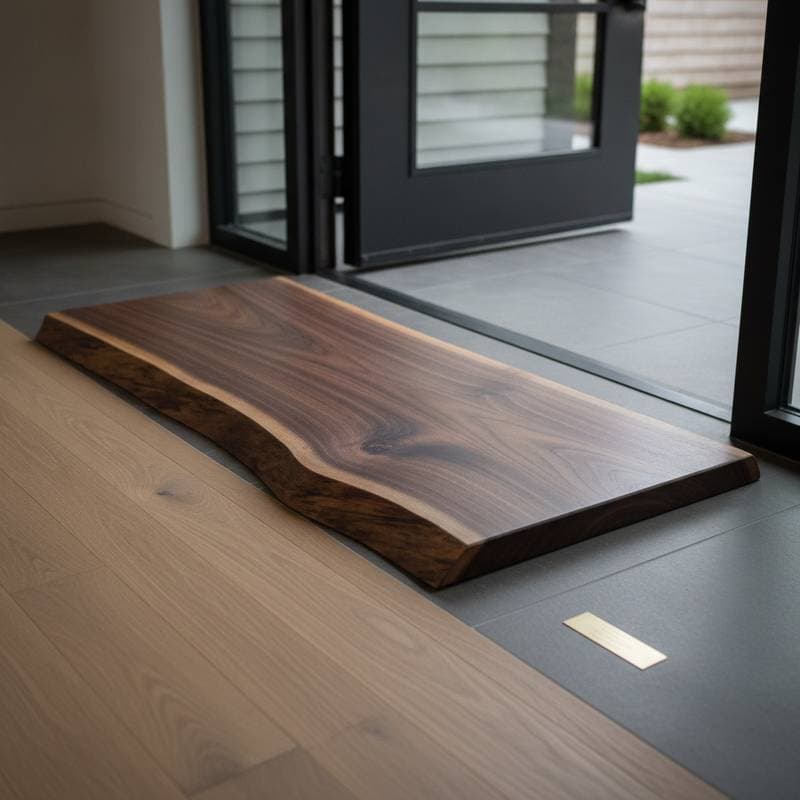
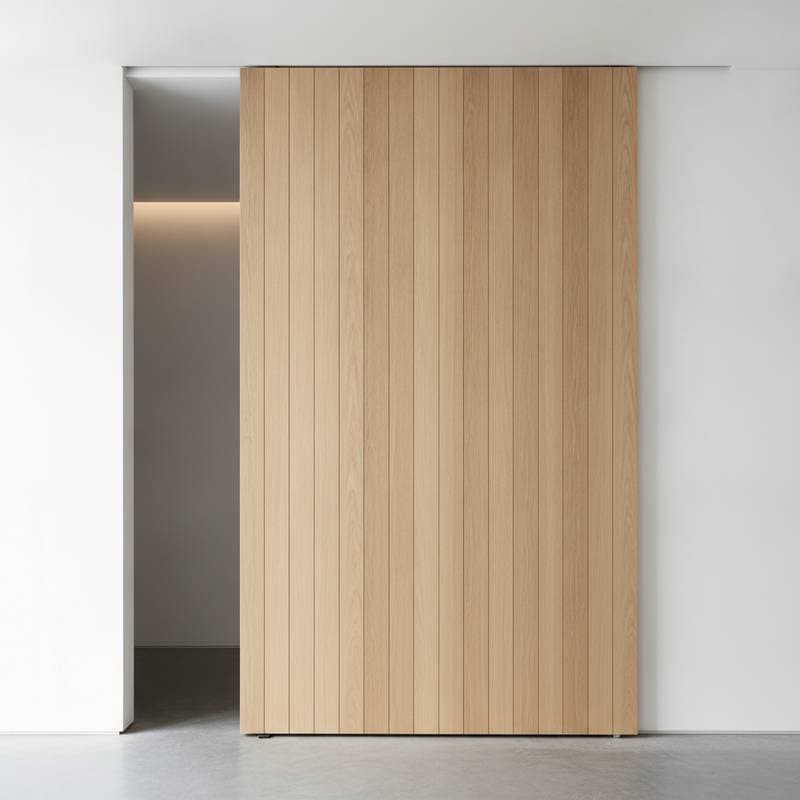
The entry door serves as the design's anchor, influencing the overall mood. Prioritize doors with unadorned profiles and inherent wood patterns to align with Japandi's clean aesthetic. Finishes in light oak, ash, or walnut integrate seamlessly with interior schemes, while matte black hardware provides understated definition.
| Door Material | Cost Range | Key Features |
|---|---|---|
| Solid Oak | $1,200 to $3,000 | Durable, strong grain, natural finish |
| Engineered Wood | $800 to $2,000 | Stable, cost-effective, customizable stains |
| Bamboo Veneer | $900 to $2,400 | Sustainable, lightweight, distinctive texture |
| Composite Wood | $700 to $1,800 | Moisture-resistant, lower maintenance |
A professional installer from Horizon Woodworks observes, “For Japandi, simplicity is the best luxury. A solid core door with a clear finish conveys craftsmanship and calm without distractions.”
Factors That Influence Project Costs
Multiple elements shape the final expense of a Japandi entryway project. Awareness of these factors enables precise financial planning.
- Size of the entryway: Expansive areas demand greater quantities of flooring and fixtures, elevating both materials and installation fees.
- Material selection: Eco-friendly imports, such as reclaimed bamboo, command premiums over locally sourced alternatives like pine.
- Customization: Tailored elements, including integrated shelving or etched glass inserts, boost upfront costs yet enhance durability and appeal.
- Labor rates: Urban professionals charge higher for precise work, such as aligning door frames with minimalist trim.
- Finishing touches: Incorporate elements like diffused LED strips or slim wall mirrors to refine the space economically.
Professional involvement typically constitutes 40 to 50 percent of expenses, reflecting the precision required for seamless execution.
Expert Tips for a Functional Japandi Entryway
Achieve practicality in your design through targeted strategies.
- Plan storage early: Integrate concealed compartments within cabinetry to stow seasonal items, preserving surface clarity.
- Use layered lighting: Blend ceiling pendants with adjustable sconces for adaptable illumination that suits evening arrivals or morning departures.
- Select quality over quantity: Invest in one artisanal piece, such as a hand-turned wooden stool, to anchor the composition.
- Balance textures: Contrast polished surfaces with nubby fabrics, like a linen throw on a teak bench, for tactile interest.
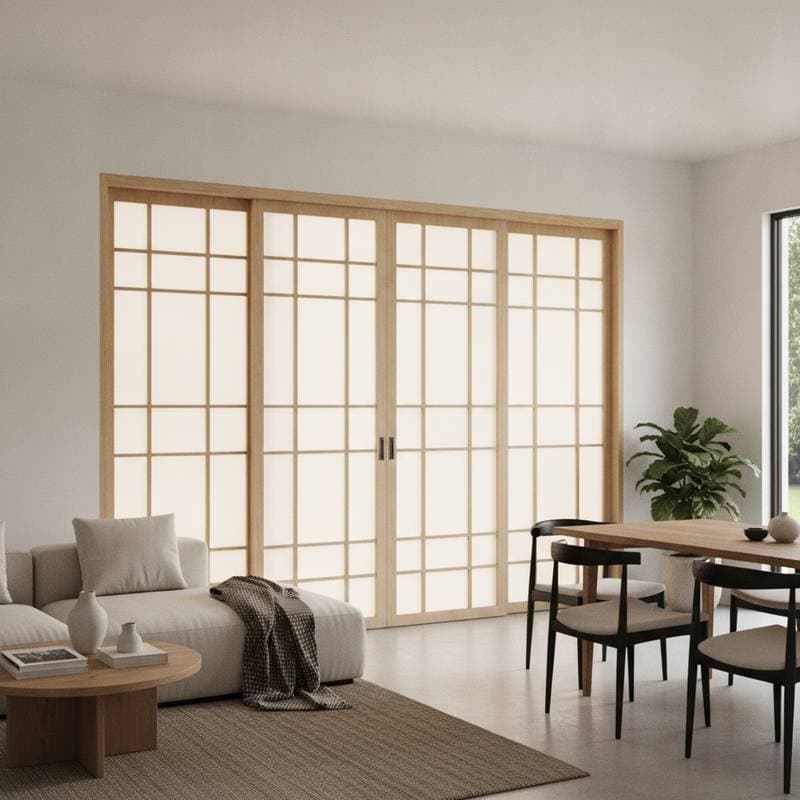
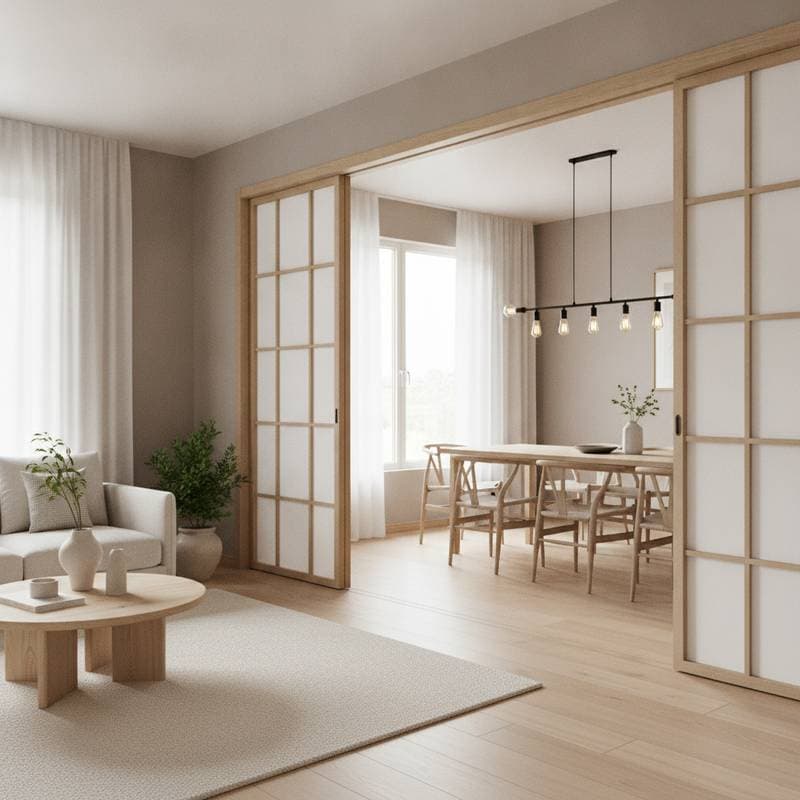
- Maintain visual flow: Position slim hooks or open shelving to connect the entry with adjacent living areas, avoiding partitions that disrupt harmony.
Maintaining Your Japandi Entryway
Preserve the entryway's refined appearance with routine care. Dust surfaces weekly using soft cloths, and mop floors gently with pH-neutral solutions to protect wood finishes. Apply natural oils to doors and accents annually to sustain their luster, and fit protective pads beneath any movable pieces to guard against wear.
Implementing Japandi in Your Home
Transitioning to a Japandi entryway begins with evaluating existing features and pinpointing opportunities for simplification. Introduce one element at a time, such as swapping hardware or adding a single plant, to build cohesion gradually. This approach yields a space that not only reflects enduring style but also supports effortless daily living with poise and comfort.