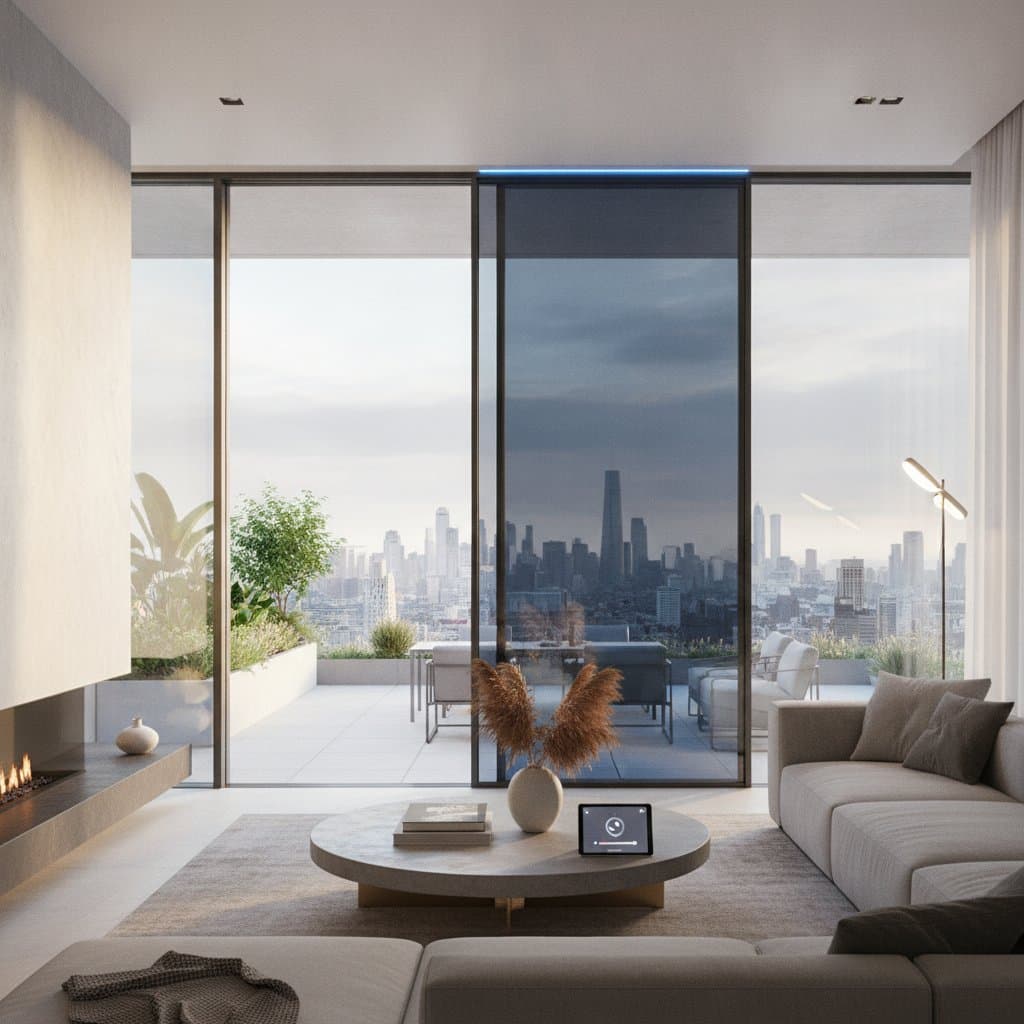

Introduction to Electrochromic Doors
Electrochromic doors integrate advanced technology into everyday architecture. These smart glass panels use electrical currents to change from transparent to opaque in seconds, offering privacy without permanent barriers. Homeowners gain control over light and views, enhancing both functionality and style in living spaces.
This innovation suits various settings, from urban apartments to suburban homes. The doors respond to a simple switch, app, or voice command, adapting to daily needs. Beyond privacy, they contribute to energy savings by regulating indoor temperatures through selective light blocking.
Selecting the right electrochromic door involves considering size, frame materials, and integration with existing decor. Options range from basic models for single doors to expansive systems for room dividers. Understanding these elements ensures a seamless addition to any interior.
Key Benefits of Smart Glass Doors
Privacy features activate instantly, creating secluded areas without drawing curtains or installing blinds. This eliminates visual clutter and maintains open sightlines when desired. The technology proves ideal for home offices, bathrooms, or entertaining spaces.
Energy efficiency stands out as a major advantage. Opaque modes reduce solar heat gain, lowering cooling costs during summer months. In winter, clear settings allow passive solar heating, balancing comfort year-round. Paired with insulated frames, these doors enhance overall home performance.
Design flexibility elevates interiors with modern elegance. Available in frameless or framed versions, they complement minimalist, contemporary, or traditional styles. Tints range from subtle frosted effects to full opacity, allowing customization to match personal taste.
Durability ensures long-term value. High-quality panels resist fading and scratching, maintaining clarity over years of use. Low-voltage operation minimizes energy consumption, often drawing less power than standard lighting fixtures.
Common Mistakes to Avoid
Selecting an inappropriate tint level can disrupt room ambiance. An overly dark opaque setting might make areas feel confined, especially in smaller spaces. Test various opacity options under both natural daylight and indoor lighting conditions prior to purchase. Observe how each level affects visibility and mood to find the optimal balance.
Opting for do-it-yourself installation poses risks to safety and functionality. Improper wiring may lead to electrical hazards or uneven operation, while misaligned panels could cause premature wear. Engage a certified professional who specializes in smart glass systems. They handle precise calibration, secure mounting, and integration with home automation, guaranteeing reliable performance for years.
Overlooking compatibility with existing infrastructure leads to costly adjustments. Verify that the door's power requirements align with your electrical setup. Consult with installers early to assess structural supports and wiring paths, avoiding surprises during the project.
Neglecting maintenance routines shortens the lifespan of the technology. Dust accumulation on surfaces can impair switching speed, and exposure to harsh chemicals damages coatings. Follow manufacturer guidelines for gentle cleaning with microfiber cloths and approved solutions to preserve clarity and responsiveness.
Planning Your Installation: A Comprehensive Checklist
Thorough preparation sets the foundation for successful electrochromic door integration. Begin by documenting your space to visualize the final result. This step reveals potential challenges and opportunities for enhancement.
Documenting Your Current Space
Capture exterior views from several angles to assess architectural harmony. Note how the new doors will interact with siding, roofing, and landscaping elements. This evaluation informs choices in frame profiles and finishes that blend seamlessly.
Examine interior details around entry points. Record wall colors, flooring types, and adjacent fixtures to guide material selections. Matching hardware styles, such as handles or hinges, creates cohesive flow throughout the home.
Considering External Factors
Review neighborhood aesthetics and any homeowners association rules. Smart glass installations must adhere to guidelines on visibility and exterior appearance. Obtain necessary approvals in advance to prevent delays or modifications.
Account for local climate patterns. Track sunlight progression across your rooms at different times of day. Large glass areas benefit from adjustable tinting to manage glare and heat, particularly in sunny regions.
Setting Financial and Practical Boundaries
Establish a clear project budget, allocating funds between the glass technology, framing, and ancillary features like automation controls. Prioritize essentials such as safety certifications over aesthetic upgrades if resources prove limited.
Consult with suppliers for samples and demonstrations. Hands-on testing confirms the door's operation suits your lifestyle. Factor in ongoing costs, including electricity usage and potential warranty extensions.
Integrating Smart Glass with Your Design
Pair electrochromic doors with complementary materials for visual unity. Wood frames warm up sleek glass surfaces, while metal accents add industrial edge. Consider textures like matte finishes to reduce glare and enhance tactile appeal.
Coordinate with lighting schemes for optimal effect. Dimmers and smart bulbs sync with door states, creating layered ambiance. In kitchens or living areas, this setup supports versatile moods from bright and open to intimate and subdued.
Incorporate automation for effortless control. Link doors to motion sensors or schedules via home systems. This automation streamlines routines, such as tinting for movie nights or clearing for daytime views.
For multi-door setups, ensure uniform operation. Centralized controls prevent mismatched states, maintaining design consistency. Professional calibration during installation achieves synchronized performance across units.
Achieving Seamless Functionality
Electrochromic doors merge cutting-edge innovation with practical living. They deliver privacy solutions that adapt without adding bulk, style that endures without high upkeep, and efficiency that supports sustainable habits.
Careful attention to budget, professional guidance, and design synergy yields spaces that evolve with needs. This technology advances toward flexible environments where aesthetics, utility, and resilience unite in elegant, responsive forms.