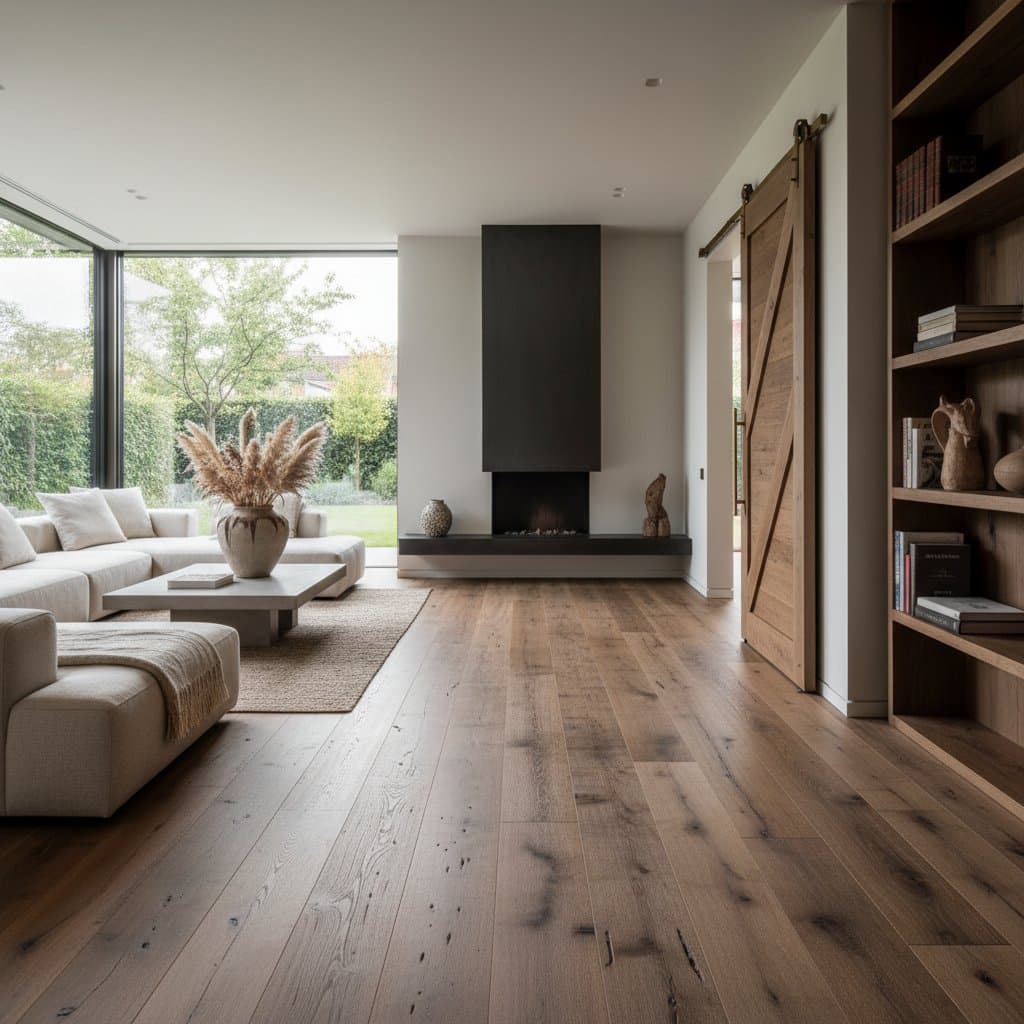
Reclaimed Barn Wood Floors: From Rustic Charm to Luxury Essential
Reclaimed barn wood flooring has evolved from a niche rustic option to a premium design choice. Homeowners and designers now value this material for its historical depth and genuine authenticity. As sourcing becomes more challenging and milling techniques more refined, the market expands while prices reflect the specialized craftsmanship involved.
A thoughtfully installed reclaimed barn wood floor elevates any room. The wood features unique textures, such as nail holes and weathered patina, that convey a narrative unmatched by synthetic alternatives. However, rising costs and precise installation requirements demand careful planning. Homeowners benefit from insights into pricing drivers and budget strategies to align aesthetic goals with practical considerations.
Why Reclaimed Barn Wood Captivates
Reclaimed barn wood flooring delivers rich character through its varied grains and subtle imperfections. Each plank shows evidence of its previous use, including saw marks and faded hues from years of exposure. These elements introduce organic movement that infuses spaces with warmth and interest.
This flooring suits diverse aesthetics. In farmhouse designs, it pairs with dark window frames and subdued hardware. Contemporary spaces gain dimension against clean walls and sleek surfaces. Traditional renovations achieve historical accuracy, while industrial or coastal interiors use the wood's tonal shifts to anchor expansive areas.
Sustainability enhances its allure. Reclaimed wood minimizes resource consumption, diverts waste from landfills, and supports forest preservation. Homeowners often appreciate the backstory of planks from old barns or mills, which adds sentimental worth to the investment.
Strategies to Achieve the Reclaimed Look
Budget-Conscious Option (6000 to 9000 dollars for a typical room)
- Select engineered flooring topped with a veneer of genuine reclaimed barn wood, secured to a plywood core for stability.
- Apply the material selectively in high-impact zones, such as a foyer or living area, and pair it with compatible new wood elsewhere.
- Apply a natural oil finish to accentuate the wood's patterns while controlling expenses, avoiding pricier lacquers.
Balanced Investment (10000 to 15000 dollars)
- Source solid planks from blended species like oak, chestnut, or pine for varied appeal.
- Ensure uniform thickness and precise tongue-and-groove edges to simplify laying.
- Engage professionals for sanding and sealing that preserve color diversity and enhance longevity.
- Complement the floors with painted trim and straightforward panel doors to emphasize the wood's surface.
Premium Commitment (18000 to 25000 dollars)
- Choose broad planks of uniform species, such as oak or heart pine, selected for harmonious color and pattern.
- Specify bespoke treatments like hand-applied oils and subtle sealants to retain the wood's evolving character.
- Employ installers skilled in handling reclaimed materials to secure seamless fits and proper subfloor readiness.
- Incorporate matching wood in stairs and thresholds for seamless continuity.
Selecting Complementary Materials and Finishes
Windows
Black or bronze frames harmonize with the wood's earthy shades. For gentler contrasts, opt for taupe or cream wood frames. Narrow designs keep attention on the flooring's details.
Doors
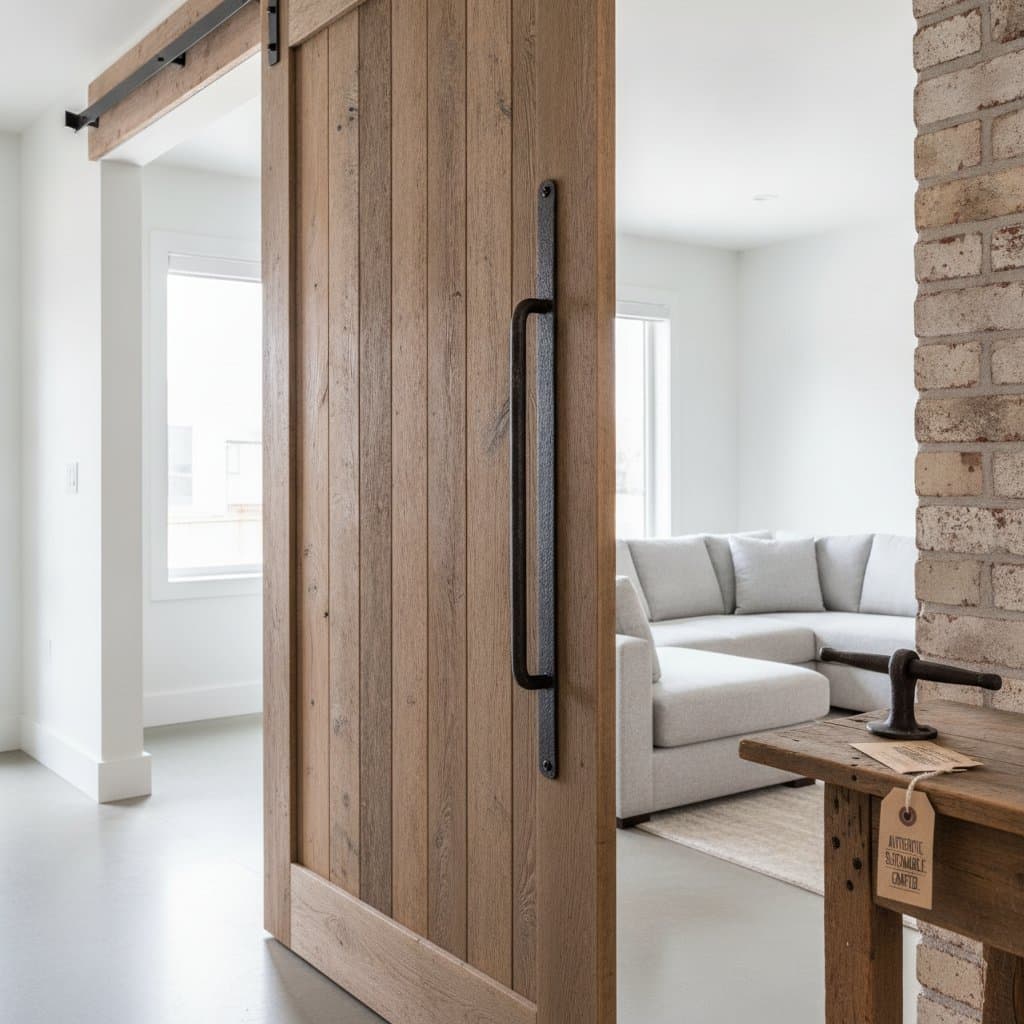
Doors in white oak or knotty alder with matte clear coats reinforce the floor's heritage. In modern contexts, flat slab doors with neutral tones provide equilibrium. Select hardware in brass, iron, or black finishes to support the style without distraction.
Siding
For outdoor extensions, composite panels simulating barn wood offer low-maintenance replication of aged textures. Authentic reclaimed siding benefits from UV-protective oils to moderate further aging.
Trim and Details
Paint trim in off-white, gray, or charcoal for subtle framing. Install vertical shiplap accents in a paler shade on walls to build layers. Add black grilles to windows and minimalist metal lights for polish.
Essential Maintenance Practices
Reclaimed wood demands regular upkeep to preserve its integrity. The textured surface conceals minor abrasions better than pristine finishes, yet protective layers require renewal. Oil treatments need reapplication to sustain vibrancy and barrier strength, while polyurethane options endure longer at the cost of some natural tactility.
Control humidity to prevent expansion or contraction. Install whole-home systems to stabilize moisture levels. Place rugs at entrances to block abrasive particles, and use felt protectors on furniture legs to minimize marks.
Clean gently with pH-balanced solutions and minimal water. Over time, the patina matures naturally, but excess dampness risks swelling or distortion.
Common Pitfalls to Sidestep
- Neglect acclimation: Allow wood to adjust in the space for days prior to installation to avoid subsequent shrinkage or buckling.
- Combine untreated and prefinished planks: Such mismatches disrupt uniformity; commit to a single finishing method.
- Sand excessively: Aggressive removal erases the desirable patina; employ light brushing or minimal abrasion instead.
- Overlook subfloor checks: Irregular bases lead to noises and separations; conduct leveling and moisture assessments upfront.
Harmonizing Colors and Styles
Integrate reclaimed floors thoughtfully with surrounding elements for cohesive appeal. Explore these pairings:
- Warm rustic: Golden oak floors with cream trim, black accents, and fabric upholstery.
- Modern edge: Gray-toned barn wood against white walls, black frames, and steel fixtures.
- Timeless neutral: Light pine in golden hues with gray storage and brass hardware.
- Coastal ease: Washed-light planks, beige exteriors, and blue-gray entries.
- Industrial depth: Dark walnut floors, charcoal borders, and metal exposures.
These schemes amplify the wood's nuances while unifying floors with doors and structures.
Factors Driving Cost Increases
Supply constraints and demand surges elevate reclaimed barn wood prices. Sourcing relies on salvaging from aging buildings, a diminishing resource as demolition opportunities wane.
Preparation intensifies expenses: removal of fasteners, drying, and resizing demand precision, with flawed pieces culled to maintain quality. Labor shortages among specialists further inflate rates.
Growing interest in eco-friendly, character-rich options sustains momentum. Media showcases in high-end projects position reclaimed wood as a sustainable luxury comparable to rare imports, blending origin tales with superior workmanship.
Project Preparation Steps
Document site specifics and objectives early to guide selections. This approach averts errors and aligns materials with the home's framework.
Pre-Shopping Checklist:
- Capture images of exteriors and interiors from various perspectives.
- Assess style and catalog current features like trim and doors.
- Verify community rules on modifications or palettes.
- Evaluate local weather patterns, focusing on moisture and temperatures.
- Define budget limits, prioritizing coverage, treatments, and labor.
Such diligence streamlines choices for enduring performance and visual fit.
Aligning with Broader Design Choices
Reclaimed floors dictate the room's atmosphere, influencing windows, doors, and exteriors. Strategic pairings foster intentional cohesion.
- Windows: Favor unadorned frames to let the wood's complexity shine.
- Doors: Use similar woods in plank or panel forms with subdued hardware.
- Transitions: Match entry doors or decks to interior shades for fluid flow.
Opt for warm lighting to showcase grain details; cooler tones may dull the warmth.
Environmental Benefits and Enduring Worth
Reclaimed wood advances conservation by repurposing seasoned lumber from demolition sites. This practice spares trees and cuts waste.
Durability ensures lasting returns. With correct setup, these floors withstand decades, their surfaces masking everyday use while maturing attractively. During sales, the eco-credentials and artisanal quality appeal to discerning buyers, bolstering home equity.
Infusing Personal Narrative
Reclaimed barn wood transcends function to evoke heritage. Marks from past eras and gradual tonal changes forge a bond to enduring craft. Selecting this flooring invites homeowners to embed stories of resilience into their living spaces.