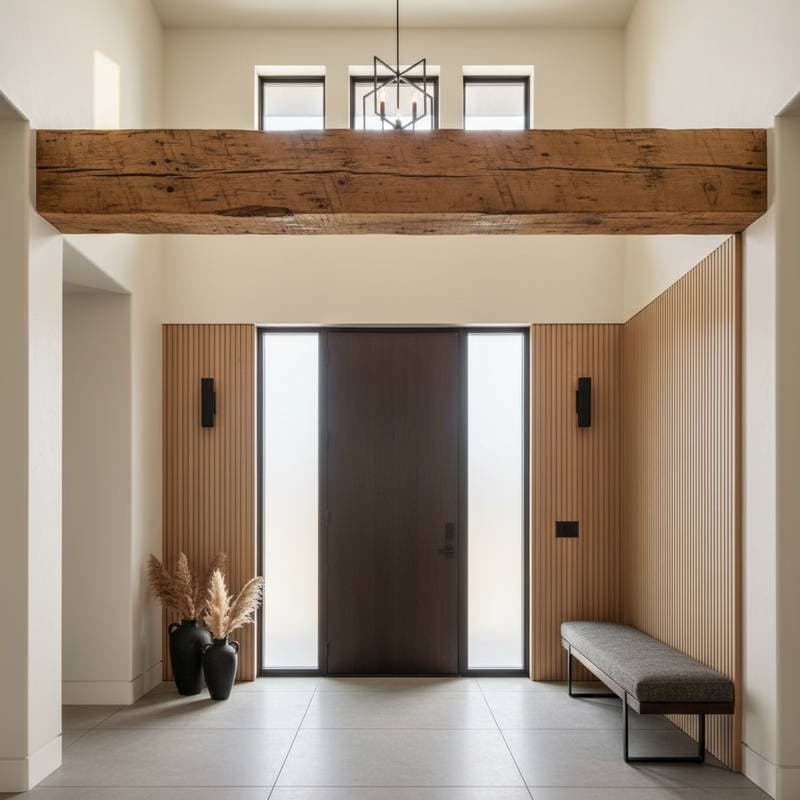
The $5K Reclaimed Beam Trend Redefining Entryways
Reclaimed beams have evolved from subtle rustic accents to bold statements in contemporary entryways. Homeowners frame front doors with salvaged timber to produce grounded, inviting spaces that merge environmental responsibility with enduring design. The charm stems from pairing the rough patina of seasoned wood against the precision of modern builds. Such integration delivers genuine depth and a lasting quality absent in synthetic alternatives.
This aesthetic adapts to diverse budgets, from bespoke installations to resourceful material sourcing. The inherent grain, patina, and narrative of vintage timber provide a sensory richness that elevates basic doorways to central design elements.
Three Ways to Achieve This Look
Budget-Friendly Approach ($1,500 - $3,000)
- Select polyurethane faux beams cast from authentic wood molds for lightweight installation.
- Apply paints or stains to replicate the nuances of weathered oak or chestnut.
- Position these as ornamental surrounds around the door, avoiding load-bearing roles.
- Invest in a solid wood door with pronounced grain to harmonize with the beam's rustic vibe.
This method delivers the visual effect without the demands of transporting or mounting heavy lumber. It supports do-it-yourself projects and fits compact porches or sheltered entries effectively.
Mid-Range Approach ($3,000 - $6,000)
- Acquire authentic reclaimed beams from nearby salvage operations or reuse facilities.
- Combine with a wood door stained to match, incorporating divided-lite glass for subtle elegance.
- Incorporate black iron strap hinges or matte bronze fittings for striking contrast.
- Select pre-finished siding that mirrors the beam's hue to foster unified warmth.
This option merges true wood authenticity with fiscal restraint, demanding only routine care. It appeals to those seeking genuine materials integrated into existing frameworks without full renovations.
Premium Approach ($6,000 - $12,000)
- Order tailor-made beams from reclaimed oak or Douglas fir, showcasing mortise details and natural aging.
- Extend the framework over porch ceilings or form a timbered portico around the entry.
- Match with a custom solid wood door, including textured glass panels and forged hardware.
- Ground the composition with natural stone or brick bases for visual and structural stability.
This level prioritizes artisanal quality and resilience. The investment secures a distinctive entry that defines the home's character over time.
Material and Finish Guide
Windows
Opt for black or bronze frames to offset the wood's warmth. Casement styles or fixed panes with slim muntins offer contemporary poise beside rugged beams. Oil-rubbed bronze or antique brass hardware aligns with the wood's patina while ensuring versatility.
Doors
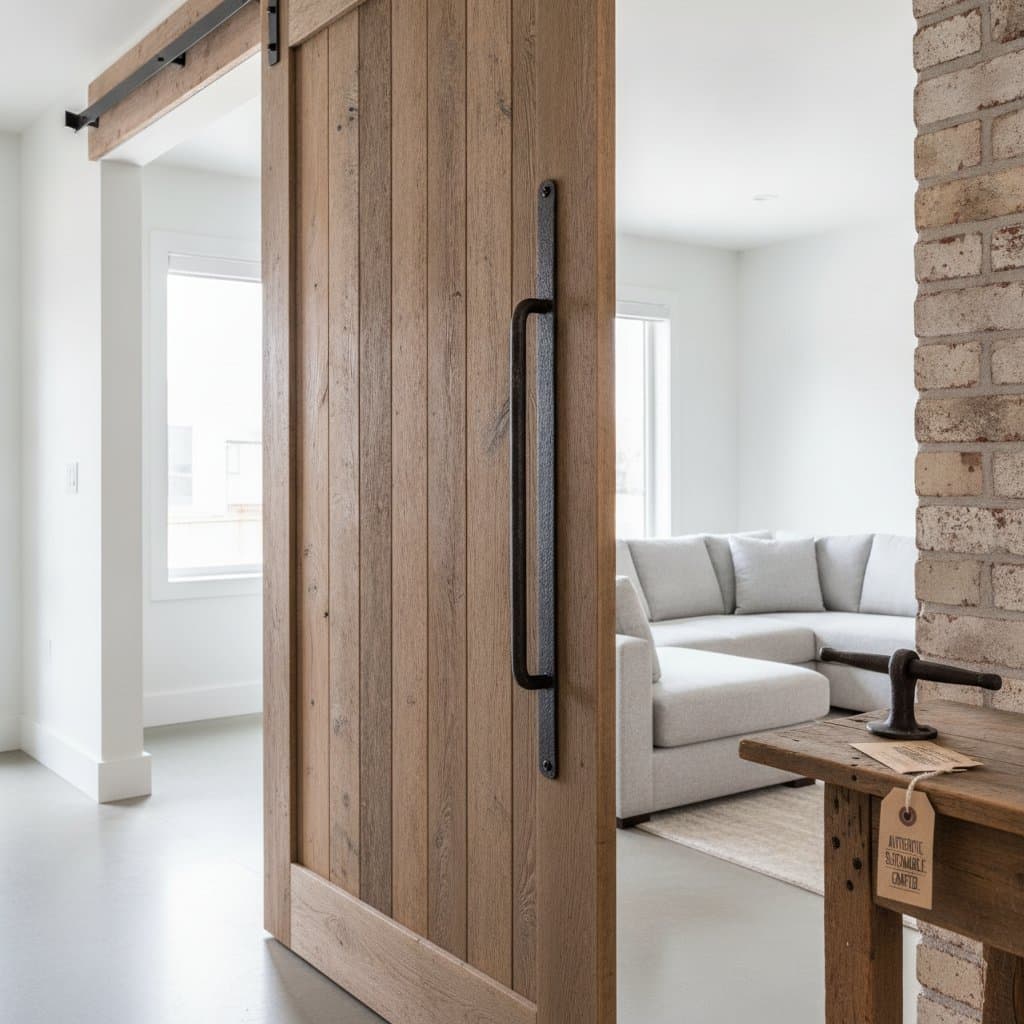
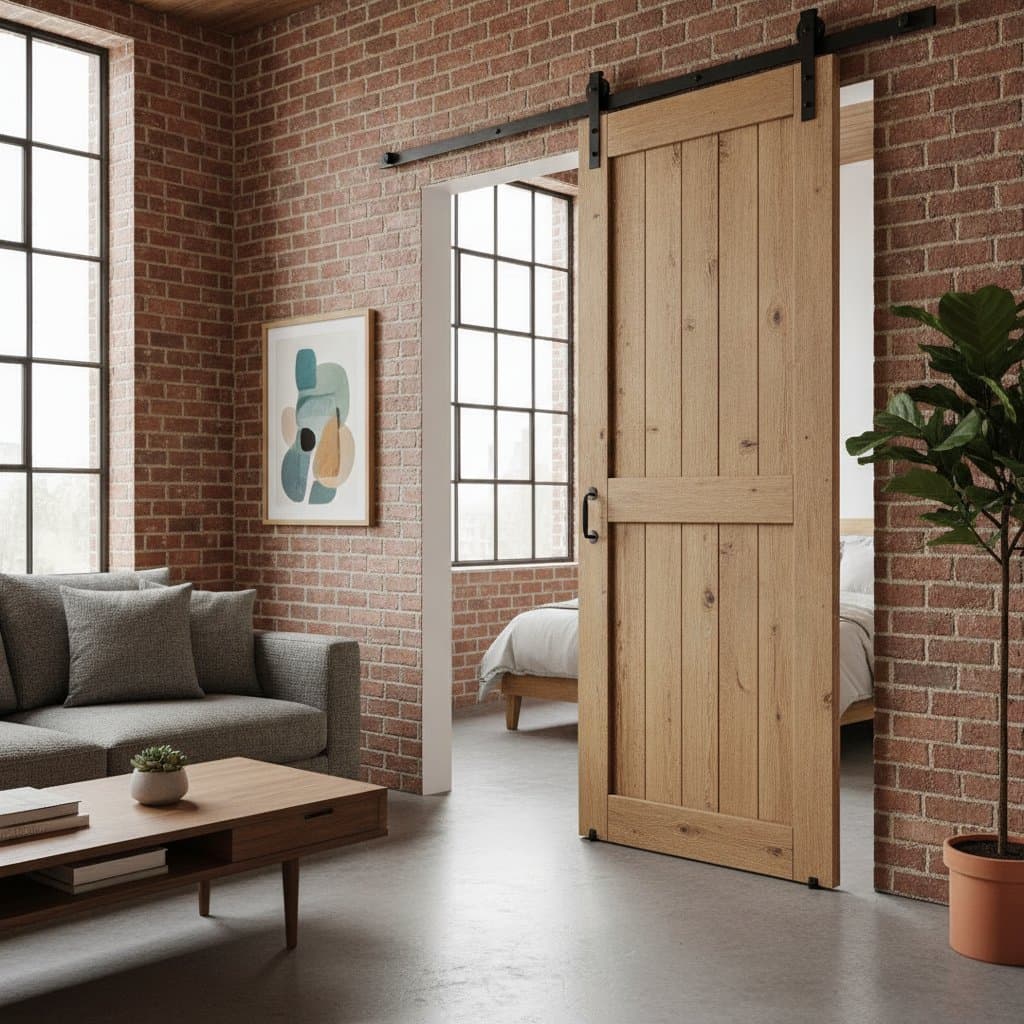
Knotty alder, white oak, or mahogany varieties complement reclaimed beams seamlessly. Prioritize finishes that expose the grain for natural expression. Seeded or reeded glass inserts soften light transmission and preserve seclusion. Forged metal handles or latches provide weighty, engaging details.
Siding
Horizontal lap styles in subdued shades like driftwood gray or warm taupe recede to spotlight the beams. Board-and-batten or shiplap adds subtle dimension. Fiber cement options simulate wood veining with reduced upkeep.
Trim and Accents
Employ cedar or composite trim in neutral paints. Incorporate a salvaged wood bench or planters to reinforce the texture. Dark metal or aged copper lanterns illuminate the wood's contours after dark.
Maintenance Considerations
Reclaimed wood's imperfections enhance its allure, yet demand proactive care. Seal genuine timber against moisture and pests using matte polyurethane or oil treatments to preserve the patina. In moist environments, inspect yearly for mold or rot.
Faux beams need little attention beyond dusting or gentle cleaning. They resist warping or cracking, ideal for sun-drenched or rainy exposures. Pre-finished siding and composites around the entry minimize repainting needs.
Select durable metals with coatings for outdoor hardware. Inspect and lubricate components periodically to avert rust. Consistent attention keeps the rustic charm polished.
Common Pitfalls to Avoid
- Excessive Material Overlap: Blanketing the facade in reclaimed wood risks a ponderous appearance. Offset it with pale hues and sleek planes to maintain lightness.
- Proportion Imbalance: Thick beams on modest porches dominate unduly. Align beam scale with door dimensions and overhead clearance for equilibrium.
- Finish Mismatches: Pairing raw wood with coated trim invites inconsistent aging. Sample stains and sealants to achieve cohesion.
- Structural Oversights: Added timber weight requires verification of support capacity. Engage professionals to sidestep expensive adjustments.
- Costly Illusions: Premium pricing for faux-reclaimed lumber seldom yields real character. Seek regional salvagers focused on barn or factory timbers.
Color and Style Coordination
Effective beam entries rely on thoughtful hues that amplify the wood's qualities. Position the timber as the core warm element, surrounded by neutrals for emphasis.
Recommended Palette
- Weathered Oak: Gentle golden-brown for inviting depth.
- Charcoal Black: Suited to frames, fixtures, or accents for definition.
- Stone Gray: Cooling siding that accentuates wood warmth.
- Soft White: Refreshing choice for trim and eaves.
- Iron Bronze: Subtle metallic for hardware and supports.
This scheme adapts to farmhouse, craftsman, or sleek modern facades, accommodating varied finishes.
Planning and Documentation Checklist
Document your entryway meticulously before procurement or contractor involvement. Detailed images aid in assessing scale, illumination, and tonal harmony.
Homeowner Checklist
- Photograph the entry from multiple views, including details of trim, door, and lights.
- Catalog style traits like roof pitches, pillars, or surface textures.
- Consider local surroundings to blend with neighboring aesthetics.
- Review HOA guidelines or municipal codes impacting exteriors.
- Evaluate weather influences such as sunlight, winds, and precipitation.
- Establish budget limits and rank priorities like doors or beams.
Regional and Climate Adaptations
Coastal areas benefit from cedar or cypress beams resistant to salinity and dampness. Apply marine sealants for humidity protection. Arid zones call for UV-stable oils to curb splitting. Cold regions favor dense oaks that withstand freezing and thawing.
Ensure airflow gaps between beams and walls to deter moisture buildup. Stainless fasteners prevent discoloration. These measures sustain form and function year-round.
Incorporating Contemporary Elements
Reclaimed beams need not evoke pure rusticity. Blend in industrial or modern features for vitality, such as polished concrete paths, slim black sidelights, or streamlined numerals affixed to the beam. These updates render the entry timeless rather than dated.
Integrate smart illumination like base-mounted LEDs to cast evocative shadows on the grain. Merging tech with natural forms yields a refined, forward-looking rustic style.
Collaborating with Professionals
Irregular reclaimed pieces necessitate skilled handling. Request sourcing histories from vendors, including treatment records. Remove embedded nails or metals prior to fabrication.
Verify contractors' expertise in vintage wood applications. Sealing, fastening, and finishing vary from conventional methods. Clarify if beams serve structural purposes to outline supports. Align door, enclosure, and lighting selections from the outset for unity.
Crafting a Cohesive Entry
Reclaimed beam designs succeed by weaving narrative, legacy, and skill into welcoming portals. Thoughtful pairings of timber with doors, cladding, and fittings yield spaces that honor tradition while embracing daily life.
Balance defines the approach: patina meets precision, genuineness pairs with utility, and spending aligns with upkeep. Strategic preparation turns a standard threshold into an enduring emblem of home.