Privacy On-Demand: Electrochromic Doors for 2026 Homes
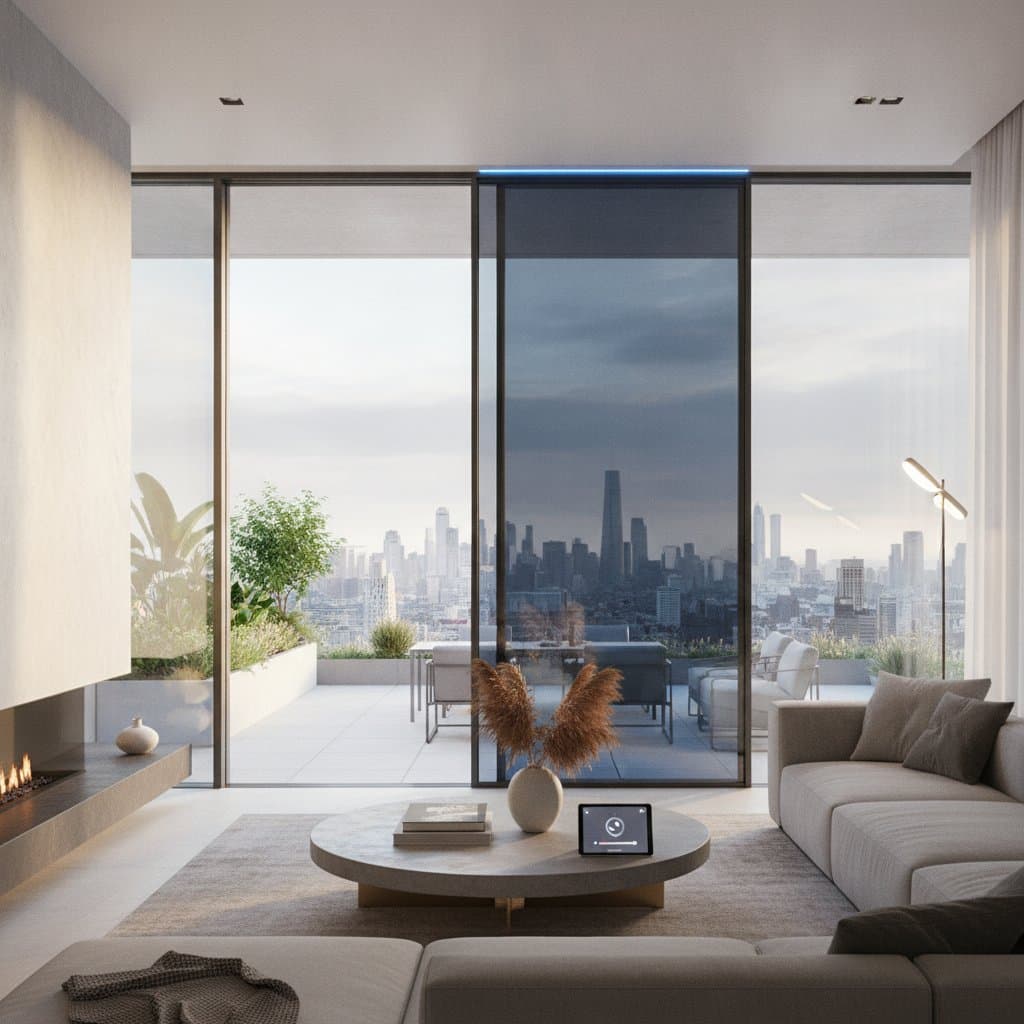
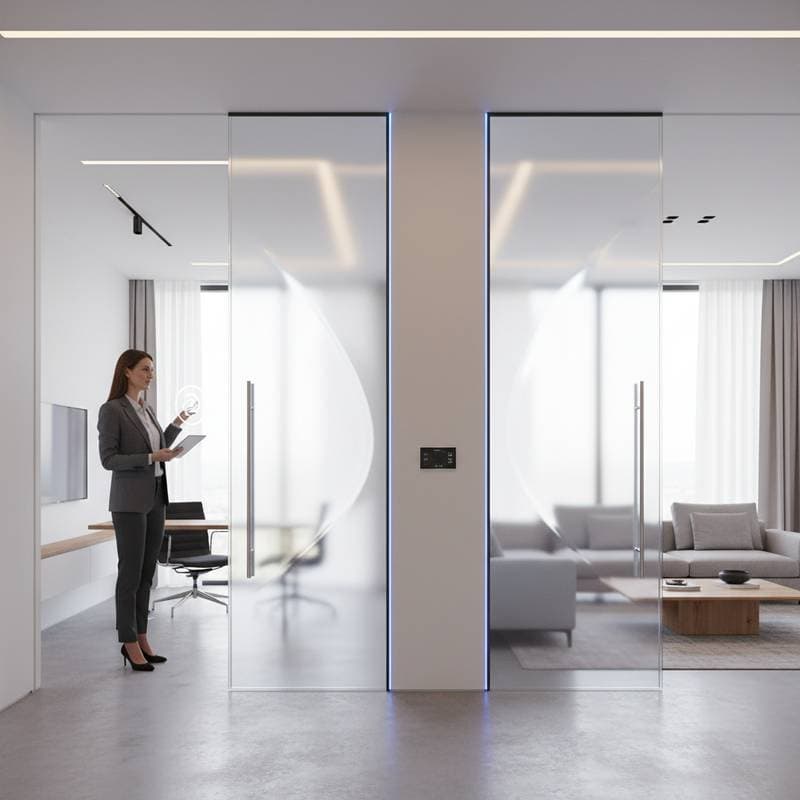
Smart home design evolves rapidly, making privacy as adjustable as lighting or temperature settings. Electrochromic doors, known as switchable privacy glass doors, redefine interior boundaries for homeowners. These doors transition from transparent to opaque with a simple button press, delivering privacy without blocking natural light or compromising style. As connected living advances, this technology shifts from experimental feature to essential design element.
Understanding Electrochromic Technology
Electrochromic glass incorporates layers of reactive materials that respond to low electrical voltages. Upon activation, ions shift within these layers, altering the glass from clear to tinted in a seamless process. No mechanical components or visible changes occur, preserving the door's elegant appearance and functionality for partitions or entryways.
Most installations connect to low-voltage wiring, operable via wall switches or smart home platforms. Advanced models integrate voice activation or app controls. Users can program the glass to stay clear, remain opaque, or adjust automatically using timers or motion detectors.
Material and Design Options
Electrochromic doors adapt to diverse interior styles, from modern to classic. Options include full-glass panels or wood-framed versions that blend technology with organic textures. Key glass types feature:
- Clear glass: Maximizes daylight in transparent mode and provides a uniform frosted effect when opaque.
- Tinted glass: Minimizes glare and heat from sunlight, suitable for brightly lit areas.
- Laminated safety glass: Enhances impact resistance and acoustic insulation, perfect for offices or wet zones.
Frames utilize aluminum for sleek minimalism, wood for inviting warmth, or composites for balanced durability. Select wood frames for cozy living spaces and aluminum for streamlined contemporary environments.
Comparing Privacy Technologies
Electrochromic doors belong to the category of switchable glass innovations. A comparison highlights their unique position among alternatives.
| Technology | Initial Cost | Lifespan | Maintenance | Best For |
|---|---|---|---|---|
| Electrochromic glass | Higher | Long | Minimal | Smart homes, offices, luxury interiors |
| PDLC (Polymer dispersed liquid crystal) | Medium | Moderate | Occasional recalibration | Bathrooms, conference rooms |
| Smart blinds or shades | Lower | Varies | Regular cleaning | Windows needing flexible shading |
Electrochromic options excel in longevity and clarity. They avoid the subtle haze of PDLC glass in clear states and block UV rays to protect interior surfaces.
Pros and Cons of Electrochromic Doors
Home upgrades require weighing benefits against challenges to set appropriate expectations.
Advantages
- Instant privacy control: Activate transparency or opacity via button, voice, or app.
- Energy efficiency: Tinting blocks solar heat, aiding climate control.
- Minimal maintenance: Absence of moving parts simplifies cleaning to standard glass care routines.
- Modern aesthetics: Seamless design enhances minimalist or high-tech interiors.
- Integration potential: Pairs with ecosystems like Alexa or Google Home for scheduled adjustments.
Disadvantages
- Higher upfront cost: Advanced materials and setup demand significant investment.
- Electrical dependency: Installation needs reliable wiring and power access.
- Transition duration: Certain models require up to several minutes for full state change.
- Limited color choices: Neutral tones dominate, restricting bold customization.
Homeowners prioritizing seamless automation and durability often justify the expense, while those seeking budget options may opt for targeted applications.
Installation Process Overview
Electrochromic door setup demands expertise beyond standard replacements, focusing on electrical and structural integration. Begin with a site assessment to evaluate power availability, wall reinforcements, and precise measurements. Electricians route low-voltage lines, while carpenters modify openings to fit the door's dimensions and weight.
During assembly, secure the panel, apply weatherproof seals, and link to controls. Test transitions for uniformity and stability before final calibration. Professionals handle smart pairings, ensuring compatibility with existing hubs. Post-installation, receive a manual on daily operation and basic troubleshooting to maximize reliability.
Applications Tailored to Daily Life
Select placement based on how light and seclusion influence routines. In bathrooms, eliminate bulky coverings for effortless seclusion. Home offices gain focus without isolation, preserving an expansive atmosphere.
Bedrooms benefit from adjustable illumination and barriers for restful transitions. Open living areas transform into zoned spaces for work or entertainment. Families appreciate the versatility: view play areas through clear panels, then obscure for bedtime routines. This adaptability suits evolving household dynamics without fixed divisions.
Long-Term Performance and Care
Electrochromic doors endure with routine attention, often outlasting initial costs through efficiency gains. Sealed mechanisms resist humidity and contaminants, supporting decades of use. Tinting cuts cooling demands, potentially trimming utility bills in sunny climates.
Clean surfaces with soft cloths and mild solutions, avoiding abrasives that could scratch coatings. Monitor controls for responsiveness; professional service addresses rare component failures. Future-proof designs accommodate updates via firmware or add-ons, aligning with advancing smart ecosystems.
Selecting and Integrating Electrochromic Doors
Assess needs systematically to choose optimal configurations. Budget for full costs, including labor, against long-term savings in energy and convenience. Pinpoint high-impact rooms where frequent adjustments enhance usability.
Align frames and finishes with current furnishings for cohesive appeal. Favor app-based controls for remote access or sensors for hands-free operation. Plan for scalability, ensuring compatibility with planned home automations.
Consult certified providers for specs on voltage draw, response times, and guarantees. Early collaboration between tradespeople streamlines retrofits, minimizing disruptions. Pair doors with complementary elements like transoms to unify aesthetics and functionality, delivering enduring value through innovative privacy.