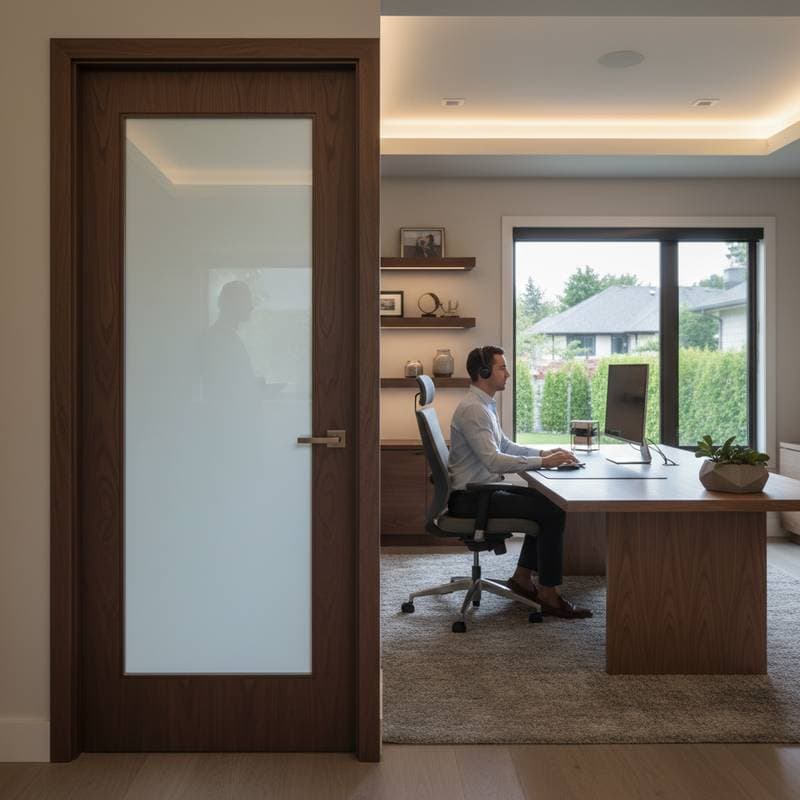
How Acoustic Doors Restore Focus in Work-from-Home Spaces
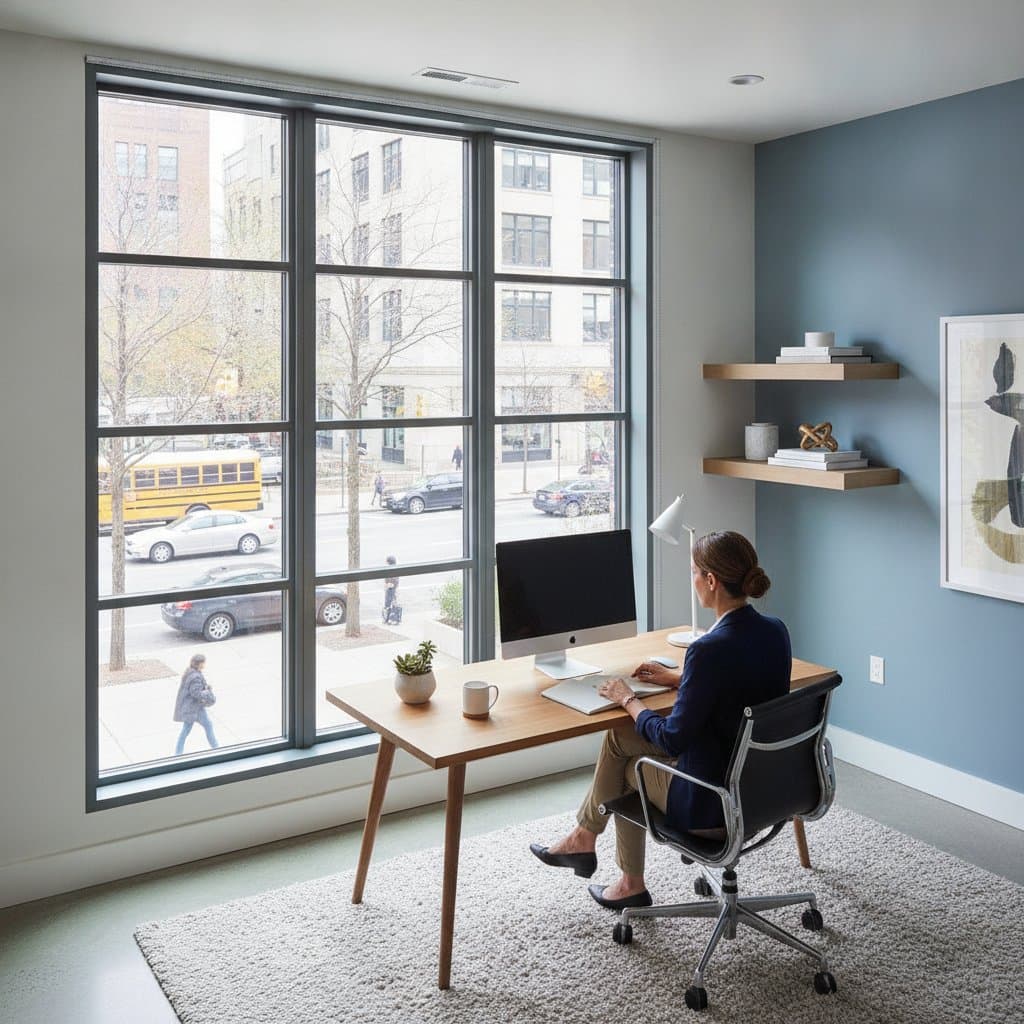
Remote work blurs the lines between home life and professional demands. Everyday sounds from family activities or household chores can disrupt calls, writing tasks, or deep concentration. Acoustic doors address this challenge by limiting noise passage between rooms, fostering a dedicated zone for uninterrupted productivity.
Key Features That Set Acoustic Doors Apart
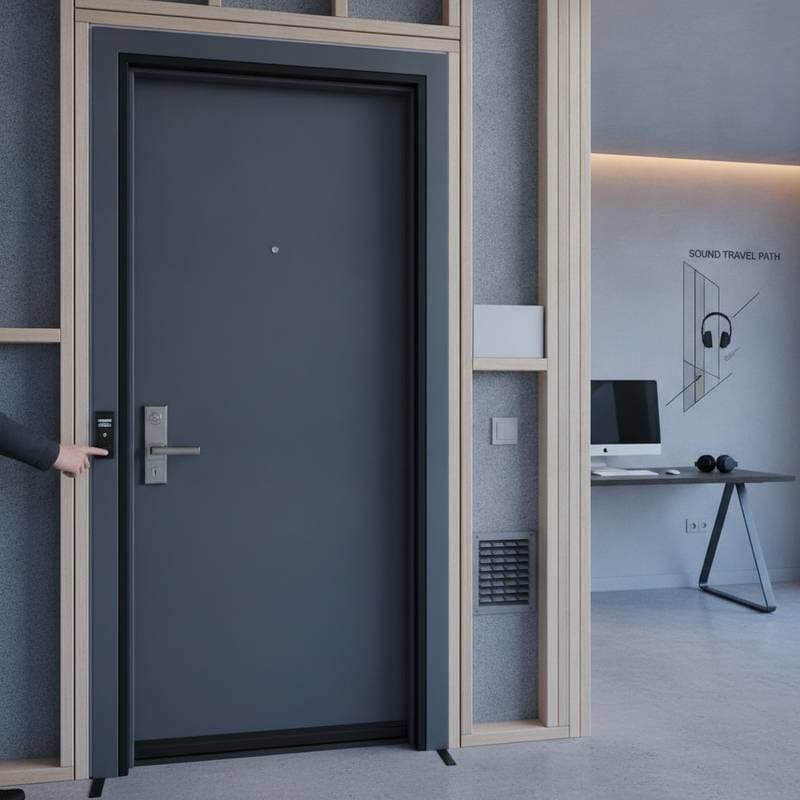
Acoustic doors resemble typical interior doors in appearance but incorporate advanced engineering for sound control. They feature dense cores made from solid wood composites or particleboard, paired with acoustic seals around the edges and sound-dampening infills. These elements trap airborne sounds, such as voices or appliance hums, preventing them from traveling through the door.
Performance relies on the Sound Transmission Class (STC) rating, which quantifies noise reduction on a scale from 20 to 60. For home offices, an STC of 30 to 40 typically suffices to muffle moderate disturbances. In busier households, opt for STC 45 or higher to handle overlapping noises from multiple occupants.
Acoustic Doors Versus Standard Interior Options
Hollow-core doors prioritize affordability and ease of handling but allow sounds to pass freely due to their lightweight build. In contrast, acoustic doors employ solid or multi-layered cores that reflect and absorb sound waves, achieving up to 50 percent better isolation. This upgrade demands careful consideration of weight, which influences hinge selection and frame reinforcement.
| Door Type | Initial Cost | Lifespan | Maintenance | Best For |
|---|---|---|---|---|
| Hollow Core | Low | Moderate | Minimal | General passageways |
| Solid Core | Medium | Long | Moderate | Quiet bedrooms |
| Acoustic Door | Medium-High | Long | Moderate | Productive home offices |
Acoustic doors strike a balance, outperforming basic solid cores without the bulk or expense of professional recording studio barriers.
Steps for Effective Acoustic Door Installation
Installation precision ensures optimal sound blocking, as even minor gaps undermine performance. Begin with accurate measurements of the door frame and opening to confirm compatibility with the door's dimensions.
Follow these structured steps:
- Assess and plan: Evaluate the wall's load-bearing capacity and level the floor. Verify the existing frame's squareness using a carpenter's square.
- Prepare the site: Remove the old door and clean the opening, shimming as needed for plumb alignment.
- Install components: Secure the new frame, hang the door slab, and apply acoustic seals to the top, sides, and bottom. Include an automatic drop seal for the threshold.
- Test and adjust: Close the door and check for drafts or vibrations. Fine-tune hinges and seals to eliminate any play.
- Verify performance: Simulate use by playing audio inside the room at conversational levels and assess audibility from outside. A well-installed door should reduce volume by at least 20 decibels.
Hire a professional for complex setups to avoid compromising the seals. Skilled DIYers can succeed with tools like a level and sealant applicator, but attention to detail remains essential.
Everyday Benefits for Remote Workers
Acoustic doors extend beyond silence to enhance overall well-being. They establish clear auditory zones, minimizing interruptions that lead to frustration or reduced output. During video meetings or focused tasks, a sealed door maintains professional poise without external echoes.
In family settings, these doors allow parents to work while children engage in play or screen time nearby. Creative professionals, such as writers or remote musicians, benefit from controlled acoustics that contain output noise, respecting shared living areas.
Evaluating Costs and Long-Term Returns
Expect to invest 20 to 50 percent more upfront for an acoustic door compared to a hollow-core model, with prices ranging from $300 to $800 depending on size and materials. However, their robust construction ensures 20 to 30 years of service, far outlasting cheaper alternatives.
The true value emerges in sustained productivity gains. Reduced distractions correlate with higher task completion rates and lower stress, potentially offsetting costs through improved work efficiency. Factor in energy savings from a more comfortable, zoned environment.
Integrating Acoustic Doors into Home Design
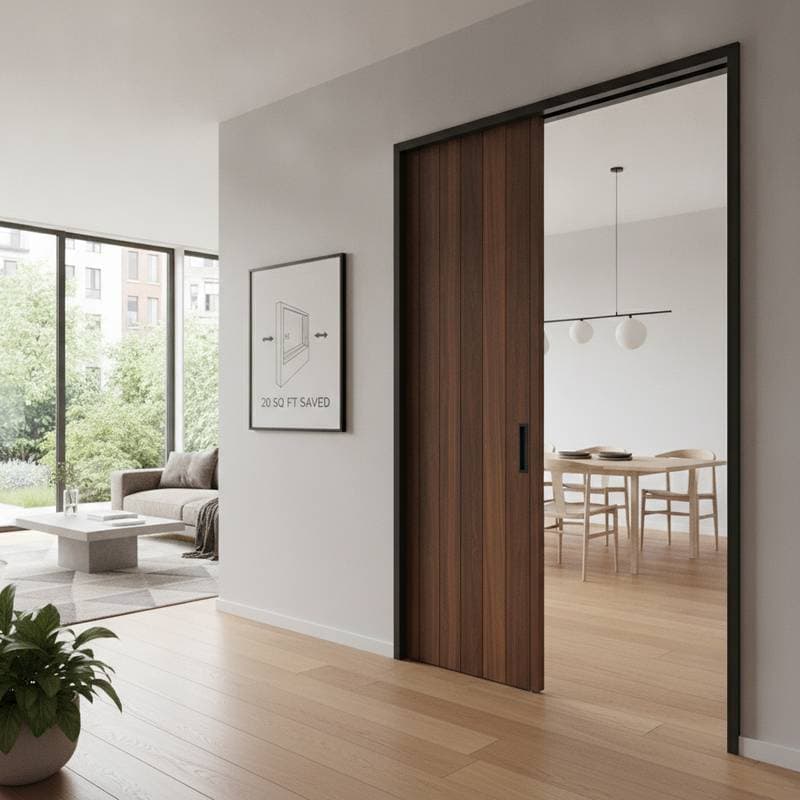
Functionality pairs seamlessly with style in acoustic doors. Choose from oak or maple veneers for warmth, or sleek laminate finishes for contemporary looks. Hardware options like soft-close hinges and lever sets maintain cohesion with surrounding decor.
In open-plan homes, select flush designs to blend subtly. For paneled interiors, match grain patterns to existing doors. Always confirm the door's STC rating aligns with needs without altering its visual appeal.
Simple Maintenance for Lasting Performance
Routine care keeps acoustic doors effective with little effort. Dust surfaces weekly and clean seals monthly using a soft cloth and neutral cleaner to preserve flexibility.
Annually inspect for seal compression or hinge wear; replace gaskets if gaps appear, a task costing under $50. Avoid heavy impacts to the core, and lubricate hinges sparingly to prevent squeaks. These habits sustain soundproofing without specialized tools.
Tailoring Acoustic Doors to Your Setup
Select based on specific usage patterns for maximum impact:
- Solo office: STC 30-35 with a neutral finish for everyday focus.
- Multi-user home: STC 40+ to isolate group activities or device sounds.
- Adjacent bedrooms: STC 35 with ventilation-friendly seals to balance quiet and air circulation.
Complement the door with soft furnishings like rugs or curtains, which absorb residual echoes and amplify overall quiet.
Final Steps to a Quieter Workspace
To implement, measure your space and consult manufacturer specs for STC compatibility. Test a sample seal if possible to gauge fit.
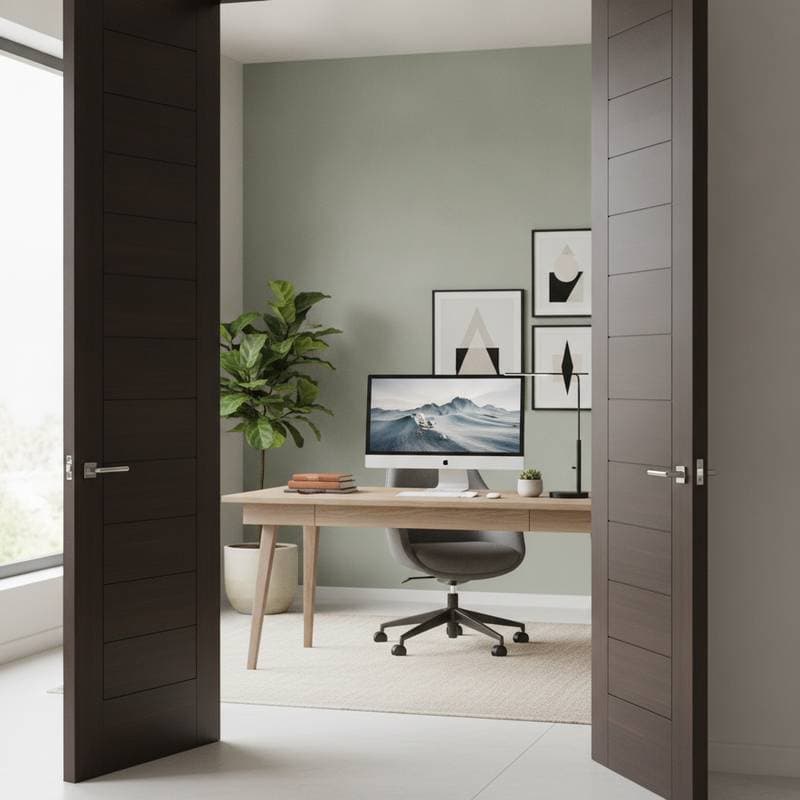
An acoustic door elevates the home office from mere accommodation to a true sanctuary. It delivers reliable noise control, stylish integration, and practical durability, empowering remote workers to thrive amid daily demands.