Understanding the Shift from Sliding to Stacking Glass Doors
Homeowners often find that traditional sliding glass doors limit access to patios or decks, as only one panel moves along the track. This restriction hampers airflow and obstructs views. Stacking glass doors address these issues by employing multiple panels that slide and stack to one side, opening up expansive areas that connect interior and exterior spaces seamlessly.
These systems appeal to those seeking modern functionality and abundant natural light. The following sections detail the differences, costs, installation process, maintenance, security features, and selection criteria to help you evaluate this upgrade.
Key Differences Between Stacking and Sliding Doors
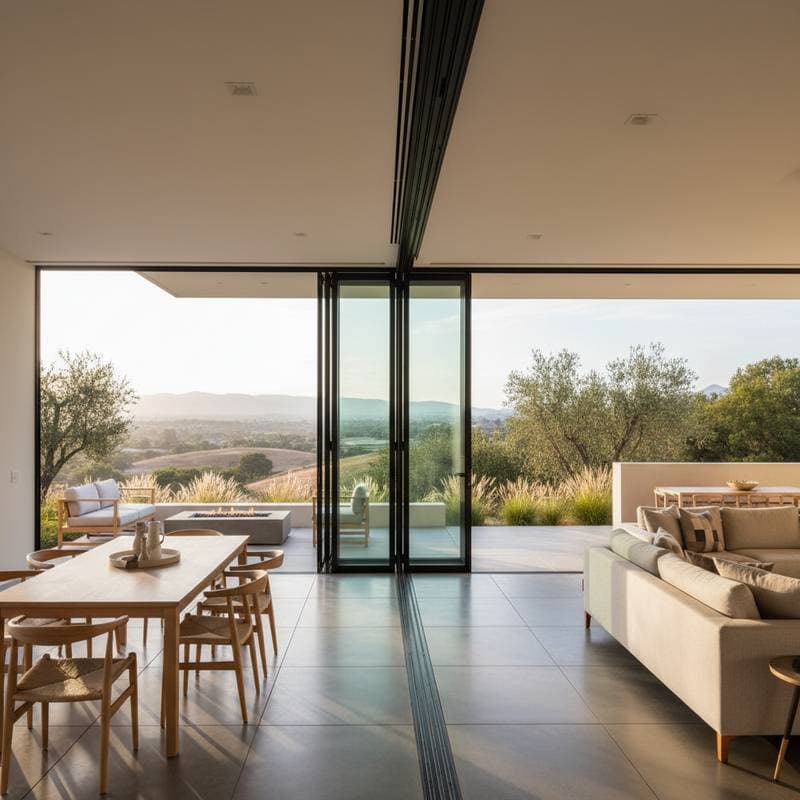
Sliding doors consist of two panels on a single track, where one panel shifts to allow partial access. In contrast, stacking doors utilize several panels that glide along parallel tracks and fold or stack compactly, often permitting up to 90 percent of the opening to remain unobstructed. Advanced configurations even recess panels into wall pockets for a fully hidden effect.
This arrangement enhances flexibility and maximizes sightlines. Robust hardware ensures effortless movement, even with heavy glass panels. Many owners report that the installation imparts an immediate sense of modernity to their rooms.
Factors Influencing Installation Costs
The overall expense hinges on project specifics, with costs typically ranging from $4,000 to $20,000. Consider these elements when budgeting:
| Cost Factor | Description | Typical Impact |
|---|---|---|
| Door Size and Panel Count | Larger configurations demand additional materials and support | $1,000 to $5,000 extra |
| Frame Material | Options like wood or aluminum-clad exceed basic vinyl | $500 to $4,000 extra |
| Glass Specifications | Energy-efficient Low-E or impact-resistant varieties increase price | $300 to $1,200 extra |
| Structural Adjustments | Modifications such as enlarging openings or installing headers | $2,000 to $5,000 extra |
| Labor and Setup | Intricate track alignment and professional expertise | $1,500 to $3,000 extra |
Local regulations, contractor qualifications, and site conditions also play roles. Experts advise a preliminary site assessment to identify necessary alterations before purchasing.
Step-by-Step Installation Overview
Projects usually span two to four days, based on complexity. Professionals follow a structured approach:
- Precise Measurement and Fabrication Professionals take exact measurements, as most systems receive custom manufacturing to match existing frames.
- Removal of Existing Setup Technicians dismantle the old sliding door and track with care to avoid structural damage.
- Preparation of Framework Teams reinforce walls or headers as needed and ensure the floor remains level for track placement.
- Assembly of Track and Panels Installers secure the multi-track system, position each glass panel, and fine-tune rollers and seals for optimal function.
- Final Adjustments Workers apply trim, weatherproofing, and hardware, sometimes adding threshold seals or siding integrations.
Post-installation testing verifies smooth operation, secure locking, and resistance to elements.
Essential Maintenance Practices
These doors require minimal upkeep, yet consistent attention sustains their performance and aesthetics.
- Vacuum or brush tracks every three months to clear debris that impedes rollers.
- Apply silicone lubricant to moving components biannually for fluid motion.
- Examine seals periodically for wear that might permit air leaks or water entry.
- Wipe glass surfaces regularly with ammonia-free solution and soft cloths to prevent residue buildup.
Proper care extends the lifespan to 20 years or beyond, reducing repair needs.
Prioritizing Safety and Security
Contemporary stacking doors incorporate multi-point locks and tempered glass for reliability. Opt for laminated or impact-rated glass to maintain integrity during breakage. Additional safeguards include security screens or smart locking integrations with home systems.
For heightened protection, select models with fortified frames and dual locking mechanisms on each panel's top and bottom edges.
Selecting Stacking Doors to Suit Your Lifestyle
Evaluate your daily routines and property layout before proceeding. Properties featuring patios, decks, or pools gain the most from these doors, as they facilitate unrestricted flow between areas. Regional weather influences suitability; temperate climates maximize the value of expansive openings.
Consult professionals to align the system with your architectural style and functional needs.
Realizing Long-Term Value from Your Investment
Stacking glass doors elevate daily living by flooding interiors with light, improving ventilation, and fostering connections to nature. Beyond aesthetics, they contribute to energy savings through better insulation and potentially raise resale appeal. This upgrade transforms ordinary spaces into versatile, inviting environments that endure.