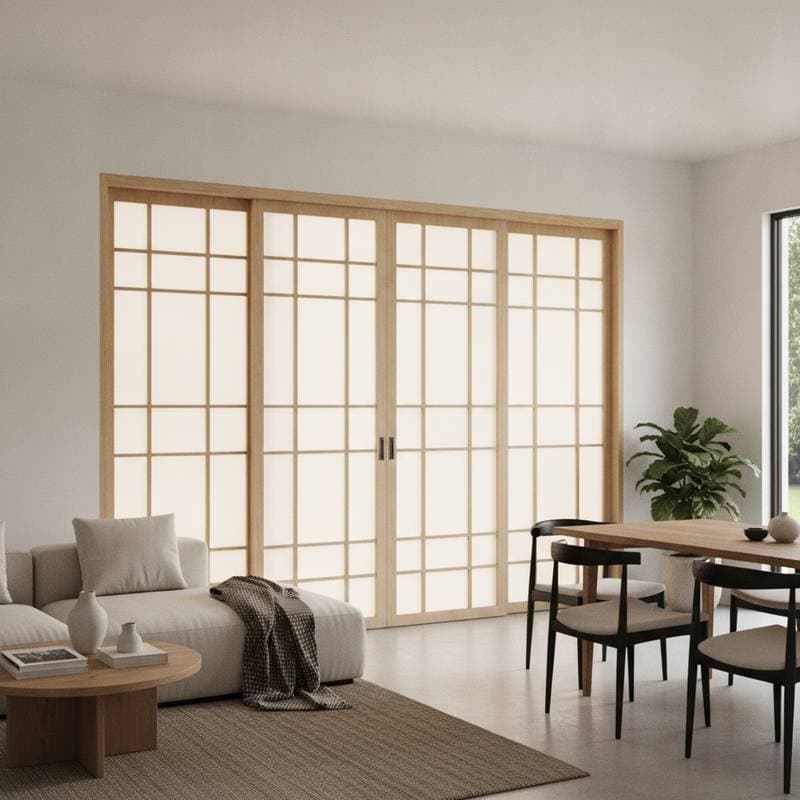

Why Homeowners Switch to Stacking Glass Doors
Stacking glass doors rank among the top upgrades for homeowners seeking to blend indoor and outdoor environments. These systems deliver superior aesthetics and performance compared to conventional sliding doors. For remodels or patio enhancements, a clear grasp of their advantages supports sound investment choices.
What Sets Stacking Glass Doors Apart
Traditional sliding doors rely on two panels that overlap during operation. In contrast, stacking glass doors employ multiple panels that glide along tracks and gather compactly on one side. This arrangement yields a broad, uninterrupted aperture that unites interior and exterior realms without visual hindrance.
Customization options allow these doors to span extensive wall sections, suiting patios, sunrooms, or gathering areas. Open panels vanish into the frame, fostering an expansive ambiance. Closed configurations feature robust glass and tight seals that preserve thermal efficiency and resist elements.
Average Installation Costs for Stacking Glass Doors
Installation expenses for stacking glass doors fluctuate based on dimensions, materials, glazing choices, and project demands. Typical outlays range from $8,000 to $25,000, encompassing materials and professional labor. Oversized or bespoke setups may surpass $30,000, particularly with necessary structural adjustments.
| Door Type | Average Cost (Installed) | Key Features |
|---|---|---|
| Aluminum Frame | $8,000 to $14,000 | Lightweight, corrosion-resistant, modern finish |
| Vinyl Frame | $7,000 to $12,000 | Affordable, energy-efficient, low maintenance |
| Wood Frame | $10,000 to $18,000 | Warm aesthetic, customizable finishes, higher maintenance |
| Clad Wood (Wood Interior, Aluminum Exterior) | $12,000 to $20,000 | Combines durability and design appeal |
| Custom Architectural Systems | $20,000 to $30,000+ | Large openings, premium glass, structural integration |
These figures generally cover double-pane glass, mounting, and fittings. Advanced glazing like low-emissivity or impact-resistant variants increases costs by $1,000 to $3,000.
Licensed contractors report that labor constitutes 20% to 35% of the overall expense. Challenges such as modifying load-bearing walls or embedding floor tracks elevate charges considerably.
Reasons Homeowners Opt for the Switch
1. Expanding Usable Space
Stacking glass doors dissolve boundaries between indoors and outdoors. Fully retracted, they enable seamless movement that simplifies hosting and promotes fresh air circulation. In compact residences, this optical extension enlarges perceived room sizes.
A California general contractor observes that clients view these doors as a method to "extend their square footage without adding construction." Such openness reshapes property dynamics profoundly.
2. Boosting Natural Illumination
Predominantly glass construction in each panel invites abundant sunlight into living areas. This diminishes reliance on electric lights by day and elevates well-being. In efficient dwellings, insulated glazing aids temperature control when doors integrate properly.
3. Elevating Design Aesthetics
These doors impart a refined, current silhouette adaptable to diverse styles, from sleek minimalism to textured rustic elements. Narrow profiles and vast glass surfaces evoke luxury. Select dark aluminum or wood exteriors to harmonize with current motifs.
4. Enhancing Energy Performance
Contemporary designs incorporate insulated units, thermal barriers, and superior seals to sustain climate control across seasons. Premium variants match or exceed sliding door insulation ratings.
5. Boosting Home Value
Real estate experts highlight heightened buyer appeal for properties featuring stacking glass doors. This feature denotes superior build quality and lifestyle alignment, vital in temperate regions. Investments often recoup 50% to 70% via elevated market worth.
Key Influences on Installation Expenses
Multiple variables shape project budgets and merit evaluation upfront.
| Cost Factor | Description | Typical Range |
|---|---|---|
| Door Size and Number of Panels | Larger spans demand additional panels and reinforcement | Adds $1,000 to $5,000 |
| Glass Type | Low-E, tempered, laminated, or triple-pane selections | Adds $500 to $3,000 |
| Structural Modifications | Altering load-bearing elements or installing beams | Adds $2,000 to $6,000 |
| Frame Material | Choices in aluminum, vinyl, or wood | Varies by type |
| Hardware and Track Systems | Custom finishes, hidden tracks, or motorized aids | Adds $500 to $2,000 |
| Labor and Permits | Local wages and regulatory approvals | Adds $1,000 to $4,000 |
Local conditions and wall configurations further dictate final amounts.
Overview of the Installation Process
Professional setup of stacking glass doors proceeds through defined phases. Contractors adhere to this progression for reliability:
- Site Assessment: Measure the aperture, assess support needs, and identify framing or base concerns.
- Structural Preparation: Install support beams for load-bearing walls to bear overhead loads.
- Frame Installation: Align and anchor the frame meticulously for fluid motion.
- Panel and Track Assembly: Mount panels on tracks, fine-tuning for uniform gaps.
- Sealing and Finishing: Apply barriers, moldings, and compounds against air and moisture.
- Final Inspection: Verify functionality, alignment, and perform thorough cleaning.
Projects span two to five days, influenced by site specifics. Avoid self-installation for expansive units, as misalignment risks leaks and malfunctions.
Maintenance Guidelines for Longevity
These doors demand minimal upkeep, yet routine checks sustain efficacy.
- Vacuum and wipe tracks periodically to remove dust buildup.
- Examine seals for wear that permits drafts; replace promptly.
- Apply silicone lubricant to rollers and pivots for effortless gliding.
- Clean glass with mild solutions and lint-free materials to avoid streaks.
- Clear drainage channels in exterior tracks to avert pooling.
Quality installations endure 20 years or longer with diligent care.
Stacking Doors Versus Alternatives
Evaluate stacking options against sliding, folding, or French doors by matching needs to space, funds, and routines.
| Door Type | Advantages | Considerations |
|---|---|---|
| Stacking Glass Doors | Broad access, sleek style, reliable mechanics | Elevated expense, potential structural work |
| Sliding Patio Doors | Budget-friendly, straightforward setup | Narrower views, restricted aperture |
| Folding (Accordion) Doors | Complete span coverage, adaptable layouts | Space for folding, intricate mechanisms |
| French Doors | Timeless elegance, fits modest widths | Inadequate for broad areas, moderate efficiency |
Stacking doors excel in blending form and utility for sizable entries, with concealed panels suiting modern visions.
Steps to Integrate Stacking Glass Doors
Consult certified specialists versed in reinforcements and exact placements. Obtain several estimates detailing inclusions. Confirm compliance with codes and efficiency norms.
For those prioritizing illumination, connectivity, and style, these doors revolutionize spatial experiences. Thoughtful execution yields enduring comfort and worth.