Why Reclaimed Barn Doors Command Premium Value in the Market
Reclaimed barn doors have evolved from simple farm elements into sophisticated interior features. Their escalating value stems from a blend of expert craftsmanship, environmental benefits, and practical design advantages. Homeowners and professionals value the genuine texture and resilience these doors offer, qualities that often exceed those of freshly produced wood. As market interest grows, prices reflect this demand, prompting even seasoned renovators to reconsider budgets. Grasping the factors behind these valuations equips buyers to evaluate options for purchase, construction, or restoration.
Key Distinctions of Reclaimed Barn Doors
Reclaimed barn doors originate from wood salvaged from old agricultural buildings, stables, or rural storage facilities. This timber has withstood years of natural exposure, resulting in a compact structure and stability that fresh lumber struggles to achieve. Natural imperfections like color shifts, embedded nails, and surface patina create a unique narrative in every board, impossible to duplicate through industrial processes.
Reclamation requires meticulous disassembly, thorough cleaning, precise milling, and targeted refinishing. These steps retain the wood's inherent character while ensuring it meets modern structural standards. The finite nature of true reclaimed wood drives annual value increases; once depleted, equivalent historical material remains unavailable.
Material Quality and Craftsmanship Elements
Old-growth wood features denser grains and greater strength compared to contemporary fast-grown varieties. Such properties bolster resistance to environmental stresses and dimensional changes. Artisans skilled in heritage materials employ manual finishing methods that honor the wood's history, investing significant time to preserve its essence.
Newly fabricated barn doors, though solidly constructed, draw from less mature trees with looser fibers prone to earlier degradation. Initial appearances may align, but long-term performance diverges. Reclaimed versions frequently incorporate period-appropriate hardware, such as hand-forged iron hinges or patinated steel tracks, enhancing both utility and stylistic harmony.
Sustainability and Ecological Benefits
Homeowners increasingly select reclaimed barn doors for their alignment with responsible practices. Opting for salvaged wood curbs fresh harvesting needs and diverts potential waste from disposal sites. This approach resonates with environmentally aware individuals and professionals focused on efficient resource use in architecture.
The ecological footprint of reclaimed materials extends beyond metrics to foster a sense of stewardship. A door repurposed from prior service embodies principles of renewal and material respect. In pursuits of sustainable certifications like LEED, such elements strengthen project credentials and marketability.
Design Versatility and Stylistic Impact
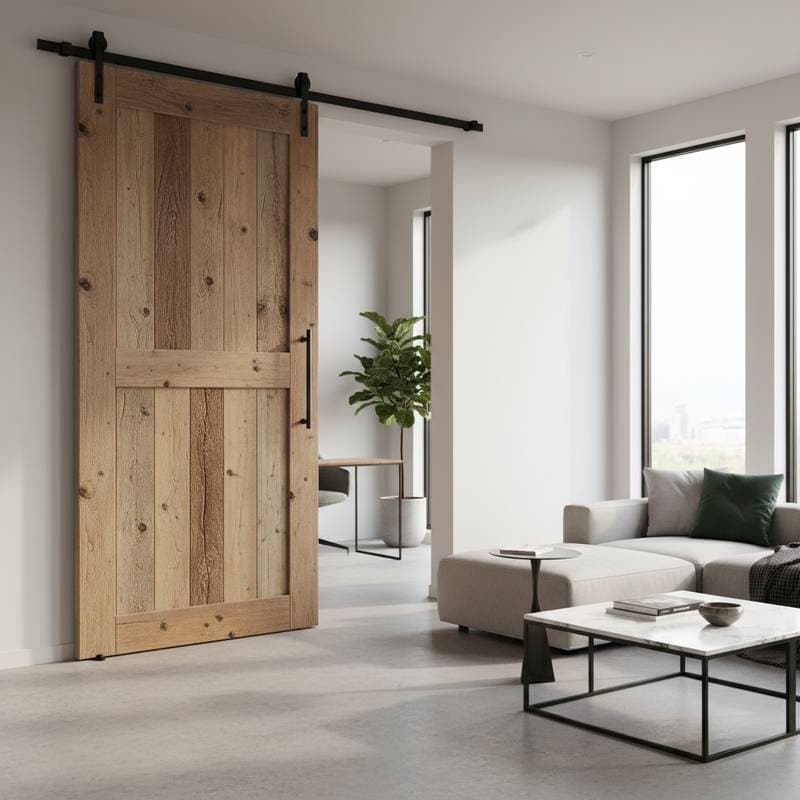
Reclaimed barn doors integrate seamlessly across diverse interior aesthetics. They infuse contemporary settings with organic warmth, add dimension to sparse minimalism, and reinforce authenticity in classic environments. The sliding configuration optimizes space in compact areas or fluid open layouts, positioning them as efficient solutions.
Customization options abound in finishing techniques. Preserve the natural aging for raw appeal, or apply subtle sanding followed by transparent sealants to highlight intricate grains. Hardware selections further tailor the outcome: sleek black rails for urban polish, or aged brass for pastoral charm. This range sustains their popularity amid evolving design preferences.
Market Forces and Pricing Components
Premium pricing for reclaimed barn doors arises from limited availability and rigorous preparation demands. Authentic sourcing involves identifying viable structures, obtaining access rights, and executing damage-free deconstruction. Subsequent phases of decontamination and processing necessitate advanced tools to extract fasteners and reinforce aged components.
Prepared material enters a competitive arena where architects and builders vie for singular items beyond mass replication. This rivalry elevates costs as affluent clients seek bespoke distinction. The synergy of historical integrity, green credentials, and artistic refinement underpins the justified surcharge.
Reclaimed Versus New Barn Doors
| Option | Initial Cost | Lifespan | Maintenance | Best For |
|---|---|---|---|---|
| Reclaimed Barn Door | Elevated from sourcing and artisanal work | Extended with appropriate protection | Periodic dusting, rare touch-ups | Those pursuing distinctive, eco-integrated aesthetics |
| New Wood Barn Door | Affordable to mid-range | Standard duration | Frequent recoating or varnishing | Cost-effective modern or replica installations |
While customization suits new doors readily, they seldom capture equivalent sensory depth. Reclaimed counterparts hold enduring worth due to irreplaceable sourcing, boosting property resale potential through timeless appeal.
Steps for Installing a Reclaimed Barn Door
- Site Assessment and Measurement: Precisely dimension the doorway and evaluate wall reinforcement. Account for the added mass of reclaimed pieces compared to conventional options.
- Pre-Installation Prep: Cleanse, seal, and condition the wood to ambient moisture levels. Inspect for lingering debris or metallic residues from past applications.
- Core Assembly: Secure a robust overhead beam for the rail system. Affix gliding mechanisms and fittings per provided guidelines.
- Operational Testing: Confirm fluid operation and level positioning. Address any friction or imbalance to ensure seamless function.
- Finalization and Care: Coat with environment-matched preservatives. Monitor rail fastenings and surface integrity at regular intervals.
Familiarity with these procedures aids in estimating expenses and identifying needs for specialist involvement. The heft and uneven contours of reclaimed doors typically benefit from professional execution.
Elements Shaping Enduring Value
Multiple aspects determine the sustained appreciation of reclaimed barn doors:
- Timber Type: Oak, chestnut, and pine prevail, yet oak and chestnut command premiums for their robust density and striking patterns.
- Structural Integrity: Pieces with consistent humidity and few fissures adapt best to interior conditions.
- Refinishing Expertise: Skilled applications improve visual allure and service life.
- Hardware Reliability: Superior gliding components and supports avert misalignment and ease operation.
- Historical Documentation: Provenance from notable eras or locations enhances narrative and collector interest.
Prioritizing these attributes guarantees functionality and desirability across generations.
Aligning with Daily Living and Aesthetic Objectives
Beyond ornamentation, reclaimed barn doors facilitate practical spatial management in narrow corridors or transitional zones unsuitable for hinged variants. They temper divisions in expansive configurations, promoting adaptable living arrangements. Households appreciate their sturdiness alongside the personality they impart to communal areas.
For lifestyles merging current functionality with heritage vibes, these doors strike an ideal balance. They pair advanced mechanical precision with the allure of seasoned timber, supporting routine usability and stylistic endurance.
Selecting the Ideal Reclaimed Barn Door
Investment in a reclaimed barn door hinges on individual priorities, financial scope, and stylistic intent. Enthusiasts of unparalleled artistry and perpetual merit often deem the initial outlay worthwhile. Alternatives in simulated styles may suit those emphasizing affordability.
The decision centers on core values: genuine heritage, ecological impact, or fiscal prudence. When sourcing, inquire into wood provenance, treatment protocols, and guarantees for the assembly and components. Trustworthy vendors provide traceability and post-setup guidance, securing enhancements in beauty and reliability that endure.