Japandi Shoji Doors: Transforming Open-Plan Living
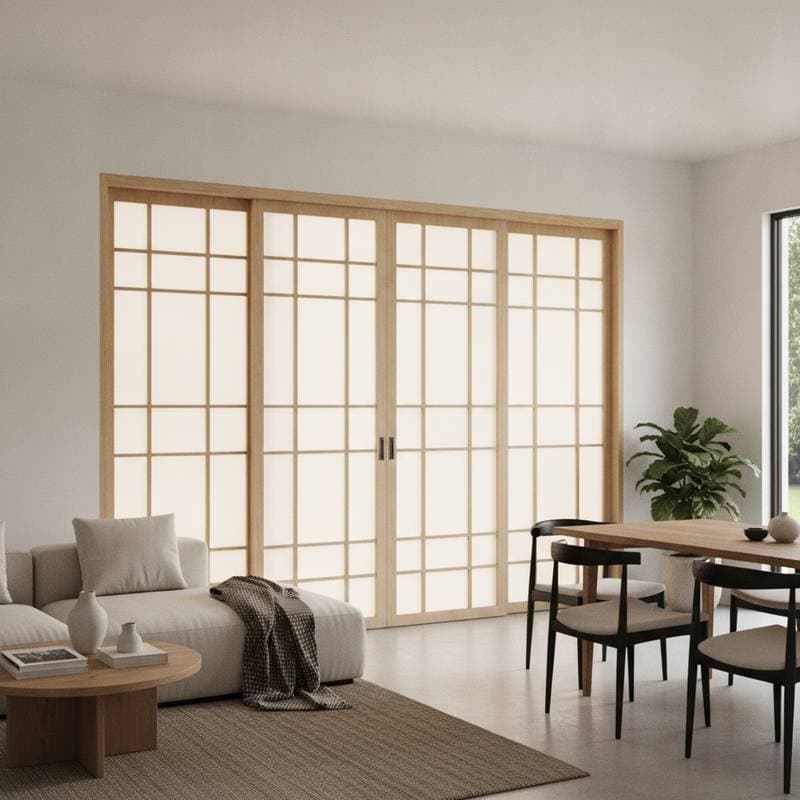
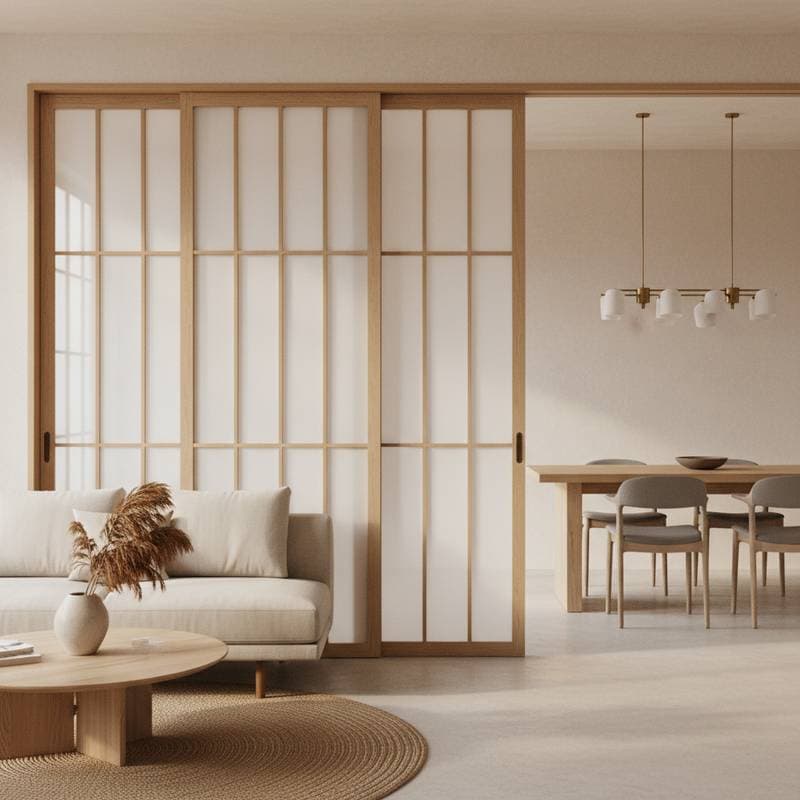
Japandi style combines the warmth of Scandinavian simplicity with the serene balance of Japanese design. This aesthetic emphasizes natural materials, clean lines, and functional beauty. Shoji doors, featuring translucent panels and subtle wood frames, embody this blend perfectly. They introduce structure to open-plan spaces while preserving light and movement.
These doors extend beyond mere decoration. They redefine connections between rooms, allowing spaces to feel unified yet distinct. Shoji doors divide areas without isolation, moderate sound levels, and distribute soft light. Such elements suit homes that prioritize openness alongside selective privacy.
Three Approaches to Achieve This Design
Budget-Friendly Option ($500 to $1,500)
- Select prefabricated Shoji-style panels with pine or poplar frames and synthetic rice paper inserts. These choices provide lightweight construction and cost efficiency, suitable for renters or short-term setups.
- Install using sliding track kits or ceiling-mounted rails to enable easy repositioning.
- Allocate funds toward basic hardware in finishes like brushed nickel or matte black.
Mid-Range Option ($1,500 to $4,000)
- Choose custom-sized frames from maple, birch, or bamboo veneer for enhanced strength and smooth functionality.
- Incorporate genuine shoji paper or laminated rice paper to achieve a richer, diffused glow.
- Pair with hardware in muted bronze or soft brass to convey artisanal quality.
- Include soft-close mechanisms on sliding systems for seamless, quiet operation.
Premium Investment ($4,000 to $9,000)
- Order handcrafted doors with solid oak or walnut frames joined through traditional techniques.
- Use frosted glass or washi-backed acrylic for superior durability and straightforward maintenance.
- Embed recessed tracks, hidden handles, and complementary transom panels to create an integrated architectural element.
- Enhance with built-in lighting or shelving to unify the room's overall design.
Guide to Materials and Finishes
Windows
For spaces incorporating Japandi influences, window frames in light oak or black aluminum align with the precise lines of Shoji panels. Frosted or textured glass diffuses daylight effectively and maintains visual consistency with the doors.
Doors
Shoji doors perform optimally in light wood finishes such as ash, white oak, or bamboo. Maintain a fine grid pattern to avoid heavy mullions that interrupt sightlines. Opt for minimal hardware, including slender rectangular pulls, to preserve equilibrium.
Siding
Exterior siding harmonizes with interiors through shared natural tones. Consider horizontal cedar cladding, fiber cement in warm gray, or smooth stucco in sand hues to extend the Japandi palette outward.
Trim and Accents
Select trim with straightforward profiles that recede into the background. Apply finishes matching the door frames, like matte clear sealants or subtle light stains. Introduce restrained metal accents in black or dark bronze for pulls and fixtures.
Essential Maintenance Considerations
Shoji installations demand regular care to sustain their appeal. Traditional rice paper proves fragile against pet claws or humidity, prone to tearing. Opt for synthetic versions, such as laminated washi or acrylic-backed panels, which withstand daily use and clean easily with a damp cloth.
Wood frames in humid environments may shift slightly, so apply a matte sealant to guard against distortion. Clean sliding tracks periodically with a vacuum to ensure fluid movement and prevent grit accumulation.
For authentic wood selections, plan to reapply oil or sealant every two to three years to retain color and sheen. In families with active children or heavy traffic, acrylic panels strike a balance between style and resilience. High-moisture zones like bathrooms necessitate water-repellent treatments and adequate ventilation.
Common Pitfalls to Avoid
- Excessive Grid Complexity: Multiple vertical or horizontal divisions shatter the serene symmetry central to Japandi. Scale the grid appropriately to the door's dimensions.
- Neglecting Light Flow: These panels depend on ambient light for their effect. Avoid positioning in low-light areas or against opaque barriers; instead, place where sunlight can play across the surface.
- Inconsistent Wood Tones: Pairing reddish oak with pale maple or deep walnut creates visual discord. Establish a primary wood shade and echo it across the interior.
- Overlooking Installation Precision: Misaligned tracks or irregular frames undermine the clean aesthetic. Engage skilled installers or precision-engineered hardware for optimal outcomes.
Coordinating Colors and Styles
Japandi relies on measured choices to evoke enduring calm. Draw from organic hues and subtle textures to build a cohesive environment.
Recommended Palette:
- Soft Birch: Neutral tone for frames and trim.
- Warm Clay: Accent for walls or siding.
- Charcoal Black: Finish for hardware to add depth.
- Linen White: Base for interior walls.
- Fog Gray: Matte option for floors in stone or tile.
These shades foster seamless transitions between areas. A Soft Birch Shoji divider with Charcoal Black hardware links naturally to a kitchen boasting Fog Gray floors and Warm Clay details.
Lighting influences ambiance significantly. Select shades in paper or fabric to mimic the doors' translucency. Warm LED bulbs amplify the subtle glow of wood elements.
Photography Checklist for Planning
Document the space thoroughly before purchasing Shoji doors. Detailed visuals aid in refining choices and confirming measurements.
- Capture multiple views of the open-plan layout, noting light patterns.
- Highlight structural features like beams, floor changes, and window positions.
- Include surrounding views if they affect privacy or aesthetics.
- Document local weather factors, such as moisture levels or intense sun exposure.
- Outline budget focuses to guide investments in key areas.
Such records serve as key tools for designers and builders, guaranteeing a tailored fit to the home's scale and daily rhythms.
Incorporating Shoji Doors in Contemporary Layouts
Shoji doors partition open zones while upholding spaciousness. In transitions from kitchen to living area, sliding panels screen activity during meals yet allow light to link the spaces. Bedrooms gain seclusion without harsh barriers, welcoming gentle dawn light.
These doors pair with sparse furnishings and textures like linen, wool, and stone. In rooms with expansive windows or visible beams, they moderate glare and reinforce structural motifs. The outcome yields interiors that feel stable, tranquil, and unified.
Budget Strategies and Long-Term Value
Evaluate expenses against material longevity. Synthetic panels endure with little effort, whereas wood and rice paper deliver genuine character. Blend options where feasible: synthetics for busy paths, traditional for quiet retreats like bedrooms.
Those inclined toward hands-on projects can handle basic kits, but bespoke setups benefit from carpenter expertise for exact fits. Professional labor typically increases costs by 15 to 25 percent, varying with project scope and surface prep.
Consider energy aspects as well. Doors with insulated glass or multi-layer construction minimize thermal loss, boosting year-round efficiency. This practical enhancement supports the eco-conscious principles of Japandi design.
Achieving Harmonious Open-Plan Design
Japandi Shoji doors craft refined divisions that enhance rather than restrict flow. Their understated construction conceals expert detailing, while translucency guides light softly between zones. Suitable for compact dwellings or expansive residences, they instill order, depth, and serenity.
Practical selections in materials and care ensure these elements remain robust over time. Homeowners thus secure a style that matures elegantly, free from excess fragility.
Rooted in Japanese heritage and Scandinavian precision, Shoji doors transcend utility. They embody equilibrium, uniting areas via illumination, scale, and inherent grace.