Why Japandi Entryways Balance Calm and Function in 2026
The entryway establishes the initial mood of any home. It greets visitors upon arrival and bids farewell as you depart. In minimalist settings, this area can appear stark or unwelcoming. Japandi design addresses this by fusing Japanese minimalism with Scandinavian coziness, resulting in a space that radiates tranquility, practicality, and subtle invitation. Thoughtful implementation boosts utility, promotes order, and mirrors a mindful approach to living amid natural elements.
Grasping the Japandi Aesthetic
Japandi merges Scandinavian functional simplicity with Japanese refined poise. Both draw from skilled workmanship, organic substances, and intentional design. Japanese elements stress equilibrium and serenity, whereas Scandinavian ones prioritize ease and hygge-like comfort. Together, they yield interiors that appear pristine yet inviting, avoiding sterility or excess.
In entryways, select substances, hues, and pieces that foster peace while supporting daily needs. This style eases the shift from external bustle to internal repose. Those favoring minimalism value Japandi for streamlining routines without diminishing personality.
Key Traits of Japandi Entryways
Japandi entryways employ moderation while incorporating organic textures and subtle diversity. Every component serves a role in aesthetics and utility. Essential attributes encompass:
- Organic substances like timber, rock, rattan, and flax for tactile appeal.
- Subdued hues such as pale creams, soft grays, earthy tans, and gentle tonal shifts.
- Simple furnishings with artisanal touches minus embellishments.
- Even illumination via diffused sources over stark glare.
- Efficient arrangements that facilitate flow and concealment without disorder.
These facets establish a serene cadence. The area seems intentionally arranged yet organic, with items positioned for harmony.
Selecting Materials for Sensory Impact
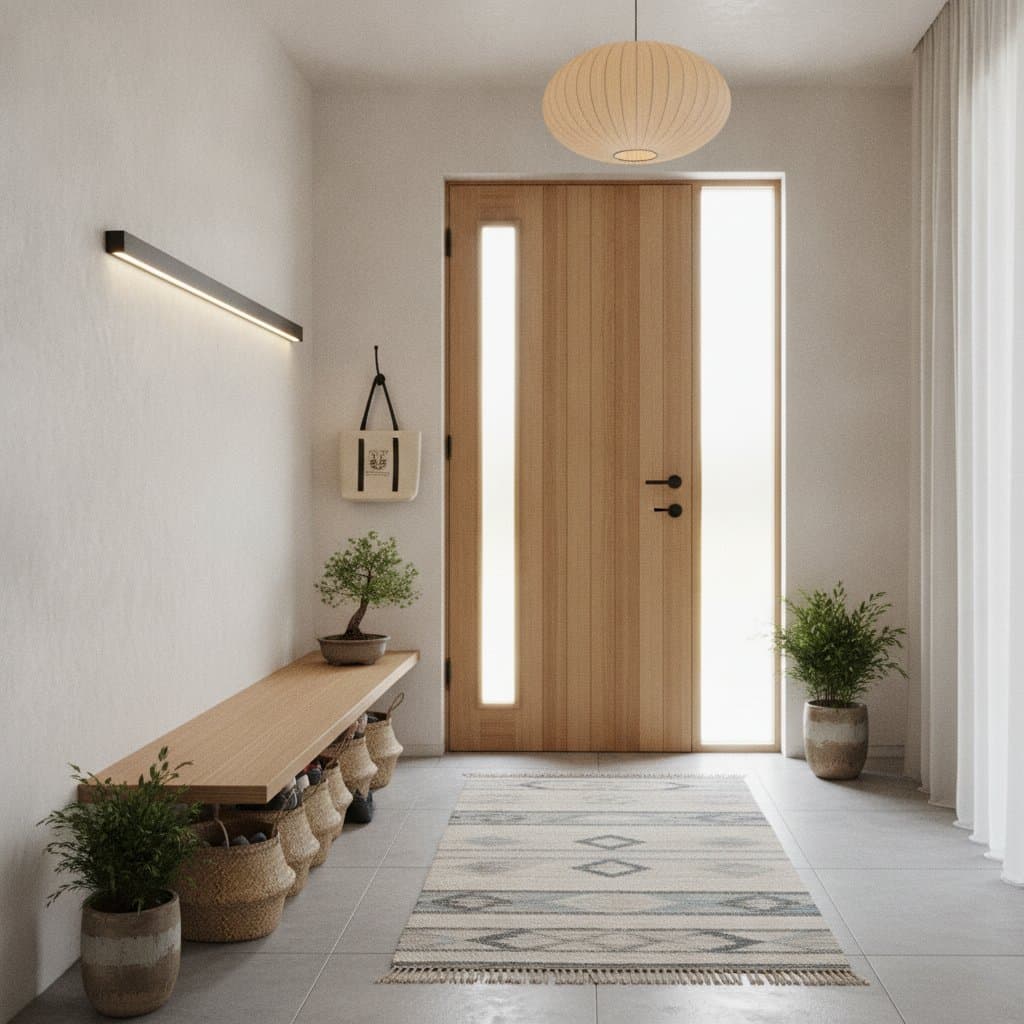
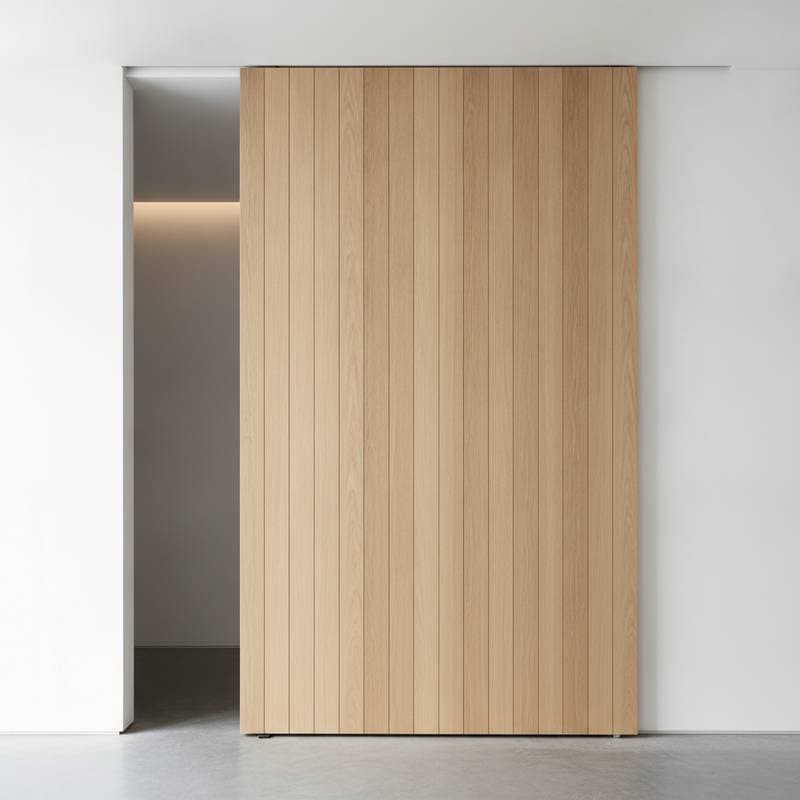
Choices in materials shape the entryway's feel. Timber forms the core, particularly light options like oak or ash, whose grains add dimension and gentle heat. Opt for it in doors, panels, or cabinets to link indoor and outdoor realms. Matte or oil-treated surfaces preserve a soft touch absent in artificial alternatives.
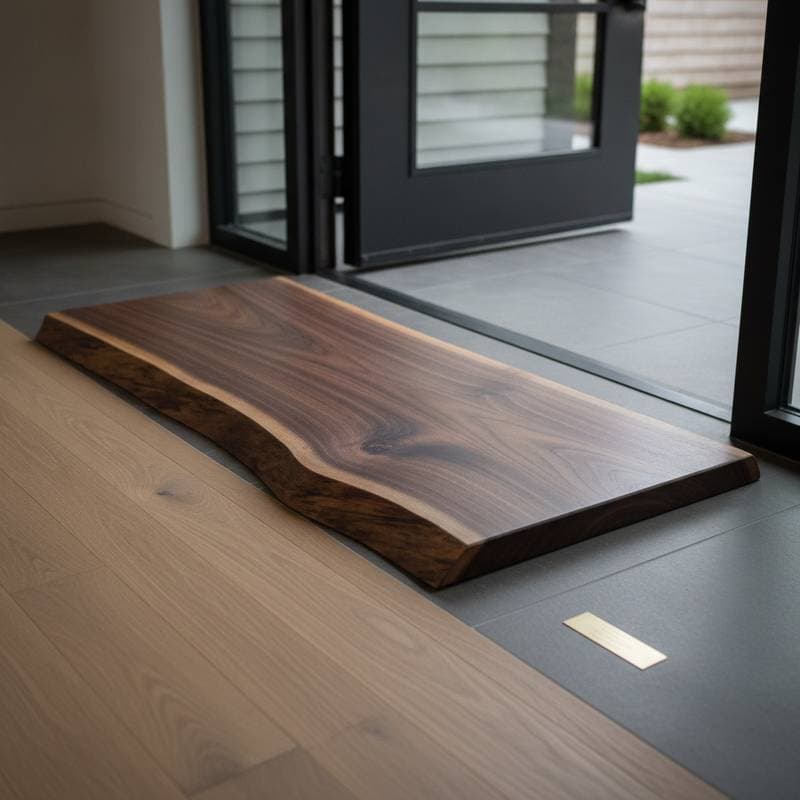
Incorporate stone or ceramic near entrances to resist dampness and traffic. Pairing a stone base with wooden extensions provides stability. Add woven items like bamboo holders or seagrass rugs for varied texture aligned with nature. Such selections patina over time, honoring Japandi's embrace of wabi-sabi imperfection.
Employing Color and Light for Mood
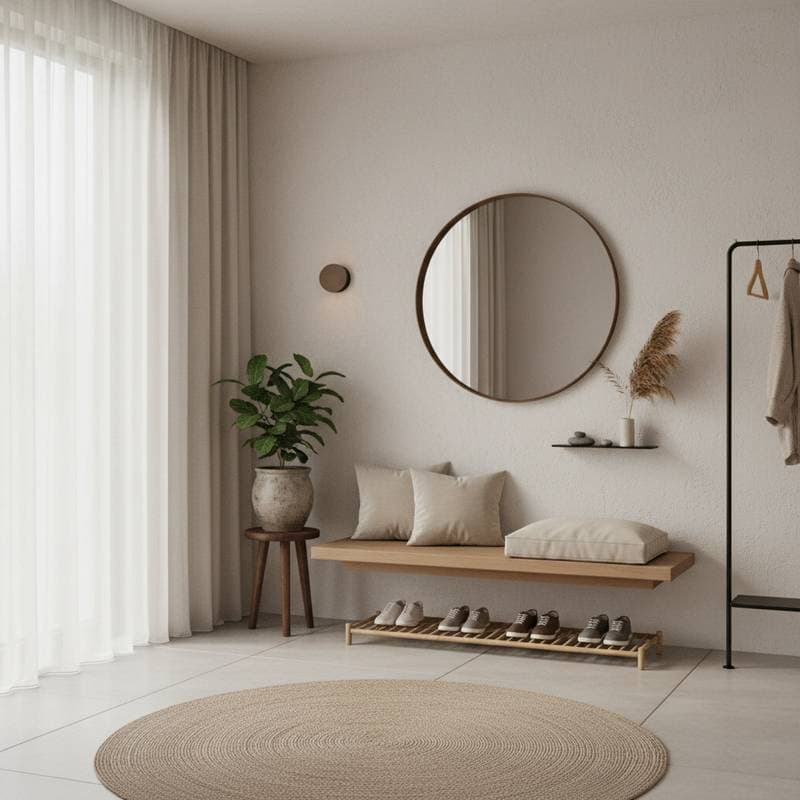
Japandi hues remain understated, framing materials without overpowering. Cream walls, taupe surfaces, and ebony highlights offer contrast in quiet measure. Illumination complements this subtlety. Layer small fixtures like hanging pendants, side-mounted sconces, or embedded warm bulbs to delineate areas softly.
Prioritize daylight where possible. Use sheer coverings on windows or adjacent panes to highlight natural shifts and vistas. Daily light variations enhance the soothing ambiance, aligning with the style's natural ethos.
Implementing Storage for Efficiency
Utility anchors Japandi principles. A serene entryway demands seamless operation. Integrate recessed units, seating with compartments, and hidden fasteners to minimize mess while preserving openness.
Consider a compact timber seat featuring under-storage for swift shoe changes and item tucking. Employ wall racks or rails for upright access to essentials, sparing floor space. Assign roles to each element to sustain equilibrium between spareness and utility.
Addressing Durability and Upkeep
Japandi prioritizes enduring appeal alongside visual grace. Select substances that endure with minimal effort and develop character. Nourish timber with periodic oils instead of synthetics for breathability. Reseal stone or tile periodically against marks.
Choose resilient fabrics like linen or cotton for easy care. This strategy appeals to those seeking enduring investments over disposables. It upholds the cultural tenets of sustainability from both origins.
Infusing Warmth into Minimalism
Minimalism risks void-like chill, but Japandi counters with texture, scale, and selective layering. Position a lone pottery vessel, knotted mat, or padded seat to evoke coziness sans overload. Intentional spacing grants each item prominence within the whole.
Tactile qualities further nurture comfort. Gentle fabrics, polished grains, and ambient rays shape entry sensations. This blend delivers the nurturing essence often missing in stark minimalism.
Aligning Design with Daily Routines
Beyond aesthetics, the entryway functions as a threshold for habits. Japandi fosters deliberate practices like shoe removal, gear stowing, and surface clearing for tranquility. Such patterns echo cultural emphases on simplicity for wellness.
Households gain from reduced disarray in transitions. Visitors sense fluid navigation, signaling gracious hosting through form rather than flourish. The space evolves into a guide for purposeful existence.
Adapting to Climate and Ecology
Japanese and Scandinavian roots respond to seasonal demands, rendering Japandi versatile. In chill zones, timber insulates visually and thermally. In heat, pale tones and airflow promote ventilation.
Substances like bamboo, cork, or wool manage moisture inherently for steady comfort. Source eco-friendly options: certified timber, non-toxic coatings, organic weaves. These choices embody respect for the environment and measured use.
Collaborating with Professionals
Realizing Japandi demands aligned expertise in concept and execution. Articulate goals around restraint, substance excellence, and fluid unity. Engage builders versed in clean minimalism for precise joins and hidden features.
Monitor material junctions during setup, from timber-to-stone edges to frame alignments. Expert input harmonizes form with resilience, securing lasting serenity and serviceability.
Tailoring to Your Space
Homes vary in form, illumination, funds, and flow. Some suit Scandinavian lightness with fair grains and plush linens; others Japanese depth via richer shades and detailed craft. True Japandi mirrors personal rhythms over dogma.
| Option | Initial Cost | Lifespan | Maintenance | Best For |
|---|---|---|---|---|
| Light Wood and Neutral Palette | Moderate | Long | Occasional oiling | Bright, compact spaces |
| Dark Wood and Stone Contrast | Higher | Long | Regular surface care | Larger or shaded entryways |
| Mixed Textures with Natural Accents | Moderate | Long | Light cleaning | Homes emphasizing warmth and texture |
This guide aids in aligning selections with needs for optimal results.
Realizing Lasting Harmony
Japandi entryways transform thresholds into mindful havens. By prioritizing natural integration and purposeful design, they elevate daily passages. Homeowners achieve spaces that nurture calm, efficiency, and enduring style, inviting a balanced life within.