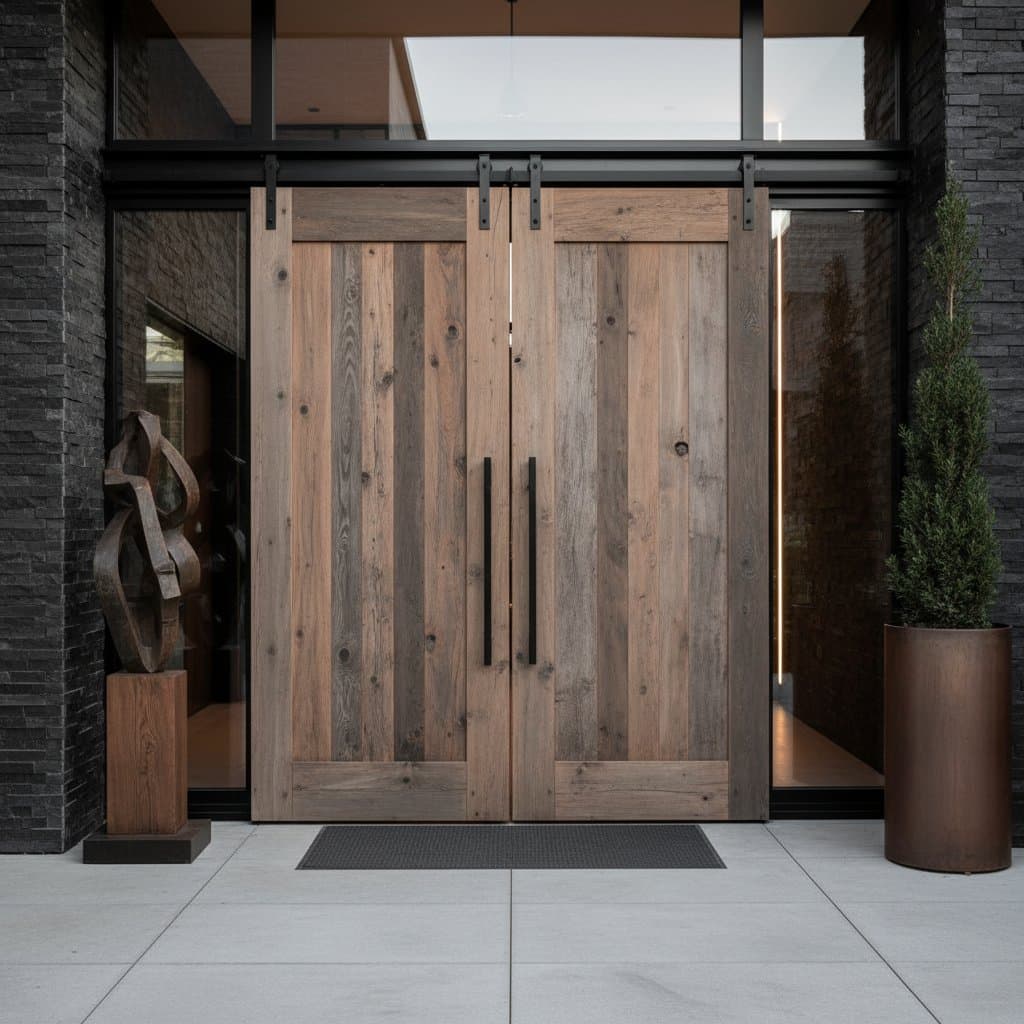
The Surge in Reclaimed Barn Wood Entryways: $8,000 in 2026
Reclaimed barn wood has transitioned from simple rustic elements to premium architectural highlights. Homeowners value its unique texture, inherent warmth, and historical narrative. Each plank reveals distinct grain, nail marks, and aged hues that surpass any manufactured alternative. In entry door applications, this material crafts a compelling first impression, making the home entrance both intimate and striking. Surging interest in genuine artistry, alongside constrained availability, drives custom reclaimed wood entryways toward premium pricing levels.
Strategies to Achieve the Reclaimed Look
Budget-Friendly Option ($2,000 to $4,000)
- Opt for engineered wood with veneers that replicate the textured surface of reclaimed materials.
- Select stains in shades like warm walnut or driftwood gray to build visual depth and authenticity.
- Pair with durable hardware, such as matte black levers and ornamental hinges, to enhance the overall realism.
Balanced Investment ($4,000 to $6,000)
- Combine sections of genuine reclaimed panels with fresh wood frames to ensure reliable support.
- Apply a subtle distressed treatment, then seal with matte polyurethane for lasting defense against elements.
- Add energy-efficient features, including insulated glass panels or adjacent sidelights, to boost performance.
Premium Custom Build ($6,000 to $8,000)
- Engage a skilled artisan to construct a complete door from solid reclaimed barn wood slabs.
- Integrate bespoke elements like hand-forged iron fittings and custom glass accents for distinction.
- Seal with penetrating oil or a marine-grade protectant that preserves the developing patina and repels moisture.
Essential Materials and Finishes
- Window Pairings: Integrate black aluminum-clad windows alongside reclaimed wood doors for sharp contrast. These frames highlight the wood's organic colors while requiring minimal care. Select bronze or oil-rubbed hardware to harmonize with the weathered exterior.
- Door Specifications: Reclaimed barn wood often derives from oak, pine, or hemlock species. Prioritize planks of uniform thickness and balanced moisture levels to avoid distortion. For unity, apply the same finish to nearby interior doors in areas like mudrooms or pantries.
- Exterior Siding Choices: Employ vertical board-and-batten or horizontal lap styles in subdued colors such as taupe, graphite, or soft white to spotlight the entry door. Materials like fiber cement or engineered wood provide tactile interest with reduced maintenance compared to solid timber.
- Accent and Trim Details: Incorporate dark bronze or wrought iron around window surrounds and light fixtures. Add a matching reclaimed wood beam or seating element on the porch to reinforce the door's aesthetic across the front elevation.
Practical Maintenance Considerations
Reclaimed wood offers genuine allure yet requires diligent upkeep. Direct sun exposure or damp conditions may dull finishes or cause surface roughening. Perform yearly maintenance with gentle soap cleaning and fresh application of oil or sealer to sustain color vibrancy and smoothness. In areas with high humidity, install adequate roof overhangs or protective storm doors to minimize expansion. Consider engineered substitutes or veneer constructions for lower maintenance demands while retaining the aged wood appearance. Tailor choices to local weather patterns and exposure for optimal longevity.
Common Pitfalls to Sidestep
- Neglecting Reinforcement: Dense reclaimed doors demand robust hinges and sturdy frames. Insufficient support results in drooping or poor alignment over time.
- Excessive Texture Overload: Combining reclaimed wood with coarse stone or rugged siding creates visual weight. Introduce smoother elements like stucco or metallic details for equilibrium.
- Mismatched Finishes: Standard polyurethane on porous reclaimed surfaces can retain water. Choose permeable oils or exterior-specific sealers instead.
- Uneven Budget Allocation: Focusing funds solely on the door while overlooking sidelights or trim disrupts cohesion. Distribute resources evenly for a unified facade.
Harmonizing Colors and Styles
Strategic color selections amplify the depth of reclaimed wood. Explore these pairings:
- Warm Harmony: A honey-toned oak door against cream siding and dark bronze window frames.
- Contemporary Rustic: Charred stain on the wood with crisp white fiber cement siding and black accents.
- Serene Coastal: Gray-weathered door complemented by light blue siding and brushed nickel hardware.
Pre-Project Documentation Guide
Prior to procurement or renovation, photograph the current exterior from various perspectives, including roof profiles, trim lines, and fixture placements. Assess the home's architectural style, surrounding neighborhood vibe, and any community restrictions. Factor in environmental elements like sunlight patterns and wind directions. Define a precise budget spectrum and pinpoint key objectives, such as enhancing insulation, updating visuals, or improving material resilience.
Realizing Lasting Entryway Impact
Reclaimed barn wood entryways embody more than mere sentimentality. They signify a commitment to skilled workmanship, eco-conscious practices, and personal expression in residential design. Through informed selections in materials and proactive care routines, this enduring style yields strong curb appeal and sustained homeowner delight.