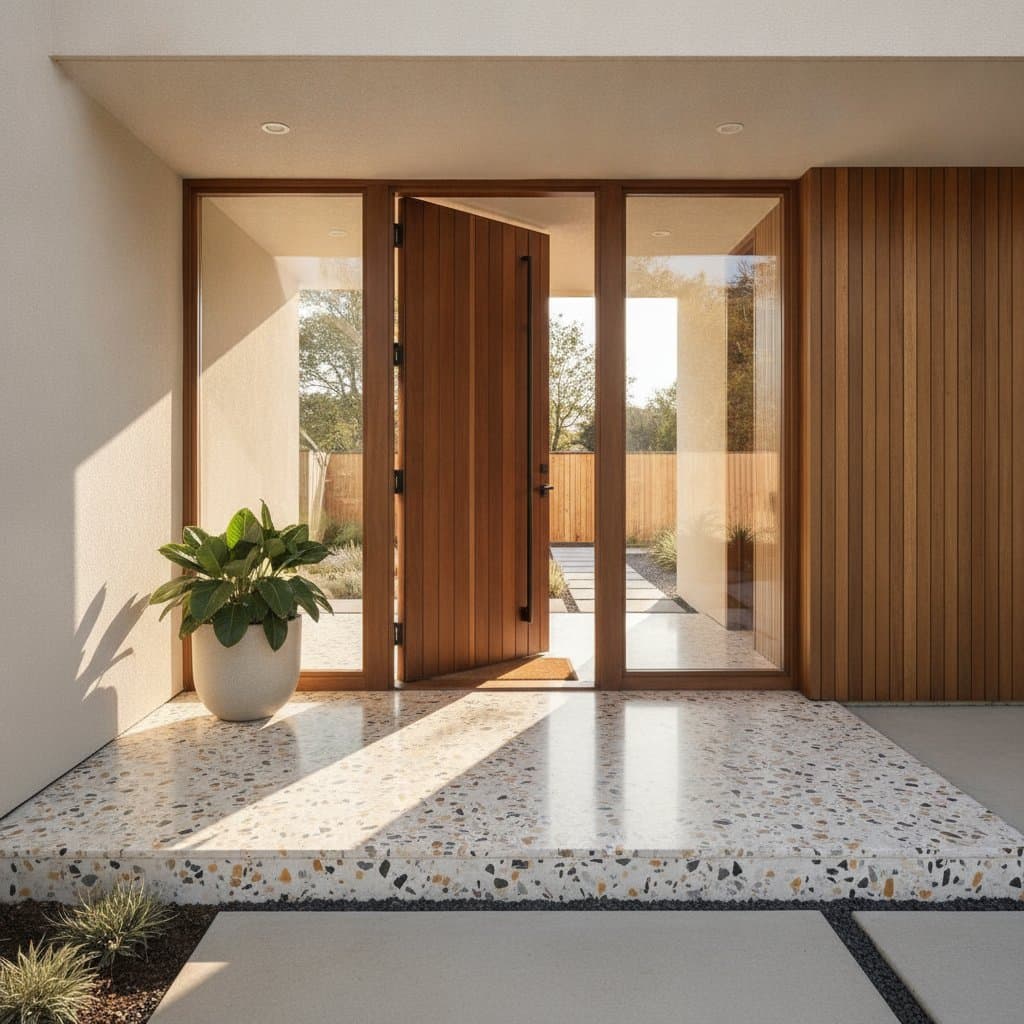
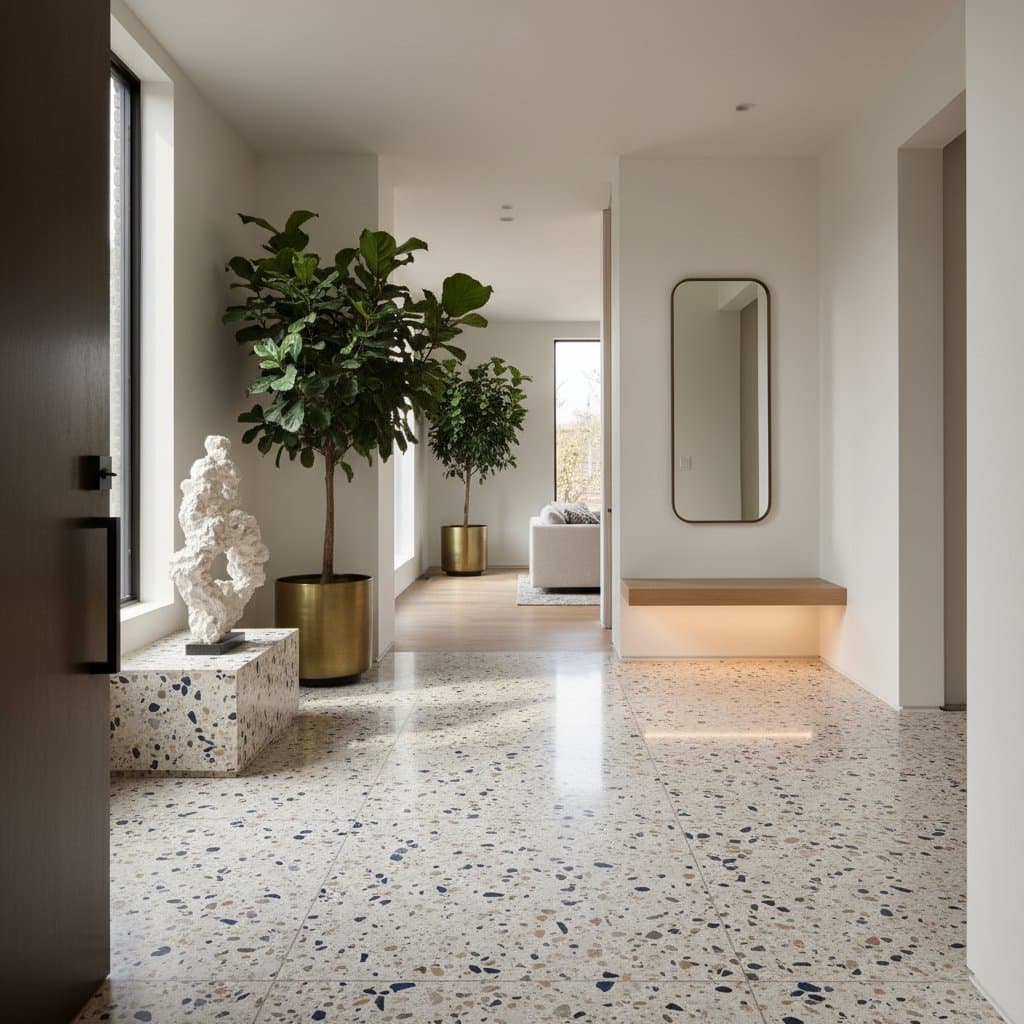
Why Invest $8K in Terrazzo Entryways That Outlast Traditional Tile
Homeowners redesigning entryways often encounter terrazzo flooring in upscale projects. Previously confined to commercial buildings and luxury hotels, terrazzo now gains popularity in residential settings. An average installation costs around $8,000, yet this investment yields superior durability, contemporary aesthetics, and enduring value that surpass those of traditional tile.
This guide covers essential details on costs, advantages, and key considerations to position terrazzo as the focal point of your entryway.
Key Reasons Homeowners Select Terrazzo Over Tile
Terrazzo provides a unique, premium look that tile struggles to achieve. The poured installation forms a fully customized pattern aligned with personal preferences and home architecture.
Primary factors driving this choice include:
-
Enduring Durability Spanning Decades
Terrazzo withstands over 50 years of use with appropriate care. Its compact composition resists scratches, chips, and stains more effectively than ceramic or porcelain tile. In high-traffic entryways or active households, this resilience proves invaluable. -
Smooth, Effortless Maintenance Surface
Terrazzo eliminates grout lines that collect debris in tile installations. The continuous expanse simplifies cleaning through routine sweeping and infrequent mopping. Property owners avoid the periodic tasks of regrouting or substituting damaged tiles. -
Versatile Customization Options
Incorporate marble, quartz, glass, or metal aggregates into a cement or epoxy binder. Match specific color schemes, form geometric motifs, or integrate personalized logos and inlays for distinctive results. -
Eco-Conscious and Resource-Efficient Composition
Numerous terrazzo formulations incorporate recycled materials, minimizing waste and ecological footprint. The extended service life reduces the frequency of replacements, conserving resources over time. -
Elegant Visual Impact
The buffed terrazzo surface delivers an impressive initial view. Its light-reflecting properties brighten entryways, fostering an illusion of spaciousness and sophistication.
Factors Shaping Terrazzo Flooring Expenses
Grasping the elements that determine terrazzo costs enables informed budgeting. Multiple variables influence the total expenditure:
1. Terrazzo System Variety
Cement-based versions offer thickness and classic appeal, whereas epoxy-based options provide slimmer profiles, reduced weight, and enhanced adaptability. Epoxy installations typically incur higher fees due to their design versatility.
2. Aggregate Choices
Embedded chips define the visual character and price point. Standard selections encompass marble, granite, quartz, and glass. Opting for high-end aggregates or bespoke mixtures can elevate expenses by 20 to 40 percent.
3. Pattern Intricacy
Basic monochromatic setups remain cost-effective. Introducing varied hues, intricate designs, or divider elements demands additional labor and meticulous execution, thereby increasing overall charges.
4. Existing Subfloor Preparation
Subfloors needing alignment or dampness control attract extra fees. Terrazzo demands a firm, moisture-free foundation to avert issues like fractures or blistering.
5. Surface Finishing Techniques
Achieving a glossy polish involves multiple stages and dedicated tools. Alternatives such as satin or matte finishes may trim costs modestly.
Professional Perspectives on Terrazzo's Growing Residential Appeal
Industry experts note a marked increase in terrazzo specifications for home interiors.
"Terrazzo was once viewed strictly as a commercial option, but homeowners now value its creative possibilities," states Brian Kessler, a flooring specialist based in Chicago. "They seek bespoke elements that endure indefinitely. Terrazzo fulfills these expectations."
Interior designer Rachel Porter of Portland adds, "Tile restricts seamless pattern continuity. Terrazzo facilitates fluid transitions in entryways, making compact areas appear more expansive and unified."
Such insights highlight an industry trend favoring resilient, aesthetically compelling materials for homes.
Scenarios Favoring Tile Over Terrazzo
Terrazzo excels in numerous aspects, yet it suits not every residence or financial plan. Consider tile when:
- Installation timelines demand speed.
- Budgets fall below $2,000 for modest areas.
- Textured natural stone or ornate ceramic visuals are desired.
- Remodeling cycles span less than ten years.
Tile accommodates diverse styles and simplifies updates amid evolving tastes. Nevertheless, those prioritizing entryways as enduring assets gravitate toward terrazzo for its robustness and perennial elegance.
Current Trends Elevating Terrazzo in Interior Design
Contemporary terrazzo applications transcend the conventional mottled gray palette. Designers integrate vibrant aggregates, colored binders, and metallic highlights. Prevailing styles feature:
- Neutral foundations paired with sizable marble fragments for understated, natural vibes.
- Segmented color fields delineating entry regions or room adjacencies.
- Inlaid brass or aluminum accents for refined embellishment without excess.
- Fine-particle terrazzo yielding a sleek, modern texture.
These innovations distinguish terrazzo from standardized tile offerings, rendering each floor a singular artistic expression.
Steps to Install Your Terrazzo Entryway
To pursue a terrazzo upgrade, engage a contractor experienced in home installations. Secure a comprehensive estimate covering materials, workmanship, and polishing. Examine aggregate samples and finish variants to envision the outcome in your environment.
Anticipate brief disruption during the process, as curing and refinement precede usability. Although the initial outlay appears considerable, terrazzo's longevity often yields savings versus repeated tile renewals every ten to twenty years.
A terrazzo entryway elevates beyond mere aesthetic renewal. It establishes a robust, environmentally sound foundation merging opulence with functionality, setting a benchmark for forward-thinking home entrances.