Why Designers Are Switching from Tile to Terrazzo in 2026
Terrazzo, once prominent in historic structures and mid-century homes, now dominates contemporary design landscapes. This material combines crushed marble, quartz, or glass aggregates embedded in a polished cement or resin binder, yielding a surface that merges enduring elegance with innovative appeal. Professionals shift from conventional tile due to terrazzo's capacity for uninterrupted patterns, bespoke craftsmanship, and superior resilience.
This resurgence aligns with preferences for tactile, artisanal finishes that maintain peak functionality. Property owners appreciate the nuanced texture and vibrant hues, whereas architects leverage its adaptability across flooring, thresholds, kitchens, and opulent vestibules. Terrazzo transcends the uniformity of tile grids, enabling expansive creative expression from muted earth tones to intricate motifs.
Three Practical Ways to Incorporate Terrazzo
Budget-Conscious Option ($3,000 to $5,000)
- Install precast porcelain tiles engineered to replicate authentic terrazzo aggregates.
- Select grout shades that closely match the tile's primary color for a fluid, cohesive appearance.
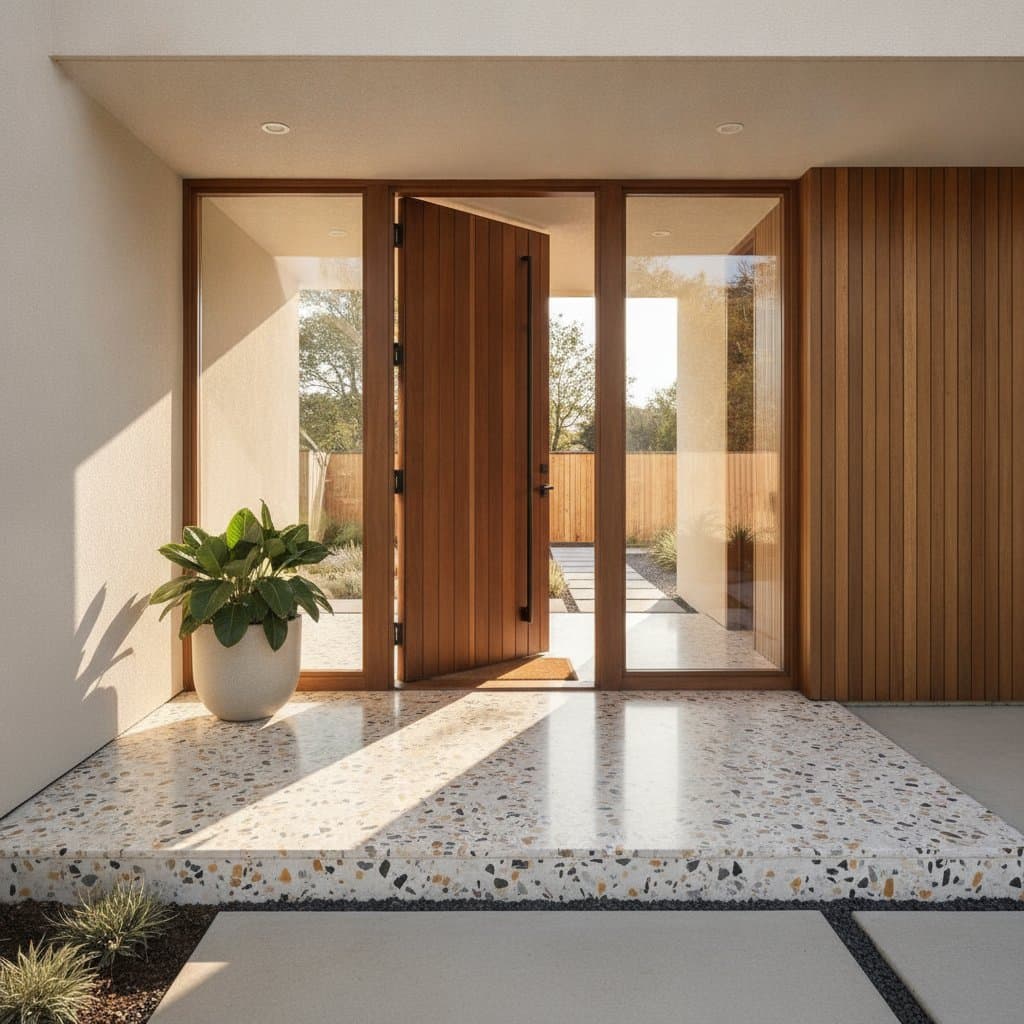
- Invest in accent elements, such as overhead fixtures or prominent entry doors, to amplify the terrazzo's visual impact.
Moderate Investment Option ($6,000 to $9,000)
- Apply poured epoxy terrazzo in compact zones, including lobbies or corridors.
- Integrate neutral aggregates like limestone with base shades of beige or cream to achieve an understated sophistication.
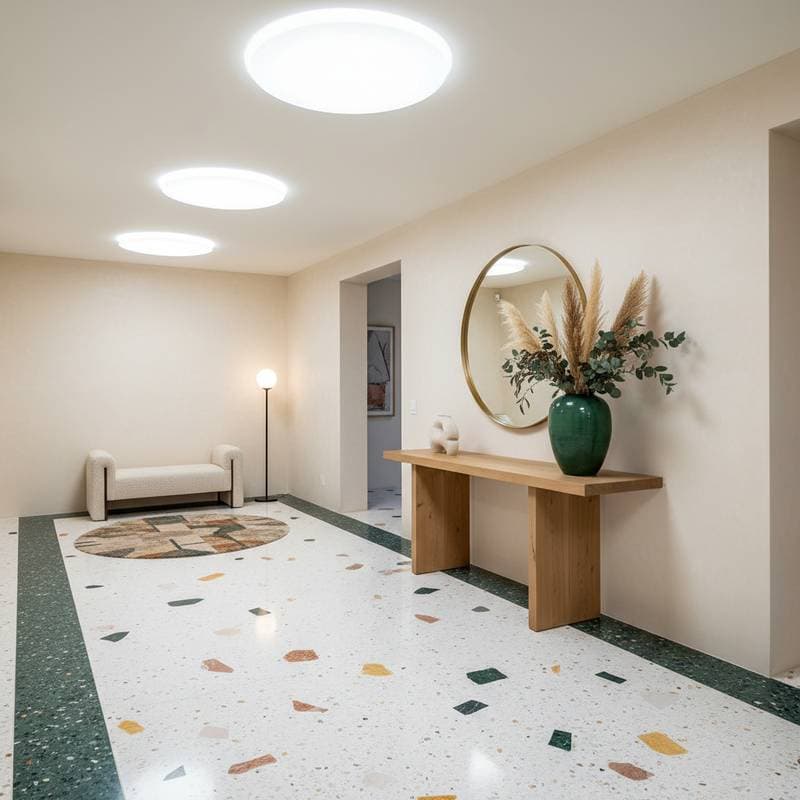
- Incorporate metallic divider strips to form discreet geometric divisions that guide spatial flow without dominating the composition.
Premium Investment Option ($10,000 to $15,000)
- Choose classic cement-based terrazzo featuring curated marble or glass inclusions.
- Tailor aggregate dimensions, tonal mixes, and layouts to craft a singular, bespoke installation.
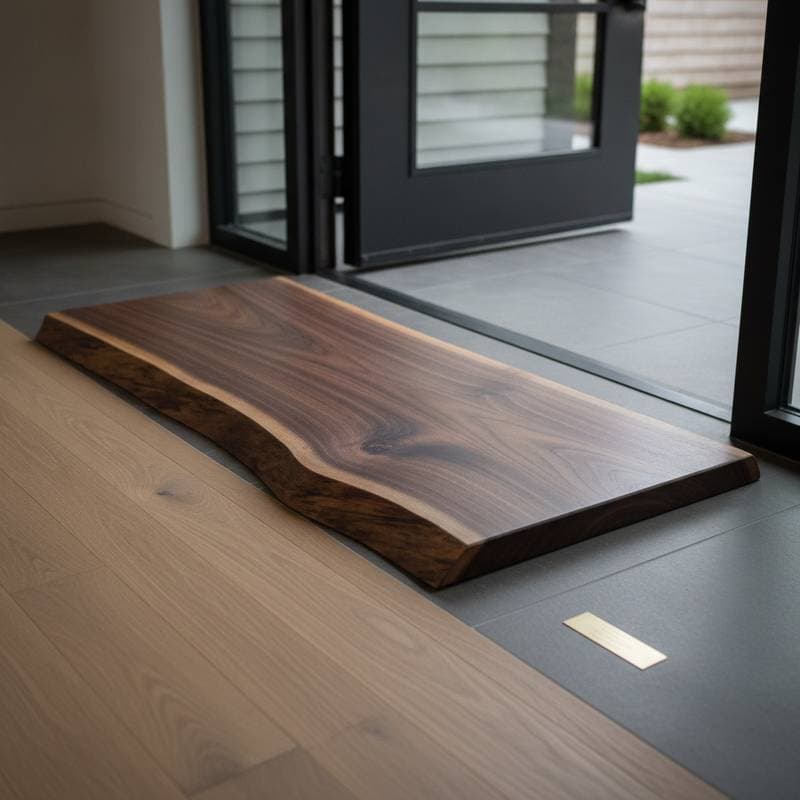
- Complement the floor with carved wooden portals, satin-finished brass fittings, and textured wall coverings to forge a unified, enduring aesthetic.
Essential Guide to Materials and Finishes
For flooring applications, epoxy terrazzo delivers a sleek, impermeable surface capable of vivid color integration. Cement variants impart organic depth and a subdued sheen, harmonizing seamlessly with natural wood elements. Both options withstand heavy use while preserving their allure over time.
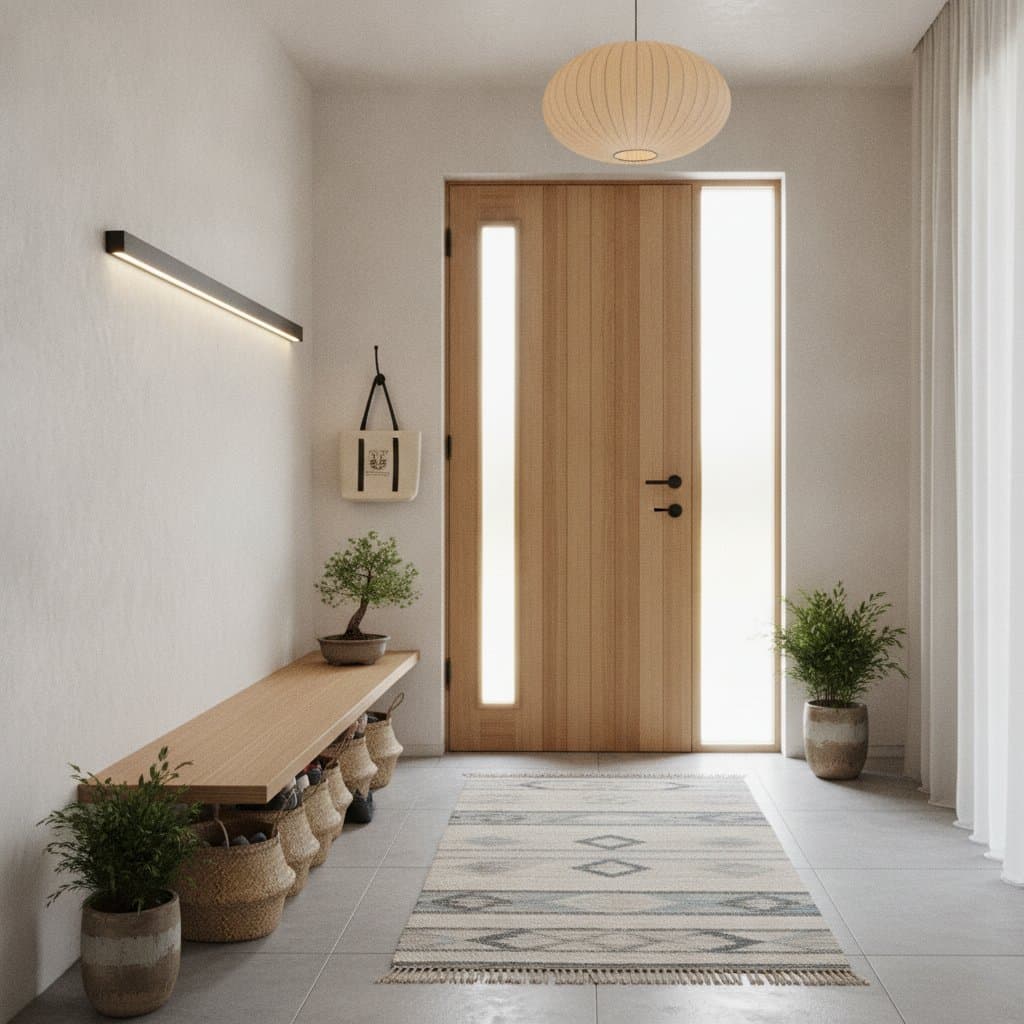
In vestibule settings, pair terrazzo bases with pale ash interior portals and subdued iron accents to merge poise with robustness. This arrangement suits high-exposure areas prone to foot traffic and environmental elements. Extend the material to vertical surfaces for enhanced continuity.
Apply terrazzo to staircase edges or lower wall panels to unify sightlines throughout a space. Align bordering paints with the aggregates' dominant shades, opting for gentle grays, warm beiges, or crisp whites to sustain a polished scheme.
Realistic Maintenance Expectations
Terrazzo earns its reputation for simplicity in upkeep, though requirements vary by composition. Epoxy formulations repel stains and humidity effectively, positioning them as optimal for thresholds subject to tracked-in moisture or debris. Cement types benefit from routine sealing to guard against surface erosion and liquid penetration.
Routine care involves sweeping followed by mopping with a mild, balanced cleaner. Porcelain imitations demand the least attention yet forfeit the poured version's fluid expanse. Epoxy strikes an ideal equilibrium between aesthetic potency and operational ease for most installations.
Common Pitfalls to Sidestep
- Neglect slip prevention: Highly buffed terrazzo risks becoming hazardous in damp conditions. Specify a satin or minimally roughened texture for passages and busy zones.
- Excess aggregate variety: An overload of hues or scales disrupts visual balance. Restrict selections to no more than three complementary elements for serene cohesion.
- Overlooking control joints: Expansive pours require strategic gaps to accommodate movement and avert fractures. Engage contractors skilled in foundational assessments.
- Forcing compatibility in legacy structures: Irregular underlayments in aged properties may compromise integrity. Resort to tile alternatives or segmented pours to uphold stability.
Strategies for Color and Style Integration
A unified terrazzo scheme bridges indoor and outdoor realms cohesively. Consider these curated pairings:
- Subtle Neutrals: Base in soft ivory accented by pale stone flecks, aligned with light maple portals and polished silver hardware.
- Striking Monochrome: Deep slate foundation with bright and metallic specks, coordinated with ebonized frames and low-luster dark fittings.
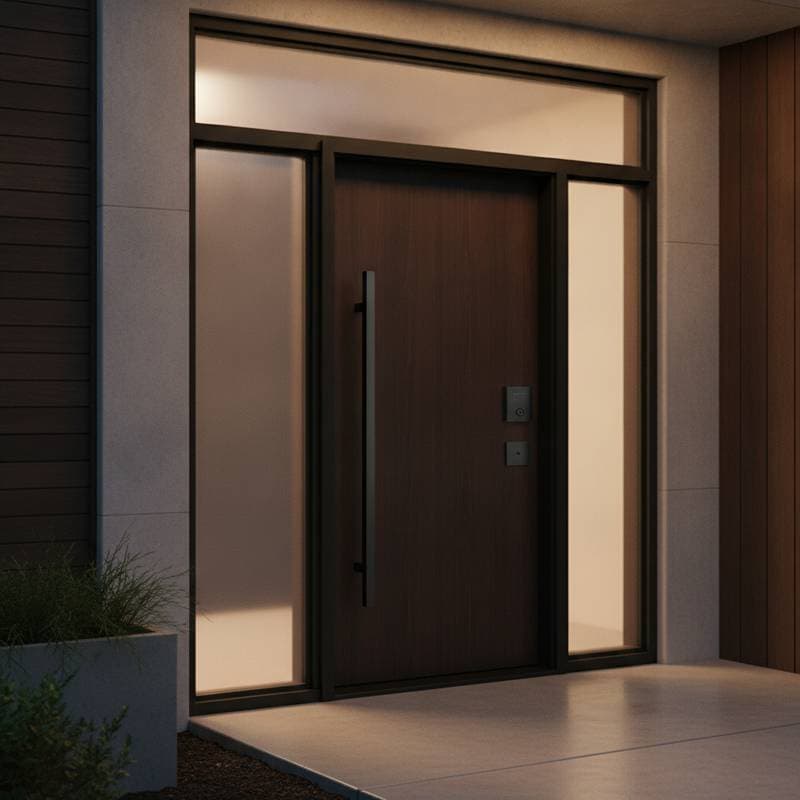
- Inviting Naturals: Rustic clay underlayer with golden and taupe inclusions, offset by rich mahogany entries and aged copper touches.
- Sleek Contemporaries: Light ash groundwork with indigo and iridescent bits, enhanced by stark linear borders and gleaming metallic accents.
Pre-Installation Documentation Essentials
Prior to material selection, compile detailed records of the site:
- Photograph existing surfaces and access points from varied perspectives to inform scale and proportion.
- Catalog structural features, including portal configurations, frame styles, and illumination sources.
- Identify community guidelines or regulatory limits influencing hue selections or substance approvals.
- Evaluate regional weather patterns, noting how moisture levels or thermal fluctuations influence installation timelines and material performance.
Achieving Seamless Design Harmony
Terrazzo distinguishes itself through its fusion of creative precision and steadfast reliability, qualities that surpass many tiled solutions. Custom formulations ensure fluid connectivity across areas, while its extended service life supports discerning choices for lasting refinement. Homeowners gain environments that deliver both elevated presence and uncompromised utility, poised to endure evolving tastes.