Why Terrazzo Beats Tile for Entryways
The entryway serves as the gateway to your home, shaping first impressions while enduring daily foot traffic and environmental stresses. Selecting the ideal flooring demands a careful evaluation of aesthetics, functionality, and longevity. Although tile remains a popular option due to its accessibility, terrazzo emerges as a superior alternative, blending exceptional durability with sophisticated design. By examining key aspects such as installation, upkeep, and overall value, homeowners can determine if terrazzo aligns with their vision for a resilient and stylish space.
Understanding the Materials
Tile flooring features individual units crafted from ceramic or porcelain, fired at high temperatures to form a resilient, glazed surface. Available in diverse sizes, colors, and textures, it suits a range of tastes from subtle earth tones to bold geometric prints. Terrazzo, however, involves embedding aggregates like marble, quartz, glass, or granite chips within a cement or epoxy matrix. After pouring and curing, the surface undergoes grinding and polishing, yielding a monolithic expanse that reveals intricate patterns and a luxurious sheen.
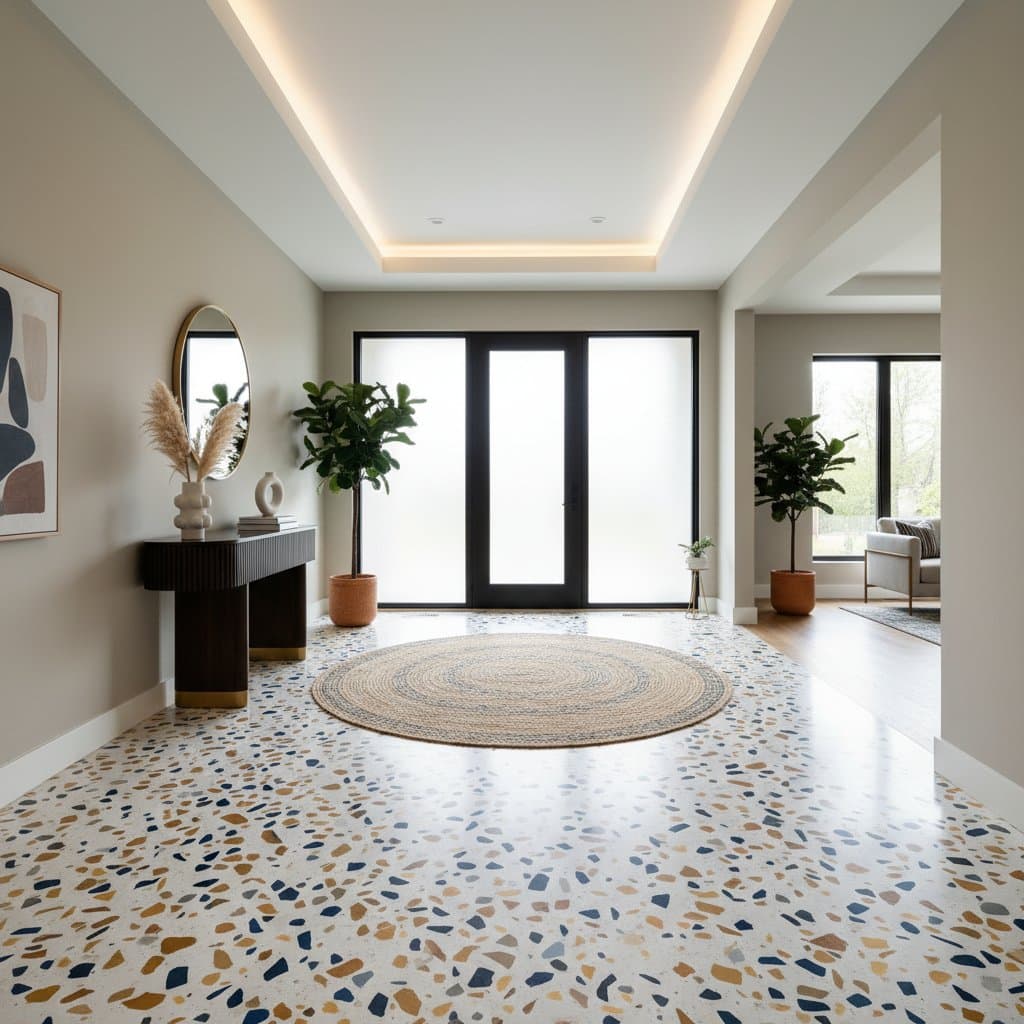
This composition grants terrazzo a unique depth, where the aggregates create natural variations impossible to replicate with uniform tile pieces. Homeowners appreciate how terrazzo's artisanal quality elevates the entryway, transforming it from a mere passageway into a refined focal point.
Comparing Installation and Complexity
Tile installation requires laying each piece on a prepared subfloor using thin-set mortar, followed by precise grouting to fill joints. This method demands skilled labor for alignment, particularly with complex layouts like herringbone or mosaics, and can extend project timelines by several days. Terrazzo installation, poured in situ or delivered as precast slabs, involves mixing aggregates with binders on-site, allowing it to set, then meticulously grinding and buffing to perfection.
Although the terrazzo process spans one to two weeks depending on area size, it eliminates visible seams, resulting in a fluid, joint-free surface. Initial costs for terrazzo range from $20 to $50 per square foot, compared to tile's $5 to $15, yet the seamless finish reduces future repairs. For entryways spanning 100 square feet or more, terrazzo's efficiency in large pours minimizes labor overlaps that tile installations often encounter.
Durability and Daily Performance
Entryways confront relentless challenges, including tracked-in dirt, water from footwear, and impacts from furniture. Tile performs adequately in these scenarios, with its hard surface resisting everyday abrasion, but grout lines remain vulnerable to cracking and discoloration after two to five years of use. Terrazzo's dense, uniform composition withstands these demands far better, boasting a compressive strength up to 8,000 psi that prevents chipping even under heavy loads.
Moisture management sets terrazzo apart; its non-porous epoxy variants repel water effectively, curbing mold growth in humid regions. Tiles may shift with seasonal humidity changes, leading to gaps or breaks, whereas terrazzo maintains structural integrity across expansive floors. In high-traffic zones, this reliability ensures the entryway retains its appeal without frequent interventions.
Maintenance and Long-Term Care
For households with demanding schedules, ease of care proves essential. Tile demands sweeping or vacuuming followed by mopping, with grout lines requiring targeted scrubbing to avoid buildup. Every three to five years, resealing grout becomes necessary to combat stains from spills like mud or pet accidents. Terrazzo streamlines this routine: a damp mop with pH-neutral soap suffices for daily cleaning, and its lack of joints prevents dirt accumulation.
Over time, terrazzo may dull from abrasion, but a professional buffing every five to ten years restores its luster for under $2 per square foot. This contrasts with tile, where cracked pieces necessitate spot replacements costing $10 to $20 each. Ultimately, terrazzo's minimal demands translate to savings, with total ownership costs 20 to 30 percent lower over 20 years compared to tile.
Design Flexibility and Aesthetic Appeal
Aesthetic choices reflect personal style, and tile excels in straightforward replication of wood grains or stone veining through printed surfaces. Yet, its grid-like arrangement can fragment visual continuity in open entryways. Terrazzo unlocks boundless customization, with designers blending aggregates to mimic terrazzo veins or embed logos and motifs directly into the pour.
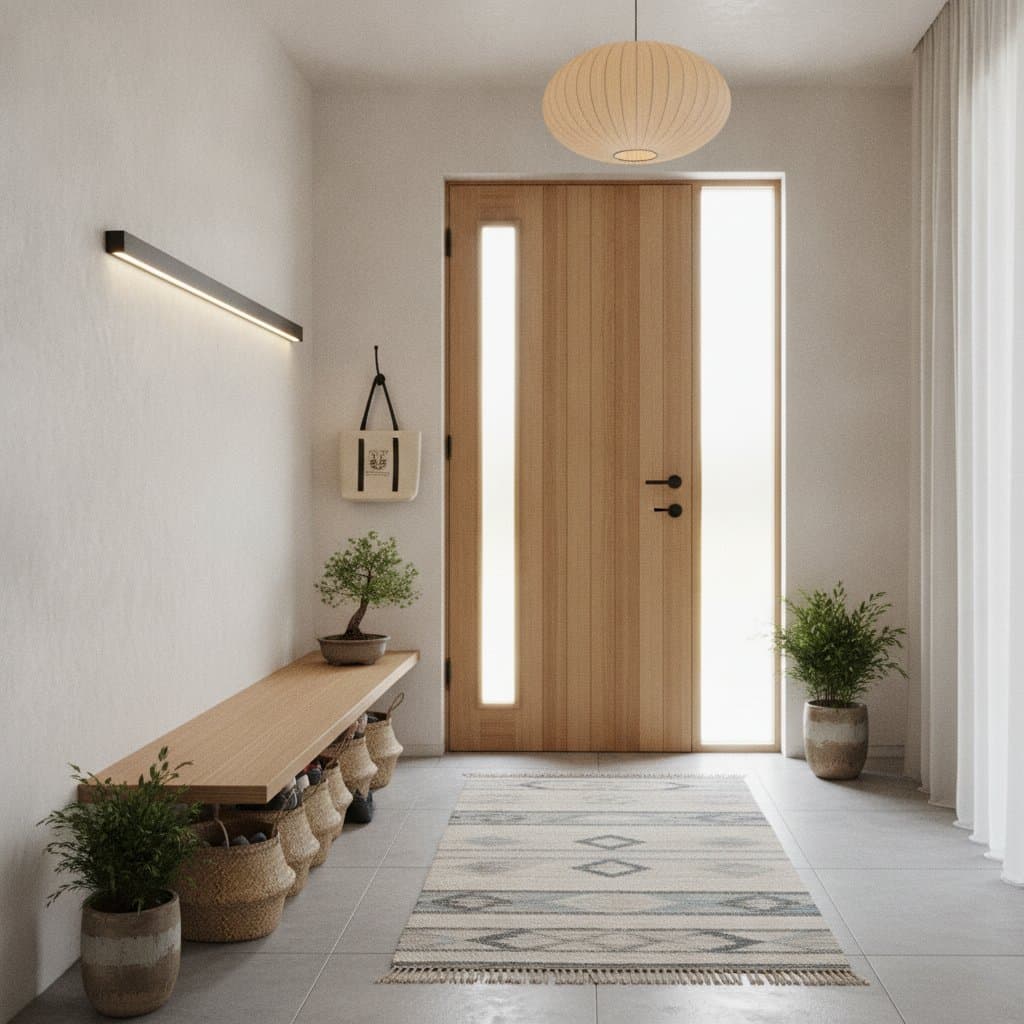
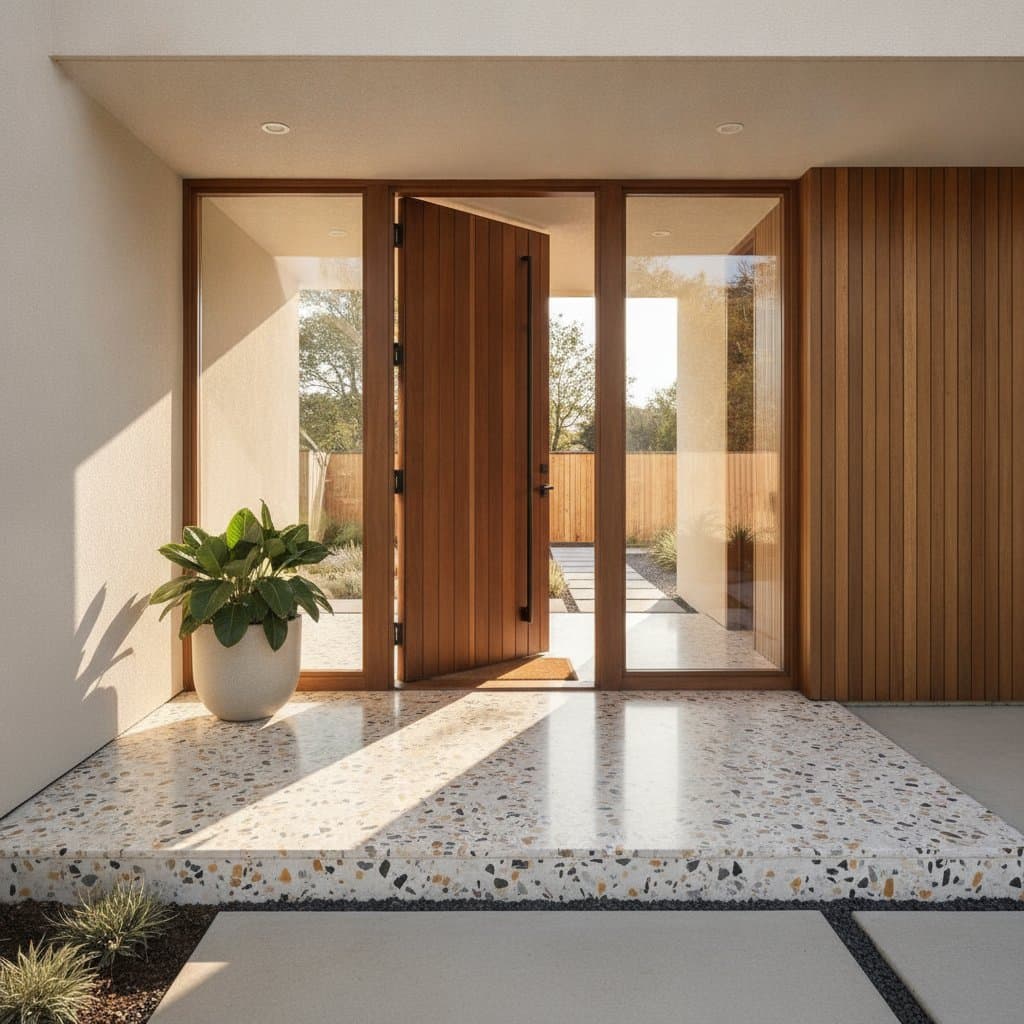
Imagine coordinating terrazzo hues with warm oak wood doors or sleek brass hardware for a harmonious entry. Its subtle reflectivity enhances natural light, making spaces feel larger and more inviting. In modern homes, terrazzo pairs seamlessly with minimalist lines, while in traditional settings, it echoes marble elegance without the fragility.
Environmental and Lifestyle Considerations
Eco-conscious decisions shape contemporary renovations. Terrazzo incorporates up to 80 percent recycled content, such as post-consumer glass, minimizing landfill contributions and earning certifications like LEED credits. Tile manufacturing, reliant on clay extraction and energy-intensive kilns, generates higher carbon emissions, and its shorter 15- to 25-year lifespan prompts more replacements.
Active lifestyles amplify terrazzo's advantages. Its slip-resistant polish, rated at 0.6 coefficient of friction, supports safe movement for families with young children or elderly members. Pets' claws leave negligible marks on terrazzo, unlike tile's prone edges, preserving the floor's pristine condition amid playful chaos.
Cost Comparison and Value Over Time
| Option | Initial Cost per Sq Ft | Lifespan (Years) | Annual Maintenance Cost | Best For |
|---|---|---|---|---|
| Tile | $5–$15 | 15–25 | $50–$100 | Budget renovations, quick installs |
| Terrazzo | $20–$50 | 50+ | $20–$50 | Enduring style, high-traffic areas |
Terrazzo's premium entry price yields substantial returns through extended use and reduced upkeep. For a 150-square-foot entryway, tile might total $3,000 initially but add $1,500 in repairs over a decade. Terrazzo, at $4,500 upfront, incurs half the long-term expenses, appealing to those investing in home equity.
Preparing for Installation
Start by inspecting the subfloor for levelness within 1/8 inch over 10 feet and absence of moisture, using a calcium chloride test kit. Reinforce weak joists if needed to support terrazzo's weight, around 18 pounds per square foot for epoxy types. Hire certified installers experienced in pours over 500 square feet to avoid cracks from improper mixing.
During curing, maintain temperatures between 65 and 85 degrees Fahrenheit for seven days. Post-polish, apply a penetrating sealer to enhance stain resistance. These steps guarantee a durable foundation that withstands your home's rhythms.
Integrating Terrazzo into Your Home
Opt for terrazzo when envisioning an entryway that marries form and function for generations. It harmonizes with interior wood doors, amplifying warmth against its cool tones, and withstands the tests of time in vibrant households. This choice not only boosts curb appeal but also safeguards your investment with effortless grace.