Why Terrazzo Entryways Justify Their $8,000 Price Tag
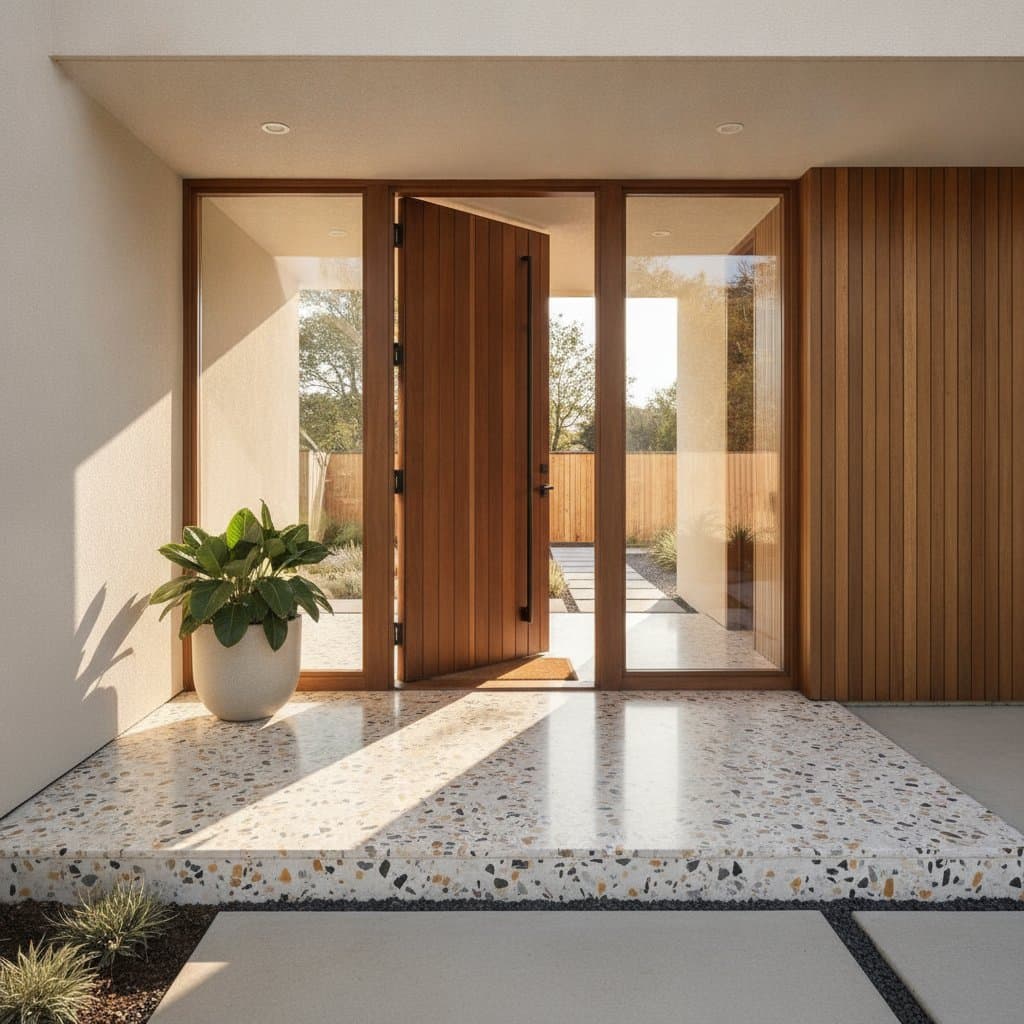
Homeowners seeking to enhance curb appeal and interior style frequently focus on the entryway. This space establishes the overall tone of the home and endures significant daily foot traffic. Traditional ceramic or porcelain tile has served as a reliable option for years, yet terrazzo flooring stands out as a premium choice that combines luxury, durability, and versatile design. An average terrazzo entryway installation costs around $8,000, yet it delivers enduring value that surpasses conventional tile alternatives.
Comparing Terrazzo Costs to Traditional Tile
The upfront expense of terrazzo flooring often catches newcomers to renovation off guard. For an entryway spanning 200 to 300 square feet, materials and installation typically fall between $8,000 and $12,000. This equates to $25 to $45 per square foot, covering labor and materials. In contrast, installed ceramic or porcelain tile ranges from $6 to $20 per square foot. Although terrazzo demands a higher initial outlay, its extended lifespan and aesthetic qualities frequently balance the scales over time.
| Material/Service | Cost Range per Sq. Ft. (Installed) | Key Features |
|---|---|---|
| Terrazzo | $25 to $45 | Customizable design, seamless surface, extremely durable |
| Porcelain Tile | $10 to $20 | Water-resistant, wide color selection, may crack under heavy impact |
| Ceramic Tile | $6 to $15 | Budget-friendly, moderate durability, visible grout lines |
| Natural Stone Tile | $15 to $35 | Elegant aesthetic, porous surface, requires sealing |
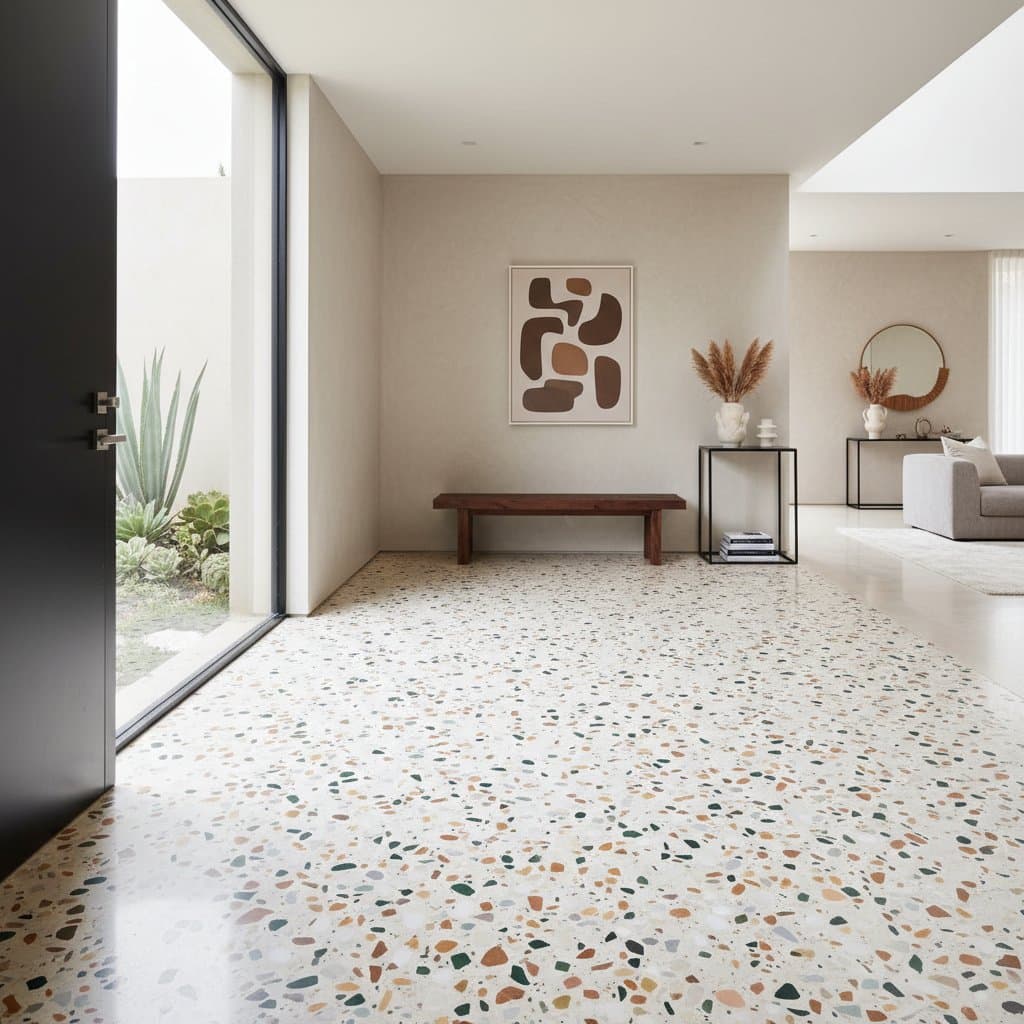
Terrazzo functions as more than a mere surface covering. It consists of a composite formed from marble, quartz, granite, or glass chips embedded in a cement or epoxy binder. After installation, professionals polish it to create a smooth, continuous finish capable of enduring decades with little upkeep. Tile installations, however, feature grout lines prone to staining and cracking, which incur repeated maintenance expenses.
Factors Elevating Terrazzo's Price
Multiple elements determine the total expense of a terrazzo entryway. Choices in aggregates, design intricacy, and installation approaches significantly influence the outcome.
- Material selection: Aggregates for terrazzo include recycled glass, marble chips, mother-of-pearl, or metal inlays. Opting for high-end options increases costs while enhancing visual impact.
- Design complexity: Basic single-color terrazzo proves more affordable than multicolored patterns or elaborate layouts that demand custom divider strips and precise arrangement.
- Installation method: Cement-based terrazzo requires greater thickness and labor, whereas epoxy versions offer a slimmer profile with quicker curing, ideal for contemporary residences.
- Labor expertise: Skilled contractors specialize in terrazzo work. The precision in mixing, pouring, and polishing directly impacts both expense and final quality.
"Terrazzo represents one of those materials where the installer's experience truly manifests in the end result," noted Michael Torres, a California-based flooring contractor. "A properly executed terrazzo floor conveys seamlessness and solidity, whereas subpar work results in irregularities or mismatched tones."
Durability That Recoups the Investment
Most tile floors necessitate replacement after 15 to 20 years, contingent on care and usage. Terrazzo endures 50 years or longer when maintained appropriately. Thus, despite the doubled initial cost, it equates to a lifelong flooring solution.
The material's dense composition and polished surface resist scratches, moisture, and intense traffic. It performs exceptionally in entryways exposed to dirt and abrasives that harm lesser options. Homeowners sustain its appearance through pH-neutral cleaners for routine sweeps and occasional resealing, avoiding the hassles of grout repairs or full tile overhauls.
| Flooring Type | Average Lifespan | Maintenance Level | Replacement Frequency |
|---|---|---|---|
| Terrazzo | 50+ years | Low | Rarely needed |
| Porcelain Tile | 20 years | Moderate | Every 15–20 years |
| Ceramic Tile | 15 years | Moderate to High | Every 10–15 years |
| Stone Tile | 25 years | High | Every 15–20 years |
Distributing terrazzo's cost across its service life reveals a lower annual expense compared to tile.
Superior Design Flexibility
Terrazzo entryways provide boundless creative opportunities. Professionals can tint the base to any hue, incorporate decorative chips, and craft curves, geometric motifs, or personalized emblems. This level of tailoring suits homeowners desiring a unique entrance unachievable with standard tile.
Porcelain and ceramic tiles depend on printed or glazed repeats, producing a gridded appearance. Terrazzo delivers a fluid canvas where embedded elements catch light organically. This yields a sleek, uninterrupted aesthetic that harmonizes with modern or traditional settings.
"Clients gravitate toward terrazzo for its artistic yet enduring quality," observed Jenna Kim, an interior designer focused on upscale flooring. "Integrating shades from walls, furnishings, or outdoor features directly into the floor offers personalization uncommon in typical tile selections."
Simplified Maintenance and Cleaning
Tile demands frequent grout scrubbing to avert discoloration and mold. Cracks in grout permit water infiltration, exacerbating damage in busy zones. Terrazzo sidesteps these issues with its unbroken expanse, simplifying care to basic mopping with neutral solutions.
For those with allergies or respiratory concerns, terrazzo adds value through its nonporous nature, which repels dust unlike grout-filled joints. It also thwarts moisture and bacteria, proving suitable for damp environments.
Standard upkeep for terrazzo includes:
- Daily sweeping or vacuuming to remove debris
- Weekly mopping using a neutral cleaner
- Resealing every three to five years to preserve gloss and repel stains
- Occasional polishing to renew shine
These practices demand less effort than the periodic regrouting or sealing required for tile.
Sustainability and Health Benefits
Contemporary homeowners prioritize eco-conscious choices that minimize waste and elevate air quality. Terrazzo aligns with these preferences by utilizing recycled aggregates and low-VOC epoxy binders. Numerous formulations qualify for green building certifications based on recycled materials and longevity, reducing environmental footprint.
Replacing old tile contributes to landfill accumulation, and certain adhesives emit VOCs gradually. Terrazzo's infrequent need for renewal cuts down on refuse and fosters healthier interiors.
Ideal Scenarios for Terrazzo Selection
Terrazzo's premium price may give pause, but it rewards those committing to lasting home improvements. It excels in entryways, foyers, and corridors emphasizing resilience and visual punch. The material also integrates seamlessly with radiant heating, retaining warmth effectively.
In vintage homes with irregular subfloors, preparatory work like leveling compounds may increase expenses but guarantees a flat, reliable base. Engage installers versed in terrazzo application and subfloor assessment to avert complications.
Key Aspects of Professional Installation
Terrazzo demands expert handling, as it spans multiple precise stages:
- Surface preparation: Ensure the subfloor is pristine, even, and robust.
- Divider strip placement: Install metal strips to outline patterns and manage expansion.
- Mixing and pouring: Blend aggregates and binders uniformly for consistency.
- Curing and grinding: Allow setting, then smooth with diamond tools.
- Polishing and sealing: Buff to the chosen finish and apply protective sealant.
Reputable installers provide long-term warranties, bolstering confidence. Verify credentials through references, past installations, and proficiency in cement and epoxy variants.
Maximizing Your Terrazzo Investment
A $8,000 terrazzo entryway elevates guest impressions with an air of stability and elegance beyond standard tile. To safeguard this asset, implement consistent care, position mats at thresholds, and steer clear of abrasive cleaners.
During renovations, align the floor's palette with adjacent wood doors, moldings, or fixtures for cohesive flow. Through thoughtful design and expert execution, terrazzo transcends flooring to become a enduring emblem of sophistication that appreciates your property's worth over time.
Steps to Proceed with Terrazzo
Evaluate your entryway's dimensions and subfloor condition with a professional assessment. Select aggregates and patterns that reflect your style while considering traffic levels. Secure quotes from certified installers to compare timelines and guarantees, ensuring your investment yields decades of flawless performance.