Japandi Entryways: The Fusion of Wabi-Sabi and Scandinavian Design
Japandi design merges the Japanese philosophy of wabi-sabi, which embraces imperfection and transience, with the functional warmth of Scandinavian aesthetics. This combination yields spaces that radiate peace, authenticity, and purpose. In the entryway, the threshold between exterior and interior worlds, Japandi principles shine by transforming a often-overlooked area into a sanctuary of balance.
Homeowners gravitate toward this style for its soothing neutral palette, eco-friendly materials, and emphasis on artisanal details that honor natural flaws as sources of beauty. A Japandi entryway establishes tranquility upon arrival. Precise lines, pale wood finishes, and organic surfaces establish an immediate sense of equilibrium. Each component, from the primary door to subtle moldings, contributes to a unified composition that prioritizes moderation without sacrificing comfort.
Strategies to Achieve the Japandi Aesthetic
Budget-Conscious Strategy ($2,000 - $5,000)
- Select engineered hardwood or composite entry doors featuring streamlined silhouettes and low-sheen surfaces. Prioritize hues like light oak or ash to replicate the patina of aged timber.
- Update only prominent fixtures and moldings, leaving core structures intact. Opt for matte black or satin nickel pulls to introduce clean, modern accents at minimal expense.
- Emphasize organization and subtle refreshes. Apply a layer of soft ivory or light slate paint, then incorporate one strategic greenery element, such as a low-maintenance succulent in a simple terra-cotta pot, to elevate the ambiance.
Moderate Investment Strategy ($5,000 - $10,000)
- Install solid timber doors showcasing linear grain and hidden hinges for an unobtrusive profile.
- Upgrade entry glazing with slim-profile fiberglass or wood-clad aluminum frames that permit diffused illumination without excess glare.
- Apply horizontal plank paneling or sleek fiber cement cladding in neutral shades like muted taupe or sandy beige to underscore restraint.
- Integrate a custom bench with concealed compartments to foster tidiness and open sightlines.
Premium Investment Strategy ($10,000 - $25,000)
- Commission bespoke doors from responsibly harvested oak, walnut, or cedar, finished with hand-applied oils to accentuate inherent grain inconsistencies.
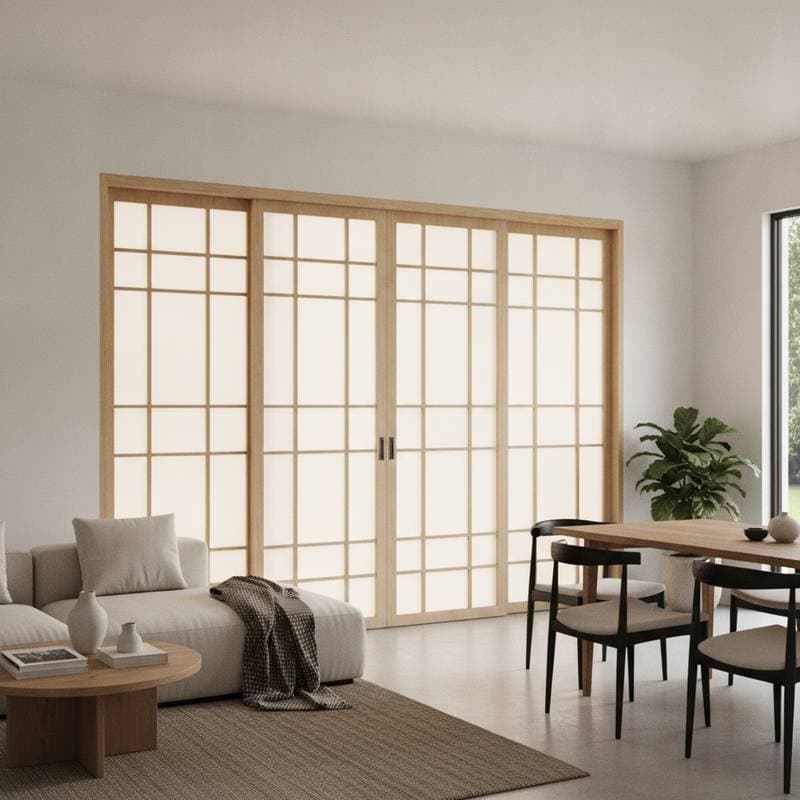
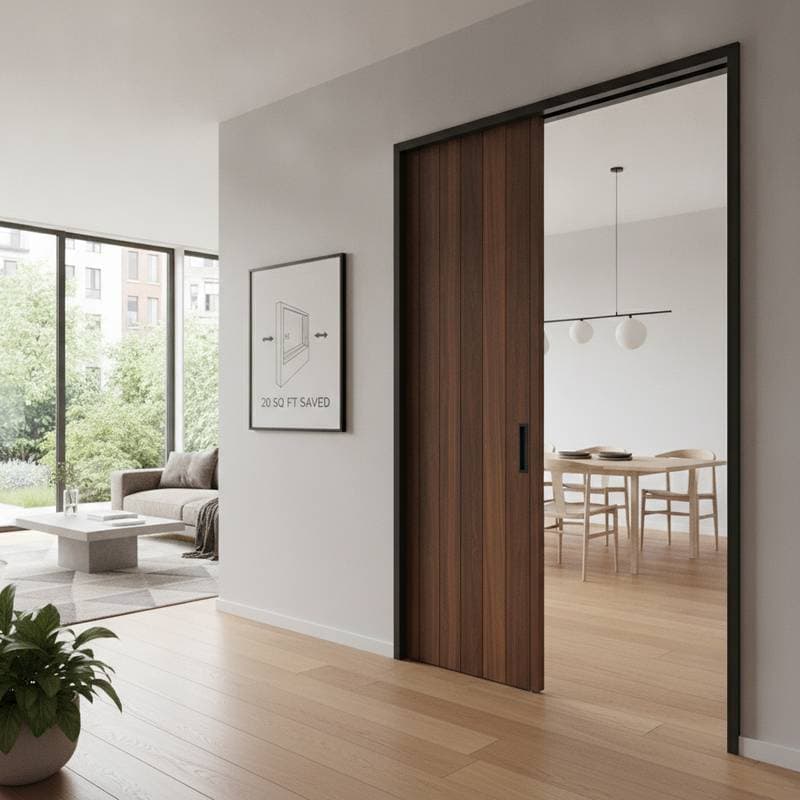
- Incorporate expansive pivot or pocket doors to foster fluid transitions between indoor and outdoor realms.
- Fit high-end aluminum-framed windows with minimal divisions to maximize views and luminosity.
- Clad exteriors in treated cedar or shou sugi ban wood in deep mocha or slate tones for dynamic interplay against lighter interiors.
- Enhance the approach with a restrained fountain or pebble walkway, amplifying the contemplative essence of the space.
Essential Materials and Finishes
- Glazing Elements: Favor narrow-framed casement or picture windows with transparent or etched panes. Frame options in matte black, aged bronze, or raw timber align with sparse forms. Eliminate divided lights inside to preserve unadorned clarity.
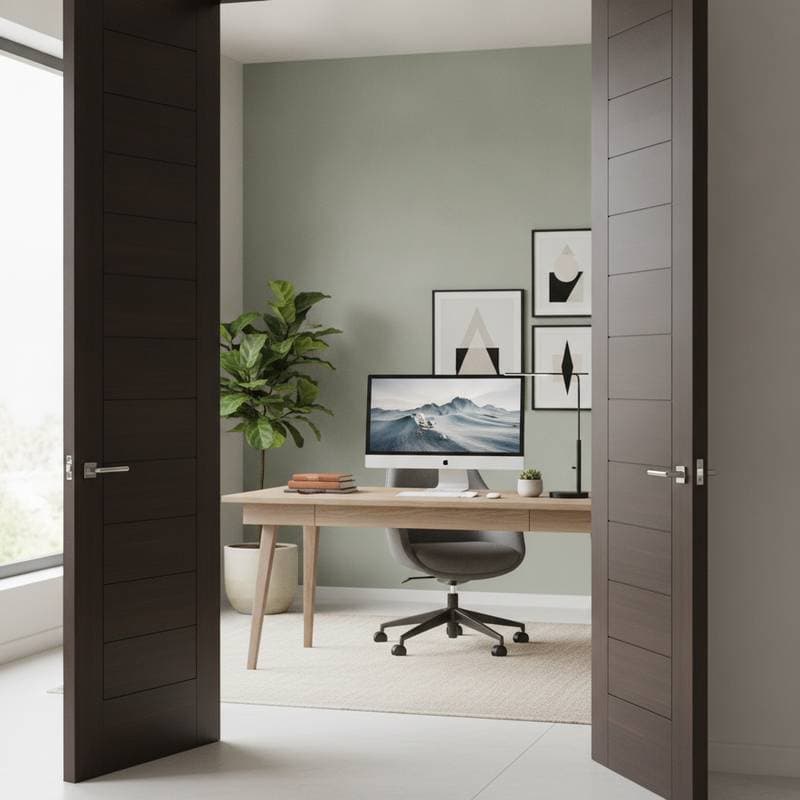
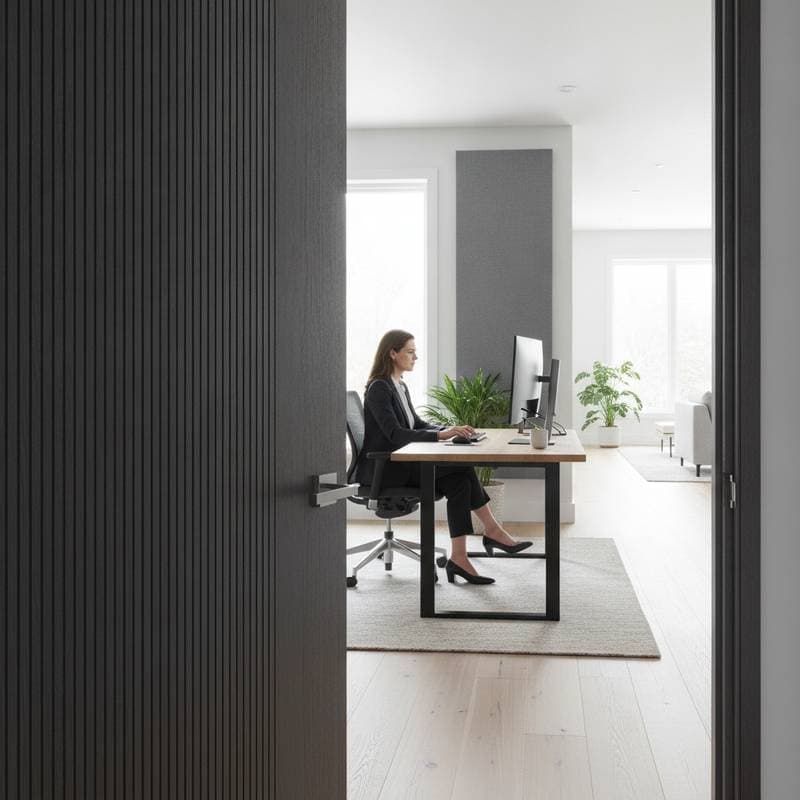
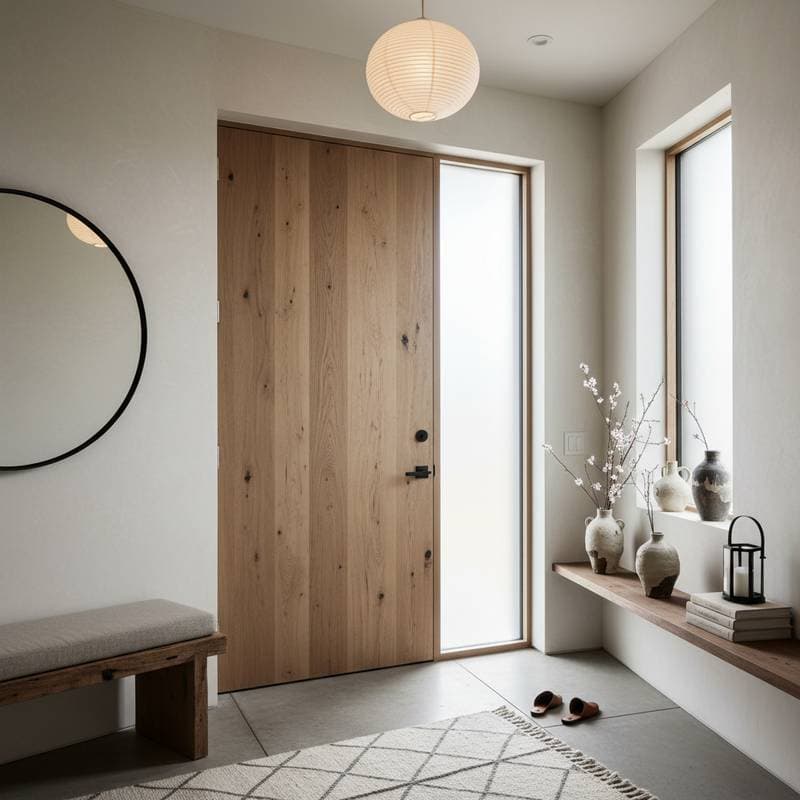
- Entry Doors: Employ flat or louvered timber panels in untreated or oiled states. Pair with hardware in dulled black or antiqued brass for restrained emphasis. Etched glass panels diffuse light while safeguarding seclusion.
- Exterior Cladding: Select authentic substances such as western red cedar, engineered bamboo, or cement board to evoke raw tactility. Orient planks vertically to elongate the facade and promote serenity. Tones including weathered gray, neutral ecru, or gentle taupe evoke quietude.
- Moldings and Details: Employ slim, aligned profiles for casings. Prefer non-reflective sheens to glossy alternatives. For illumination, choose geometric sconces or pendants with 2700K bulbs that accentuate surfaces softly rather than starkly.
Practical Maintenance Considerations
Japandi materials, while visually gentle, demand deliberate care to endure. Timber doors benefit from periodic sealing with UV-resistant oils every two to three years to shield against humidity and sunlight. Durable substitutes like composites or fiberglass provide comparable visuals with reduced upkeep.
Pale exterior panels, elegant in their subtlety, accumulate grime visibly. Clean them biannually using a soft brush, mild soap solution, and rinse water. Satin metal fittings repel smudges more effectively than high-polish versions. Ground-level features like stone or aggregate paths require occasional clearing of debris and minor adjustments to sustain their spare appearance.
Sustained, undemanding attention suits the wabi-sabi ethos of gradual evolution over flawless upkeep. This approach ensures the design matures gracefully, mirroring life's natural progression.
Common Pitfalls to Sidestep
- Excessive Adornment: Japandi flourishes through sparsity. Limit accessories to one focal piece, such as a woven basket or artisanal vessel on a slim shelf, to avoid visual overload.
- Inconsistent Timber Shades: Restrict diversity to paired tones for cohesion. Stark disparities fracture the serene equilibrium.
- Disrupted Scale: Bulky openings dominate compact fronts. Align dimensions symmetrically with adjacent architecture.
- Reflective Coatings: Shiny paints or metals undermine the tactile essence of wabi-sabi. Select eggshell or flat finishes for paint and fixtures alike.
- Overlooking Illumination Patterns: Light circulation defines Japandi vitality. Analyze daily solar paths to optimize glazing positions and translucency levels.
Harmonizing Colors and Motifs
Japandi color schemes layer subdued earth tones with inherent material qualities. Texture and subtle gradations provide depth, obviating bold hues.
Recommended Palette:
- Creamy Linen White for primary surfaces and panels.
- Honeyed Oak Neutral for timber elements and borders.
- Sooty Charcoal for framing and metallic touches.
- Subtle Terracotta for bases or hardscapes.
- Misted Sage for ancillary items like vessels or mats.
These selections unify the composition, channeling Japanese restraint alongside Nordic invitation.
Documentation Guide for Design Planning
Capture your current entry comprehensively to inform choices. Detailed imagery and observations streamline material and layout decisions.
Visual Records for Homeowners:
- Broad perspectives from the approach to gauge overall presence and proportions.
- Macro views of existing portals, panes, and edges to evaluate wear.
- Sequential captures of daylight progression across the frontage.
- Focused shots of adjunct features, including supports, overhangs, and paths.
- Surrounding environmental context, noting communal guidelines or local vernaculars.
Key Annotations:
- Prevailing building typology and enduring attributes to retain.
- Regional conditions, such as dampness, coastal corrosion, or solar intensity.
- Fiscal allocations, balancing artisanal focus against streamlined options.
Realizing Harmonious Entryways
A Japandi entryway embodies mindful habitation through genuine substances and measured forms. This approach adapts seamlessly to diverse environments and scales by emphasizing equilibrium over elaboration. Pale timber portals, sparse fittings, and tonal cladding establish an enduring base that matures subtly.
Treat the endeavor holistically for optimal results. Synchronize glazing and door alignments, standardize molding scales, and select patinas that develop richly. Regardless of expenditure level, wabi-sabi invites reverence for organic shifts and subtle flaws.
The outcome welcomes inhabitants and visitors with poised assurance. It conveys deliberate curation free of artifice or austerity. From timber veining to veiled radiance through panes, each facet fosters unity. Such an entryway commands no spectacle; it bestows repose, underscoring that elegance resides in restraint, genuineness, and poise.