DIY Reclaimed Barn Doors: Save Up to $2,000 on Custom Home Upgrades
Building a reclaimed barn door offers substantial savings, often up to $2,000 compared to purchasing a prebuilt version from a custom mill or home improvement retailer. Homeowners appreciate the rustic charm, exceptional durability, and environmental benefits of reclaimed wood. With careful planning and a commitment to the process, anyone with basic woodworking skills can produce a premium-quality door at a fraction of the retail cost.
This guide covers essential cost factors, material selections, and a detailed step-by-step process to help you create a striking, sustainable addition to your home.
Factors Influencing Project Costs
Multiple elements determine the total expense of your reclaimed barn door project. A clear understanding of these components allows for precise budgeting and manageable expectations.
Wood Source and Condition
The price of reclaimed wood fluctuates based on its origin and required preparation. Wood from old barns or structures often contains nails, weathered sections, or minor rot, which demand extra time for cleaning and milling. This preparation can lower the usable yield from each board. Opt for cleaner, kiln-dried pieces from architectural salvage yards or specialized suppliers; these options simplify the work but carry a modest premium, typically $5 to $15 per board foot.
Door Dimensions
Standard barn doors span 36 to 42 inches in width and reach 84 inches in height to suit most interior openings. Larger sizes or configurations, such as double doors for wider spaces, necessitate more lumber and extended hardware tracks. Expect material costs to increase by 20 to 40 percent for oversized designs, pushing the budget from around $300 for basics to $500 or more.
Hardware Selection
Sliding hardware kits vary from simple steel rollers, priced at $100 to $200, to high-end options like forged iron or soft-close mechanisms that cost $300 to $600. Investing in durable components ensures smooth operation over years and minimizes future repairs. Consider the weight of your door when choosing; heavier reclaimed wood requires robust tracks rated for at least 200 pounds.
Finishing Options
Reclaimed wood demands thorough cleaning, sanding, and sealing to preserve its integrity. Basic finishes, such as penetrating oil, cost under $50 and enhance the natural patina. More advanced choices, like water-based polyurethane for added protection, range from $75 to $150. The selected finish influences both upfront expenses and ongoing care routines.
Insights from Woodworking Professionals
Ryan Keller, owner of a custom carpentry shop in Colorado, emphasizes the value of DIY reclaimed projects. "When you work with reclaimed wood, you are not just saving money, you are getting character that no new lumber can match," Keller states. His clients who undertake these builds typically save $1,500 to $2,500, depending on local material access and project scale.
Data from home renovation resources align with Keller's observations, pegging professional installation and fabrication at $60 to $100 per hour. Handling the construction personally removes these fees, delivering not only financial benefits but also the fulfillment of crafting a unique, personalized element for your living space.
Essential Materials and Tools
Gather these items before starting to streamline your build.
Materials List
- Reclaimed wood boards: 100 to 150 board feet for a standard door, sourced from salvage yards.
- Sliding hardware kit: Track, rollers, and floor guide compatible with your door weight.
- Screws and fasteners: Corrosion-resistant varieties for assembly and hanging.
- Wood glue: For reinforcing joints in paneled sections.
- Finishing supplies: Sandpaper (80-220 grit), cleaner, oil or sealant.
Tools Required
- Circular saw or table saw for cutting boards to size.
- Drill with bits for pilot holes and hardware installation.
- Clamps to secure pieces during assembly.
- Measuring tape, level, and square for accuracy.
- Orbital sander for smoothing surfaces.
Total material costs average $400 to $800, far below the $2,500 price tag of comparable custom doors.
Step-by-Step Building Process
Follow these steps over a weekend to construct your door efficiently.
-
Measure and Plan: Assess your opening and decide on door dimensions, allowing 1 to 2 inches of clearance on all sides. Sketch a simple panel design with vertical stiles, horizontal rails, and optional cross-bracing for stability.
-
Prepare the Wood: Remove nails, hardware, and debris from reclaimed boards. Cut them to rough lengths, then plane or sand edges for uniformity. Sort pieces by grain and color to achieve a balanced aesthetic.
-
Cut and Assemble the Frame: Rip boards into stiles (vertical sides, 4-6 inches wide) and rails (top and bottom, matching width). Form a rectangular frame using mortise-and-tenon joints or biscuits for strength; apply wood glue and secure with screws.
-
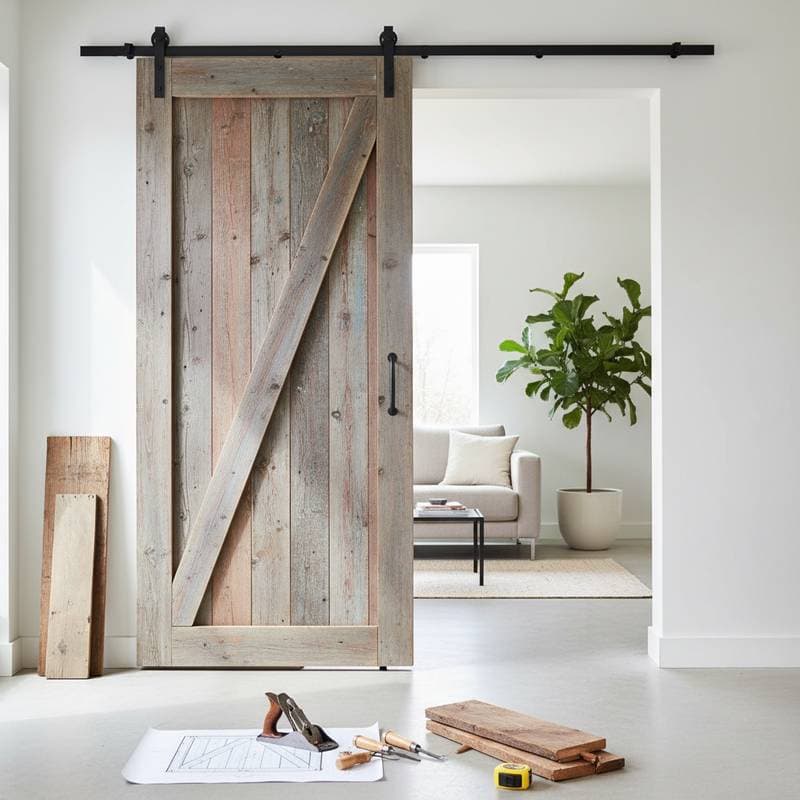
Add Panels and Details: Fill the frame with tongue-and-groove reclaimed planks or plywood backing. Incorporate Z-bracing on the back for warp resistance. Sand all surfaces progressively from coarse to fine grit.
-
Install Hardware: Attach rollers to the top edge per kit instructions. Mount the overhead track securely to the wall above the opening, ensuring it is level. Add the floor guide to prevent swinging.
-
Finish and Hang: Apply your chosen sealant in thin coats, allowing drying time between applications. Once cured, lift the door onto the track and adjust for smooth sliding.
Upkeep for Enduring Performance
A well-built reclaimed barn door withstands daily use for decades with minimal effort. Dust surfaces weekly using a soft, dry cloth to avoid scratching the finish. Inspect and clean the sliding track monthly to remove debris that could cause sticking.
Reapply sealant every two to three years, focusing on edges exposed to humidity. Address any loose hardware promptly to maintain alignment and functionality.
Realize Your Custom Vision
Constructing a reclaimed barn door merges practical skills with eco-conscious design, yielding a one-of-a-kind feature that elevates your home's style. Source materials thoughtfully, execute each step with precision, and enjoy the rewards of a handcrafted piece that blends history with modern utility. This approach not only conserves resources but also infuses your space with authentic warmth and narrative depth.