Living Hinges: Enabling Wood Doors to Bend Without Breaking
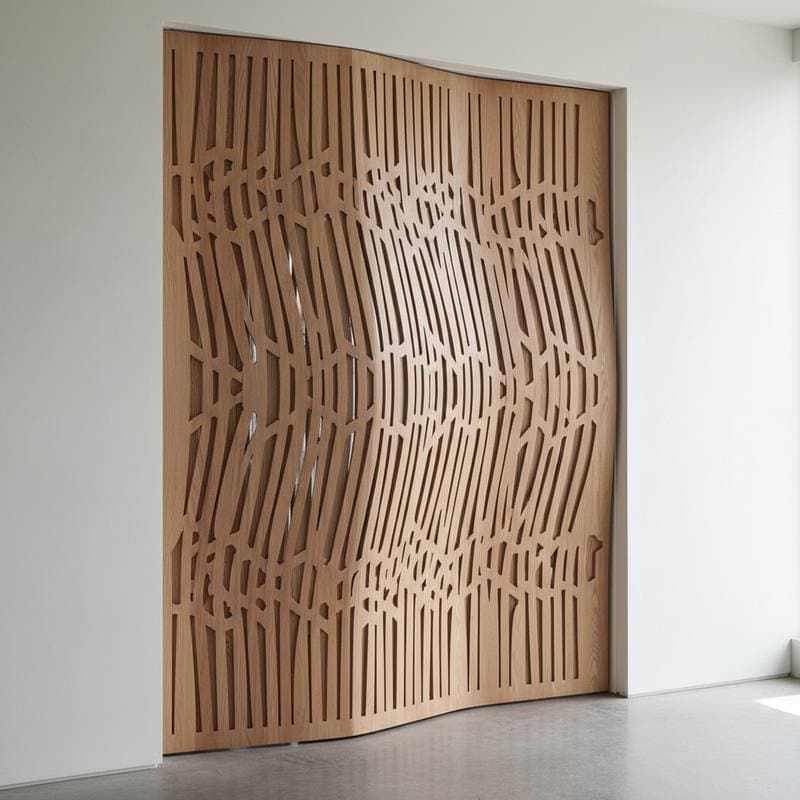
Wood commands admiration for its inherent warmth, distinctive grain patterns, and enduring elegance. Recent advancements in woodworking techniques introduce living hinges, flexible joints that permit solid wood panels to articulate smoothly without fracture. This innovation expands options for interior door configurations, enhancing both utility and visual appeal in residential settings.
Those who appreciate the fluidity of curved cabinetry or ponder the mechanics of a planar wood surface achieving graceful movement will find living hinges compelling. The following sections explain their operational principles, pricing structure, and integration into home renovation endeavors.
Cost Considerations for Living Hinge Wood Doors
Living hinge doors qualify as bespoke creations, with expenses fluctuating according to wood type, pattern intricacy, and surface treatments. Homeowners typically encounter these price brackets:
| Material/Service | Cost Range | Key Features |
|---|---|---|
| CNC Cutting and Fabrication | $300 to $800 per door | Precision laser or router patterning for joint flexibility |
| Solid Wood Door Blank | $400 to $1,200 | Options such as maple, walnut, oak, or birch optimized for articulation |
| Finishing and Sealing | $150 to $400 | Application of protective layers for humidity resistance and visual enhancement |
| Professional Installation | $250 to $600 | Alignment, secure mounting, and operational testing |
| Total Project Cost | $1,100 to $3,000 per door | Comprehensive inclusion of materials and labor |
These figures account for premium artisanal execution. As a niche offering, living hinge doors command a premium over conventional interior doors, which range from $200 to $800 when fully installed. The elevated pricing stems from specialized machining and the expertise demanded to balance pliability with structural integrity.
Advantages of Living Hinge Doors
The fusion of adaptability and robustness distinguishes living hinge doors. Key benefits warrant examination.
Seamless Aesthetic Integration
Fabricated from one continuous wood expanse, these doors eliminate exposed metal elements. This unified composition delivers a pristine, uninterrupted surface, perfectly suited to sleek, modern environments.
Optimized Space Utilization
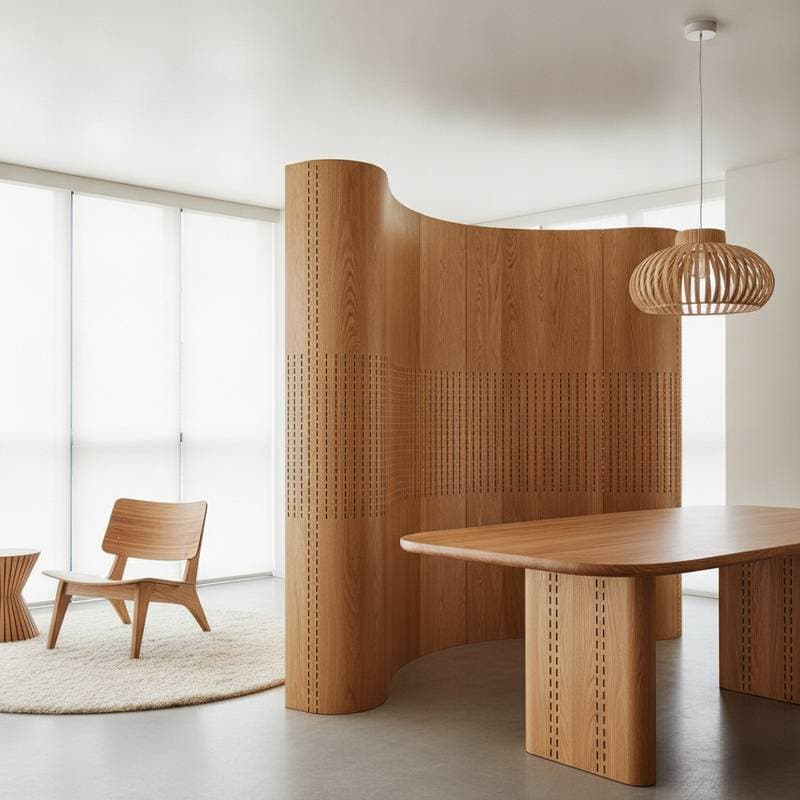
Living hinge doors accommodate folding or curving motions unattainable with rigid counterparts. Such versatility proves invaluable in confined areas or as dynamic partitions, thereby optimizing available square footage.
Minimal Upkeep Requirements
Absence of mechanical components eliminates the need for lubrication or periodic replacements. The inherent joint design minimizes vulnerability, promoting longevity with basic care.
Broad Design Customization
Artisans produce living hinges in diverse configurations, ranging from linear segments to elaborate lattice formations. These variations influence bending radius and closed-state appearance, allowing tailored solutions for specific architectural visions.
Installation Process for Living Hinge Doors
Mounting a living hinge door demands exacting calibration and experience with compliant materials. Although skilled DIY enthusiasts may undertake the task, professional assistance remains advisable for optimal results.
Essential steps encompass:
- Verifying the door frame's squareness and preparing surfaces for attachment.
- Positioning the hinge zone precisely within the frame aperture.
- Securing via hidden fasteners or embedded guides to support the flexible margin.
- Evaluating articulation to confirm fluid operation and secure latching.
- Administering protective finishes to safeguard joint fibers against environmental factors.
Expert involvement preserves the hinge's integrity, averting potential cracks from improper handling or misalignment during initial setup.
Ideal Applications for Living Hinge Doors
Living hinge constructions excel as statement pieces that merge sculptural form with practical performance. They integrate seamlessly in scenarios such as:
- Open-plan residences requiring adaptable room separators.
- Streamlined or avant-garde settings emphasizing fluid boundaries.
- Compact zones where swing doors encroach upon circulation paths.
- Bespoke storage solutions or wardrobe systems benefiting from arcuate motion.
Specialized sealants render them viable in moderately humid locales, though avoidance of steam-heavy bathrooms proves prudent. In principal living zones, these doors establish captivating accents that harmonize traditional woodworking prowess with forward-thinking engineering.
Incorporating Living Hinge Innovation into Your Interior
To harness the transformative potential of living hinge doors, consult fabricators early in the design phase. Specify wood selections and hinge patterns that align with your spatial needs and stylistic preferences. This approach not only elevates functionality but also infuses interiors with a bespoke sophistication that endures.