Flexible Wood Hinges Revolutionizing Interior Design by 2026
Woodworking traditions meet advanced innovation in flexible wood hinges, a breakthrough for contemporary designers. These hinges enable wooden elements to bend, fold, or pivot without metal components, transforming construction in furniture, cabinetry, and interior doors. The result combines aesthetic purity with reliable function, expanding possibilities for builders and homeowners alike. As production techniques advance, flexible wood integrates into designs previously constrained by conventional hardware.
Understanding Flexible Wood Hinges
Flexible wood hinges, sometimes referred to as living hinges, consist of a single wood piece engineered for controlled flexibility along a specific line. Precision cuts or patterns in the wood allow bending while preserving overall strength, eliminating the need for separate metal or plastic parts. This design leverages the natural properties of wood for smooth motion.
Manufacturers typically use thin panels or veneers from species like maple, birch, oak, or bamboo, processed via laser cutting or CNC machining. These materials provide uniform grain and resilience, ensuring the hinge withstands repeated use. The cut patterns dictate the degree of flexibility, load capacity, and visual harmony with surrounding wood.
Cost Breakdown and Project Applications
Flexible wood hinges qualify as a premium option due to their specialized fabrication. Prices depend on scale, material, and complexity, with ranges outlined below for common uses.
| Application | Cost Range (Materials and Fabrication) | Key Details |
|---|---|---|
| Custom Cabinet Doors | $250–$600 per door | Covers panel creation and basic installation |
| Furniture Joints (Chairs, Tables, Units) | $100–$400 per segment | Varies by dimensions, species, and intricacy |
| Interior Door Panels | $700–$1,800 per door | Includes hinge embedding, finishing, and adjustments |
| Decorative Wall Panels | $15–$45 per square foot | Suited for curved or folding installations |
Expect additional 20–30 percent for labor, finishes, and sealing. Larger projects benefit from bulk material discounts.
Reasons Designers Embrace Flexible Wood
The primary draw lies in design versatility. Flexible wood hinges produce uninterrupted panel transitions, free from protruding hardware, which suits sleek, minimalist spaces. This approach enhances visual flow in modern interiors.
Sustainability adds further appeal. Produced from renewable sources, these hinges avoid metal extraction impacts and remain fully recyclable. The continuous grain pattern maintains wood's organic charm across the joint.
Silent functionality sets them apart as well. Unlike metal hinges prone to noise or wear, wood versions operate quietly with steady tension, perfect for quiet environments like studies or sleeping areas.
The Manufacturing Process
Crafting flexible wood hinges requires technical precision and creative input. Start with a uniform wood sheet, selected for consistent grain. Laser or CNC tools then create slots or perforations along the hinge line, calibrated for desired bend radius.
Post-cutting, sanding smooths edges, followed by sealing to protect fibers from splits. Optional reinforcements, such as fabric backings or flexible veneers, boost longevity. Finished hinges often achieve 90-degree bends or greater, retaining form under stress.
Flexible Wood Versus Traditional Hinges
| Hinge Type | Cost per Unit | Durability | Maintenance Needs | Visual Integration |
|---|---|---|---|---|
| Metal Butt Hinge | $5–$30 | Excellent | Periodic lubrication | Obvious metal edges |
| Concealed Hinge | $10–$50 | Strong | Low | Invisible, but demands precise routing |
| Piano Hinge | $20–$70 | Strong | Low | Long exposed strip |
| Flexible Wood Hinge | $100–$400 | Good to Excellent | Periodic sealing | Fully seamless with wood |
Flexible wood excels in style-driven scenarios but may not suit extreme loads. Reserve metal for high-traffic or exterior uses.
Key Cost Influences
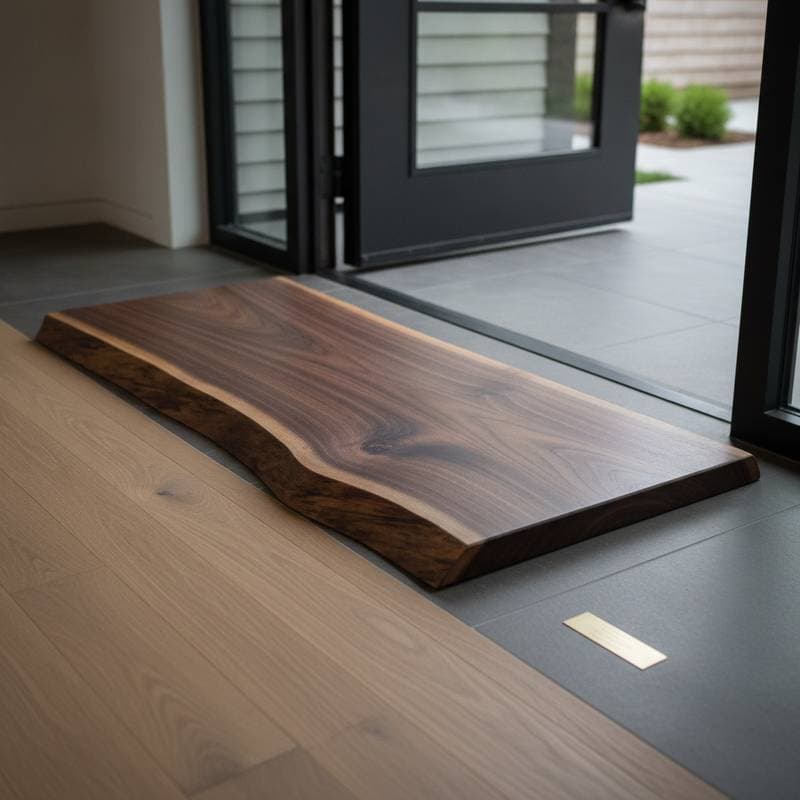
Budgeting for flexible wood hinges involves several variables. Dense hardwoods like walnut raise prices through enhanced durability and elegance. Thicker panels demand more machining time for accurate slots.
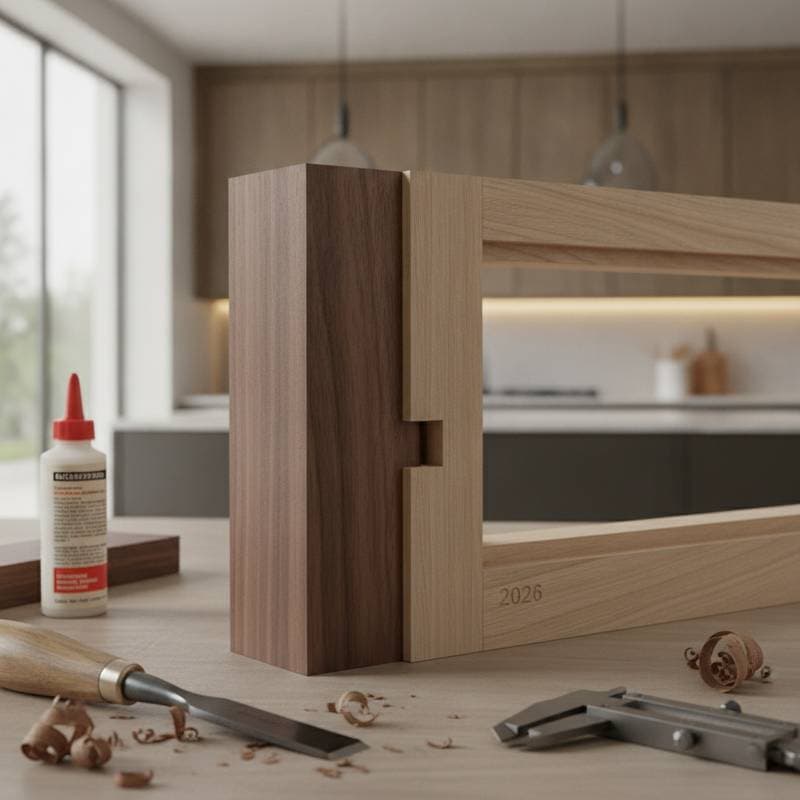
Complex patterns, such as ornate geometries, require custom tooling and trials. Finishes like durable sealants add protection but increase expenses. Integrated designs, embedding hinges into full assemblies, necessitate extra joinery expertise.
Jacob Ellison, a contractor at Seattle's Modern Wood Interiors, notes, “Flexible wood hinges demand exact patterns, or they wear prematurely. Executed well, they deliver unmatched artisanal quality over metal alternatives.”
Installation Tips for Homeowners
Small-scale projects, like decorative boxes, suit DIY efforts with basic tools. Larger installations, including cabinets or dividers, warrant professional help to ensure alignment. Missteps here can impair motion or fit.
Acclimate materials to ambient humidity beforehand to avoid distortion. Apply flexible sealants, such as polyurethane, to the hinge zone for moisture resistance. Secure attachments with even-stress adhesives or hidden fasteners, steering clear of the bend area.
Ensuring Longevity Through Maintenance
Proper care extends flexible wood hinge life significantly. Regular cleaning prevents debris from abrading cuts, while sealing guards against humidity. Aim for indoor conditions with 35–55 percent relative humidity to minimize warping.
Reapply oil or sealer every six to twelve months, focusing on the flexible section. Steer clear of heavy coatings that restrict movement. Address stiffness by gentle sanding and refinishing, avoiding overexposure to sun or dampness.
Innovative Applications in Home Design
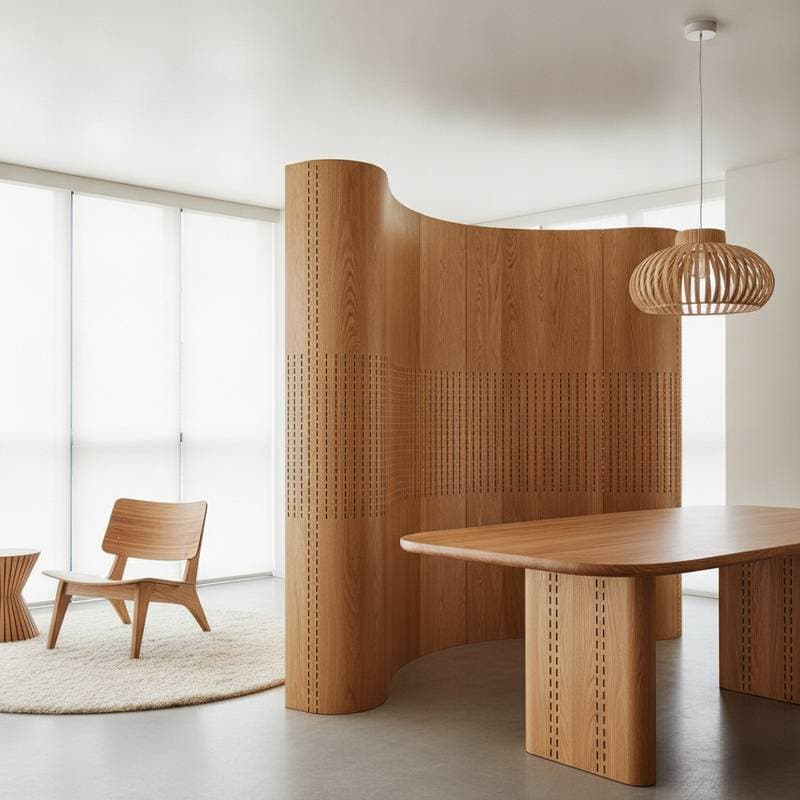
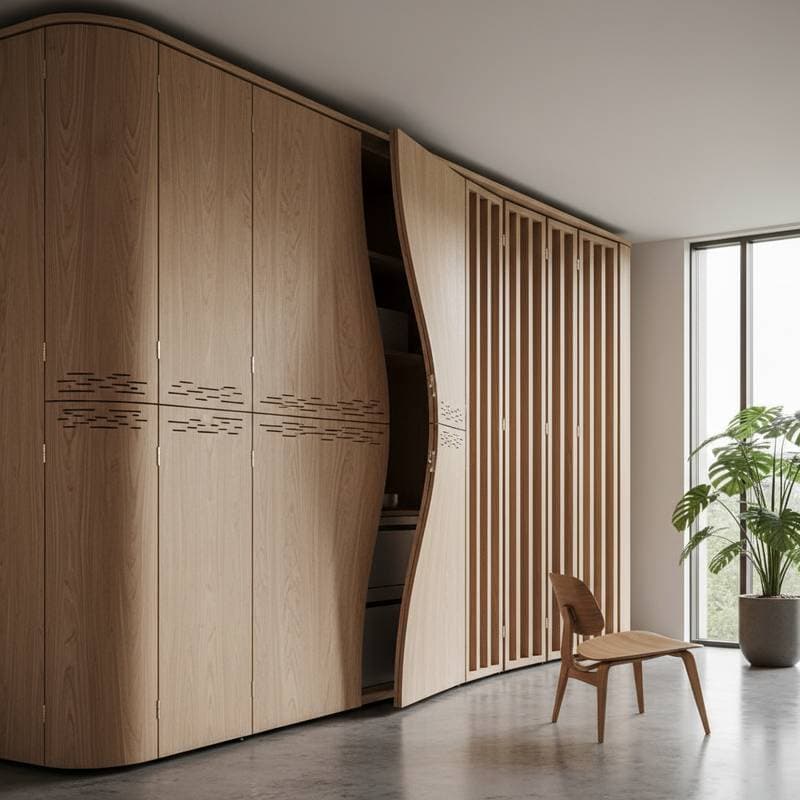
Architects leverage flexible wood for dynamic interiors. Curved cabinet doors unfold gracefully without hardware interruptions. Foldable dividers compact efficiently, preserving grain continuity.
Hidden storage blends into walls via flush, bending panels. Artistic furniture, from benches to tables, highlights the hinge's kinetic beauty. Acoustic treatments incorporate movable wood partitions for better sound management.
These uses fuse utility with sensory appeal, surpassing rigid metal systems.
Emerging Trends and Expert Perspectives
Advancements in fabrication promise thinner, tougher hinges. Composites and resin treatments enhance stability while keeping natural aesthetics. Costs may drop as techniques scale.
Maria Torres, a design engineer at Oakline Fabrication, shares, “We test layered veneers and infused woods to balance flex and endurance.” Smart integrations, like sensor-activated panels, position flexible wood in automated homes.
Sustainability Advantages
Flexible wood hinges align with green practices by forgoing metals and synthetics. Sourced from certified forests, they support recycling and easy refurbishment. Modular designs allow targeted repairs, cutting waste and prolonging service.
Integrating Flexible Wood Hinges Into Your Space
Start by assessing your project's needs: scale, style, and environment. Consult specialists for custom patterns matching your wood. Test small samples to verify fit and feel.
Budget for quality materials and finishes to maximize benefits. With careful planning, flexible wood hinges deliver enduring, elegant functionality that elevates any interior.