Mycelium Doors: A Sustainable Innovation Arriving in 2026
Sustainable home design increasingly prioritizes materials that minimize environmental harm without compromising quality. Mycelium, the underground root system of fungi, offers a promising solution. By 2026, mycelium doors will enter commercial production, providing homeowners with a renewable and insulating alternative to conventional wood products.
These doors grow from fungal mycelium intertwined with substrates like agricultural waste, resulting in lightweight yet sturdy panels. Production avoids deforestation and relies on rapid growth cycles. This approach positions mycelium doors as a viable option for interior applications, blending performance with ecological advantages.
Pricing Overview and Expectations
Initial estimates place mycelium doors in the $500 to $1,200 range per unit, factoring in dimensions, surface treatments, and material density. This pricing sits above basic hollow-core doors yet remains more accessible than premium solid wood varieties. As manufacturing scales, expect potential reductions in these figures.
The table below compares mycelium doors to common alternatives, including installation costs:
| Door Type | Typical Cost Range (Including Installation) | Key Features |
|---|---|---|
| Hollow-Core Wood | $250 to $600 | Lightweight, budget-friendly, basic insulation |
| Solid Wood | $800 to $2,500 | Authentic look, robust, substantial weight |
| Mycelium Composite | $500 to $1,200 | Eco-renewable, excellent insulation, fully biodegradable |
| MDF or Engineered Wood | $300 to $900 | Uniform texture, reliable, higher chemical use |
Prototypes demonstrate that mycelium matches wood's strength while surpassing it in thermal and sound insulation. Homeowners may invest a modest premium initially, offset by enduring energy savings and sustainability gains.
Understanding Mycelium Door Construction
Mycelium doors form through a biological process where fungal roots bind to biomass such as sawdust or crop residues. Panels shape during growth, followed by heat processing to halt development and enhance stability. This yields a versatile core suitable for various door styles.
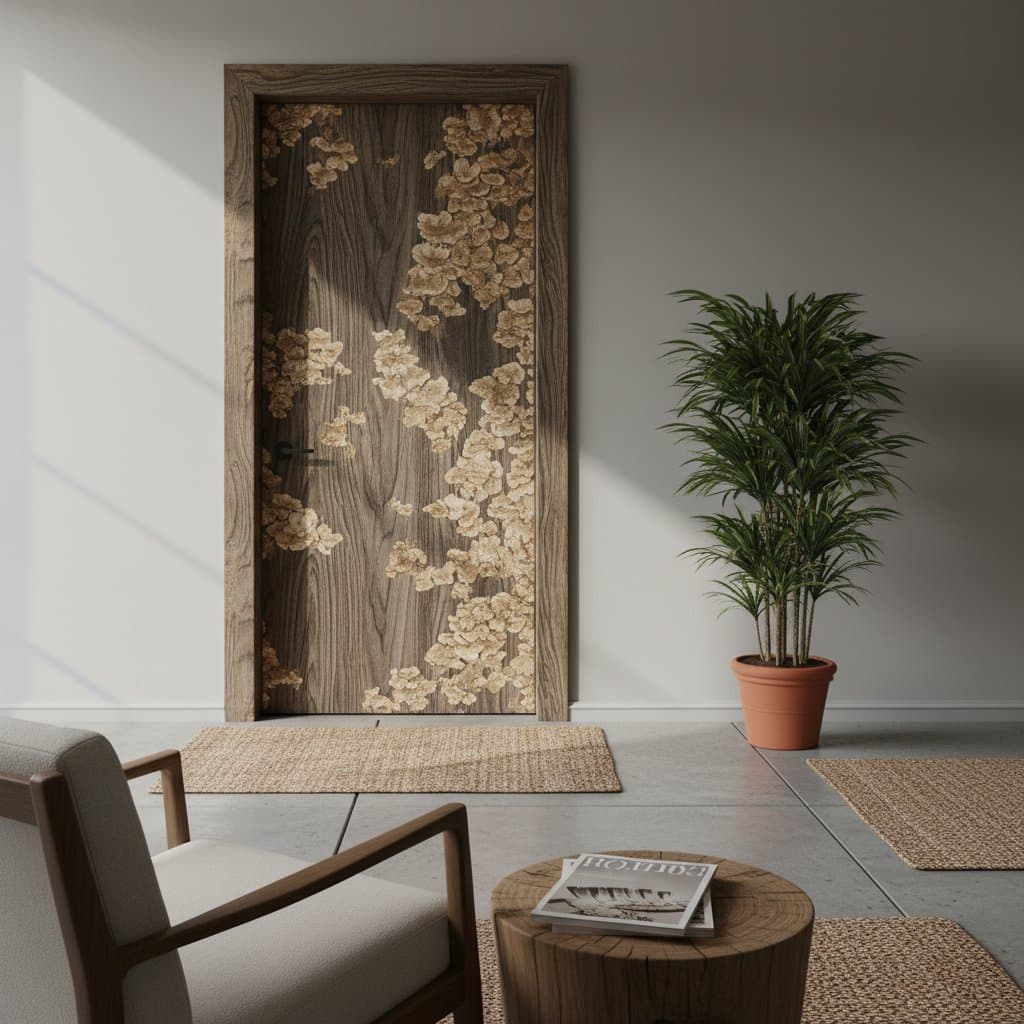
The final product mimics wood in texture and weight, allowing finishes like veneers or natural coatings. Surfaces accept sanding, staining, or painting with standard techniques. No trees require harvesting, making production inherently resource-efficient.
Reasons for Growing Interest in Mycelium
Mycelium stands out for its low-impact production, utilizing waste materials and short growth periods of just days. Unlike MDF, it requires no synthetic adhesives, eliminating harmful emissions. This results in a material that decomposes fully at end-of-life.
Engineers report up to 80 percent lower carbon emissions versus engineered wood, due to minimal energy use and waste-free sourcing. Ryan Delgado, a contractor and eco-materials consultant, notes, “Homeowners seek wood-like performance without the ecological drawbacks. Mycelium delivers that equilibrium of utility, visuals, and green credentials.”
Performance Comparison Across Materials
Testing reveals mycelium's cellular structure excels in insulation, trapping air for better temperature and noise control. It achieves densities and strengths competitive with established options, all while prioritizing biodegradability.
| Property | Mycelium Composite | Solid Wood | MDF |
|---|---|---|---|
| Density | 350–600 kg/m³ | 500–800 kg/m³ | 700–900 kg/m³ |
| Thermal Conductivity | 0.03–0.05 W/m·K | 0.12 W/m·K | 0.15 W/m·K |
| Sound Transmission Loss | 25–35 dB | 30–40 dB | 25–30 dB |
| Biodegradability | 100% | Partial | Low |
| Chemical Additives | None | Minimal | High |
These metrics position mycelium as superior for insulation and eco-profile, often equaling or exceeding wood in key areas.
Key Factors Affecting Mycelium Door Pricing
Several elements determine final costs for mycelium doors:
- Production Volume: Larger-scale operations could lower prices by as much as 30 percent through efficiencies.
- Surface Treatments: Options like wood veneers or protective resins enhance longevity but increase expenses modestly.
- Material Density: Higher densities improve strength and insulation, though they demand more substrate and time.
- Customization Needs: Tailored sizes or features like integrated hardware add to labor and material outlays.
- Supplier Variations: Specialized producers may premium-price limited editions, while mainstream brands offer competitive rates.
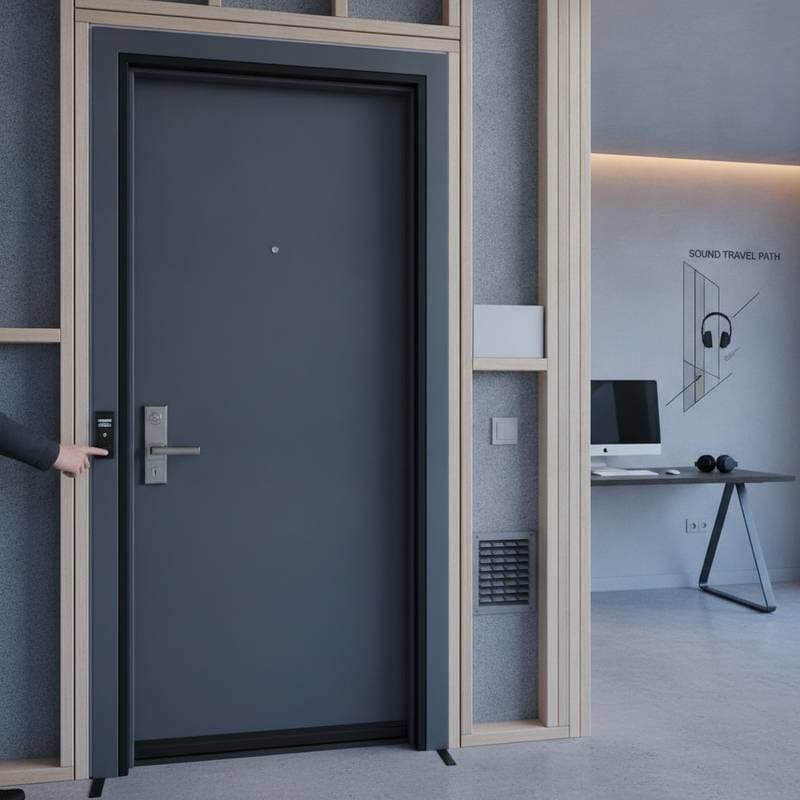
For typical uses, a basic bedroom door aligns with lower pricing, whereas specialized applications like sound-dampening office doors trend higher.
Installation Process and Upkeep
Mycelium doors install using familiar methods, compatible with existing hinges, frames, and fittings. Their reduced weight simplifies handling, often cutting installation time by 10 to 15 percent compared to heavier woods.
Maintenance mirrors that of fiberboard products: wipe with mild soap solutions and dry promptly. Protective coatings handle routine exposure, but reapply sealants periodically with natural alternatives to preserve integrity.
Health and Ecological Advantages
Mycelium eliminates formaldehyde risks found in many wood composites, fostering healthier indoor environments, especially for sensitive individuals. Its inherent resistance to fungi and bacteria further improves air quality by curbing mold.
Ecologically, the material supports a closed-loop cycle, breaking down harmlessly without toxins. This facilitates sustainable renovations, reducing overall waste in home projects.
Exploring Design Applications
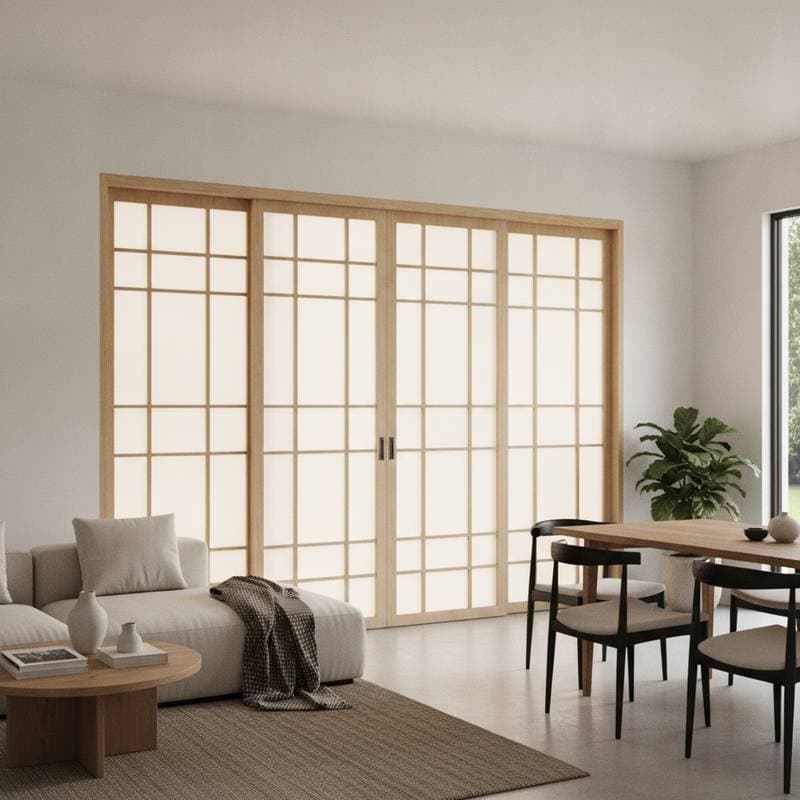
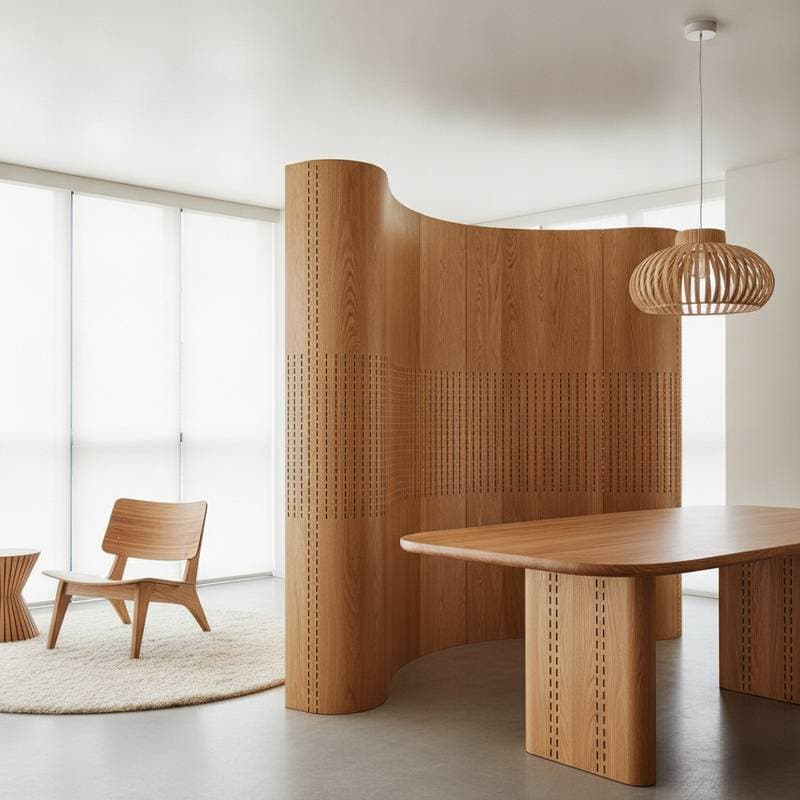
The moldable nature of mycelium enables diverse forms, from textured panels to hybrid constructions with other naturals. It supports traditional raised panels, sleek modern flats, or innovative dividers.
Untreated mycelium's subtle hue complements contemporary styles, ensuring sustainability enhances rather than limits aesthetic choices.
Expert Perspectives on Commercial Viability
Sustainable architecture specialists view mycelium as nearing widespread availability. Karen Liu, a building materials analyst advising startups, states, “Focus now lies on standardizing density and finishes. Reliable quality will propel these doors into retail mainstream.”
Field reports confirm seamless integration: tools for wood apply directly, easing adoption for professionals and self-installers alike.
Realizing Lasting Homeowner Benefits
Mycelium doors yield savings through superior insulation, which moderates energy use for climate control. Stable sourcing from waste streams insulates against timber price swings, broadening access to green options.
Over time, these doors contribute to property value by aligning with rising demand for eco-conscious features.
Addressing Adoption Hurdles
Developers continue to bolster surface resilience against impacts and enhance moisture barriers for versatile placements. Current recommendations favor dry interior zones until advancements expand suitability.
Regulatory frameworks adapt slowly; ongoing certifications align mycelium with composite standards to streamline approvals.
Selecting the Right Mycelium Door
Evaluate these criteria when choosing:
- Density Levels: Opt for higher densities in noise-sensitive areas; lighter for mobility.
- Surface Choices: Veneers suit wood enthusiasts; resins prioritize protection.
- Application Fit: Prioritize insulation for private rooms, weight savings for traffic zones.
- Vendor Reliability: Seek transparency on sourcing and performance validations.
- Professional Guidance: Engage installers versed in bio-materials for optimal results.
Preserving Mycelium Door Quality
Sustain performance by controlling indoor humidity and refreshing coatings as needed. Use gentle cleaners, and address scratches through sanding followed by resealing.
Regular care ensures longevity, maintaining both function and visual appeal.
Embracing Mycelium for Sustainable Interiors
Mycelium doors advance eco-design by merging innovation with practicality. They enable footprint reduction while upholding home standards.
Adopting them now invests in resilient, regenerative living spaces that evolve with environmental priorities.