Barn Door Hardware’s 2-Year Flaw: Durability Fix and Long-Term Solutions
Sliding barn doors add rustic charm and functional efficiency to contemporary interiors. Homeowners appreciate their ability to save space while delivering a seamless blend of style and utility. However, a common challenge arises after approximately two years of daily operation: hardware components exhibit signs of degradation, such as rattling noises, jerky motion, and misalignment.
These issues stem from everyday factors like dust accumulation, moisture exposure, and structural shifts in the home. Addressing them requires a comprehensive strategy that encompasses material selection, proper installation, and ongoing care. By implementing targeted solutions, individuals can safeguard their investment and enjoy reliable door performance for a decade or more.
Materials and Manufacturing Factors
The choice of materials significantly influences the endurance of barn door hardware. Variations in composition affect resistance to wear, corrosion, and environmental stressors. Homeowners benefit from evaluating these elements before purchase to match components with specific needs.
| Material | Initial Cost | Lifespan | Maintenance | Best For |
|---|---|---|---|---|
| Powder-coated steel | Moderate | Long | Light cleaning and lubrication | Heavy solid wood doors |
| Stainless steel | Higher | Very long | Minimal | Humid or coastal environments |
| Aluminum | Lower | Moderate | Regular tightening and cleaning | Light decorative doors |
| Carbon steel with zinc finish | Moderate | Long | Protective coating renewal | General household use |
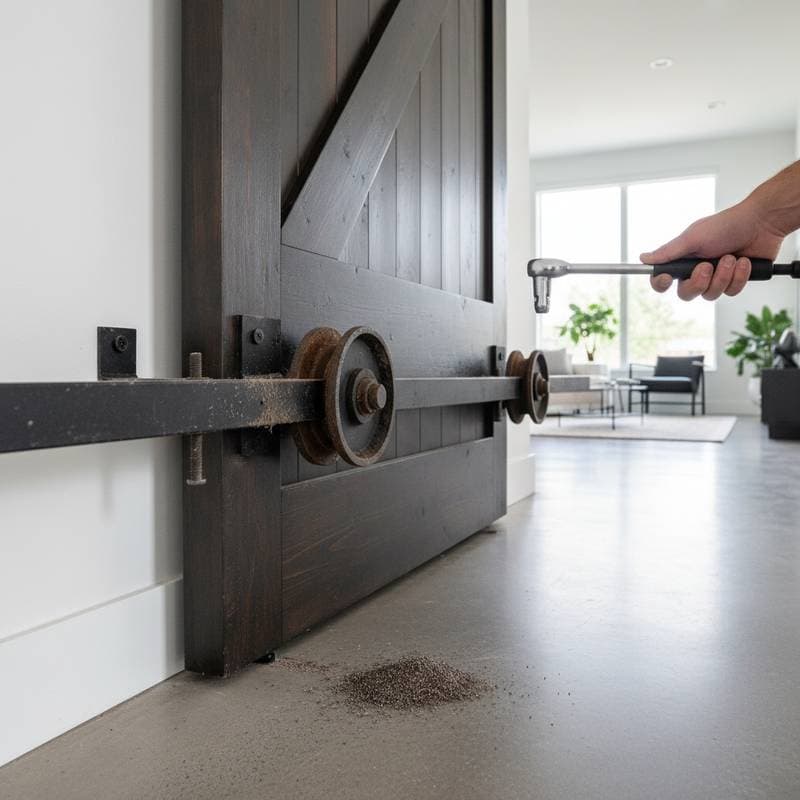
Failure often originates in high-friction areas, including rollers and tracks. Inferior bearings wear down quickly, leading to binding and noise. Opt for systems featuring sealed, precision-engineered bearings and robust tracks made from high-grade alloys. Such selections minimize deformation and promote consistent gliding action over extended periods.
Maintenance and Care Routine
Regular upkeep forms the foundation of prolonged hardware reliability. Neglecting basic tasks allows minor irritants to escalate into costly repairs. Establish a structured regimen to monitor and preserve the system’s integrity.
- Monthly inspection: Examine bolts for looseness, rollers for wobble, and listen for atypical sounds during operation. Early detection of subtle changes prevents progression to severe damage.
- Quarterly cleaning: Use a soft, dry cloth to clear dust and particles from the track. Accumulated grit acts like sandpaper on moving parts, accelerating deterioration.
- Lubrication application: Select silicone-based products for roller bearings and track interfaces to diminish friction without drawing in contaminants. Apply sparingly every three months to maintain fluidity.
- Tightening verification: Inspect and secure all fasteners, as vibrations from door use or home settling can cause gradual loosening.
- Wood door conditioning: Apply protective sealants to wooden panels biannually to mitigate swelling or contraction due to humidity fluctuations, which indirectly stress the hardware.
This disciplined approach not only averts premature failure but also enhances the door’s quiet, effortless functionality. Homeowners who adhere to it report fewer interruptions and lower long-term expenses.
The Durability Fix: Modern Improvements and Upgrades
Industry advancements directly target the vulnerabilities exposed after two years. Enhanced designs incorporate superior engineering to withstand repeated cycles of use. Explore these innovations to upgrade or fortify existing installations.
- Sealed bearing rollers: These enclosures block ingress of dirt and moisture, preserving internal components for sustained smooth travel. They outperform open designs in dusty or high-traffic areas.
- Enhanced track coatings: Advanced powder or zinc layers shield against rust and abrasion, maintaining a low-friction surface even in variable climates.
- Reinforced mounting brackets: Constructed from thicker gauge steel with reinforced bolting, they distribute weight evenly and resist sagging under heavy loads.
- Soft-close mechanisms: Integrated dampers gently decelerate the door at journey’s end, minimizing jolts that erode stoppers and alignments over time.
- Adjustable floor guides: Versatile models compensate for floor irregularities or wall movements, ensuring the door remains plumb without constant readjustment.
For systems displaying initial wear, partial retrofits prove effective. Replacing rollers alone or integrating a soft-close kit can revive performance, often at a fraction of full replacement costs. Consult product specifications to confirm compatibility with current setups.
Working with Contractors or Doing It Yourself
Installation choices hinge on the project’s complexity and the installer’s expertise. Simpler setups suit confident DIY enthusiasts, while demanding applications warrant professional intervention. Weigh these options carefully to achieve optimal results.
Professionals bring specialized knowledge, particularly for aligning heavy doors on uneven surfaces. When engaging a contractor, prioritize those with documented success in sliding hardware projects. Inquire about their familiarity with alignment techniques, preferred hardware suppliers, and commitment to warranties. Confirm that they employ secure anchoring, such as toggle bolts in drywall, to handle dynamic loads. Request details on aftercare, including free tune-ups within the first year to address settling issues.
DIY efforts succeed with meticulous preparation. Measure the opening twice, ensuring at least one inch of clearance on all sides. Level the track precisely using a laser tool, and torque fasteners to manufacturer guidelines to avoid over-tightening that could strip threads. Test the assembly multiple times before finalizing to catch any binding. Resources like detailed guides from hardware kits provide step-by-step assurance for novices.
Tailoring Hardware to Your Living Space
Selecting barn door hardware demands consideration of room dimensions, door weight, and usage patterns. A compact kitchen pass-through benefits from lightweight aluminum systems that emphasize aesthetics over robustness. In contrast, a bedroom divider supporting a solid oak panel requires stainless steel for enduring stability.
Evaluate traffic volume: High-use areas like entryways necessitate reinforced tracks to endure frequent passes. Factor in aesthetics, such as matte black finishes for industrial vibes or brushed nickel for subtle elegance. Balance budget with longevity; investing in mid-range options often yields the best value through reduced upkeep.
Securing Long-Term Performance
Implementing these strategies transforms potential pitfalls into strengths. Homeowners gain confidence in doors that operate flawlessly amid daily routines. Beyond mechanical reliability, well-maintained systems elevate home comfort and preserve design integrity. Commit to informed choices and vigilant care for hardware that withstands the test of time, delivering years of quiet, efficient service.