Terrazzo's Bold Return: Entryway Must-Have
Terrazzo flooring commands attention once again as a standout option for contemporary entryways. Previously associated with public spaces such as schools and airports, this material now aligns seamlessly with both modern and classic interior schemes. The resurgence stems from more than aesthetics; it encompasses superior performance, environmental responsibility, and enduring utility.
Homeowners seeking an impactful entryway rediscover terrazzo's versatility. When implemented thoughtfully, it provides resilience and sophistication while accommodating preferences for craftsmanship, personalization, and sustainable design.
Understanding Terrazzo as a Material
Terrazzo consists of a composite surface formed by embedding chips of marble, quartz, glass, or similar aggregates into a base of cement or resin. The mixture cures, then undergoes grinding and polishing to expose a refined, patterned finish. This process yields a material that balances creative expression with remarkable durability.
Several variants exist, each suited to specific installation needs and upkeep routines.
| Type | Binder Material | Installation Method | Best For |
|---|---|---|---|
| Cementitious | Cement base | Traditional hand trowel | Large areas, classic appearance |
| Epoxy | Resin base | Thin-set application | Modern residences, color options |
| Polyacrylate | Hybrid resin | Fast cure system | Rapid renovations |
| Precast | Factory-finished panels | Prefabricated installation | Commercial or modular environments |
In residential entryways, epoxy terrazzo prevails due to its accurate color matching, slim profile, and simplified care. Cementitious terrazzo, though bulkier and more substantial, imparts an authentic, vintage allure ideal for heritage or countryside dwellings.
Design Flexibility and Aesthetic Range
Terrazzo surpasses most flooring in customization potential. Designers blend colors to suit any motif, ranging from sleek minimalism to elaborate artistry. Aggregates extend beyond marble to encompass recycled glass, seashells, or metallic elements.
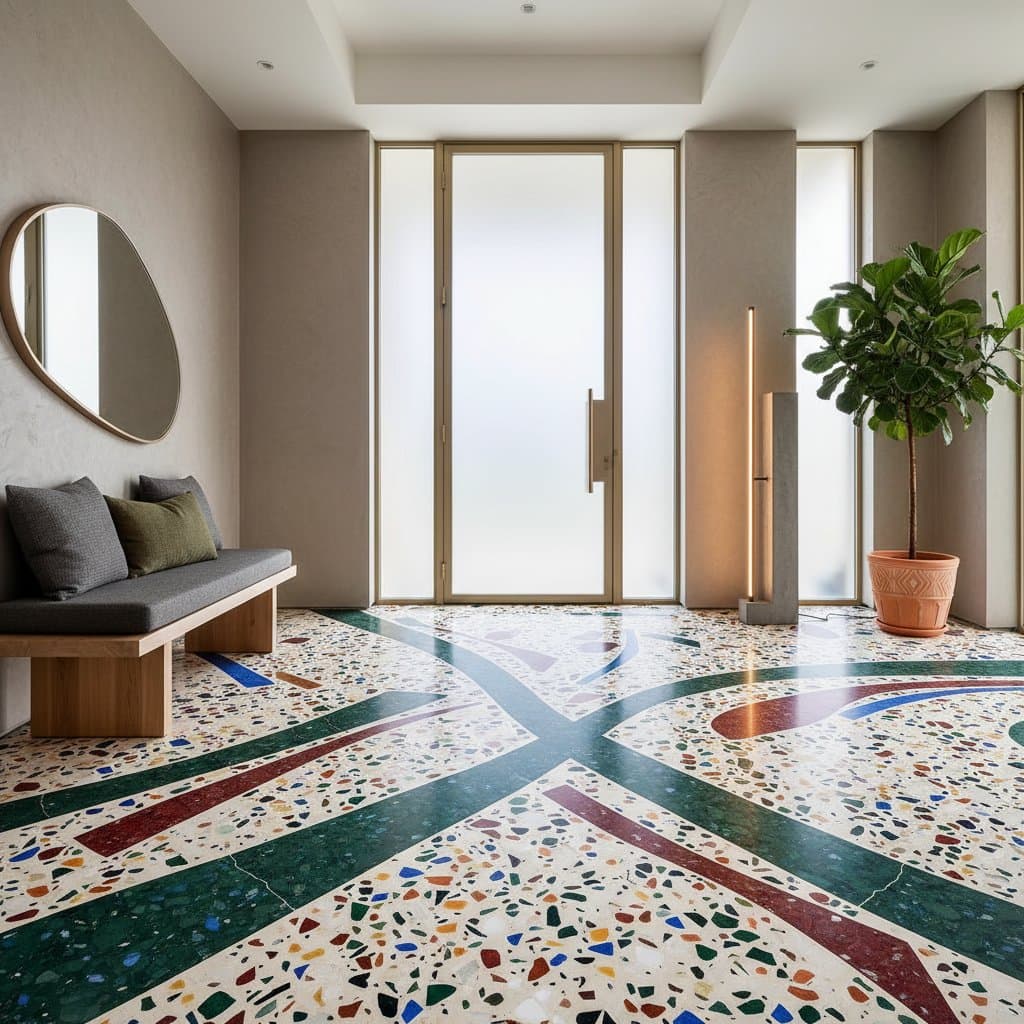
Varying chip sizes alters the visual texture: fine particles yield a cohesive look, whereas bold chunks evoke a mosaic drama. Integrate borders, geometric motifs, or soft gradients to delineate spaces or highlight architectural features.
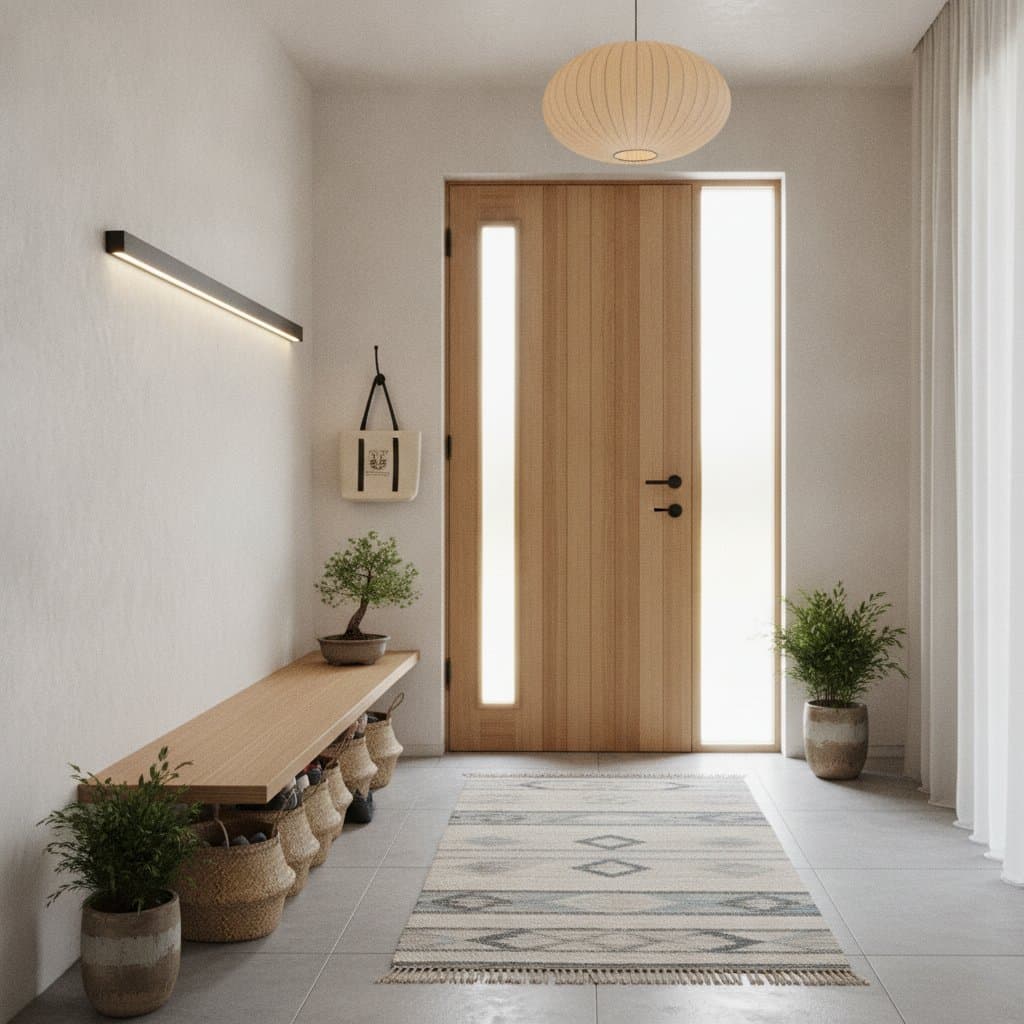
This material complements diverse elements effectively. Pair it with a wooden entry door for a harmonious interplay of natural and stone-like qualities. Brass accents or adjacent stone surfaces elevate the opulence, maintaining spatial balance.
Durability and Maintenance Considerations
Terrazzo endures through its compact structure and uninterrupted expanse. With appropriate sealing and attention, the surface persists for the home's lifetime. Such reliability suits demanding entryways exposed to dirt, dampness, and constant passage.
Daily care involves simple sweeping and mopping with water. Opt for pH-neutral solutions to preserve clarity. Periodic professional polishing eliminates light wear and renews luster. Unlike wood or textiles, terrazzo repels dust and allergens, benefiting health-conscious environments.
Challenges warrant consideration. Professional installation demands expertise and elevates initial expenses over basic alternatives. Glossy variants risk slipperiness in wet conditions; select honed or matte options, or deploy absorbent rugs at thresholds.
Sustainability and Environmental Value
Contemporary terrazzo advances green building practices. Producers incorporate reclaimed aggregates and low-VOC binders, conserving raw resources. On-site pouring and finishing generate less scrap than precut stone or modular tiles.
The extended durability aligns with conservation principles. Infrequent renewals curb material demands over decades. Minimal upkeep avoids aggressive solvents or polishes, lessening ecological footprints.
Eco-minded residents value the fusion of organic and repurposed components. Integrate it with efficient illumination and green coatings to craft an entryway that marries form with planetary stewardship.
Cost and Lifecycle Value
Upfront terrazzo expenses exceed those of many competitors. Over the complete lifespan, however, it delivers fiscal efficiency through rarity of repairs and modest ongoing costs.
| Flooring Type | Typical Initial Cost | Expected Lifespan | Maintenance Level | Long-Term Value |
|---|---|---|---|---|
| Terrazzo | High | 50+ years | Low | Excellent |
| Ceramic Tile | Moderate | 20-30 years | Moderate | Good |
| Vinyl | Low | 10-15 years | Moderate | Fair |
| Hardwood | Moderate to High | 25-40 years | Moderate | Good |
Compare options by balancing immediate finances with future savings. A terrazzo installation that spans generations ranks among the shrewdest home upgrades.
Installation Process and What to Expect
Terrazzo application demands precision and preparation. Familiarity with the steps aids in scheduling and mitigating interruptions.
1. Planning and Evaluation
Installers inspect the subfloor for cleanliness, dryness, and stability. Test for humidity, particularly in exterior-adjacent entryways. Repair fissures or level irregularities prior to advancement.
2. Preparation Steps
Apply a primer to ensure bonding. Position divider strips to manage expansion and outline patterns or hues.
3. Main Implementation
Pour or spread the terrazzo blend, allowing it to set. Grind with diamond tools to unveil aggregates, followed by progressive polishing for the chosen gloss.
4. Quality Assurance
Confirm evenness and scan for defects. Seal with a penetrating agent to guard against liquids and marks.
5. Completion and Follow-Up
Avoid foot traffic during curing. Receive guidance on upkeep, including suitable products and schedules.
The timeline spans days based on scope; coordinate to limit daily routines' impact.
Matching Lifestyle and Design Goals
Tailor selections to household dynamics. Active families favor robust, non-slip surfaces; style aficionados emphasize hues and motifs. Epoxy with a sheen fits sleek modernism, while cement-based with prominent chips enhances heritage vibes.
Illumination shapes perception. Daylight amplifies sparkle and dimension. In subdued light, muted aggregates outperform shiny ones. Outdoor-connected entries gain from subtle textures that conceal residue and enhance traction.
For unified aesthetics, extend terrazzo to adjacent stairs or walls, sustaining color harmony across areas.
Choosing What Works Best
Evaluate these elements when deciding:
- Binder Type: Cement for heritage authenticity, epoxy for adaptable modernity.
- Aggregate Composition: Marble for refinement, glass for energy, recycled for eco-benefits.
- Finish Level: Gloss for bold impact, matte for subtle grace.
- Color Palette: Neutrals for versatility, vivid designs for creative expression.
- Maintenance Expectations: Align finishes with daily routines and tolerances.
Collaborate with proficient specialists. Test samples to gauge real-world effects before committing.
Ensuring Quality Results
Select certified professionals versed in formulations and finishing. Verify compliance with regional codes for water resistance and footing security.
Building Lasting Entryway Impact
Terrazzo elevates entryways beyond fleeting styles. It embodies commitment to durability, artistry, and personal expression. Through deliberate choices and expert execution, this flooring crafts an inviting threshold that endures with grace and purpose.