The Rise of Minimalist Flush Track Barn Doors
Interior design advances through innovations that enhance functionality without overwhelming aesthetics. The flush track system represents such a development for barn doors, merging the rustic appeal of wood with contemporary precision. Homeowners appreciate how this hardware maintains the door's natural texture while ensuring it integrates smoothly into any room, offering both visual harmony and practical ease.
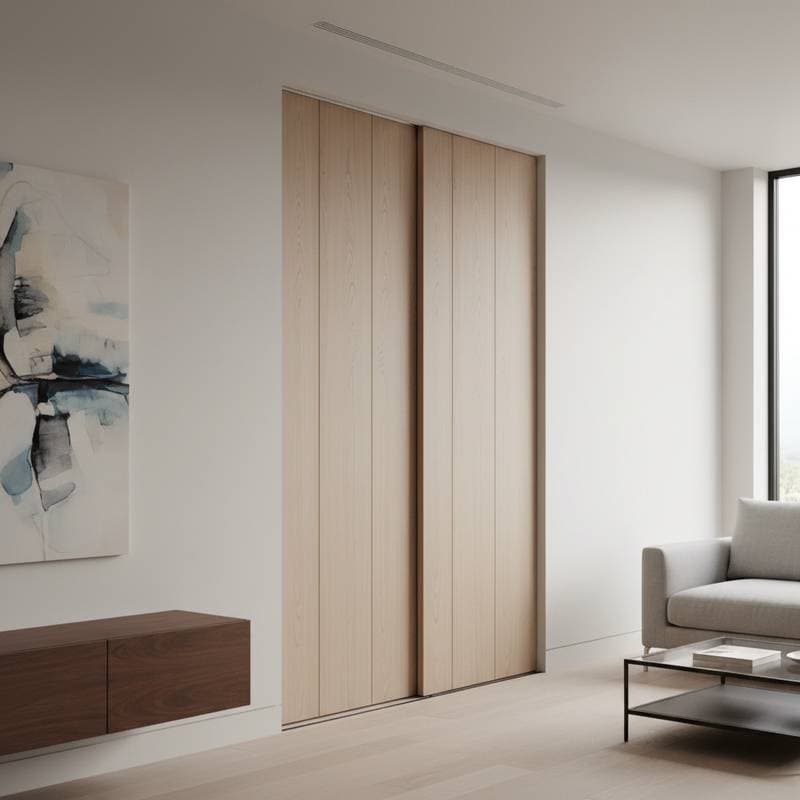
These systems appeal to those pursuing understated elegance in living spaces. By minimizing visible components, they create an illusion of built-in cabinetry rather than sliding panels. This shift suits a wide range of environments, from urban lofts to suburban renovations, where every element contributes to a cohesive whole.
Core Principles of Flush Track Design
Flush track hardware positions the track nearly level with the wall, eliminating the prominent overhead rails common in standard barn door setups. This configuration relies on recessed channels embedded into the wall structure, allowing the door to slide parallel to the surface without gaps or protrusions. Rollers, often made from durable nylon or steel, operate within these channels to provide silent, frictionless motion.
The result is a door that appears as an extension of the wall itself. Engineers design these systems to support doors up to 200 pounds, using reinforced brackets that distribute weight evenly. Compatibility extends to various door materials, including solid wood, glass panels, or composite slabs, enabling customization to match specific interior palettes.
Installation demands attention to wall composition, as tracks require precise cuts into drywall or plaster. Once mounted, the setup reduces air drafts and light leaks, enhancing energy efficiency in divided rooms. This seamless integration proves ideal for spaces prioritizing clean sightlines and subtle transitions.
Aesthetic and Functional Advantages
Flush tracks foster a sense of spaciousness by avoiding the visual bulk of exposed hardware. In living rooms or kitchens, they allow natural light to flow uninterrupted, amplifying the openness of minimalist layouts. Paired with neutral wall colors and simple furnishings, these doors highlight architectural details rather than drawing attention to themselves.
Practically, the concealed design minimizes injury risks in high-traffic areas like hallways. Fingers cannot pinch on visible edges, and the smooth glide prevents abrupt stops that might jolt users. Maintenance simplifies to occasional wiping of the door surface, as dust accumulation on hidden tracks remains low.
Consider a home office separated by a flush track door: it maintains privacy while preserving the room's airy feel. In bedrooms, the quiet operation supports restful environments, contrasting with the creaks of traditional sliders. Overall, this hardware elevates daily routines through thoughtful engineering that prioritizes user comfort.
Comparing Track Systems for Informed Choices
Selecting the right track involves weighing visibility, upkeep, and suitability against design preferences. The table below outlines key differences to guide decisions.
| Track Type | Appearance | Maintenance | Best For |
|---|---|---|---|
| Traditional Exposed | Prominent rails and rollers | Regular lubrication needed | Rustic farmhouse or loft styles |
| Low-Profile | Slim, semi-hidden elements | Moderate cleaning | Transitional or eclectic rooms |
| Flush Track | Fully integrated, invisible | Rare adjustments required | Sleek modern or minimalist homes |
Traditional options suit bold statements, while flush systems excel in refined settings. Low-profile tracks offer a middle ground for budgets or walls unsuitable for recessing.
Step-by-Step Installation Guide
Professional installation ensures longevity, but skilled DIY enthusiasts can manage with basic tools. Begin by measuring the door's dimensions and the wall's load-bearing capacity, consulting a stud finder to locate supports.
-
Site Assessment: Evaluate wall material and confirm at least two studs align with the track path. Account for door height, typically 80 to 96 inches, and ensure 1-inch clearance above flooring.
-
Preparation Work: Outline the recess using a level and pencil. Use a drywall saw to cut channels 1.5 inches deep, then reinforce edges with wooden backing for stability.
-
Hardware Assembly: Bolt the track into the recess, securing with lag screws into studs. Attach floor guides if needed to prevent door swing.
-
Door Mounting: Lift the door onto rollers, adjusting height with set screws for a flush fit. Test slides across the full range, lubricating rollers sparingly with silicone spray.
-
Finishing Touches: Apply wall compound to cover cuts, sand smooth, and paint to match surroundings. Inspect for even gaps, no more than 1/8 inch, to achieve the desired seamless effect.
Common pitfalls include misalignment, which causes binding; always double-check levels at each stage. For complex walls, such as those with insulation, consult structural guidelines to avoid compromises in support.
Durability and Everyday Integration
Over time, flush track systems demonstrate resilience through their protected components. Enclosed rollers resist corrosion from humidity, extending service life beyond 10 years with minimal intervention. The design also accommodates expansion in wooden doors due to seasonal moisture changes, preventing warping or sticking.
In family homes, this reliability translates to fewer disruptions. Parents value the safety in play areas, while remote workers appreciate the noise reduction during calls. Cleaning routines integrate easily: a soft cloth suffices for the door, and vacuum attachments reach track edges annually.
Lifestyle alignment extends to evolving needs. As rooms repurpose from offices to gyms, the door's versatility maintains flow without remodeling. Its understated presence complements sustainable practices, often pairing with eco-friendly wood sources for an authentic, low-impact appeal.
Selecting the Ideal Flush Track Solution
Evaluate your space's demands when choosing flush tracks. Assess wall suitability for recessing and desired door weight to select appropriate hardware kits, available in lengths from 4 to 10 feet. Budget for professional help if structural modifications exceed basic skills.
This system shines in updates seeking modern polish without sacrificing warmth. It bridges traditional craftsmanship with innovative form, allowing personalized touches like custom stains or etched glass. Ultimately, integrating a flush track barn door enhances living quality through refined motion and enduring style.