Acoustic Doors: Achieving 85% Noise Reduction in Home Offices
In contemporary homes, silence represents a valuable asset. Remote work has elevated noise management from a mere preference to an essential requirement for concentration, professional interactions, and mental tranquility. Acoustic doors provide one of the most reliable solutions for establishing a serene environment. These doors diminish sound transmission by up to 85 percent, fostering a focused workspace that maintains aesthetic harmony.
Recent advancements in acoustic door technology extend beyond mere utility. They incorporate versatile designs compatible with diverse styles, such as rustic farmhouse, sleek minimalist, or bold contemporary. Homeowners upgrading their offices benefit from this integration of practicality and visual appeal.
Strategies for Implementation
Budget-Conscious Option ($800 to $1,200)
Select a solid-core wood composite door equipped with fundamental acoustic seals. Incorporate perimeter weatherstripping and a drop-down threshold to seal potential gaps effectively. Apply paint or stain to align with current trim, avoiding the need for frame replacement.
This approach controls expenses while delivering substantial noise attenuation. It suits compact offices or auxiliary spaces where moderate sound suppression suffices.
Balanced Investment ($1,500 to $3,000)
Choose engineered wood doors featuring sound-rated cores, typically achieving STC ratings of 30 to 35. Integrate acoustic perimeter seals and automatic door bottoms for enhanced isolation. Apply a decorative veneer or painted finish to complement custom cabinetry or built-in elements.
This category offers a practical equilibrium between cost and efficacy. The noise reduction supports remote professionals engaged in video conferences or creative endeavors.
Premium Solution ($3,500 to $6,000)
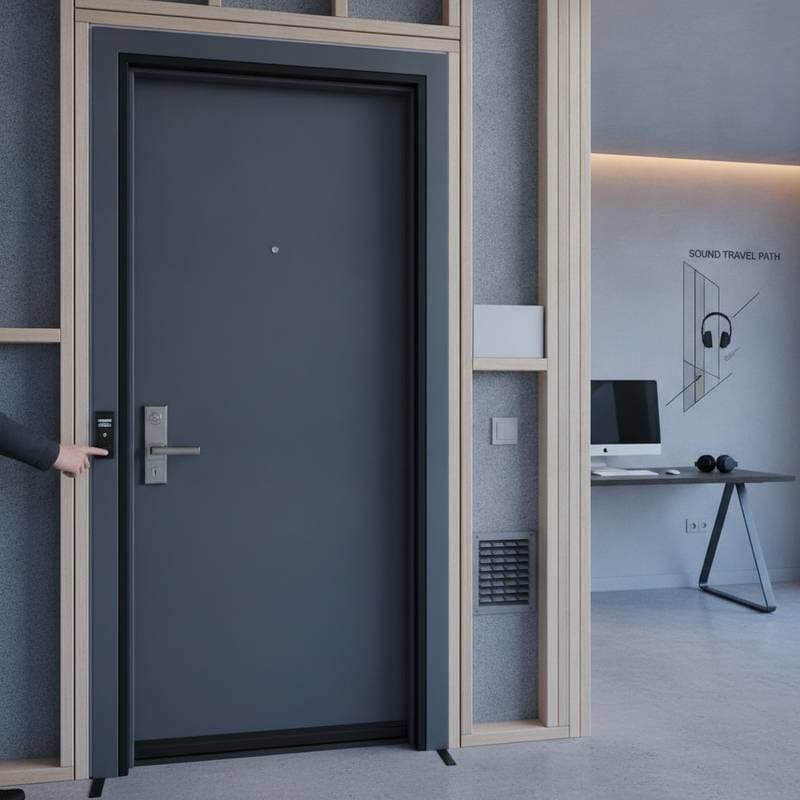
Install a professional-grade acoustic door system with an STC rating exceeding 40. Utilize a prehung assembly that includes integrated jamb seals and robust hinges. Customize with veneers, hidden hardware, or high-quality glass inserts.
This configuration emulates professional studio soundproofing. It idealizes dedicated zones for intensive tasks, such as analytical work or audio recording.
Selecting Materials and Finishes
Pair acoustic doors with compatible elements to maximize performance and style.
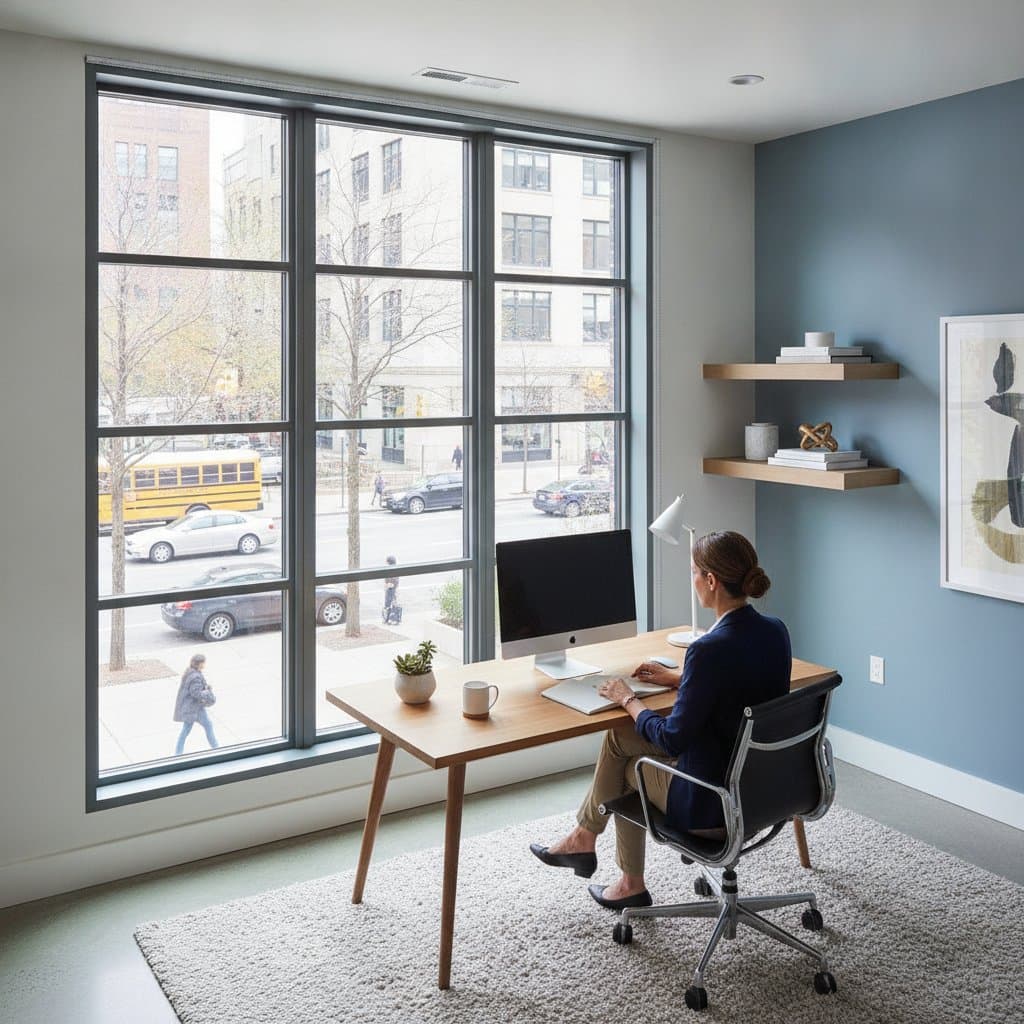
- Windows: Opt for double-glazed or laminated glass in office-adjacent windows. Select dark bronze or matte black frames for modern aesthetics, or white vinyl for traditional settings. Eliminate single-pane options nearby, as they compromise the door's sound-blocking capabilities.
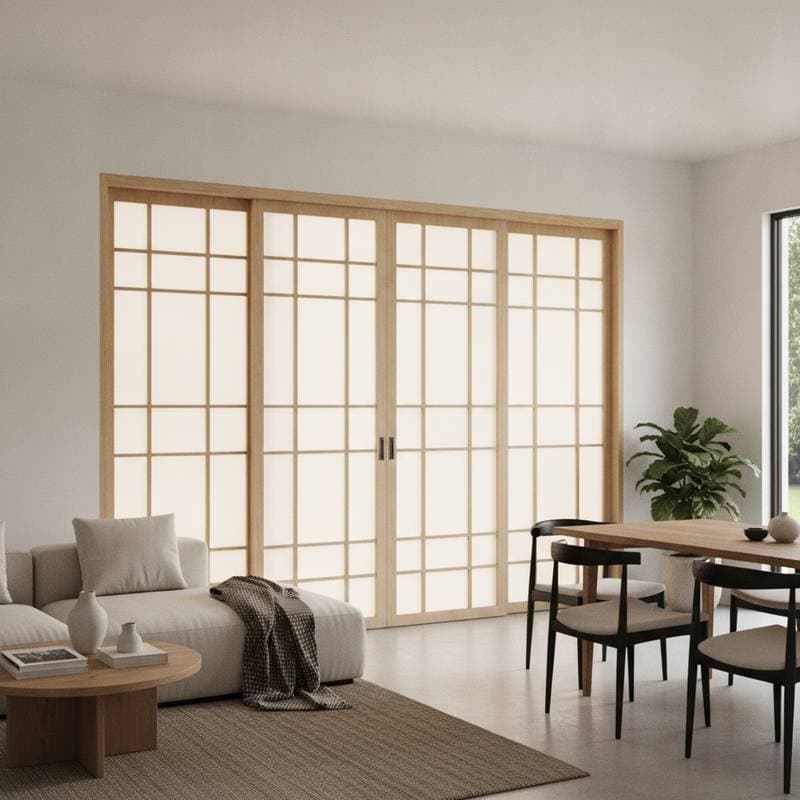
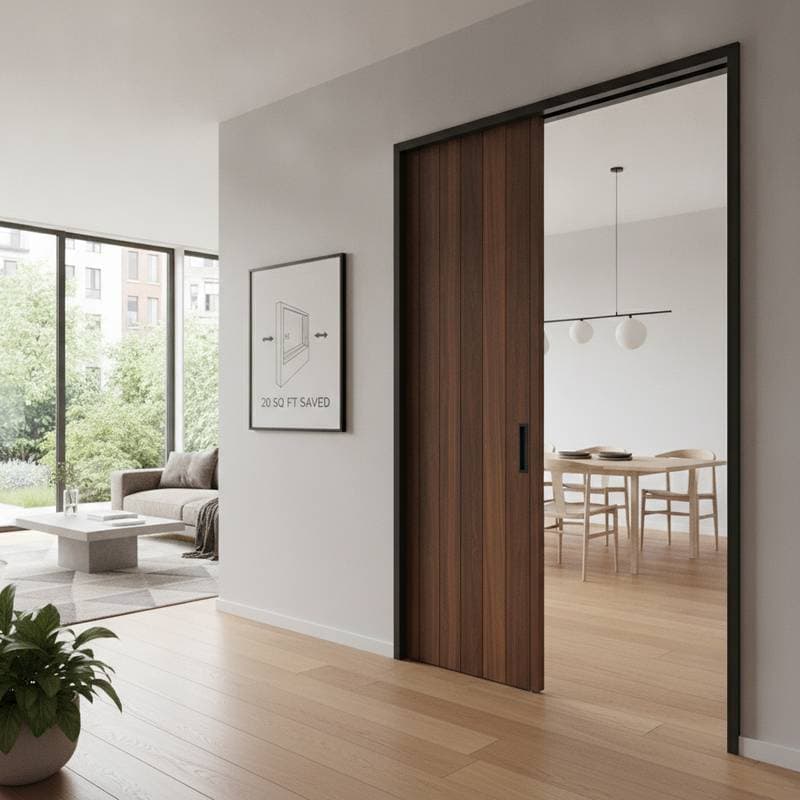
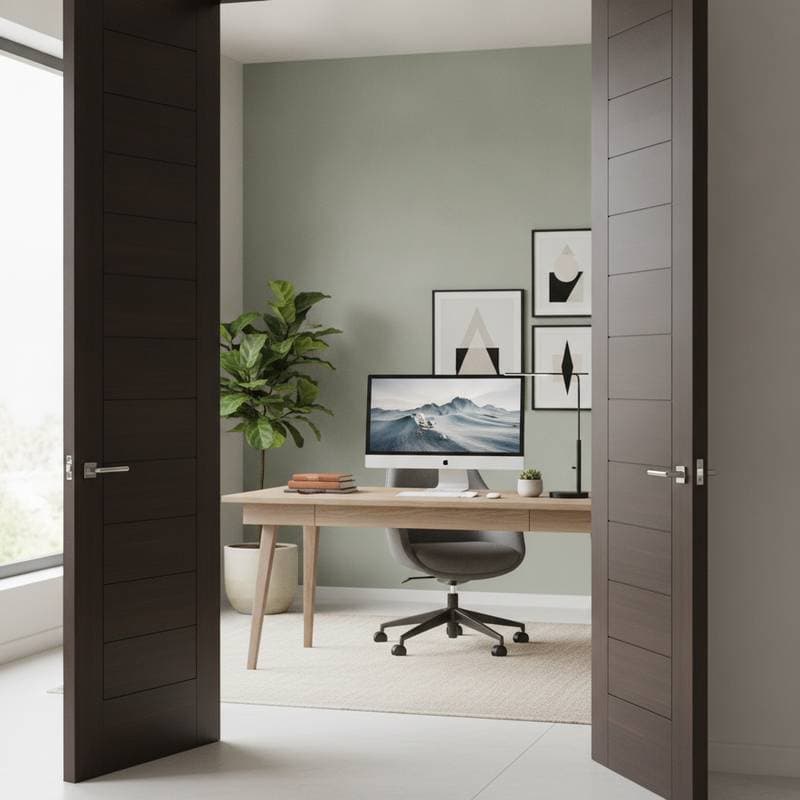
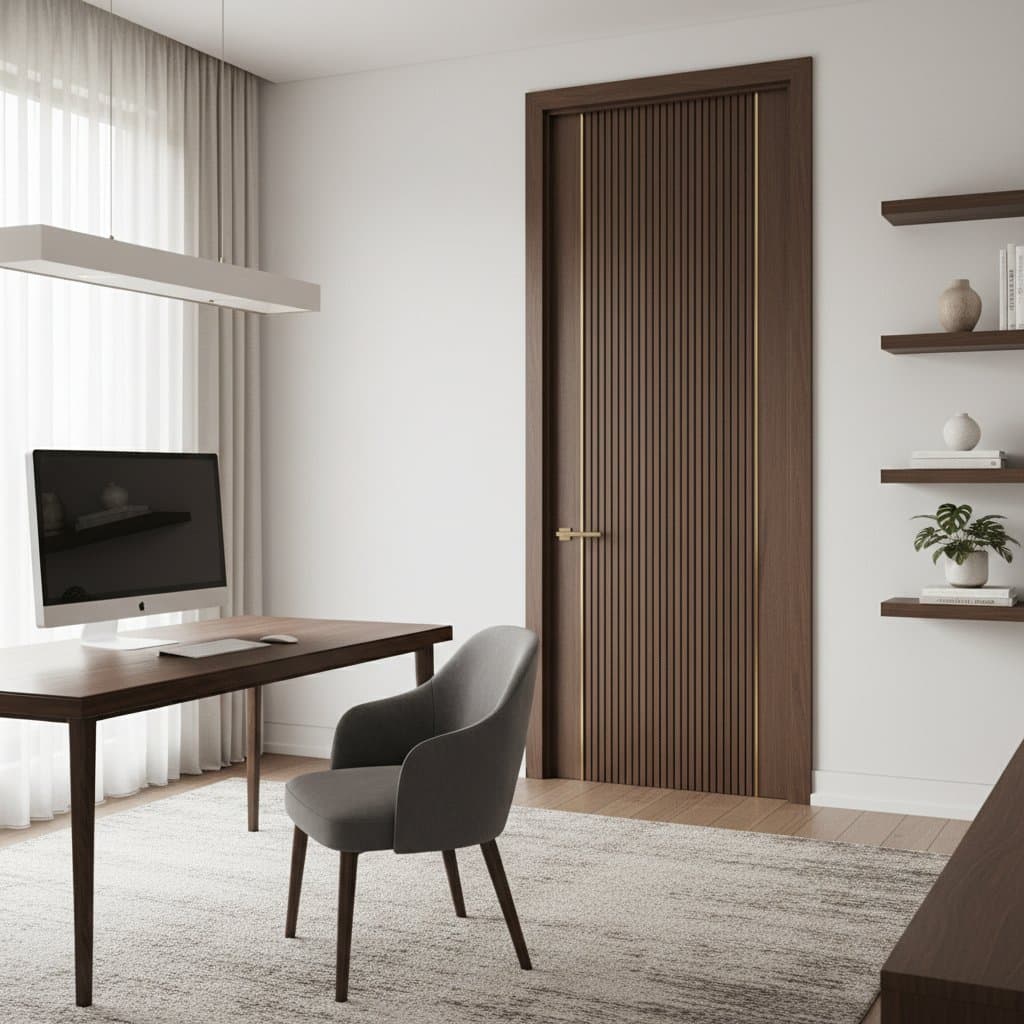
- Doors: Prioritize solid-core wood, MDF enhanced with acoustic laminates, or steel-reinforced timber. Finishes include warm walnut for timeless elegance, pale oak for understated Scandinavian vibes, or matte painted surfaces for sharp contemporary lines.
- Siding: In exterior-oriented offices, employ fiber cement or insulated vinyl siding to block outside sounds. Horizontal panels convey modernity, whereas board-and-batten styles align with farmhouse designs.
- Trim and Hardware: Employ wide-profile trim to offset the door's substantial presence. Coordinate hardware finishes with adjacent lighting. Enduring selections encompass brushed nickel, matte black, and aged brass.
Essential Maintenance Practices
Acoustic doors endure regular use, yet demand consistent upkeep to preserve integrity. Examine frame seals annually or biannually for signs of wear, such as cracks or compression. Replace deteriorated gaskets immediately to sustain acoustic efficiency.
Clean painted surfaces with a damp cloth and mild detergent, steering clear of abrasives that might degrade seals or finishes. For wood-veneer models, apply clear protective wax or low-sheen polyurethane to guard against moisture and smudges. Metal variants require simple dusting, with periodic hinge lubrication to eliminate operational noises.
Common Pitfalls to Sidestep
- Neglecting Gaps: Minute openings, particularly at the door base, permit sound penetration. Mandate adjustable thresholds or automatic drop seals in every installation.
- Inconsistent Door Types: Proximity of hollow-core doors in closets or hallways dilutes the acoustic barrier. Maintain uniformity across relevant entry points for optimal results.
- Subpar Frame Construction: Superior doors falter against unstable or uninsulated frames. Insist on dense jamb materials and expert carpentry during fitting.
Harmonizing Colors and Styles
Integrate the acoustic door into the home's overall scheme through thoughtful palettes. Consider these curated pairings:
- Modern Monochrome: Charcoal gray door paired with black hardware and white walls for an urbane, streamlined appearance.
- Warm Natural Tones: Honey oak door, bronze handles, and cream siding to evoke gentle warmth.
- Coastal Serenity: Pale gray-blue door, brushed nickel hardware, and white trim for luminous calm.
- Classic Contrast: Deep navy door accented by crisp white trim and polished brass for enduring sophistication.
- Minimalist Neutrals: Soft beige door, matte black handle, and light neutral siding for refined subtlety.
Pre-Installation Documentation Guide
Document the existing setup prior to committing to an acoustic door. This preparation aids in option evaluation and supplier discussions.
- Photograph the door's exterior and interior from various perspectives.
- Detail surrounding windows, trim, and floor interfaces.
- Identify the home's architectural motif to ensure design continuity.
- Capture lighting fixtures and wall hues impacting finish decisions.
- Consult local community or HOA regulations on exterior modifications.
- Establish a comprehensive budget, ranking priorities like hardware, finishes, or sound ratings.
Integrating for Lasting Impact
Acoustic doors merge technical prowess with artisanal quality and adaptable aesthetics. They elevate home offices into tranquil havens that uphold design excellence. Select from economical solid-core variants to sophisticated engineered assemblies, emphasizing alignment with surrounding elements for seamless execution.
This strategic approach yields environments that promote productivity, composure, and visual unity. Noise mitigation evolves into an intrinsic aspect of the interior narrative, enhancing everyday functionality.