The $800 Barn Door Hardware Mistake to Avoid
Barn doors add rustic elegance, optimize space, and provide versatile design options in modern homes. However, selecting incompatible hardware can result in significant financial loss and operational issues. Homeowners frequently spend $800 or more on systems that fail due to mismatched components, leading to sagging doors, wall damage, and the need for complete replacements.
How Barn Door Hardware Functions
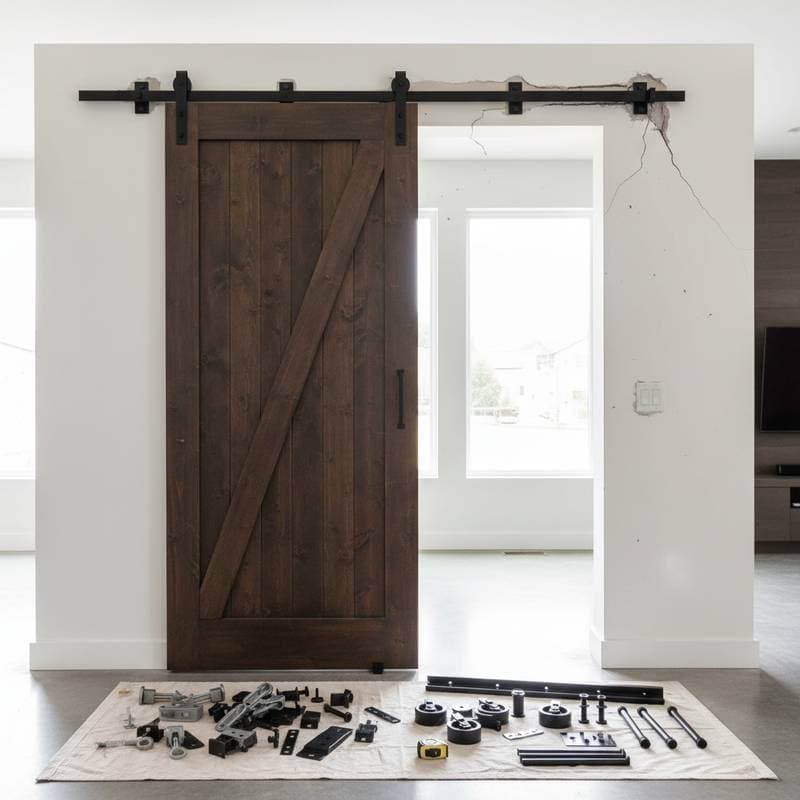
Barn door hardware includes a wall-mounted track, wheeled hangers, anti-jump guides, end stops, and secure brackets. The track supports the hangers attached to the door's top edge, enabling smooth lateral movement. Floor guides prevent swinging, while stops limit travel to avoid derailment.
Each element requires precise coordination with the door's dimensions and the installation surface. Mismatches cause binding, excessive noise, or instability. Verify compatibility early to sidestep these pitfalls.
The Hidden Expenses of Incompatible Hardware
Premium hardware often costs $800 or higher, drawn by its aesthetic appeal and brand prestige. Functionality depends on proper matching, not just price. An expensive system on an unsuitable door leads to accelerated wear, such as bent tracks or stripped rollers.
For instance, pairing ornate hardware with a 100-pound solid oak door overwhelms lightweight components, necessitating reinforcements or full swaps. These fixes escalate costs beyond the initial investment, underscoring the value of upfront assessment.
Hardware Types and Ideal Scenarios
Various hardware systems serve distinct purposes, from basic interiors to high-traffic zones. Evaluate based on door size, usage, and environment to select optimally.
| Hardware Type | Initial Cost | Expected Lifespan | Maintenance Needs | Recommended Applications |
|---|---|---|---|---|
| Standard Steel Kit | $200–$400 | 10–15 years | Minimal cleaning | Standard interior doors up to 80 pounds |
| Heavy-Duty Kit | $400–$800 | 20+ years | Periodic checks | Solid wood or oversized doors |
| Soft-Close System | $500–$900 | 15–20 years | Lubrication yearly | Quiet spaces like bedrooms or studies |
| Decorative Kit | $700–$1,000 | 8–12 years | Surface care | Accent walls or visible architectural features |
Opt for heavy-duty options in demanding settings, even if pricier, to ensure durability and reduce long-term expenses.
Critical Factors Influencing Hardware Selection
Multiple variables determine system performance. Address each to prevent errors.
-
Door Weight and Composition
Calculate the door's weight using material density and size; solid hardwoods exceed 150 pounds for 36-inch widths. Choose hardware rated 50 percent above this to handle dynamic loads during operation. -
Wall Composition and Support
Tracks demand attachment to wall studs or joists, not mere drywall. Locate studs with a finder; install a mounting ledger if spacing misaligns, preventing pull-out failures under load. -
Track Dimensions and Spatial Fit
Measure for a track at least 1.5 times the door width to permit full recess. Account for 1–2 inches of headroom above the door and obstacles like light switches that could impede clearance. -
Aesthetic and Material Harmony
Select finishes like matte black for industrial vibes or brushed nickel for contemporary looks. Test samples against wall colors and flooring to maintain visual unity.
Step-by-Step Installation Process
Professional results stem from methodical execution. Follow these stages for reliability.
-
Initial Assessment
Document the doorway's width, height, and stud positions. Weigh the door or estimate via online calculators; unpack hardware to confirm all parts. -
Site Preparation
Level the installation line with a laser tool. Secure a 2x6 header board across studs if needed, using lag screws for stability. -
Core Assembly
Align and fasten the track with included lags into studs, ensuring perfect level. Bolt hangers to door edges per template, then hoist and connect to track wheels. -
Final Adjustments
Install stops at track ends and guides at the floor. Test multiple cycles, adjusting wheel heights for plumb alignment and gap consistency. -
Post-Installation Checks
Monitor for a week, retightening hardware as vibrations settle. Apply manufacturer-recommended lubricant sparingly to rollers.
Maintenance for Extended Durability
Quality hardware endures 20 years with routine care. Dust the track monthly with a soft brush to prevent grit buildup. Inspect annually for loose bolts or wheel play, tightening as required.
Address early signs like uneven sliding by realigning guides or shimming the track. Such proactive steps avert major overhauls and preserve smooth operation.
Weighing Initial Investment Against Future Savings
Visual allure tempts overspending on mismatched pieces. Prioritize specs over style: seek 25 percent weight overcapacity, full-extension tracks, and robust powder coatings.
Consider operational quietness with polymer wheels and extended warranties signaling superior build. These choices yield economical, hassle-free performance over time.
Tailoring Hardware to Your Space
Assess household dynamics for optimal picks. Prioritize soft-close features in family areas to minimize noise and finger risks. In compact rooms, slim-profile tracks maximize floor space.
For statement-making installations, integrate hardware as design elements, selecting ornate details that complement trimwork.
Securing Flawless Performance
Precision in measurement and mounting guarantees success. Double-check alignments before final fixes to eliminate rework.
This diligence delivers a barn door that operates silently, supports daily use, and amplifies your home's character without unforeseen expenses.