Terrazzo Entryways: The 2026 Revival in Residential Design
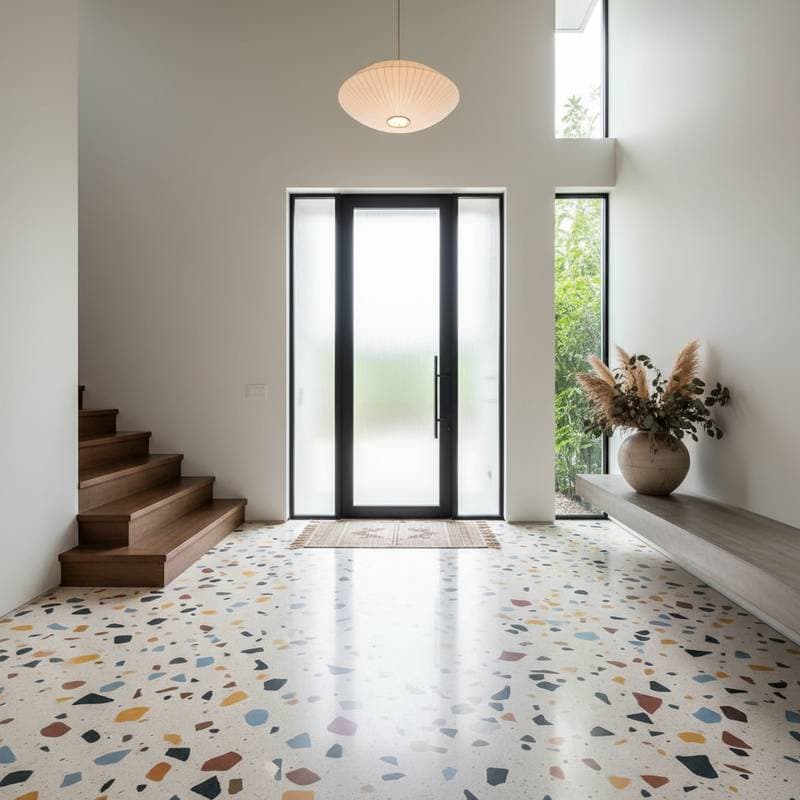
Homeowners seeking to update entryways find renewed interest in terrazzo flooring, a staple of mid-century architecture now reemerging in contemporary homes. This material combines aesthetic appeal, robust performance, and personalization potential, making it a prominent option for entrance renovations. Consider terrazzo when balancing sophistication with everyday functionality in your living space.
Average Cost of a Terrazzo Entryway
Terrazzo installation ranges from $25 to $80 per square foot, encompassing materials and labor. Variations arise from aggregate selections, pattern intricacy, and regional pricing. Opt for prefabricated tiles to stay within budget, or choose poured-in-place for bespoke designs that elevate the space.
| Terrazzo Type | Cost Range (per sq. ft.) | Key Features |
|---|---|---|
| Prefabricated Tiles | $25 to $45 | Faster setup, uniform motifs, economical option |
| Poured-in-Place | $50 to $80 | Tailored aesthetics, continuous surface, extended durability |
For a standard 100-square-foot entryway, anticipate expenses from $2,500 to $8,000, adjusted for local conditions. Although the upfront outlay appears substantial, terrazzo's extended service life and reduced upkeep justify the investment through years of reliable use.
Why Terrazzo Captures Current Design Interest
Design professionals highlight terrazzo's adaptability, while residents value its composition of repurposed elements and enduring look. Contemporary formulations incorporate recycled glass, marble fragments, or quartz aggregates bound by epoxy or cement, promoting environmental responsibility.
Interior designer Tasha Reed from Reed Studio Interiors noted, “Terrazzo checks all the boxes for homeowners who want something unique, durable, and environmentally conscious. It’s both nostalgic and forward-thinking.”
This blend of heritage and innovation positions terrazzo as a forward-looking solution for entryways that demand both form and function.
Key Benefits for Entryway Applications
Entryways endure constant foot traffic, so resilience remains essential. Terrazzo excels in such environments, providing advantages that surpass mere visual charm.
- Durability: Expect decades of service with minimal intervention; it outperforms many stones in resisting impacts and fractures.
- Low Maintenance: Routine sweeping and infrequent mopping suffice to preserve its luster.
- Design Flexibility: Choose aggregates, hues, and textures to harmonize with your interior palette.
- Sustainability: Recycled components minimize environmental impact and align with certification standards for green homes.
These qualities transform entryways into focal points that welcome guests with refined permanence.
Factors Influencing Installation Costs
Project expenses hinge on specifications, substrates, and logistics. Evaluate these components to forecast your budget accurately.
| Cost Factor | Description | Typical Influence |
|---|---|---|
| Material Composition | Cement-based or epoxy terrazzo | Epoxy offers portability but elevates price |
| Design Complexity | Color counts, metal strips, bespoke motifs | Elaborate work extends installation duration |
| Subfloor Preparation | Smoothing or damp-proofing | Contributes $2 to $5 per sq. ft. as required |
| Labor Rates | Local specialist fees | Elevated in urban centers |
| Finish and Sealant | Glossy, satin, or honed surfaces | Custom treatments raise costs by 10% to 20% |
Removing prior flooring incurs demolition fees of $1.50 to $3.00 per square foot. Address subfloor irregularities or humidity issues early to avoid complications.
Installation and Timeline Expectations
Poured-in-place terrazzo demands precision, spanning one to two weeks overall. Follow this sequence for optimal results:
- Subfloor preparation: Clear and flatten the foundation to prevent future settling.
- Mix and pour: Blend aggregates with binder and spread uniformly.
- Curing: Allow full hardening to achieve structural integrity.
- Polishing and sealing: Buff to desired sheen and apply protective layers.
Prefabricated tiles accelerate the process to mere days, akin to standard tile laying. Professional installer Carlos Mendoza of CM Flooring Solutions emphasized, “The quality of the subfloor makes or breaks a terrazzo project. A well-prepared base ensures the surface will stay flawless for decades.”
Select certified experts to guarantee adherence to industry protocols.
Comparing Terrazzo to Other Entryway Floors
Assess terrazzo alongside alternatives by examining expense, resilience, and versatility.
| Material | Cost per sq. ft. (installed) | Durability | Maintenance | Design Variety |
|---|---|---|---|---|
| Terrazzo | $25 to $80 | Excellent | Low | Extensive |
| Ceramic Tile | $10 to $25 | Good | Moderate | High |
| Natural Stone | $20 to $60 | Very Good | Moderate | Medium |
| Luxury Vinyl | $5 to $15 | Fair | Low | High |
Terrazzo's premium pricing yields unmatched longevity and presence, often recouping costs via reduced replacements and cleaning.
Maintenance Tips for Long-Term Performance
Preserve terrazzo's condition through consistent habits and periodic treatments. Implement these practices to sustain its appeal:
- Vacuum or sweep daily to eliminate abrasive particles.
- Clean with pH-neutral solutions biweekly, using soft cloths.
- Refresh sealant every three to five years for stain resistance.
- Steer clear of abrasives or acids that erode the surface.
Diligent care ensures the flooring retains its original vibrancy across generations.
Steps to Integrate Terrazzo in Your Entryway
To incorporate terrazzo effectively, consult specialists early in planning. Review aggregate samples and visualize patterns via mockups to align with your vision.
Budget for professional assessment of your subfloor and select finishes that complement adjacent areas. This approach secures a seamless upgrade that enhances your home's gateway with timeless craftsmanship and practical resilience.