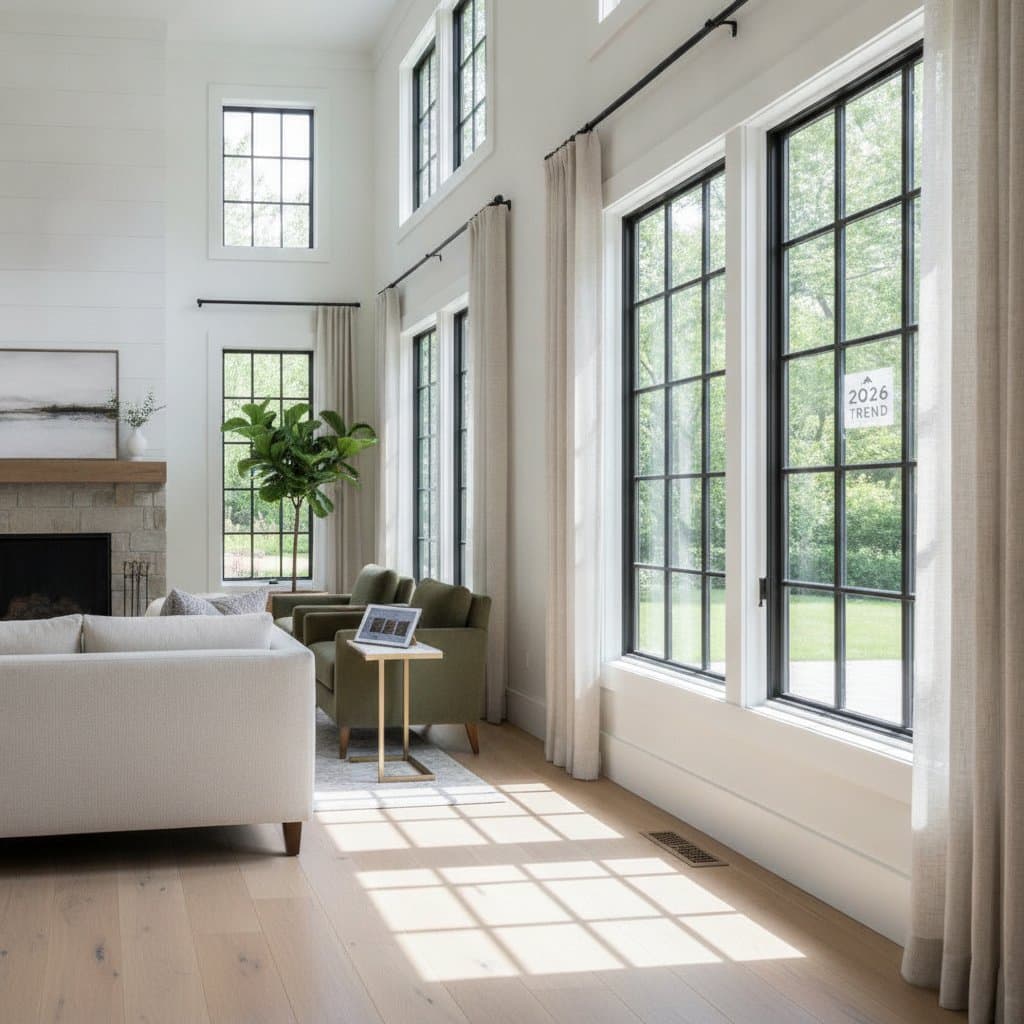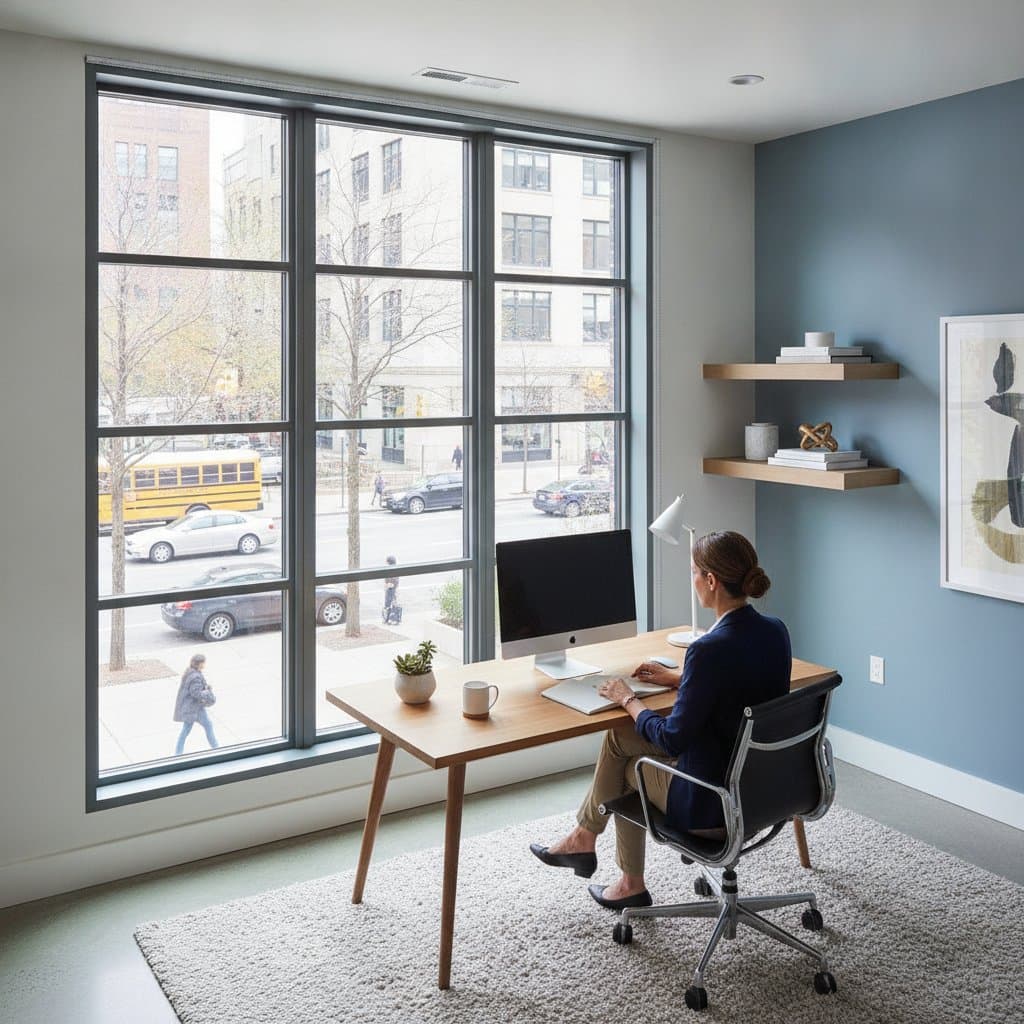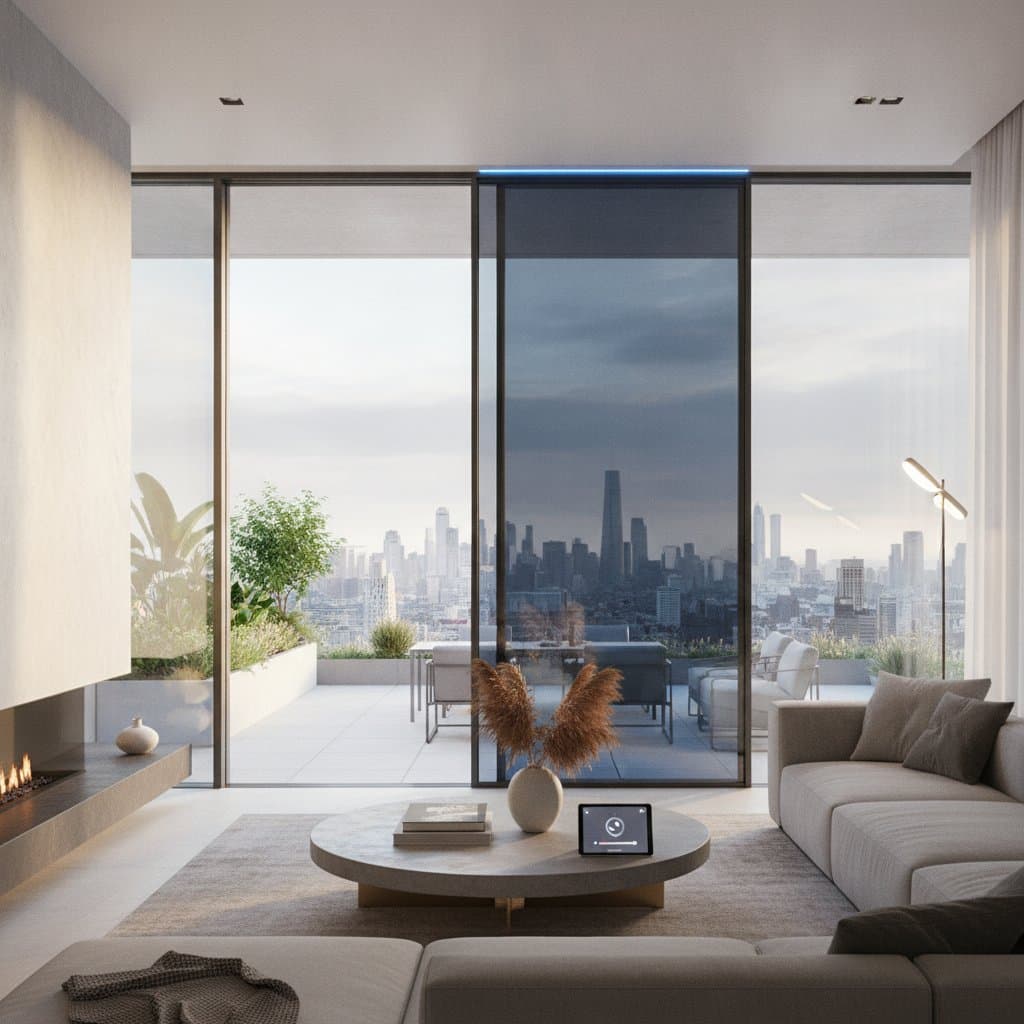
- Electrochromic Film – Modifies tint through electronic means for exact regulation of brightness and privacy.
- Photochromic Film – Darkens in proportion to sunlight intensity, activating without manual input.
- Thermochromic Film – Shifts opacity in response to temperature changes, intensifying tint under heat exposure.
- Suspended Particle Device (SPD) Film – Employs particles that realign with electrical current, facilitating rapid shifts from clear to opaque states.
Electrochromic film stands out for residential applications due to its seamless transitions, substantial energy conservation, and compatibility with smart home ecosystems.
Energy Efficiency and Cost Savings
Heating and cooling dominate household energy expenditures. Smart window film mitigates these by curbing solar heat influx in warmer seasons and preserving indoor warmth during cooler periods. It achieves this by filtering infrared energy, thereby stabilizing internal temperatures.
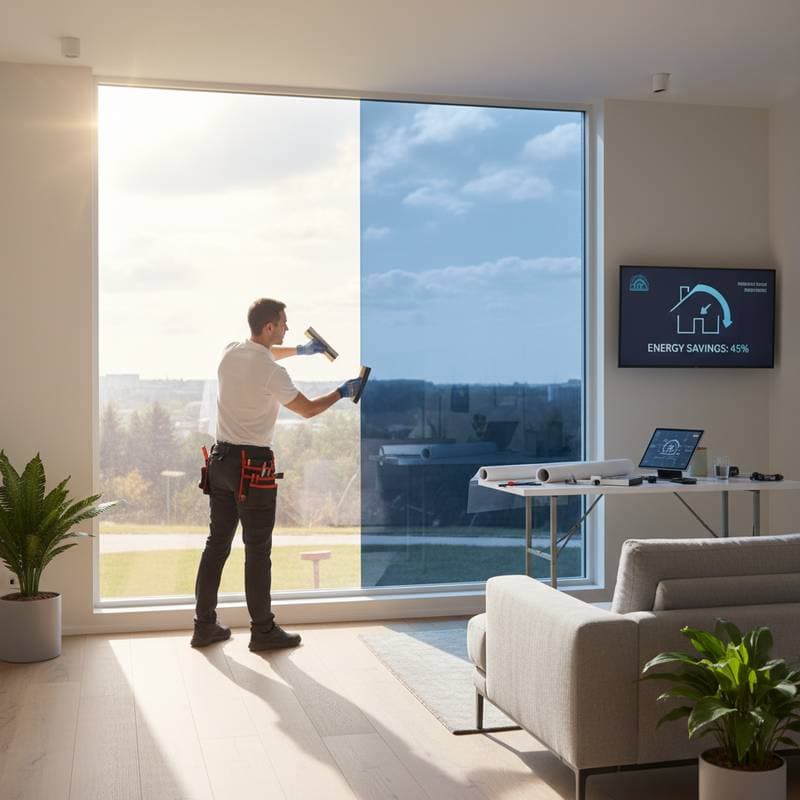
Savings depend on factors such as window direction, film variant, and prevailing weather patterns, yet numerous installations deliver up to 45 percent reductions in energy use. These gains frequently result in shorter return-on-investment periods than those associated with complete window overhauls.
Additionally, consistent indoor climates lessen the workload on HVAC units, reducing operational cycles, prolonging equipment durability, and decreasing upkeep expenses.
Comfort and Lifestyle Benefits
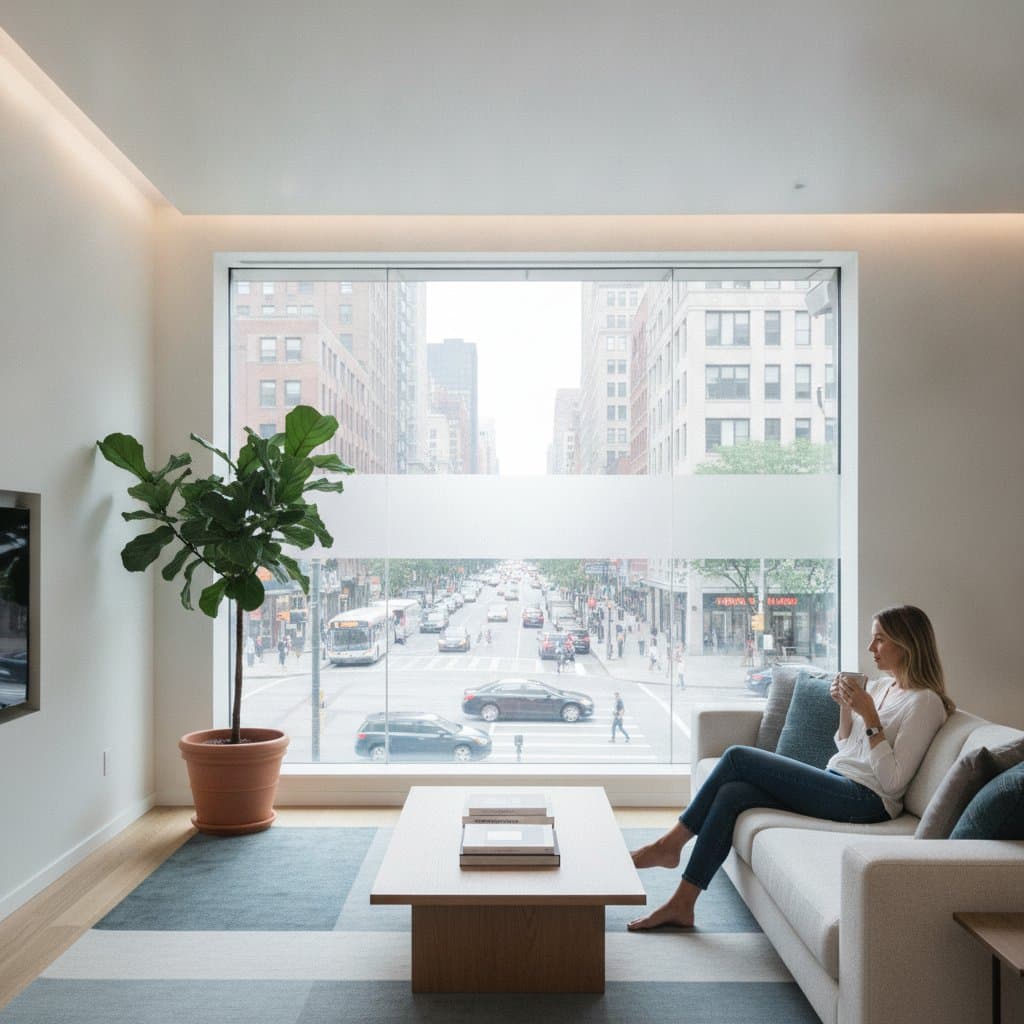
Smart window film elevates daily experiences beyond mere financial advantages. It curbs screen glare, safeguards furnishings against color degradation, and eliminates reliance on cumbersome shades. Enhanced privacy arrives without dimming overall illumination, proving especially useful in densely populated areas or residences featuring expansive glazing.
For remote workers or students, the capacity to fine-tune light levels fosters focus and ease across varying hours. Balanced illumination and thermal control create inviting spaces that require minimal intervention with coverings or climate settings.
Installation and Preparation
Effective installation of smart window film demands meticulous preparation and execution. The procedure generally follows these stages:
- Assessment and Measurement – Professionals measure window dimensions, inspect glass integrity, and analyze sun exposure patterns.
- Surface Preparation – Thorough cleaning removes contaminants like dust, oils, or residues to promote secure adhesion.
- Film Application – A wet method positions the film precisely, preventing air pockets and ensuring uniform bonding.
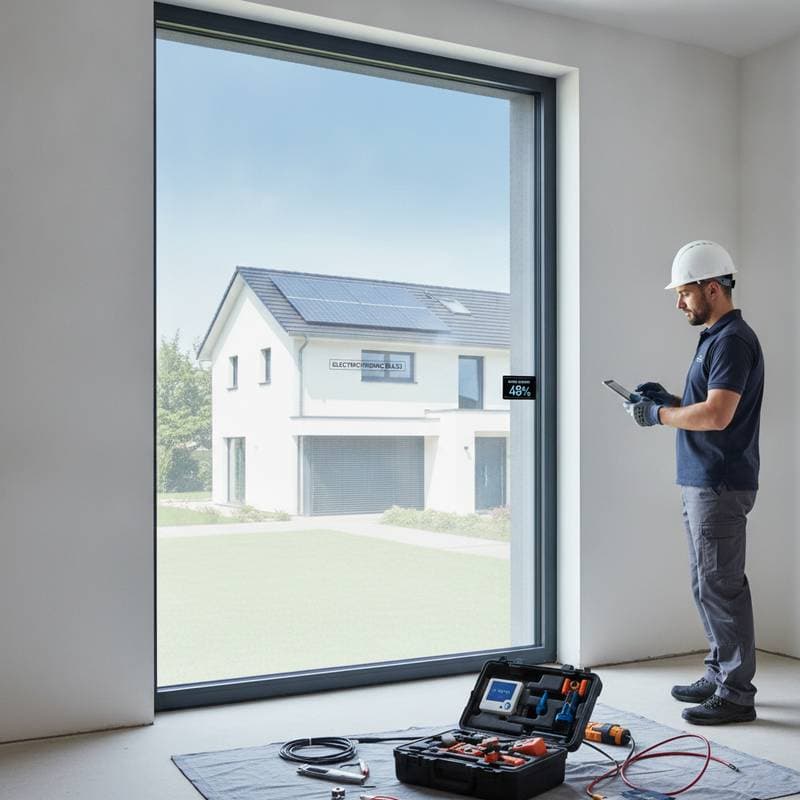
- Connection and Calibration – Electrochromic or SPD variants connect to power supplies or controllers, with testing to verify state changes.
- Final Inspection – Sealing edges as required and operational checks confirm reliability.
Engage certified professionals to handle electrical integrations and alignments, safeguarding performance over time.
Comparing Options
When evaluating energy upgrades, homeowners compare smart film to alternatives. The following table outlines key differences:
| Option | Initial Cost | Lifespan | Maintenance | Best For |
|---|---|---|---|---|
| Smart Window Film | Moderate | 15-20 years | Minimal cleaning | Energy efficiency without full window swaps |
| Low-E Replacement Windows | High | 20-30 years | Occasional cleaning | Extensive renovations or obsolete frames |
| Standard Tint Film | Low | 5-10 years | Occasional cleaning | Fundamental heat and glare mitigation |
Smart window film bridges the gap between basic tints and premium replacements, delivering robust results at accessible pricing.
Maintenance and Care
Smart window film demands little ongoing attention. Clean surfaces periodically with gentle, non-abrasive tools to preserve clarity. Steer clear of ammonia-containing products, which may erode protective layers.
For electrically powered systems, inspect connections and controls at intervals to maintain safety. Certain models support software enhancements or linkages to evolving smart home infrastructures, optimizing functionality.
Long-Term Considerations
Smart window film fosters enduring comfort and elevates property appeal. By limiting ultraviolet rays, it preserves floors, artwork, and upholstery, postponing deterioration. In eco-conscious households, it promotes lower energy demands and diminished environmental impact.
Longevity hinges on material excellence and installation precision. Established brands offer extended warranties for adhesion, transparency, and electronics. Partnering with adept installers adhering to protocols maximizes these assurances.
Matching Your Needs
Selecting appropriate smart film requires weighing efficacy, visual harmony, and finances. Key considerations include:
- Orientation: Windows facing south or west maximize heat management gains.
- Privacy: Opaque settings suit intimate spaces like restrooms or sleeping areas.
- Automation: Pairing with intelligent thermostats or lights amplifies usability.
- Design: Transparent options uphold outward views, whereas reflective or colored films introduce stylistic elements.
Expansive glass features, such as sliding doors or vistas, yield the most pronounced enhancements in usability and economy. Targeted applications in problem zones for light or seclusion remain worthwhile.
Ensuring Quality Results
Prior to purchase, examine samples or live demos to assess transition speed and tint uniformity. Confirm adherence to benchmarks for solar heat gain coefficients and light transmittance.
Collaborate with permitted specialists to align with regional codes. Comprehensive records facilitate warranty enforcement if issues arise.
Integrating Smart Film into Your Home
Smart window film provides an effective strategy for achieving energy conservation, enhanced livability, and contemporary functionality. It harmonizes advanced features with aesthetic considerations, fitting seamlessly into established or newly built structures. Grasping its variants, setup procedures, and care routines empowers informed selections tailored to personal circumstances and resources.