Why Clay Plaster Dominates 2025 Entryway Textures
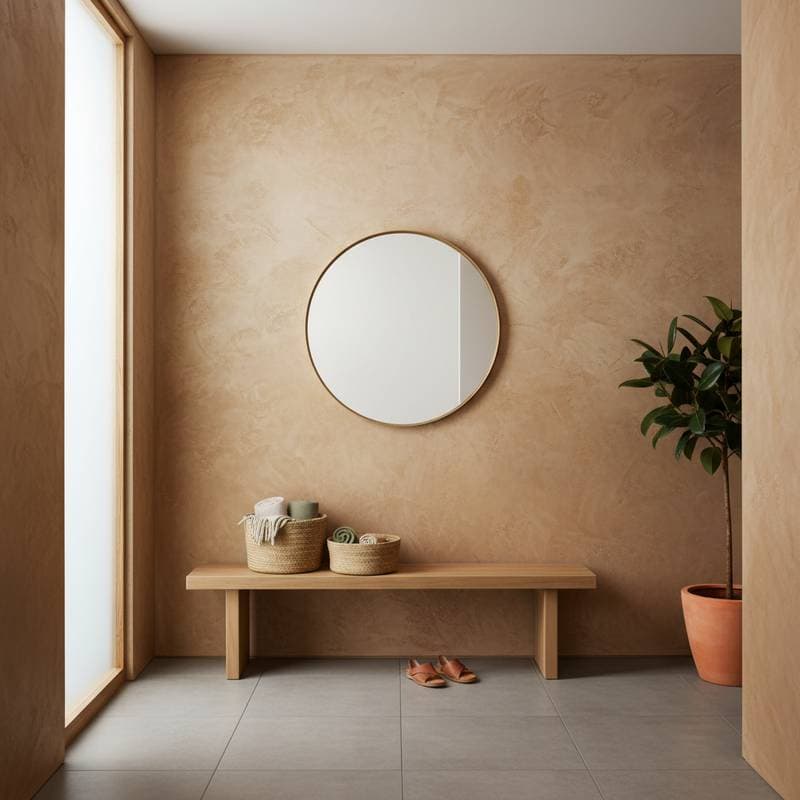
Interior design trends increasingly favor natural, tactile materials that infuse spaces with warmth and genuineness. Clay plaster has transitioned from a specialized option to a widely adopted choice, especially in entryways that set the tone for the home. This evolution goes beyond visual appeal. It signals a broader movement toward surfaces that respond to light shifts, maintain vitality, and develop patina naturally. Such textures deliver an inviting organic quality that surpasses the uniformity of synthetic paints or wallpapers.
Clay plaster combines aesthetic charm with functional advantages. Its subtle matte surface diffuses light softly, generating depth unattainable with standard flat paints. Additionally, it balances indoor humidity levels, supports healthier air circulation, and serves as a non-toxic substitute for conventional wall coverings. For individuals renovating or constructing homes, grasping the mechanics of clay plaster and its installation needs supports informed, enduring selections.
Comparing Clay Plaster with Other Wall Finishes
Assessing wall finishes involves examining key performance aspects to identify the optimal match.
| Option | Initial Cost | Lifespan | Maintenance | Best For |
|---|---|---|---|---|
| Clay Plaster | Moderate to High | Decades with proper care | Occasional rehydration and touch-ups | Natural textures and humidity regulation |
| Lime Plaster | High | Long-lasting | Minimal when sealed | Traditional or heritage settings |
| Painted Drywall | Low | Moderate | Requires periodic repainting | Cost-effective refreshes |
| Wallpaper | Moderate | Short to medium | Prone to tears and peeling | Decorative patterns or accents |
Clay plaster occupies a balanced position in terms of expense while excelling in sustained performance and occupant well-being. Initial savings with paint often diminish due to repeated applications. Lime plaster offers comparable natural qualities but demands more precise handling during installation. Wallpaper provides creative patterns yet falls short in sensory richness and vapor permeability compared to clay.
Process Overview: From Planning to Application
1. Planning and Evaluation
Prior to selecting clay plaster, examine the current wall state thoroughly. It bonds effectively to absorbent substrates like lime render, gypsum board, or primed drywall using a mineral adhesive. Smooth or impermeable surfaces, such as varnished paint or polished concrete, demand abrasion or etching for secure attachment.
Decide on the preferred texture during initial stages. Test samples on test panels to observe hues and effects in ambient light. Colors derive from earth-based pigments, leading to subtle batch differences. Accounting for these nuances secures uniform appearance across the project.
2. Preparation Steps
Prepare the surface by removing debris, repairing defects, and applying an adhesion-promoting primer. Seal fissures and voids with matching fillers to promote uniform curing. Clay plaster thrives in controlled environments, so schedule application away from periods of excessive moisture or ongoing site disturbances with exposed elements.
3. Main Implementation
Apply clay plaster in one to three layers based on the intended finish. Allow each coat to set partially before overlaying the next. Craftspeople employ trowels for sleek results, sponges for subtle undulations, or brushes for finer details. Incorporating elements like hemp fibers or silica adds varied granularity. This phase blends skill with creativity, emphasizing steady application for comprehensive coverage.
4. Quality Assurance
Curing demands careful oversight to prevent defects. Promote gradual drying through controlled conditions to minimize shrinkage cracks. Apply light misting if necessary to sustain hydration in the initial phase. Upon completion, buff out small flaws or retain them for an artisanal aesthetic. The cured layer must exhibit solidity while permitting vapor exchange, free of flaking residue.
5. Completion and Follow-up
In most cases, clay plaster requires no sealant, preserving its natural properties. For entryways near moisture sources, apply a thin beeswax or protein-based coating for subtle safeguarding. Refresh aged areas with gentle wiping or a fresh skim coat as needed over time.
Potential Drawbacks and How to Manage Them
Clay plaster presents compelling advantages, yet certain aspects influence preparation and expenditure.
- Expertise Demands: Professional outcomes necessitate skilled labor. Errors in layering can cause irregular setting or fissures; mitigate by selecting certified applicators.
- Expense: Supplies and workmanship surpass basic drywall costs. Longevity and low upkeep justify the upfront outlay through reduced future interventions.
- Moisture Sensitivity: Prolonged contact with liquids may cause staining. Address this with targeted sealants in vulnerable areas like near entry mats.
- Pigment Inconsistencies: Earth tones fluctuate across lots. Procure surplus quantities at the outset to blend and maintain cohesion.
Addressing these elements enables practical decision-making regarding project scale and refinement.
Choosing What Works Best
To determine if clay plaster suits a specific entryway, consider core elements:
- Aesthetic Goals: Seek a seamless plane or pronounced relief that showcases manual artistry?
- Daily Use Patterns: Prioritize resilience and simplicity, or value expressive uniqueness?
- Financial and Schedule Constraints: Accommodate extended setup times versus quicker alternatives like painting?
- Environmental Factors: Benefit from permeable walls in climates with variable dampness or thermal fluctuations?
Numerous residences find value in integrating function with form. Complete coverage works for immersive effects, whereas focal panels around portals or recesses introduce texture selectively without dominating the area.
Working with Contractors
Securing a capable specialist guarantees optimal clay plaster execution. Inquire about their background with earthen finishes and review physical examples from past installations. Verify knowledge of vapor management and base layer readiness. Superior technique reveals itself in how light interacts with subtle contours.
For those inclined toward DIY, pursue guided sessions from material providers. These often include starter sets for limited zones. Begin with a single feature wall to gain proficiency prior to broader applications.
Ensuring Quality Results
Post-installation, scrutinize for uniform pigmentation, balanced hydration, and seamless junctions. Subtle variations enhance authenticity, but fissures or dusting warrant prompt correction. Regulate ambient moisture throughout setting to avert complications.
In subsequent years, clay plaster adapts dynamically, softening hues and integrating with surroundings. Routine dusting and selective renewals sustain its allure. Distinct from manufactured coatings that degrade visibly, it evolves alongside daily rhythms, embodying enduring harmony.
Integrating Natural Warmth into Entryways
Clay plaster charts a forward path for entryway evolution by uniting visual allure with ecological mindfulness. It links built environments to natural origins via palpable form, subtle tonality, and permeability. Individuals desiring material authenticity alongside ease select clay plaster for its perpetual, individualized resonance. This understated presence elevates initial encounters, fostering a sense of belonging from the threshold inward.